
Mahjong for Backgammon Players: What Skills Transfer
Last updated: Nov 23, 2026
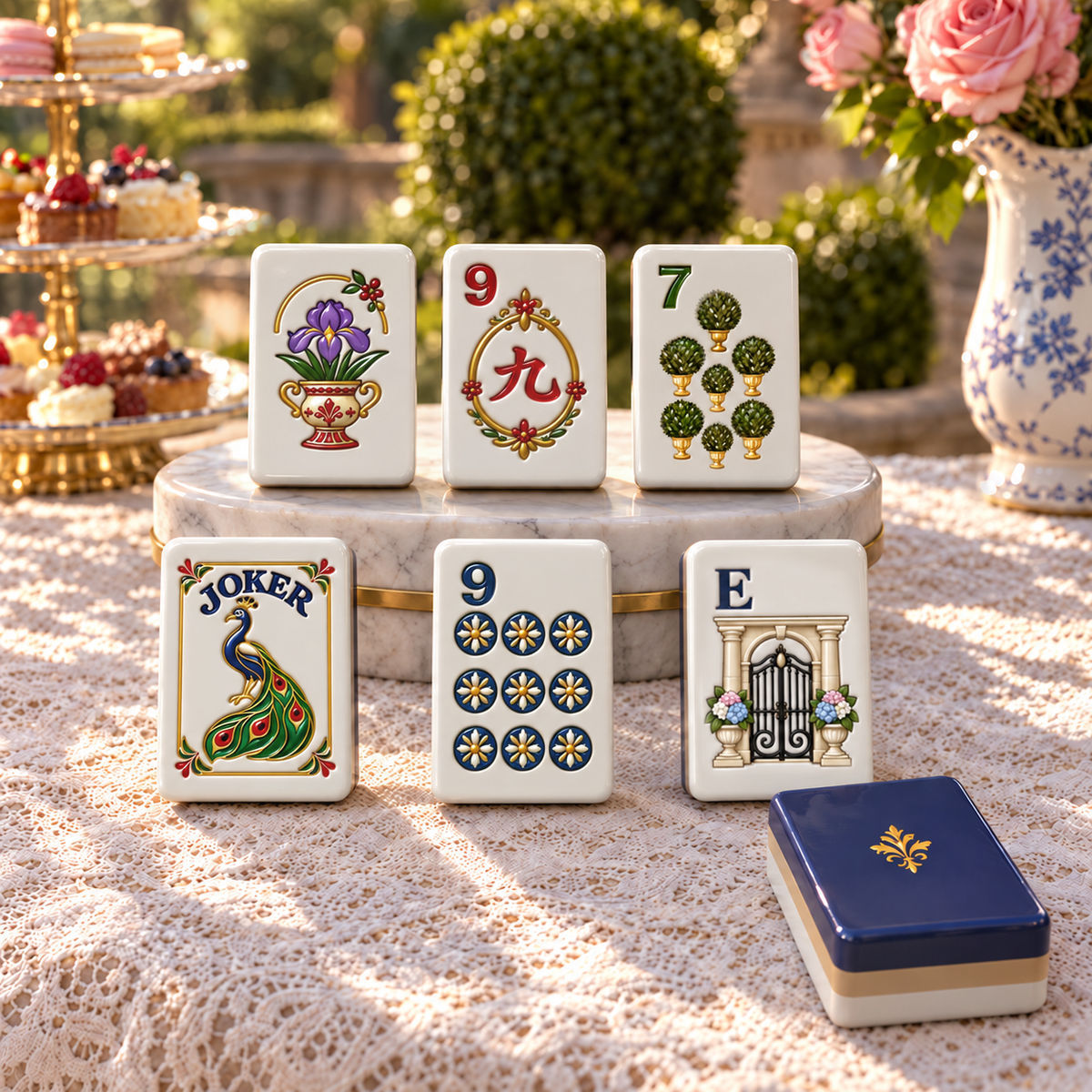
Backgammon and mahjong share territory strategy, probability weighing, and opponent reading, but diverge sharply in execution. Your checker tempo and pip-counting translate poorly because mahjong's 152-tile draw is fixed (no luck cascade), hands are from a seasonal card only, and you expose melds face-up instead of hiding them. What transfers: your gut for board tempo, bluff detection, and risk-per-turn thinking. What's new: perfect-information endgames, mandatory tile-pass ritual (the Charleston), and the fact that sequences (chows) don't exist in American mahjong—only identical pungs, kongs, and joker-wild melds. Expect four weeks to feel comfortable; most backgammon players crack the tile-reading by week two. Start with our best-selling sets and the National Mah Jongg League card for the current year, and you'll spot the pattern language immediately. 🀄 Shop best-selling mahjong sets →
What skills from backgammon actually work in mahjong?
Your pattern-recognition circuits—the ones that weigh containment risk and calculate whether to leave a blot—map directly onto mahjong hand-building. You already think in sequences of probability: "If I keep this piece, what's the cost if my opponent hits me?" Mahjong mirrors that logic when you're deciding which tile to discard; you weigh whether exposing your strategy is worth keeping a flexible middle number. Your speed at reading opponent behavior transfers too. In backgammon, you spot hesitation and infer checker position; in mahjong, a player's discard tempo and rack pressure reveal whether they're waiting on one tile or three. That same cold reading skill saves weeks of learning. Tempo judgment—knowing when to push and when to pass—is your superpower here.

Why backgammon's probability math doesn't translate directly
Backgammon is a rolling game: each turn reshuffles the odds. Mahjong is fixed: 152 tiles, drawn linearly, no reshuffle mid-game. This breaks your mental model fundamentally. In backgammon, you think "I have a 30 percent chance of hitting that blot"; in mahjong, once a tile is discarded, it's dead—you calculate odds by counting remaining tiles and tracking which ones have appeared. Your dice-reading shortcut (expected value per roll) has no equivalent because there's no randomness in draw order, only in which tiles opponents release. The biggest shock: backgammon's "leave nothing to chance—calculate EV" mindset fails when you're staring at a hand where three different patterns are possible and the card tells you they're all legal this season. You'll instead make decisions based on the card structure itself—which patterns are rare versus common—rather than probability tables. This switch takes backgammon players two to three weeks; embrace it early.
The hidden-tile memory demand is steeper than backgammon
Backgammon rewards spotting which checkers are trapped; mahjong demands you track every tile that's been discarded and remember which suits have dried up. A typical four-player game exposes 60–70 tiles across the table before the hand ends. You must hold a live map: "East has thrown nothing but Dots and Honors, so she's likely building a Bam hand" or "that 5 Crak left the table in turn three, so the Green Dragon phon pattern just died." Backgammon players often have strong positional memory (where did the opponent's back checker go?), which is a foundation. But mahjong's memory game is volume-based and category-based, not spatial. Your brain will tire faster the first week. Play three games back-to-back instead of one-per-night; the fatigue forces faster pattern recognition. Most backgammon converts report that by game six, they stop consciously "remembering" and start pattern-matching automatically—the same reflex that lets you glance at a backgammon position and instantly see the race count.
🎁 See our most-loved mahjong sets & accessories →
Exposure strategy flips your concealment instinct
In backgammon, you hide strength: stack your back checkers, leave ambiguous blots, use the 24 point as a fortress. Mahjong forces the opposite. The moment you claim a tile (say, picking the discard instead of the wall), you must expose it face-up in a pung or kong. Opponents see exactly what you're collecting. There's no bluff by omission; there's no "I look vulnerable, so attack me less." Instead, you bluff by speed of decision and what you discard—you throw a tile that looks like it belongs in a dangerous pattern, then pivot. Backgammon players feel naked at first. The strategic win comes from accepting it: because everyone sees your melds, the real game is now discard reading and tile-sequence inference, not concealment. Your ability to spot what an opponent hasn't exposed (their hidden hand) becomes your edge. This flip from "hide strength" to "display strength, exploit what's hidden" takes roughly two weeks to internalize.

How the tile-passing ritual (Charleston) rewires your opening plan
Before a mahjong hand even begins, players pass tiles to each other in three rounds—the Charleston. This is chess-like: you're passing tiles to strengthen your hand and block opponents. In backgammon, your opening is fixed (checkers start the same; you react to the dice). Here, you're making three active choices to sculpt your starting position. Backgammon players often excel at this because you already think "what pieces do I need to control the board?" Treat the Charleston as a three-move tempo game: pass your most dangerous tiles first (ones that look strong to opponents) to distract them, keep flexible mid-range numbers, and watch which players pass you the same suit repeatedly (they're telegraphing a weakness or lack of interest in that color). Learn how the Charleston works in depth before your first game; it's where backgammon players gain an unfair advantage in week one.
The card-based hand pool changes everything
Mahjong hands come only from the current year's National Mah Jongg League card—roughly 80–120 legal patterns per season. Backgammon has infinite board states. This sounds limiting until you realize it's liberating: you can memorize the shape of all winning hands. A backgammon player's advantage: you're already comfortable with "standard" plays (like the running game, the back game). Mahjong is the same. After five games, you'll recognize "Oh, that's a one-suit bonus" or "She's building a consecutive number set." The card becomes your rule book and your strategic map. Spend 20 minutes before your first game scanning the card and asking: What are the rarest patterns? Which rely on luck (low Bam/Crak/Dot runs)? Which are reliable (Honor-heavy patterns)? Backgammon pros often misjudge this step—they think more patterns = more complexity. It's actually the reverse: fewer patterns = faster mastery. You'll crack the card faster than a chess player cracks an opening repertoire.
What Transfers | What's New | Timeline |
Pattern recognition | Fixed-tile memory (not random draw) | Week 1 |
Risk-per-turn judgment | Card-based hand pool (no infinite states) | Week 2 |
Opponent reading (tempo/hesitation) | Exposure strategy (strength = visibility) | Week 2–3 |
Speed of decision-making | Charleston tile-passing ritual | Session 1 |
Bluff detection (tells) | Honor-and-Flower melds (no backgammon parallel) | Week 3 |
What to check before you buy your first set
Tile size & texture: American sets use larger tiles than Chinese mahjong (easier for backgammon players switching sports). Acrylic tiles are standard and hold up through hundreds of games—worth the investment if you're serious. A 160-tile set from our best-selling collection gives you 152 playing tiles plus spares; that's all you'll ever need.
Rack and pusher quality: Backgammon teaches you that equipment matters. Cheap racks wobble and tiles slip; good ones (with pushers) let you manage your hand like you'd manage checker stacks. Test before buying if you can.
Mat with clearly marked seats: Coming from backgammon, you're used to a clear board orientation. A quality mat shows wind positions and has defined player zones.
Current-year card: Buy the 2026 National Mah Jongg League card locally or online. Old cards are useless; hands change annually. Laminated versions survive table spills better than paper.
✨ Find your Mahstead set — free US shipping →

FAQ
Will my backgammon rating translate to a strong mahjong ranking?
No, but your learning curve will be faster. Backgammon ranking depends on thousands of positions; mahjong depends on ~100 card patterns. You'll hit intermediate play (winning consistently in friendly games) in 4–6 weeks, but tournament-level strategy takes a season because mahjong hand-reading is more psychological than calculation-based.
Do I need to unlearn backgammon instincts?
Yes—specifically the "hide strength" and "randomness is the main variable" instincts. Your speed, pattern-spotting, and opponent reading all stay active. Spend week one consciously practicing the opposite: expose your melds proudly and focus on what's hidden (opponent's closed hand), not what you can conceal.
Which backgammon skill fails fastest in mahjong?
pip-counting under time pressure. Backgammon trains you to calculate running totals mid-game; mahjong has no equivalent math. You'll try to "count down" which tiles are safe, waste mental energy, and slow down. Surrender to pattern-matching instead: after five discards, you'll feel which Bams are gone without counting.
Is the Charleston like a backgammon opening setup?
Partially. In backgammon, the opening is fixed (checkers start the same place every game). The Charleston is three active turns where you shape your opening. Treat it like a three-move chess opener: you're signaling intent and managing opponent expectation. Learn it cold before your first game; that's where backgammon players gain the most advantage.
Should I learn American mahjong or Chinese mahjong if I come from backgammon?
American only. Chinese mahjong allows chows (sequences of any three consecutive numbers in the same suit, e.g., 3-4-5 Bams), which backgammon players confuse with rummy sequences. American mahjong has no chows—only identical pungs, kongs, and joker melds. Fewer patterns = faster mastery for a logic-driven backgammon mind.
How long before I can join a weekly game without slowing it down?
Two to three weeks if you play one game per week, or 10–12 days if you play three games in one session. Speed comes from muscle memory (tile-moving), not strategy. After three games, your hands will fly; after eight, your discard decisions will match table pace even if your hand-reading is still rough.


View More
View More
View More
