
Mahjong vs Rummikub: Which Game Should You Play?
Last updated: Nov 23, 2026
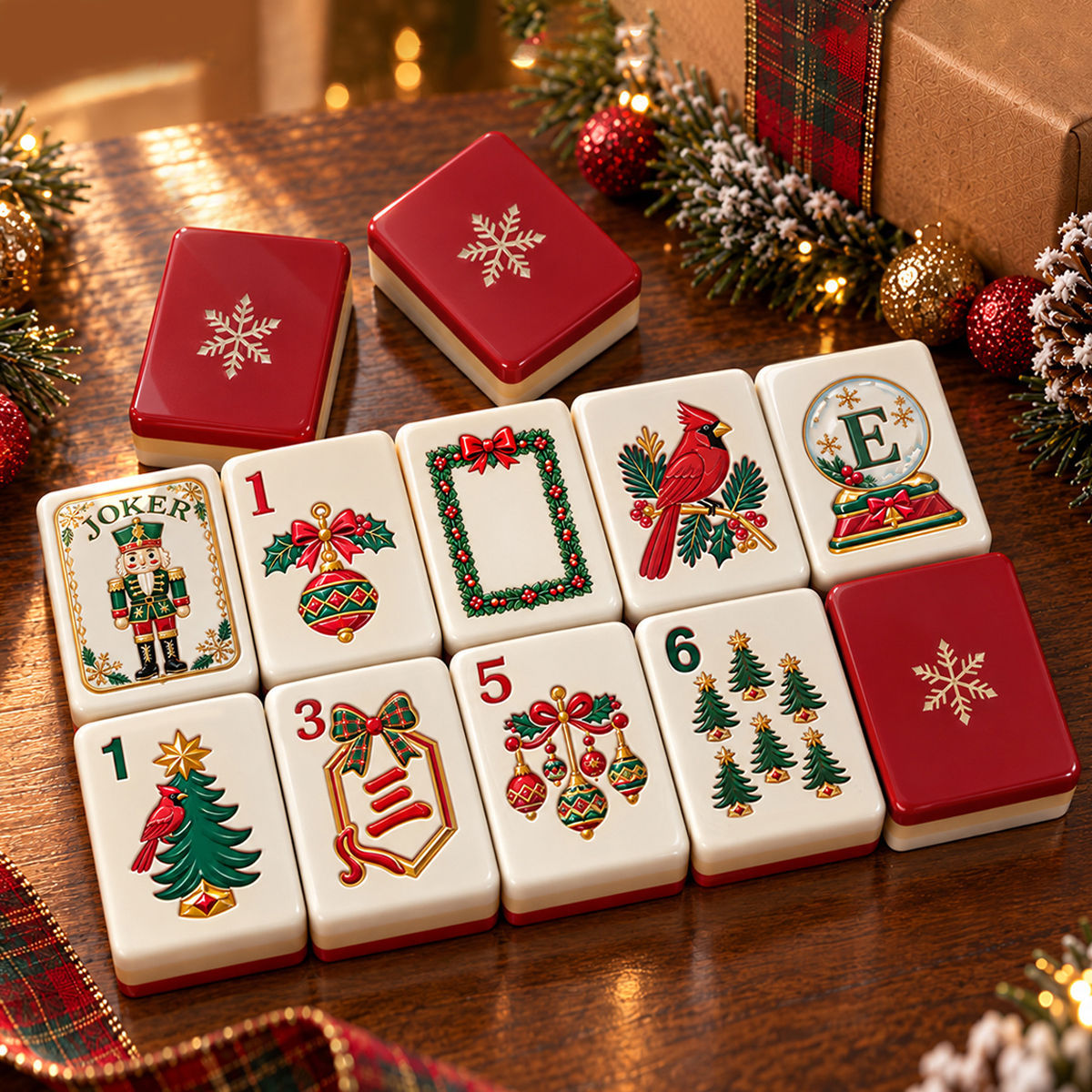
Mahjong and Rummikub are tile-based rummy-style games, but they're built on separate rule systems. American mahjong uses 152 tiles divided into three suits (Bams, Craks, Dots numbered 1–9), winds (North, East, West, South), dragons (Red, Green, White), flowers, and 8 jokers. Players form pungs (three identical tiles), kongs (four identical), and higher-numbered melds, then declare hands only from the current year's National Mah Jongg League card. A game takes 45 minutes to two hours. Rummikub uses numbered tiles (1–13) in four colors; players build sequences (1-2-3) and sets (same number, different colors), with no official card—any combination works. Rummikub plays faster (30–45 minutes) and requires less memorization. Both need 4 players (though variants exist), but mahjong rewards long-term skill and pattern recognition; Rummikub emphasizes quick tactical adjustments. At Mahstead, we craft engraved acrylic best-selling mahjong sets for serious American mahjong players who value the complexity and ritual of the game.
American mahjong uses 152 tiles divided into three suits (Bams, Craks, Dots numbered 1–9), winds (North, East, West, South), dragons (Red, Green, White), flowers, and 8 jokers. Players form pungs (three identical tiles), kongs (four identical), and higher-numbered melds, then declare hands only from the current year's National Mah Jongg League card. A game takes 45 minutes to two hours. Rummikub uses numbered tiles (1–13) in four colors; players build sequences (1-2-3) and sets (same number, different colors), with no official card—any combination works. Rummikub plays faster (30–45 minutes) and requires less memorization. Both need 4 players (though variants exist), but mahjong rewards long-term skill and pattern recognition; Rummikub emphasizes quick tactical adjustments.
What's the core difference in how you build your hand?
In American mahjong, you must match hands exactly to the current year's National Mah Jongg League card. Every valid hand is pre-printed on that card; if your tiles don't match a listed pattern, you cannot win. You combine pungs (three identical tiles like three 5 Dots), kongs (four identical), and special combinations—for example, "Like Numbers" (all 2s across all three suits) or "Dragons and Winds." Jokers substitute for any single tile but can never form a pair or stand alone. In Rummikub, you're free to arrange tiles in sequences (1-2-3-4-5 in one color) and sets (three or four tiles of the same number in different colors), and new combinations happen every game. Mahjong is a closed system; Rummikub is open-ended. This makes mahjong harder to learn but more rewarding once you memorize the card.
🀄 Shop best-selling mahjong sets →

How much memorization and skill is required?
Mahjong beginners need weeks to months to recognize common patterns on the card. You learn to spot hands by visual shape—say, "all 1s," "pairs of consecutive numbers," or "dragons mixed with winds." The National Mah Jongg League card refreshes every spring, so players update their knowledge yearly. Strategy involves reading opponents' discards, counting remaining tiles, and managing the Charleston (the tile-passing ritual before play). Experienced players win through discipline and pattern recall. Rummikub requires less upfront study: anyone who knows card-game sequences (1-2-3) can play in minutes. Skill comes from spotting manipulations—moving tiles between your laid sets to create new plays—and timing when to go out. If you prefer depth and ritual, mahjong rewards dedication; if you want quick fun, Rummikub is gentler on the brain.
Which game is easier to teach new players?
Rummikub is faster to teach. Explain sequences (same suit, ascending), sets (same number, mixed suits), and that you're trying to be first to lay down 30 points of tiles. New players can contribute within one round. Mahjong takes longer: you must learn tile names (Bam, Crak, Dot, Wind names, Dragon names), understand the card, grasp why jokers work only in exposed melds, and know what discard dangers mean. Most tables allow beginners to ask about the card mid-hand, but they'll feel lost for several games. If your group includes newcomers who visit occasionally, Rummikub wins. If you're building a regular Thursday-night mahjong crew, the investment in teaching mahjong pays off in richness and engagement over months.

How do the games handle luck vs. strategy?
Mahjong has built-in luck: the tiles you draw, the tiles other players discard, and how the Charleston tile exchange treats you all matter. But once you understand the card, strategy dominates. Knowing which hands are easiest to complete given your starting tiles, reading discard patterns, and counting which tiles have been played—these skills separate winners from casual players. Rummikub relies more on luck in the early draw but rewards tactical adaptation: if you draw weak tiles, spotting a way to manipulate your sets and lay down tiles keeps you in the game. Mahjong is kinder to patient planners; Rummikub favors flexible improvisers. Over 20 games, mahjong skill shows; Rummikub winners vary more by chance.
Aspect | Mahjong | Rummikub |
Tile count | 152 tiles (3 suits 1–9, winds, dragons, flowers, jokers) | 106 tiles (numbers 1–13 in 4 colors) |
Game length | 45 min–2 hours | 30–45 min |
Melds allowed | Pung (3), Kong (4), Quint (5), Sextet (6); pungs must be identical | Sequence (1-2-3), Set (same number), sets can be split |
Joker use | In exposed melds only; never as pair or single | Wildcard substitute in any meld |
Learning curve | 4–8 weeks to competence | 1–2 games to play; skill refinement ongoing |
Official rules | National Mah Jongg League card (annual, fixed hands) | Open-ended (players create valid melds) |
Replay variation | Same card all year; hands repeat across tables | Every game is a new puzzle |
Winner determination | Must match exact card pattern + scoring | First to lay down sets + manipulate remaining tiles |
What equipment do you need for each game?
For mahjong, you need a 160-tile acrylic set (152 playing tiles plus spares), a current National Mah Jongg League card (free online or printed), a mat to organize your hand, racks with pushers to avoid tile damage, and a score pad. Many players also use a travel bag to protect their tiles. For Rummikub, you buy one box and you're set: tiles, racks, and rules inside. Mahjong requires small ongoing investments—new cards annually, possible mat replacements—but the ritual builds community and encourages a nicer set over time. If you're serious about hosting weekly mahjong, a mahjong mat and racks with pushers protect your set and speed up play. Rummikub is simpler; one box stays on the shelf for years.
🎁 See our most-loved mahjong sets & accessories →
Which game builds better social bonds over time?
Mahjong creates enduring friendships. The 45-minute-to-two-hour time commitment, the ritual of the Charleston, the shared learning curve, and the fact that you play the same card all year build habit and identity. "Tuesday mahjong" becomes a standing date. New players feel welcomed but also challenged, and regulars recognize each other's patterns. Rummikub is excellent for one-off game nights or vacations—it's light, entertaining, and no one feels left behind. But there's less reason to gather weekly; you can play Rummikub anywhere. Mahjong tables become institutions: players invest in nicer engraved sets with their names or inside jokes, they follow the season's card together, and stories from the table linger. If you want casual fun, Rummikub is ideal. If you're building a gaming circle you'll treasure for years, mahjong is worth the effort.
✨ Find your Mahstead set — free US shipping →
What to check before you buy
For mahjong: Decide whether you want classic bone-and-bamboo sets (traditional, fragile, loud) or acrylic (quieter, easier to mark and read, durable for weekly play). Check that your set includes all 152 tiles plus 8 jokers. If you're hosting, buy a mat and racks with pushers to protect tiles and show respect for the game. Download the current National Mah Jongg League card before your first game—it's free online. Budget for a new card every spring if you play regularly.
For Rummikub: One box is complete. Ensure tiles aren't sticking or misaligned when you open it. If you plan frequent play, buy a second set to blend tiles (more combinations per game, fresher feel). Store in a cool, dry place; plastic tiles can warp. Rummikub needs no annual updates.

FAQ
Can you learn mahjong if you don't speak Chinese?
Yes. The tile names (Bam, Crak, Dot, Wind, Dragon) are pronounced in English; the game is played in English. Memorizing names takes one or two sessions. You never need Chinese to play American mahjong.
Is Rummikub easier if you know mahjong?
Not necessarily. Mahjong trains pattern recognition on a fixed card; Rummikub rewards tactical flexibility. If you know mahjong, Rummikub will feel simpler because you're used to tile-based games, but it won't feel like mahjong. Both are fun in different ways.
How many people can play each game?
American mahjong is designed for exactly 4 players. Rummikub works with 2–4 players (2-player games are faster and more competitive). Variant rules exist for 2- or 3-player mahjong, but they're less common and harder to find.
Do I need to buy a new Rummikub set every year?
No. One Rummikub set works forever. The rules don't change. If you play very frequently, tiles may wear or stick, and you might refresh after years, but there's no annual update like mahjong's card.
Can you play mahjong without the National Mah Jongg League card?
Not in American mahjong; the card defines every legal hand. Without it, you're playing a different variant (classical Chinese mahjong, Hong Kong, or Riichi rules apply different hand systems). To play American mahjong as most US tables do, the card is essential. See our guide on how to play American mahjong for a full introduction.


View More
View More
View More
