
Best Mahjong Set for Visually Impaired Players
Last updated: Nov 23, 2026
Visually impaired players need mahjong sets with tiles at least 1.25 inches wide (not 0.75–1 inch standard), numerals sized 0.2+ inches high, and contrast ratios meeting 4.5:1 or better. Acrylic tiles (not bamboo veneer) hold engraved detail sharper under magnification. Combine a high-contrast set with raised-dot Dragon markers, bold-print mats, and a stable rack with pushers so you can feel tile positions without looking. Mahstead's best-selling acrylic collection offers sets with numerals deep-carved on light or dark grounds; consider adding custom titles to pairs (Winds, Dragons) so you name your holding aloud. Costs and shipping vary by design; free shipping across the US means you try without risk.
What size and contrast do visually impaired players need?
Standard mahjong tiles measure roughly 0.9 × 1.2 inches—fine for sighted players, too small for low vision. Players with visual acuity of 20/80 or worse need tiles at least 1.25 inches wide, numerals carved or printed at 0.2+ inches tall, and symbol-to-background contrast of at least 4.5:1 (per WCAG accessibility standards). Acrylic tiles (not delicate bone-and-bamboo) tolerate magnification scratches and hold engraved marks permanently. Dark numerals on light tile faces, or white on jet, work better than pastel shades. Mahstead acrylic sets in our best-selling line offer numerals carved deep enough that your fingertip reads the relief—a tactile win for low-vision and blind players alike.

How do tactile markers help you identify Winds and Dragons?
Winds (North, East, West, South) and Dragons (Red, Green, White) are symbols many low-vision players confuse in dim light. Solution: raised-dot stickers or engraved dots clustered on specific tiles. North = one dot (top-left corner); East = two dots; West = three; South = four. Red Dragon = circle dot; Green Dragon = square dot; White Dragon = cross dot. Place the dot where your thumb naturally lands when you pick up the tile—usually the upper edge. A few players carve initials into tiles (N, E, W, S, R, G, W) or use Braille labels, though Braille doesn't translate tile suits. Raised dots are faster at the table and survive shuffling better than sticky labels.
What mat or playing surface makes tiles easiest to read?
A mahjong mat with bold contrast and large grid lines keeps your hand organized in space so you don't lose track of drawn tiles. Choose a mat where the discard zone is separated by a dark border (ideally 1-inch wide, charcoal or black) from your hand zone. Light-colored mats (cream, light gray, or white) with dark lines are easiest for players with cataracts or macular degeneration. Avoid busy patterns; a plain mat with bold section lines lets you orient yourself by touch alone. Mats with embossed or raised grid lines add tactile feedback so you can feel where your hand boundary is. Some players prefer a non-reflective matte finish to reduce glare from overhead light. Mahstead offers mats in neutral and high-contrast designs; pair one with a rack with pushers so tiles stand upright and legible.
🀄 Shop best-selling mahjong sets →
Do you need a rack with pushers, or can you hold tiles in hand?
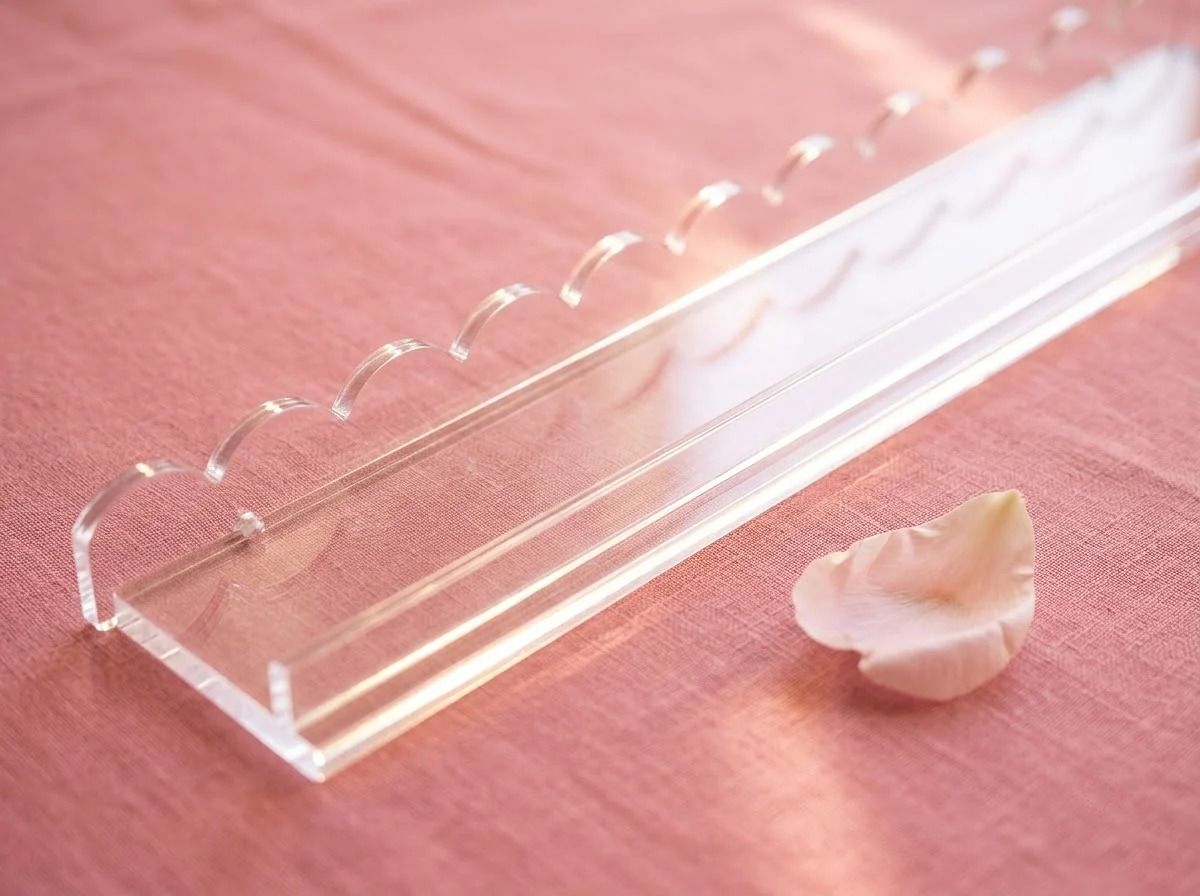
A rack with pushers is not optional for many low-vision players—it's essential. Pushing a tile up and forward with the pusher keeps your hand neat, prevents dropped tiles, and lets you "read" each tile by running your finger down the standing line. Tiles held flat in your palm are harder to distinguish by touch alone and shuffle into chaos when you draw or expose a pung. Racks also keep other players from seeing your hand accidentally. Choose a 2-tier or 3-tier stand (depending on whether you play with jokers and how many pairs you hold); darker racks reduce glare. Acrylic or wood racks both work; acrylic is easier to sanitize between sessions. A pusher (a small wooden or plastic blade) should be 2–3 inches long, light enough to maneuver one-handed, and non-slip.
Should you engraved tiles with titles or leave them plain?
Custom engravings on tile faces (Winds named "North," Dragons labeled "Red," etc.) help blind and low-vision players anchor their hand without constant tactile scanning. Engraved titles run along the tile edge or diagonally across the face, so your finger finds the label when you pick it up. Mahstead's engraved American mahjong sets let you customize Winds and Dragons; some players add season numbers (1–4) or lucky words. The trade-off: engravings add cost and slightly reduce tile contrast if the engraving is shallow. For maximum contrast, request deep carving (0.05+ inches) and avoid serifs—block letters are faster to read by touch. If budget is tight, engrave only Winds and Dragons; you'll memorize suit numerals quickly in play. Non-engraved tiles cost less and ship faster; many experienced players prefer a silent, uncluttered hand.
Comparison: Which Set Style Works for Your Vision Needs?
Set Type | Best For | Key Features | Pace of Setup |
High-contrast acrylic, plain | Low vision (20/60–20/100) | Large numerals, deep carving, strong color | 5–10 min |
High-contrast acrylic, engraved Winds/Dragons | Low vision + memory aid users | Numerals + word labels, tactile relief | 5–10 min |
Large acrylic with raised-dot markers | Blind or severe low vision + tactile readers | Acrylic + dots on Winds/Dragons, rack required | 10–15 min |
Braille tile overlay + standard set | Blind players fluent in Braille | Standard tiles + adhesive Braille labels | 15–20 min |

What to check before you buy
Tile width. Measure your current set (or ask the seller): if tiles are under 1.2 inches wide, order a new set. Mahstead tiles are approximately 1.25 inches across—check the product page or email with dimensions if you're uncertain.
Numeral depth. Request a photo or sample showing how numerals are carved, not printed. Printed numerals fade under magnifying glasses and fingernail rubs; carved numerals last the life of the set.
Contrast ratio. If you buy a light-ground set, verify the tile face is cream, white, or pale gray—not off-white or beige, which blur under dim light. Dark numerals should be black or charcoal, not brown or navy.
Rack and pusher fit. Not all racks hold Mahstead tiles at the same angle. If you already own a rack, ask whether the tiles you're ordering will stand upright without sliding. Standard American mahjong tiles fit most racks; verify before ordering.
Shipping and damage. Acrylic tiles are more fragile than they look. Mahstead ships with protective padding; inspect tiles on arrival for cracks in the numerals—deep carving can splinter if dropped. Photograph any damage before opening and report within 7 days.
CTA placement mid-article
🎁 See our most-loved mahjong sets & accessories →
How to set up your game for low-vision play
Choose your mat first. Lay it flat, ensure the discard zone is clearly marked by a dark border, and position it where overhead light doesn't create glare.
Arrange racks and pushers. Each player gets a rack angled at 30–45 degrees (tiles visible to the holder, hidden from opponents). Position pushers within arm's reach of each player.
Mark your seat. The prevailing Wind (usually East first hand) sits North. Place a tactile marker (a bump dot or folded tape) on the mat corner so blind or low-vision East players know where they sit each round.
Organize the live wall. Draw tiles from the wall in the same order every hand so players learn the rhythm. Call out "wall" when the live draw moves to a new stack.
Verbalize exposures. When a player exposes a pung (e.g., three 5 Craks), say aloud: "5 Craks pung." Blind players need to hear each move to track the game state.
Handle the Charleston carefully. During tile-passing, call out suit and number as you hand tiles across. Let each player set tiles in their rack rather than tossing across the table.
Read the card together. At game start, read the current year's National Mah Jongg League card section by section aloud, or provide a large-print or digital copy the low-vision player can magnify.
Why Mahstead acrylic sets outperform bamboo veneer for low vision
Bamboo-and-bone tiles (traditional) are beautiful but fragile: the bamboo veneer peels under magnification, the numerals are inlaid thin, and dust settles into carved channels, obscuring contrast. Acrylic tiles are solid, non-porous, and numb-resistant to scratching and UV fade. Mahstead's best-selling acrylic sets are carved with deep, sharp numerals that your finger can trace without a magnifier. They're easier to sanitize between play sessions (wipe with a damp cloth; bamboo cracks if wet). Acrylic is also cheaper than premium bone-and-bamboo, so you can afford custom engraving on Winds and Dragons without breaking budget. Downside: acrylic sounds lighter when shuffled (some players miss the click-clack of traditional tiles). If you want the feel of wood with acrylic durability, Mahstead also sources hybrid sets with acrylic faces and weighted bases.
Pairing your set with low-vision tools
A high-contrast set is half the solution. You'll also want:
A magnifying sheet or clip-on lens (3× or 5×) to read suit numerals at a distance.
A consistent shuffling routine. Wall draw and discard zone should be in the same spot every hand; muscle memory helps you find tiles without looking.
A talking scorepad app (search "accessible mahjong scorer") so you don't have to read score cards.
A dedicated play area, free of clutter, where you know where everything is.
A sighted caller or scorekeeper (a fifth player, or a rotating role) who reads the card and announces moves so blind players don't fall behind.
✨ Find your Mahstead set — free US shipping →
FAQ
Can you play American mahjong blind, or is it only for low-vision players?
Blind players can absolutely play. You'll need a sighted scorekeeper and caller, deep-carved tiles with tactile Winds/Dragon markers, a rack with pusher, and a bold-line mat. Some blind players use Braille labels; others memorize tile positions by suit and number (many do this in weeks). The key is a consistent, quiet table where other players call out moves.
What's the difference between engraved and plain tiles for a visually impaired player?
Engraved titles (e.g., "NORTH" carved into a Winds tile) let you know what tile you're holding without asking. Plain tiles cost less and load faster; you identify them by suit numerals and marker dots. If you're a fast learner, plain tiles work fine. If you want to anchor your hand quickly during fast play, engrave Winds and Dragons at minimum.
Do Mahstead tiles come in extra-large sizes, or are 1.25 inches the biggest?
Mahstead's American mahjong tiles are standard size (approximately 1.25 inches wide), which is the maximum size for play under National Mah Jongg League rules and shuffling comfort. If you need bigger tiles, custom oversized sets exist but are niche products; contact Mahstead directly to ask if they've sourced or can refer you to a maker.
Should I buy a 160-tile set (152 playing tiles plus spares) or a smaller set?
Always buy the full 160-tile set. American mahjong is played with exactly 152 tiles and 8 jokers; spares replace broken or worn tiles over time. A 160-tile set from Mahstead includes all you need to play a legal game, plus buffer tiles for loss or damage.
How do I know if the mat's contrast is good enough for my vision?
Test it in your game space under the same lighting you'll use during play. The mat's background should look distinctly lighter or darker than the grid lines—no blur or shimmer. If you're on the edge, ask the seller to email a photo, zoom it to 200%, and check whether you can still see the lines clearly. Matte (non-shiny) finishes beat glossy for low-vision play.
Can I label my Mahstead set myself, or should I order it pre-engraved?
You can add Braille labels or raised dots yourself after purchase, but engraving before shipment is neater and more durable. Self-applied labels (stickers, Braille dots) risk peeling or shifting during shuffling. If your vision is stable and you play regularly, order engraved; if you're experimenting with accessibility, buy plain tiles and add labels yourself to test first.


View More
View More
View More
