
Singapore Mahjong Rules: How to Play the Hong Kong Style
Last updated: Nov 23, 2026
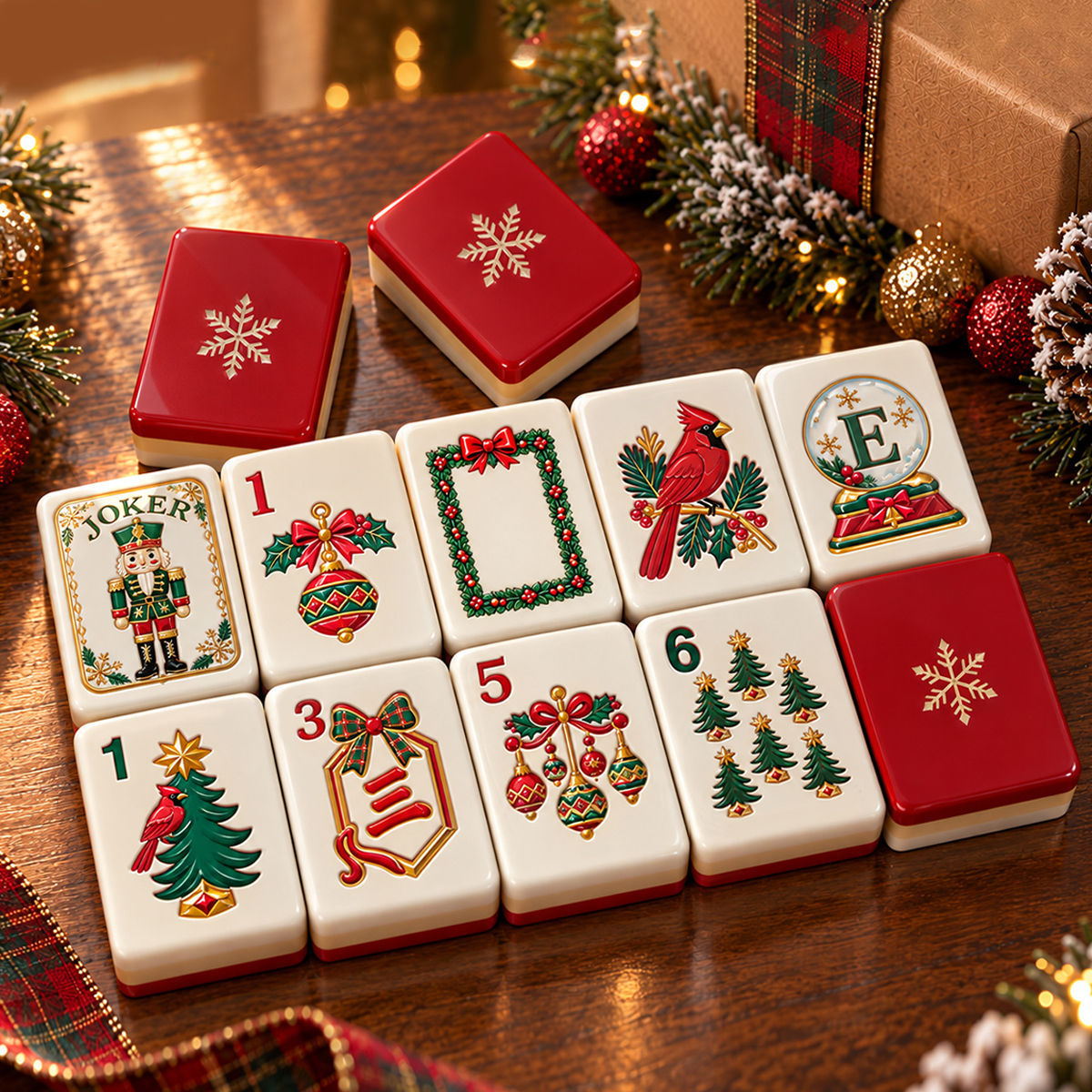
Singapore mahjong uses 144 tiles (the Hong Kong standard): three suits (Bams, Craks, Dots) numbered 1–9, four of each = 108 tiles; 16 winds (N/E/W/S, four copies each); 12 dragons (Red, Green, White, four of each). Players sit four to a table. The goal: form a hand of four melds (sets of three or four identical tiles, or sequences of three consecutive numbers) plus a pair, then declare mahjong. Unlike American mahjong, chows (1-2-3, 2-3-4, etc.) are always allowed and can be exposed when called from a discard. Play is faster because there's no National League card; hands are determined by what you can build from your 13 tiles plus the draw. Jokers are not used. A full game typically lasts 15–30 minutes per hand. We recommend learning American mahjong first if you own a set, since the tile composition differs; if you want to play Singapore rules, you'll need a 144-tile Hong Kong set, not an American 152-tile set. --- Singapore mahjong—the Hong Kong variant played widely across Southeast Asia, Malaysia, and the diaspora communities in Australia and Canada—is one of the most popular forms of the game globally. While American mahjong has a rigid hand structure from the National League card, Singapore mahjong is intuitive: you build hands from any valid combination of melds and a pair. We've watched new players pick it up in a single session, and experienced American players often find it refreshing because sequences create more possibilities and the pace is brisk.
What tiles do you use in Singapore mahjong?
Singapore mahjong (Hong Kong style) uses exactly 144 tiles: 108 suited tiles (Bams, Craks, Dots in 1–9, four copies each), 16 winds (four each: North, East, West, South), 12 dragons (Red, Green, White, four each), and 8 flowers (optional; some regions omit them). There are no jokers and no blanks. One key difference from American mahjong: American sets contain 152 playing tiles plus 8 jokers, and flowers are not part of the standard play. If you're transitioning from American to Singapore rules, you'll need a dedicated Hong Kong set or borrow tiles from the suited portion of an American set. No blanks, no jokers—pure tile mechanics.

How do melds and winning hands work?
In Singapore mahjong, you form melds in three ways:
Chow (or Kong): three consecutive tiles in the same suit (e.g., 3 Bam–4 Bam–5 Bam).
Pung: three identical tiles (e.g., 3 Red Dragons, or 5 Dots, 5 Dots, 5 Dots).
Kong: four identical tiles (e.g., four 7 Craks).
A winning hand always has four melds plus a pair. The melds can be any legal combination of chows, pungs, and kongs. For example: 1 Bam–2 Bam–3 Bam (chow) + 5 Dot–5 Dot–5 Dot (pung) + East–East–East (pung) + 8 Crak–9 Crak–1 Crak (chow, wraps around) + 2 Green–2 Green (pair) = mahjong. Crucially, chows can be called and exposed when another player discards the tile you need. In American mahjong, sequences are never exposed—only pungs and kongs. This openness is what makes Hong Kong mahjong faster and more social: you announce calls aloud, and other players see your melds growing on the table.
🀄 Shop best-selling mahjong sets →
Can you go out on your first draw or pass?
No. In Singapore mahjong, you must draw at least one tile before you can win. Most house rules require you to make a discard, too, so the earliest you can win is on your second turn (after you've drawn and discarded once). Some regions allow a "blessing of man" or "heavenly hand" win if the dealer's first four melds are already complete—a rare, ceremonial hand worth a bonus.
When you discard, you typically announce the tile clearly so players can call it. If no one calls it, the next player draws from the wall. If someone needs that tile to complete a chow, pung, or kong, they call "pung," "kong," or "chow," expose the completed meld on the table, and the discard tile goes into their meld. Their turn then ends, and play passes to the next player in rotation.
How do you score and count payments in Singapore rules?
Scoring in Hong Kong/Singapore mahjong is point-based and varies by house rules. Most common systems award points for:
A clean hand (no honors, no terminals, all melds self-drawn): 2 or 3 points.
All pungs (no chows): 1 point.
All terminals and/or honors (melds using only 1, 9, winds, dragons): 1 or 2 points.
A pair of dragons: 1 point.
Winning on a discard vs. self-drawn: different pay structures (often winner takes from the discarder + smaller payment from other two players).
The score determines the payout. If you win with 5 points and the standard unit is 1 dollar (or any agreed amount), a self-drawn win might pay you 5 units from each of the three opponents, and a discard win pays you more from the discarder and less from others. We recommend playing with house rules written down before you start, because scoring variants are regional: Singapore players, Malaysian players, and Hong Kong players may use slightly different multipliers and bonuses. There is no universal official scoring body like the National Mah Jongg League for American play.

How is Singapore mahjong different from American mahjong?
Feature | American Mahjong | Singapore/Hong Kong Mahjong |
Total tiles | 152 (no jokers in play) | 144 (Hong Kong standard) |
Suits & honors | 3 suits + winds + dragons + flowers + 8 jokers | 3 suits + winds + dragons + 8 flowers (optional) |
Sequences allowed? | No sequences ever; only pungs, kongs, quints, sextets | Sequences (chows) allowed and often called |
Hand structure | Fixed hands from current year's National League card | Any valid 4 melds + 1 pair wins |
Jokers | 8 jokers used in play; tiles can be substituted | No jokers |
Pace | Slower; each player mentally matches the card | Faster; melds are flexible and visible |
Winning call | "Mahjong" when you declare from your hand or the wall | "Mahjong" when melds + pair are complete |
The biggest mental shift: American players are trained to think in fixed patterns (from the card), while Singapore players build hands on the fly. Both are strategic, but the underlying logic is entirely different. If you've played American mahjong, you already know the tile names and wind/dragon roles—that transfers instantly. But the game flow and decision-making are unique.
🎁 See our most-loved mahjong sets & accessories →
Where do you learn to play, and what do you need?
Most Singapore mahjong players learn by watching and playing—there's no official rulebook, only house conventions. Your best bet: find a local community center, library, or cultural association (Chinese, Malaysian, or Southeast Asian) that hosts open games. Many run casual drop-in sessions on weekends. Online tutorials exist on YouTube (search "Hong Kong mahjong tutorial" or "Singapore mahjong rules"), though they vary in quality. We recommend watching at least two videos to cross-check the rules, because regional variations are common.
To play at home, you need a 144-tile Hong Kong set (not an American 152-tile set). You'll also want mahjong mats to protect your table, and racks with pushers to hold and manage your tiles neatly. Bags and cases make it easy to carry your set to games. Many players use a cloth mat with a built-in divider to organize the wall, and a turntable to rotate the dealing position around the table.
What to check before you buy:
Tile count: Confirm it's 144 tiles, not 152. American sets will confuse you.
Flower tiles: Some Hong Kong sets include them; others don't. Check your house rules.
Font and markings: Ensure Bam, Crak, and Dot suit symbols are clear. Bamboo (Bam) should have a stalk or bird; Crak should show a pattern or circle; Dot should be plain.
Acrylic vs. bone: Acrylic tiles are durable, loud (in a good way—you hear the game), and easier to clean. Bone is heavier and traditional but needs more care.
✨ Find your Mahstead set — free US shipping →
Can you play with fewer than four players?
Officially, Singapore mahjong is designed for four players. Playing with three or two is possible but requires house rule modifications: you typically remove suited tiles or dragons to reduce the wall, skip the absent player's position, or play with house-specific hand adjustments. If you need to play three-player or two-player regularly, look for a rules guide written for your region, because the adaptations vary.

FAQ
Is Singapore mahjong easier than American mahjong?
Not necessarily easier, just different. Singapore rewards pattern recognition and adaptability in real time; American mahjong rewards memory and card reading. Most players find Singapore mahjong faster to learn but strategically deeper after 10 games. Start with one variant and stick with it for a few weeks before switching.
Can I use an American mahjong set to play Singapore rules?
Technically yes, if you remove the 8 jokers and extra tiles to get to 144, but it's awkward because American sets are designed differently (extra flowers, blanks, size). We recommend getting a dedicated 144-tile Hong Kong set for clarity and accuracy.
What does "chow" mean, and why is it different from American play?
A chow is a sequence of three consecutive tiles in one suit (e.g., 3–4–5 Bams). In American mahjong, sequences never exist—only identical-tile sets. In Singapore mahjong, chows are half the game, making the hand-building strategy completely different.
How long does a typical Singapore mahjong game take?
One hand (one round) usually takes 10–20 minutes. A "session" of 16 hands (one complete game) takes 3–4 hours. American mahjong games typically run 2–3 hours for the same structure, because the card limits possibilities and play moves slower.
Are there regional variations in Singapore mahjong rules?
Yes. Singapore, Malaysia, Hong Kong, Taiwan, and Shanghai all have slight differences in scoring, bonus hands, and forbidden melds. Always agree on house rules before you start. Ask the host or most experienced player what scoring system you're using.
Do I need jokers to play Singapore mahjong?
No. Singapore mahjong uses only the 144 core tiles—no jokers, no blanks, no wildcards. This makes the game tighter and more strategic than American play.


View More
View More
View More
