
Chinese Mahjong with 3 Players: Rules, Scoring & Tile Setup
Last updated: Nov 23, 2026
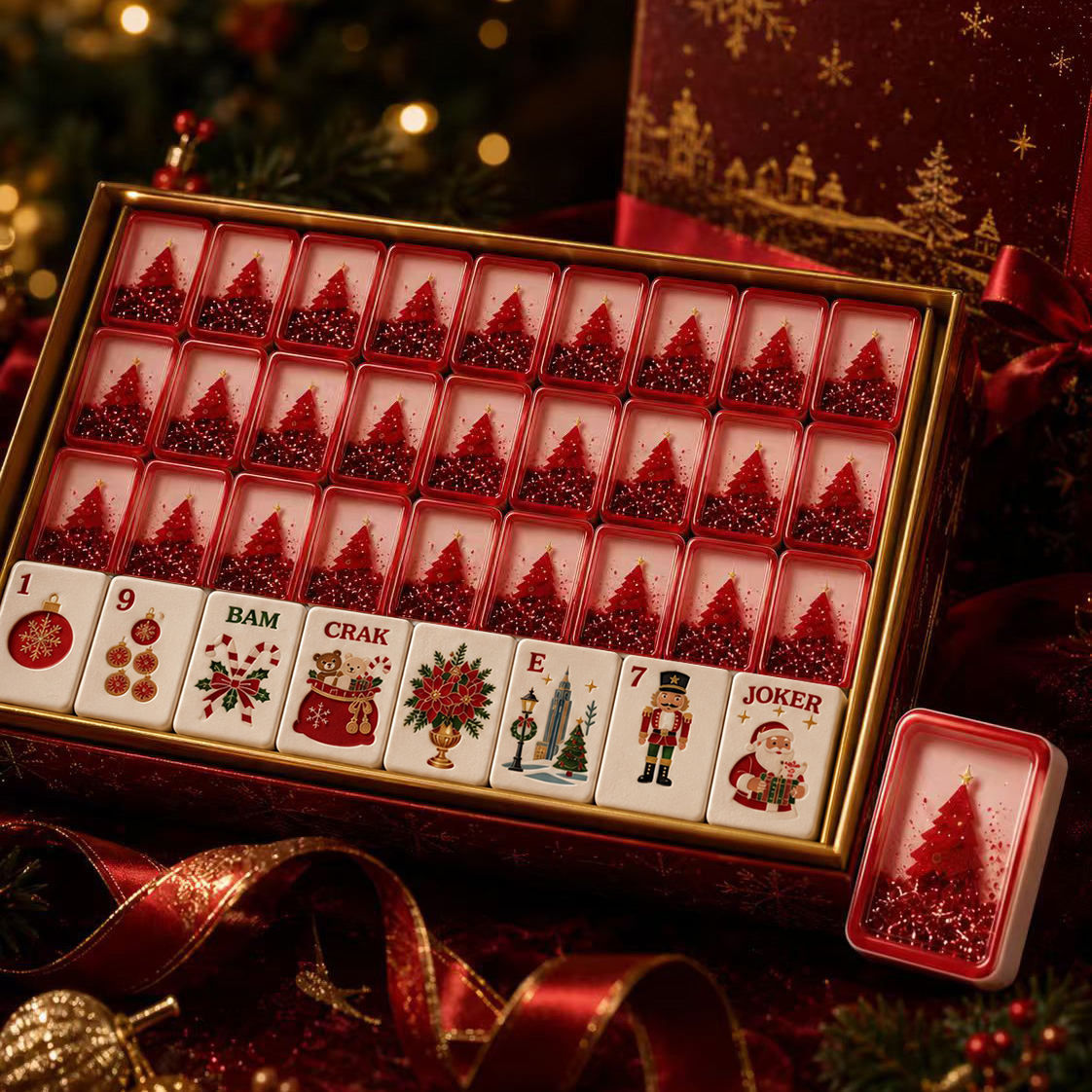
Three-player Chinese mahjong works by removing one wind (usually West) and its 4 tiles, leaving 144 playable tiles instead of 152. Each player draws 13 tiles (not 14) in the first turn; the dealer draws first. The discard wall shrinks proportionally, and winning hands follow standard Chinese rules (like Hong Kong style): melded or concealed sets of Pongs, Kongs, Chows, and a pair. Scoring adjusts so winners pay all opponents equally rather than splitting a four-way pot. The game runs faster because fewer tiles mean quicker exhaustion. Unlike American mahjong—which requires the current year's hand card and relies on exposed melds and jokers—Chinese variants prioritize concealment, and no jokers are used. We've hosted 3-player games using acrylic sets from our best-selling collection, though you'll need to track removed tiles carefully to avoid confusion mid-game.
How do you remove one player from Chinese mahjong?
Remove all four tiles of one wind suit—typically West—before the game starts. This leaves 144 tiles: three suits (108 Bams, Craks, Dots) plus 16 winds (N, E, S only, 4 each) plus 12 dragons plus 8 flowers. Deal positions rotate as normal, but only three people occupy the table. Mark the absent seat or remove the wind rack to avoid accidental mistakes during wall setup.

What changes in the draw order for three players?
The dealer sits in the East position and draws first from the wall, taking 13 tiles (not 14). Each player draws in turn—South, North, then back to East. After the Charleston equivalent (if played) or a second round of draws, players discard to form their melds. The shorter tile pool means the wall empties faster; the game often ends in fewer turns than a four-player round. If the wall exhausts before anyone wins, it's a draw.
How do you score three-player Chinese mahjong?
All opponents pay the winning player equally, typically the same point value per win. If the winner goes out on their own draw (a "self-drawn" or "zimo" win in most Chinese variants), all three pay double; if won on a discard, all three pay single. Unlike American mahjong—which has complex card-based scoring with doubles and limits—Chinese variants use base point values (often 2, 3, 4, or 8 points per hand type) multiplied by tile sets and wind/dragon bonuses. Keep a running tally; many groups use counters or chips rather than cash. Limit wins before play to avoid disputes about payout thresholds.
What hand types are valid with fewer tiles?
Standard Chinese hands work with 144 tiles: a pair (2 tiles) plus four melds of 3 tiles each (Pong, Kong, or Chow). A Pong is three identical tiles; a Chow is three consecutive numbers in one suit (like 3–4–5 Bams); a Kong is four identical tiles. All-Chows, all-Pongs, mixed colors, single colors, all-Honors (winds and dragons only), and terminal-and-honor hands remain legal if your house rules follow Hong Kong or Cantonese rules. No jokers complicate the count. Hands are either concealed (won on your own draw, hidden until winning) or partially exposed (if you declare a Pong or Kong during play). The three-player variant doesn't reduce hand variety; it just accelerates the endgame because the pool shrinks faster.
How does three-player Chinese mahjong compare to four-player and American games?
Aspect | 4-Player Chinese | 3-Player Chinese | American |
Tiles used | 144 | 144 | 152 |
Winds in play | All 4 (N/E/W/S) | 3 (N/E/S) | All 4 + blanks |
Jokers | None | None | 8 |
First draw | 14 tiles | 13 tiles | 13 tiles |
Melds | Concealed or exposed (Pongs/Kongs/Chows) | Same | Exposed only (Pungs/Kongs/Quints/Sextets) |
Hand source | House rules (no annual card) | Same | Current year's National Mah Jongg League card only |
Payout model | Often dealer wins extra or losers pay dealer | All pay winner equally | Winner takes all or split three ways |
Game speed | Moderate | Faster | Depends on hand difficulty |
Three-player Chinese mahjong sits between a four-player full game and American's strict hand requirements. It works best for casual or family play when a fourth player is absent; the reduced tile pool keeps rounds snappy. American mahjong, by contrast, demands the annual card and rigid exposed-meld rules, so it doesn't adapt to three players without house-rule chaos.

What mistakes slow down or break a three-player game?
Forgetting to remove the fourth wind. Many players start with all 144 tiles but accidentally include a West wind. Count tiles before the wall is built: you should have exactly 36 each of Bams, Craks, and Dots, plus 12 winds (4N, 4E, 4S), 12 dragons, and 8 flowers. Total = 144.
Miscounting the wall. With 144 tiles, the wall is one-third smaller. If you build a four-player wall by habit, you'll run short. Divide tiles evenly among three players' walls; each draws from a proportionally shorter stack.
Mixing up hand types or bonuses. Without a rules sheet visible, players forget whether all-Pongs beats mixed-color hands or what bonus dragons add. Write down your house rules (Hong Kong vs. Cantonese vs. your local variant) before the first game. Rules shift between regions.
Paying the wrong amount. If one player wins off a discard and another off their own draw in the same round, verify who owes whom. Three payers × two payment rates (single vs. double) creates confusion fast. Use chips or a scoring app to track tallies in real time.
We use acrylic sets from our collection for three-player sessions because the tiles are durable enough for long games and easy to spot on a smaller table without crowding.
🀄 Shop best-selling mahjong sets →
How do you set up a three-player Chinese mahjong table?
Remove West wind tiles (all 4) from your set. Confirm you have 144 tiles remaining.
Shuffle all 144 tiles face-down on the table. Mix thoroughly for at least 30 seconds.
Build a wall: Distribute the 144 tiles into three walls of 48 tiles each, stacked 2 high and 24 tiles long. (A four-player wall is 2 high × 18 tiles per side, so three-player walls are longer but use the full count.)
Assign seats: East (dealer), South, North. Mark the empty West seat to avoid confusion.
Dealer draws first: East draws 13 tiles. South and North each draw 13. Dealer draws one more, leaving 108 in the wall. First turn begins.
Play proceeds: Players draw, form melds, and discard in turn. The game ends when someone goes out (wins) or the wall empties.
For a smoother experience, use a mahjong mat designed for organized tile layout so your hand and melds stay clear and visible. A mat also protects your table and keeps tiles from sliding during the turn.
🎁 See our most-loved mahjong sets & accessories →
What tile set and accessories work best for three-player games?
We recommend a full 160-tile acrylic set; even though you'll only use 144 tiles, having spares prevents delays if a tile cracks or gets lost mid-game. Acrylic tiles are quieter than bone-and-bamboo, easier to clean, and last through hundreds of rounds. Look for sets with clear Bam, Crak, and Dot symbols so three players can identify tiles quickly without leaning in.
A compact mahjong mat sized for three players (narrower than a full four-seat version) keeps your hand and melds organized and prevents accidental tile shifts. Pair it with racks with pushers if you prefer a vertical hand display; three players can share a smaller table without racks crowding the space.
For travel or storage after games, a mahjong bag or case protects your tiles from dust and damage. Three-player sessions often happen at home or in casual settings, so portability and durability matter. Keep your rules card handy and a notepad for scoring.
✨ Find your Mahstead set — free US shipping →
What to check before you buy a set for three-player mahjong
Tile clarity: Can you distinguish Bam, Crak, Dot, winds, and dragons at a glance from three seats?
Material durability: Acrylic outlasts resin or plastic in repeated three-player rounds; check reviews or product descriptions.
Complete tile count: Confirm the set includes 144 base tiles (or 152 if you want spares). Never buy a 108-tile "travel" set for serious play.
Spare tiles included: A 160-tile set gives you 16 extra tiles. Confirm the product page lists what's included.
Accessories fit: If you add a mat or racks, ensure they fit your table and the three-seat layout.
Rules clarity: Check whether your chosen variant (Hong Kong, Cantonese, Taiwanese) is documented in the rules guide. Different regions score differently.

FAQ
Can American mahjong be played with three players?
Not easily. American mahjong requires the current year's hand card, which lists only four-player hands. Removing one wind breaks the card structure entirely. You'd need to write custom three-player hands or abandon the card system entirely—defeating the purpose of American mahjong. Chinese variants are designed for flexible player counts and adapt cleanly to three.
Do you need a different set of tiles for three-player Chinese mahjong?
No. A standard 144-tile Chinese set works as-is; simply don't use one wind suit (remove all 4 tiles). If your set is 152 tiles (American), remove one wind and any blanks or extra jokers, leaving exactly 144. A 160-tile acrylic set gives you spares, which is safer for long games.
How long does a three-player Chinese mahjong game last?
Typically 30 to 60 minutes per round. With fewer tiles and three payers, the wall empties faster than a four-player game. Casual groups often play three to five rounds in an evening. Speed depends on hand complexity and player experience.
What's the fastest way to teach three-player rules to beginners?
Start with a single practice round, designate East (dealer), and play through one full turn so players see how draws, discards, and melds work. Explain the three winds in play and confirm the pair + four melds hand structure. Skip advanced bonuses on the first game; add them once everyone is comfortable.
If three players are sitting, where does the fourth wind go?
It's removed entirely. The wall, meld types, and hand structure don't reference a fourth seat. Wind tiles are dealer rotations and bonus scoring (a Dragon wind matching the dealer's round adds points), not seat assignments. With three seats, only North, East, and South winds are active.
Do three-player Chinese hands need to be concealed to win?
Not always. Most Chinese variants allow both concealed wins (hand hidden, then revealed on winning draw) and semi-open wins (some melds exposed during play). Rules vary by region—Hong Kong style is stricter; Cantonese is more flexible. Agree on your rule set before the game starts.


View More
View More
View More
