
White Mahjong Case: How to Pick the Right Travel Bag for Your Set
Last updated: Nov 23, 2026
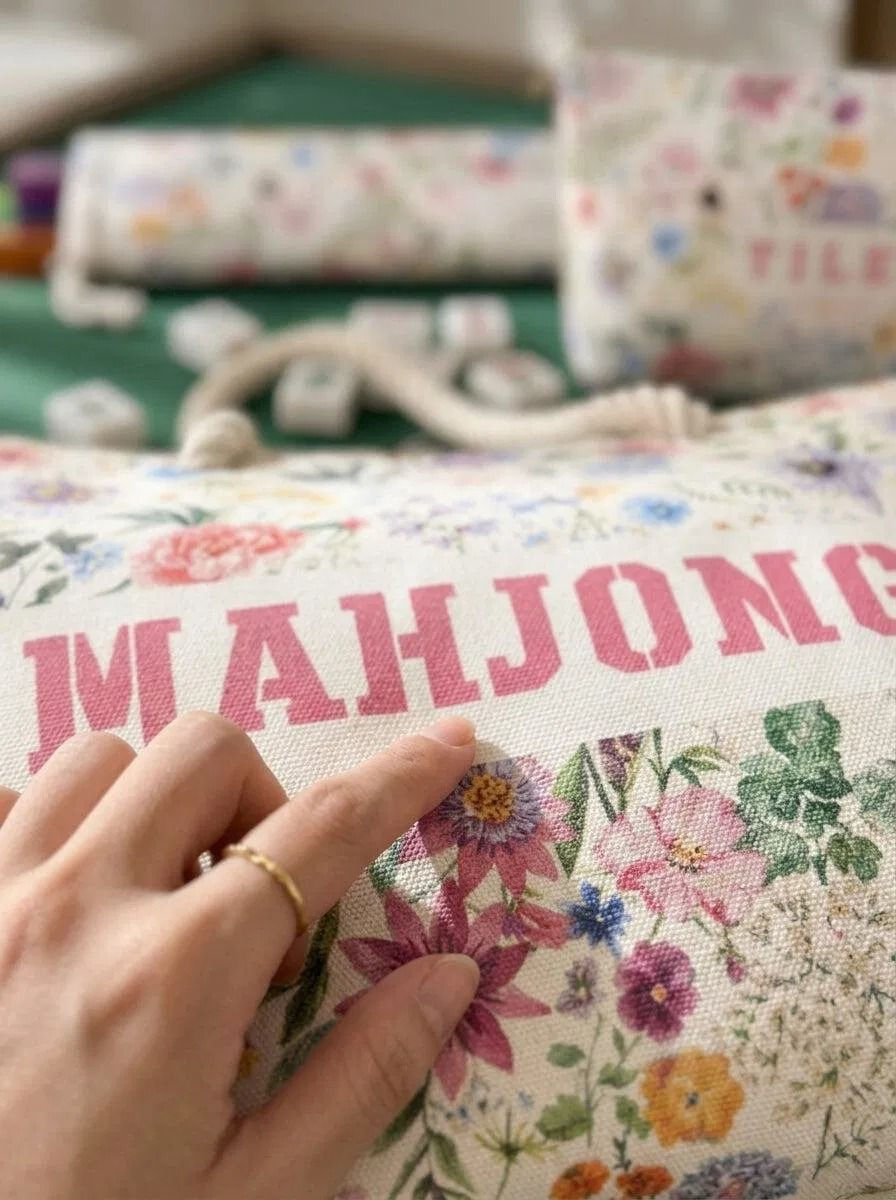
A white mahjong case is a protective carrier—hard-shell or padded fabric—sized to hold a 160-tile acrylic set (with or without a mat and racks). Most travel cases measure 12–18 inches across and weigh 2–5 pounds when empty. Cases come in three types: compact hard shells that fit tiles alone, padded soft bags that hold tiles plus a rolled mat, and large wheeled options for entire game kits. Mahstead offers cases in the travel bag collection in classic white and coordinating colors. Cost varies by capacity and material—see current price on the product page. Choose based on how you transport your set: weekly car trips to a friend's house, monthly airplane travel, or weekend tournaments. Hard shells protect best but take up closet space; soft bags compress and fit in car trunks. Avoid oversized cases that let tiles shift during movement—secure padding or a snug fit is what prevents chips and cracks. 🀄 Shop best-selling mahjong sets →
What size white case do you actually need?
Most American mahjong sets come in a box roughly 12 × 8 × 4 inches when stacked. A white case needs at least that footprint—ideally 13 × 9 × 5 inches—to slide tiles in without force. If you're also carrying a mat and two racks with pushers, you'll need a case at least 16 × 12 × 6 inches or a two-compartment design. Measure your set's box before ordering. Cases smaller than 12 inches across work only for tiles alone; anything larger becomes unwieldy in a car or luggage rack. The sweet spot for weekly players: 14 × 10 × 5 inches—holds everything except the mat, which rolls separately into a tote.

Hard shell vs. soft-sided white cases—which protects better?
Hard-shell white cases (ABS or polycarbonate) absorb impact and prevent crushing; soft-padded bags compress and mold around contents but rely on interior padding. Hard shells win if you fly, mail your set, or store it under heavy items on a shelf. Soft bags win if you carry your set into a car trunk weekly—they fit easier and won't split a car door frame. A middle ground: semi-rigid fabric cases with rigid corners and padded panels. These weigh less than hard shells, pack flatter, and still guard against moderate drops. Test the closure: zippers fail more than latches; double-zip designs add cost but prevent accidental opening mid-transport. For a set you carry every week, soft fabric outlasts hard plastic in hinges. For a set you store and travel with twice a year, hard shell pays off over time.
Can you fit a mat and racks in a white mahjong case?
Yes—if the case is designed for it. Standard mahjong mats roll to roughly 16 × 4 inches; racks with pushers stack 3–4 inches thick. A case claiming "full game storage" should measure at least 18 × 12 × 6 inches and have adjustable dividers. Many white cases designed for tiles alone cannot fit a rolled mat without compressing it, which creases the material. Check the interior dimension list before ordering—"fits set plus mat" is marketing; the actual depth matters. If your case is too small, a separate canvas tote for the mat and racks costs less than buying a larger case. Pro tip: roll your mat around your racks first, then nest everything in the case. This uses space efficiently and prevents the mat from unrolling during transport.
✨ Find your Mahstead set — free US shipping →
What makes a white case more durable than a generic box?
Mahstead cases are designed around mahjong-specific needs: padding on all sides (not just top/bottom), drainage grommets so moisture doesn't pool, and reinforced seams that flex with opening and closing. A cardboard shipping box deteriorates after 3–5 trips; a proper case lasts 10+ years. Durability factors to check: zipper quality (YKK zippers outperform generic hardware), interior fabric (nylon resists tile scratches; cotton absorbs moisture), and corner reinforcement (stitched or riveted beats glued). White cases show wear faster than dark colors—plan for cosmetic marks after a year of regular use. Avoid cases with thin plastic handles; after 50+ trips, handles crack or detach. Instead, look for reinforced carry straps sewn through the case wall. If you're buying a case for a set you'll pass down or lend out, invest in one with genuine hardware; the upfront cost saves replacement later.
Comparison: White case types and what they're built for
Case Type | Best For | Interior Size (typical) | Weight When Empty | Top Reason to Buy |
Compact hard shell | Tiles only, frequent flyer | 12 × 8 × 4 in. | 1.5–2 lb | Maximum impact protection |
Padded soft bag | Weekly car transport | 14 × 10 × 5 in. | 1–1.5 lb | Fits trunk easily, quiet |
Dual-compartment soft case | Tiles + rolled mat, no racks | 16 × 11 × 5 in. | 1.5–2 lb | Two separate secure zones |
Full-game hard case | Everything (tiles, mat, racks) | 18 × 12 × 6 in. | 3–4 lb | One-stop transport |
Rolling suitcase-style | Airport + taxi to venue | 20 × 14 × 8 in. | 3–5 lb | No hand fatigue on long trips |
Choose based on frequency (weekly = soft; monthly flights = hard shell) and contents (tiles only = compact; full kit = large or dual-compartment). Most home players never need wheels; they add cost and bulk for occasional use.

Common mistakes to avoid when choosing a white mahjong case
Oversizing. A case 20 inches across for a 12-inch set wastes space and lets tiles slide side-to-side during car stops, cracking them. Tiles shift against each other, not against the case. Choose the snuggest fit that doesn't force the lid.
Skipping the drainage check. White cases absorb light, but moisture doesn't discriminate. If there's no ventilation and you store the case in a humid garage or basement, acrylic tiles develop a sticky film or clouding inside a month. Grommets or mesh vents are worth the look.
Ignoring zipper access. A case you can only open from one side becomes frustrating after the third game night. Top-loading is easiest; side-access zippers are harder to manage while holding tiles. Test the opening angle before ordering.
Buying for the "maybe someday" scenario. A case that "fits everything including extra tiles and spare racks" becomes your default—it sits on the shelf larger than you need, and you carry it to every game. Buy for what you do now, not for hypothetical extras.
What to check before you buy a white mahjong case
Interior measurements in inches (not vague descriptions like "spacious")
Zipper brand (YKK or similar established manufacturer)
Padding thickness in the base and sides (at least ½ inch)
Drainage or ventilation (grommets or mesh, not sealed)
Handle reinforcement (stitched straps, not glued-on plastic)
Return or exchange policy if the case doesn't fit your set's box
Weight when empty (under 2 lb for weekly carry; 3–4 lb is acceptable for full-kit cases)
Check product photos for close-ups of seams and hardware. A case that looks polished but has thin zippers or glued corners will disappoint after your first trip. Mahstead's travel bag collection includes detailed interior photos and dimension specs for each option—compare before checkout.
Why white cases pair well with protective storage at home
A white case is for active transport; long-term storage needs different thinking. Keep your case in a cool, dry closet away from radiators and windows. If you store multiple sets, a wall-mounted rack or a dedicated shelf prevents cases from stacking and compressing zippers. For players who host weekly games, consider a best-selling mahjong set with matching acrylic that resists discoloration—paired with a white case, it stays guest-ready without fading. Avoid storing cases in basements or attics; temperature swings warp plastic hinges. A guest room closet or under-bed storage on an upper floor is ideal. If you own custom-engraved sets, a case that matches the engraved design (white with coordinating trim, for instance) makes unpacking at a tournament feel special—and keeps your set identifiable in a lineup of similar boxes.
🎁 See our most-loved mahjong sets & accessories →
Real-world scenarios: which white case fits your life?
You play weekly at a friend's house (same venue). A soft-padded bag, 14 × 10 × 5 inches, fits your tiles and one rolled mat. You'll carry it in and out of a car trunk 100+ times a year. Soft material won't crack the case or dent your car door. Budget: mid-range.
You fly to a mahjong tournament twice a year. A hard-shell case protects against baggage handlers and stacking. Interior 13 × 9 × 5 inches holds your tiles and a light mesh pouch of jokers/spare tiles. The case goes in checked luggage; the mat travels in your carry-on tote. Budget: mid-to-high.
You host games in your home; you don't transport often. A large dual-compartment or rolling case isn't essential. A compact soft case for tiles plus a separate canvas tote for mats and racks keeps everything organized in your closet. Budget: low-to-mid.
You're new to mahjong and borrowing a friend's set. Protect their investment with a semi-rigid fabric case, 14 × 10 × 5 inches. It's affordable, fits in a car, and shows respect for borrowed equipment. Budget: low-to-mid.
The bottom line: invest in fit, not just looks
A white mahjong case is a one-time purchase that lasts years if you match it to your actual routine. The case isn't the set itself—it's insurance against damage and a signal that you treat the game as something worth protecting. Don't buy the largest case available or the cheapest option. Measure your set's box, count how many times a month you transport it, and choose accordingly. A case that sits unused or that causes you to leave your set at home defeats the purpose. Browse Mahstead's travel bag options with your set's dimensions on hand, and order the one that matches your life, not the marketing copy. Free US shipping means no rush to buy the first thing you see—take time to compare the comparison table above and the actual interior specs.
✨ Find your Mahstead set — free US shipping →

FAQ
Can I fit a 160-tile set and a full mat in a white case together?
Only if the case is at least 18 × 12 × 6 inches with adjustable dividers. Most compact cases hold tiles alone; mats roll separately. Check interior dimensions, not just case size label.
Will a white case show dirt and stains easily?
Yes. White cases develop scuffs and marks after 10–15 trips. If you travel heavily, a mid-tone color (cream, soft gray) hides wear better while still looking clean and professional at tournaments.
What's the difference between a mahjong case and a small hard suitcase?
A true mahjong case has interior padding or foam designed for tiles and includes ventilation grommets. A generic suitcase lacks padding and may trap moisture. Specialized cases cost slightly more but prevent tile damage over time.
Do I need a case if I always play at home?
Not essential, but useful for long-term storage and occasional transport. A case protects tiles from dust, pets, and accidental spills. Cardboard boxes deteriorate; a case lasts indefinitely.
Can I store a mat inside the case with the tiles?
Only if there's space without compression. A rolled mat 16 × 4 inches needs a case at least 6 inches deep to sit flat alongside a tile box. Compressing a mat creases it permanently. When in doubt, store the mat separately.
How do I know if a case's zipper will hold up for years?
Look for YKK or comparable brand markings on the slider. Test the zipper smoothness in photos or videos if ordering online. Cheap zippers jam or split after 20–30 uses; quality zippers last 100+ open-close cycles.


View More
View More
View More
