
Mahjong Tile Thickness Guide: Standard Sizes & What Works Best
Last updated: Nov 23, 2026
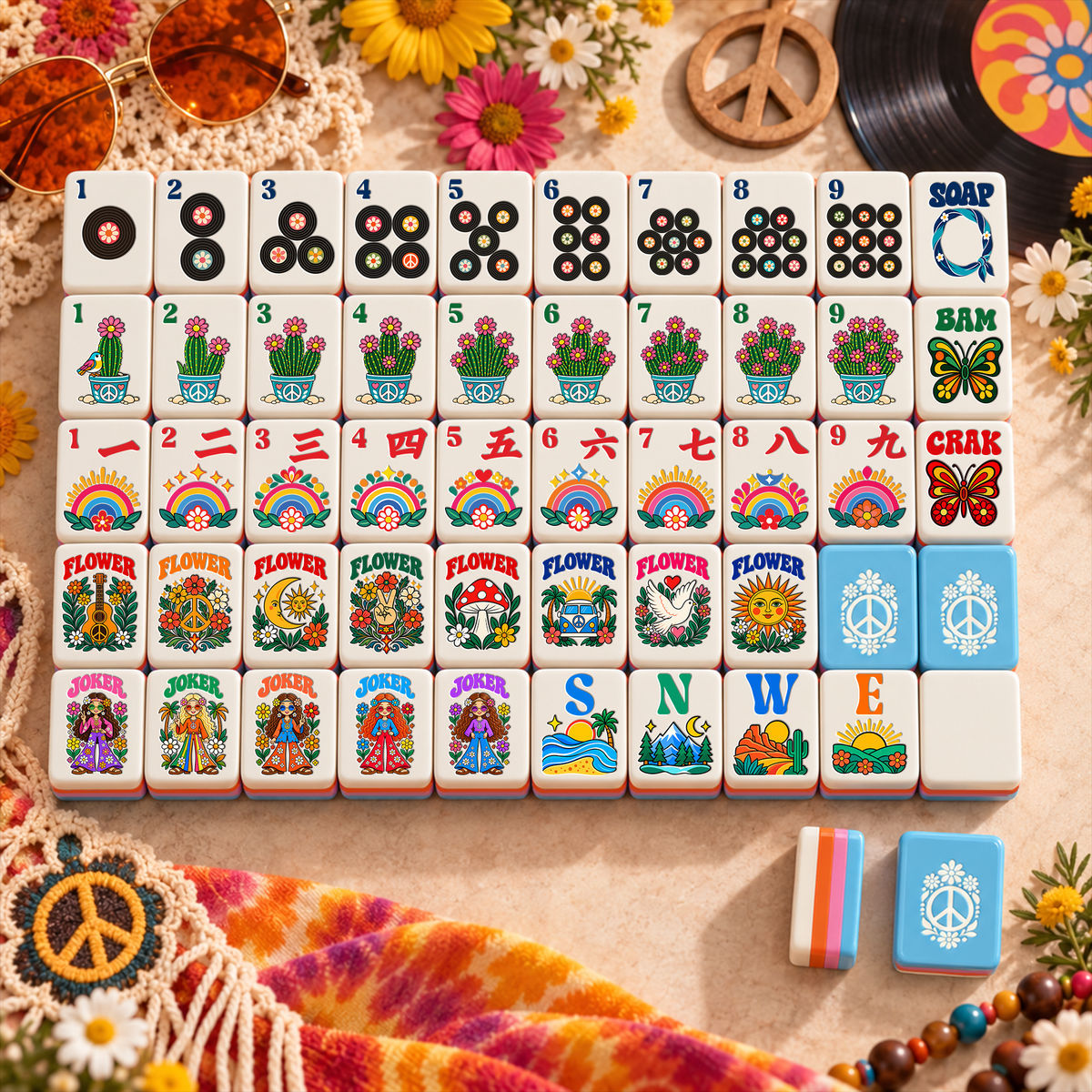
American mahjong tiles typically measure 1.0 to 1.3 inches thick, depending on material and craftsmanship. Thinner tiles (around 1.0 inch) suit travel and casual play; thicker tiles (1.2–1.3 inches) feel more substantial in hand and resist warping. Acrylic tiles—the standard for serious American games—remain consistent across years because the material doesn't swell or shrink. Thickness matters most when you shuffle, expose a pung, or hold a full hand for ten minutes; too thin and tiles feel flimsy, too thick and they tire your wrist. Our engraved American mahjong sets are precision-cut acrylic at a comfort thickness chosen by players who host weekly games. Avoid plastic tourist sets under 0.8 inches—they warp, chip easily, and frustrate serious players.
What does tile thickness actually change during play?
Thickness changes how tiles feel in your hand, shuffle, and stack. A thicker tile (1.2+ inches) resists bending when you press it into a rack or grab eight tiles for your opening hand. Thinner tiles feel lighter but can flex if squeezed, especially after months of weekly games. Stack stability matters too—a tall wall of thin tiles can topple if the table shakes; thicker tiles stand firm. Most casual players don't notice the difference in a single game, but after ten years of hosting, we notice: thicker tiles survive chip shots, accidental drops, and the pressure of racks with pushers without cracking at the edges.

How does material affect the right thickness?
Acrylic is denser than resin or plastic, so acrylic tiles at 1.1 inches feel heavier than plastic at the same thickness. Bamboo-and-bone tiles (traditional in China) run thicker—often 1.4 inches or more—because bone is softer and requires extra thickness for strength. Resin tiles can be thin without feeling cheap, but they yellow over time and absorb humidity. Plastic tiles warp, especially near radiators or in humid basements. Acrylic holds its shape year after year, which is why most American players prefer it: you pay once and your tiles play the same in 2026 as they did in 2020.
Material | Typical Thickness | Best For | Durability | Feel |
Acrylic | 1.0–1.3 inches | Weekly home games, competition | 10+ years without warping | Smooth, slightly cool |
Resin | 0.9–1.2 inches | Casual or travel | 5–7 years, yellows over time | Warm, can feel sticky |
Plastic | 0.7–1.0 inches | Beginners, gifts | 2–4 years, warps easily | Light, hollow-sounding |
Bamboo-bone | 1.4–1.6 inches | Collectors, traditional play | 20+ years | Heavy, warm, ornate |
Should I choose thin tiles for travel or thick for home?
Travel sets prioritize weight and space; thick tiles are impractical in a small bag. If you host weekly games at home and take your set to a friend's house once a year, buy thick (1.2 inches) for comfort during play and accept that transport takes two hands. If you travel monthly, choose a moderate thickness (1.0 inch) and pair it with a padded mahjong travel bag to absorb shocks. Never sacrifice thickness below 0.9 inches just to save weight—tiles that thin crack when you shuffle hard or drop the rack. Our players who rotate between two homes keep one set at each location rather than compromise on thickness.
How thick should tiles be to work with racks and pushers?
Racks with pushers grip tiles along the bottom edge, so thickness must be consistent. If your tiles vary by 0.1 inch (a sign of cheap molding), pushers jam or skip tiles. Standard racks with pushers grip tiles from 1.0 to 1.3 inches; anything outside that range requires custom racks or manual play. Thicker tiles (1.2+ inches) sit more securely in pushers because there's more surface area; thinner tiles can rattle if the rack is loose. When shopping for a set, ask whether it's compatible with standard racks before assuming. Most premium acrylic sets are designed for rack play and come in the 1.0–1.3 range.

What thickness do competitive leagues and clubs require?
The National Mah Jongg League does not mandate a specific thickness, but tournament organizers prefer consistency within a game—all four players' tiles should be the same thickness and color saturation so no one has an advantage spotting or shuffling. Most clubs use acrylic at 1.1 to 1.2 inches because that range balances comfort for a four-hour session with durability. Beginners often ask whether they need league-approved tiles to learn; you don't. You can learn on any thickness, but once you join a regular group, matching the house tiles avoids confusion. Visit local community centers, libraries, or Jewish organizations to ask what thickness the games use before buying.
🀄 Shop best-selling mahjong sets →
Real-world examples: when thickness matters most
Scenario 1: You host eight players on alternate Saturdays. Choose thick tiles (1.2+ inches). Players hold hands for 20+ minutes; thinner tiles fatigue the fingers. Two sets let you swap if one wears out. Pair with mahjong racks with pushers for faster play and fewer shuffles.
Scenario 2: You're learning American mahjong for the first time. Start with moderate thickness (1.0–1.1 inches) in our best-selling collection. A beginner won't notice the difference; you'll focus on how to play and reading the card. Upgrade to thicker tiles after your first season if you want more durability.
Scenario 3: You travel with your set every month. Buy acrylic at 1.0 inch (the lower end of premium thickness) and invest in a padded bag. The 1.0-inch thickness still feels good during play, resists warping, and fits easily into carry luggage without sacrificing durability for a full year of monthly transport.
Scenario 4: You're gifting a set to someone who already plays. Ask their group what thickness they use. A gift set that doesn't match their regular tiles sits unused. If you don't know, choose 1.1 inches—the middle ground—and include a note that they can swap it for a different thickness.
What to check before you buy
Confirm thickness in the product description. Reputable makers list this; tourist sites often don't.
Test with a friend's set if possible. Thickness is personal; your wrist may prefer 1.2, your friend's may like 1.0.
Verify compatibility with racks. If you own pushers, check that your new tiles grip securely.
Match your play frequency. Weekly games justify thicker, costlier tiles; monthly casual play works fine with moderate thickness.
Check the material. Acrylic > resin > plastic for long-term use. Bamboo-bone is beautiful but overkill unless you collect.
Ask the maker about edge finish. Rough edges chip; smooth beveled edges last longer.
🎁 See our most-loved mahjong sets & accessories →
Choosing tile thickness is about matching the material, your hand size, and your game frequency. Most players hosting weekly American games thrive with acrylic tiles at 1.1 to 1.2 inches. If you're unsure, start with engraved American mahjong sets in the standard thickness—precision-cut acrylic designed by players for weekly home sessions. Over time, you'll know whether you prefer a touch thinner or thicker based on feel and fatigue.

FAQ
What's the thinnest tile thickness I can use without risk of warping?
Acrylic at 1.0 inch is the practical minimum for serious play; below that, resin and plastic warp. Tourist-grade tiles under 0.8 inches flex after a few months. Stick with 1.0+ in acrylic if durability matters.
Do thicker tiles slow down shuffling?
Slightly. Thick tiles (1.3 inches) require a bit more wrist effort during the wall shuffle than thin tiles (1.0 inch). Most players adjust instantly and don't notice after one game. The trade-off—durability—is worth it for weekly play.
Can I mix tiles of different thicknesses in one game?
No. If two players use 1.0-inch tiles and two use 1.2-inch, the wall stacks unevenly, racks jam, and play feels clumsy. All four sets in a game must be the same thickness.
How do I measure my tiles to know their thickness?
Use a caliper or ruler placed flat against the side of a tile. Most tiles are roughly uniform; if they vary by more than 0.05 inches, the set is poor quality and will jam in racks.
Should I buy thick tiles if I only play once a month?
Not required. Casual players do fine with moderate thickness (1.0–1.1 inches). Reserve thick tiles (1.2+ inches) for groups that play weekly or near-weekly, where comfort and durability matter more.
What thickness do Chinese mahjong tiles use?
Traditional Chinese bamboo-and-bone tiles run 1.4–1.6 inches because bone is softer than acrylic. Modern plastic Chinese sets are thinner (0.9–1.1 inches). American mahjong is different—we use 152 tiles with all four copies of each number, so thickness standards aren't shared with other variants. ✨ Find your Mahstead set — free US shipping →


View More
View More
View More
