
Three Player Mahjong Tips: Rules, Setup & Strategy
Last updated: Nov 23, 2026
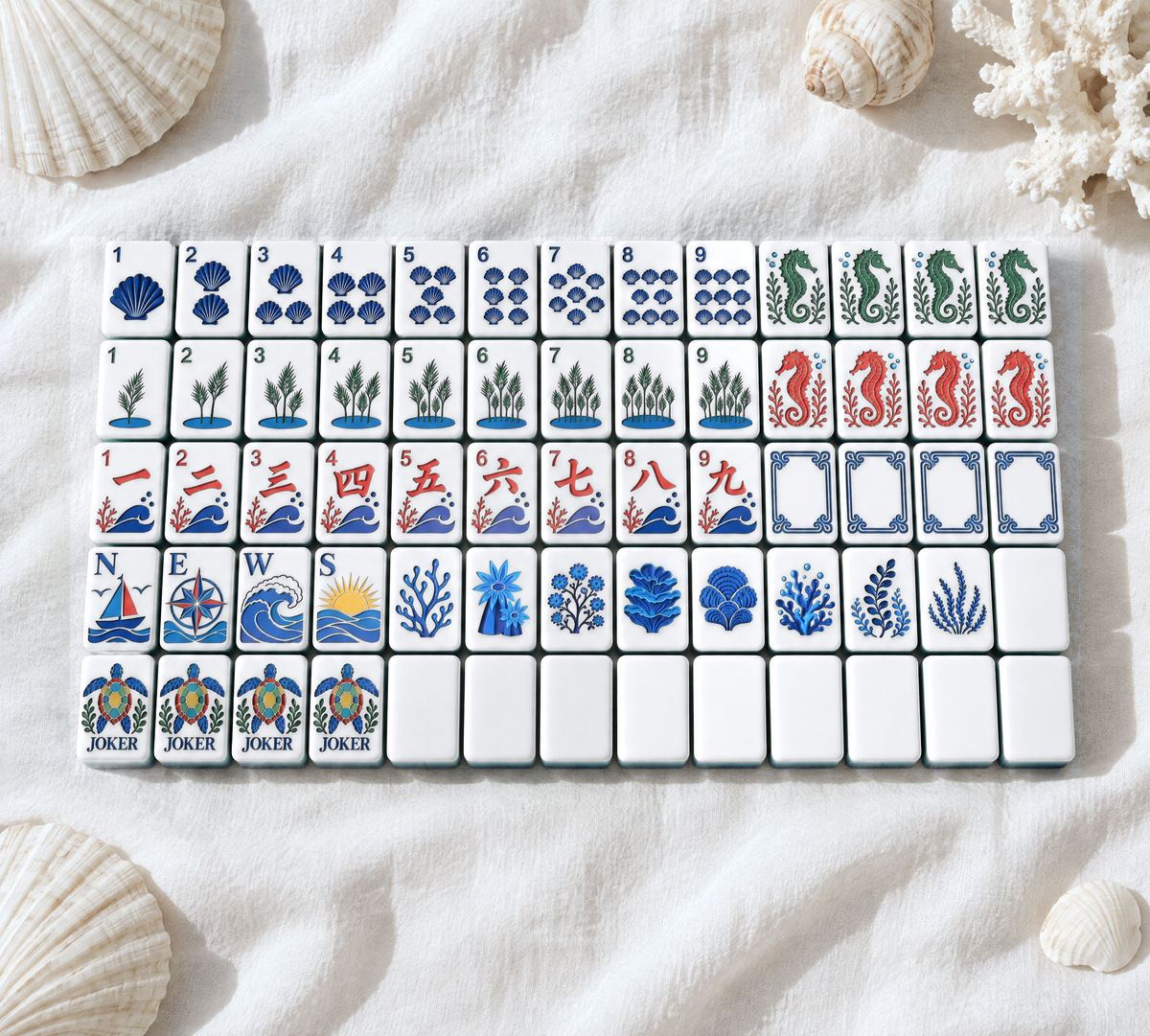
Three-player mahjong is played with one fewer hand (East, South, West; North is skipped or rotated). The wall remains 152 tiles plus 8 jokers, but is divided among three players instead of four, so each takes a longer segment: typically 15 tiles per player (45 total) instead of 18. The Charleston (pre-game tile-passing ritual) happens only between the three active seats. Hands come from the current National Mah Jongg League card, just as in four-player; jokers and rules around pungs, kongs, and sequences remain identical. Play is faster, each player holds more tiles initially, and the dealer position rotates East → South → West → East. No special equipment is needed beyond a best-selling American mahjong set, but a mat designed for three players eliminates confusion about wall placement.
Three-player mahjong is a natural adaptation when a fourth seat empties or you prefer a tighter, faster game. The core rules—exposing pungs and kongs, reading the card, using jokers—stay the same. But the wall math, draw rhythm, and hand difficulty shift noticeably. We've hosted three-player nights for years, and the shift surprises newcomers most: you'll find yourself holding 13–15 tiles before your first discard, which changes which patterns you spot early and how aggressively you can throw early tile.
For the complete rules—including how to handle the wall when a player goes out early—see our guide to 2 and 3 player mahjong rules.
How do you divide the wall for three players?
The wall starts as a single unit: 152 tiles arranged in two stacks of 76 facing the center. With three players (say East, South, West), divide it into thirds: East breaks the wall as usual and draws 15 tiles (five stacks of three). South then draws 15, then West draws 15. The remaining 107 tiles stay as the live wall, stacked and set aside. This feels awkward at first—the wall is lopsided—but it balances the initial hand size fairly and keeps the game's luck component honest.
🀄 Shop best-selling mahjong sets →

What changes in the Charleston for three players?
The Charleston (the three-round tile-passing exchange before play begins) shrinks to involve three hands, not four. East passes three tiles to South; South passes three to West; West passes three to East. Then the process reverses (South → East, West → South, East → West), and finally each player may pass any three tiles to either neighbor (called the "optional pass"). No tiles go directly across—only East–South–West flow and back. This takes roughly two minutes instead of four, but the strategic thinking—which suits to thin, which to load—remains crucial. Many newer players skip the optional pass entirely to speed up the game, which is fair for casual play but costs you a crucial hand-balancing chance.
Why do three-player hands feel harder to build?
You're holding more tiles (13 or 14 before your first turn), but fewer complete hands exist on the card because nine of the card's patterns assume four players. Hands that require four Bams or four Dragons are no less valid, but the pool of viable patterns actually shrinks slightly when players are fewer and tile circulation is tighter. Additionally, because each player has drawn 15 tiles upfront, you hold a higher proportion of the 152-tile deck, which sounds good but means fewer surprises are buried in the wall—other players can often guess what's left. Strategy shifts: build your hand narrowly (commit to one or two patterns early) rather than stay flexible. Many of us keep a second copy of the card handy in three-player games, because scanning a 144-hand card while holding 14 tiles is cognitively heavier than in four-player, where you hold 13 tiles and have more time waiting for your turn.
🎁 See our most-loved mahjong sets & accessories →
What's the play order and how fast does it move?
East discards first (as in four-player). South then goes (shorter wait than if North were present). West follows. Then East again. The cycle is tighter—three players discard, then immediately East discards again—so the game picks up pace noticeably. With faster, more frequent turns, dead time at the table vanishes; players who dawdle on their play choice become obvious quickly. Scoring is called after each hand, and the dealer (East) remains East if they won, or play rotates to South if East did not. Over a full session, the role rotates more often, so every player gets an equal chance at favorable dealer position.
Aspect | Four-Player | Three-Player | Why It Matters |
Initial tiles per player | 13 | 15 | Larger hand = faster pattern recognition, but also fewer surprises in the wall. |
Wall segments drawn | 18 tiles per player | 15 tiles per player | Smaller starting wall, faster "burn" through the live wall. |
Turn cycle | E, S, W, N, E... | E, S, W, E... | No fourth player means no pause—game feels snappier. |
Hands valid on card | All 144 (roughly) | All 144 (some weaker fit) | Some hands are harder to build with fewer players. |
Dealer advantage rotation | One per four hands | One per three hands | Dealer gets more turns in three-player; edges your chances if you're East. |

How do you handle jokers and reading the card in three-player mode?
Jokers behave identically: eight per game, never in a pair or single, always in a pung (3), kong (4), quint (5), or sextet (6) of identical tiles. The card itself—the National Mah Jongg League's current-year list—remains the only valid source for hands; you cannot improvise or use "house rules." What does change is your willingness to use jokers early. In four-player, burning a joker on your first or second turn is risky because the wall is deep and you may find the real tile later. In three-player, with the wall shallower and the game faster, joker use accelerates: many of us deploy them sooner because the game will be over in 12–15 rounds regardless. This is a subtle, hard-to-spot strategy shift—newcomers often hoard jokers and then find themselves one tile short with no time left. Learn to read the card's sections (number patterns, honor combinations, like sequences, mixed suits) the same way you would in four-player; the card doesn't change. But accept that certain patterns are harder to complete in three-player because you have less wall traffic to draw from. This isn't a rule; it's a pacing fact.
What common mistakes do three-player newcomers make?
The biggest mistake: holding tiles too long without committing to a hand. In four-player, you can stay flexible for 8–10 rounds because the game is slower and you'll have time to pivot. In three-player, you get maybe 6–8 rounds before the wall starts running thin and you're forced to win or go down incomplete. New players waste this window throwing wild discards, then panic and discard dangerous tiles late, or worse, they never converge on a single pattern and end the game holding 14 incomplete tiles.
The second mistake: misreading how much wall is left. Because the wall is divided into thirds and the live wall is smaller, the game's endgame arrives faster. You think there are "plenty of tiles left," but three rounds later the wall is gone and someone goes out. We track the live wall tile count (on our fingers, mentally) and adjust urgency accordingly: once fewer than 20 tiles remain in the live wall, discard or pung more conservatively. Beginners often don't realize the wall is nearly exhausted until it's too late.
The third: not committing the card to memory for three-player patterns. In four-player, you can glance at the card every turn. In three-player, with faster play and larger hands, you need to know immediately which patterns you can make with your tiles. Spend 30 seconds pre-game flipping through the card and mental-note the patterns that fit your tile distribution. This small habit saves minutes of fumbling later.
✨ Find your Mahstead set — free US shipping →
What to check before you buy a set for three-player games.
If you're buying your first set, 152-tile American mahjong sets work equally well for three-player and four-player. The tile count never changes. What does matter for three-player hosting:
Tile quality and readability. Larger, clearer suit symbols (Bams, Craks, Dots) matter more when you're scanning 14 tiles at once. Acrylic sets with embossed or painted markings hold up better under repeated games than paper or cheap plastic.
Mat size. A standard four-player mat can feel crowded with three players and large hands. Mahjong mats are sized the same regardless of player count, so don't worry here—but if you want comfort, a 36″ mat is the practical minimum.
Rack or hand holder.Racks with pushers keep 15 tiles organized and visible, which is harder to do with a hand-hold. Highly recommended for three-player.
Speed and durability. Three-player games move faster, so tiles wear from shuffling more frequently. Acrylic sets tolerate this far better than wood or paper-tile sets.

FAQ
Can you play three-player mahjong with a standard four-player set?
Yes. Any 152-tile American mahjong set works. You simply leave one seat empty or skip the North position in rotation. The wall divides into thirds (15 tiles per player) instead of quarters, but the tile count and rules remain unchanged.
How long does a three-player game take?
Usually 12–18 rounds total, so 45–90 minutes including shuffling, Charleston, and scoring. Four-player games often run 15–20 rounds, so three-player is modestly faster overall—not dramatically different in wall depth, but the tighter turn cycle creates the impression of speed.
Should I use a different mahjong card for three-player?
No. The National Mah Jongg League card is the only valid source and applies to all player counts. Every hand on the card is theoretically playable in three-player, though some patterns are harder to complete due to wall depletion and reduced tile flow.
Why does the three-player game feel different strategically?
You're holding more tiles (15 vs. 13), the wall is shallower, and the turn cycle is faster. This forces earlier commitment to a hand pattern, faster joker use, and more aggressive tile-discarding strategy. The skill floor shifts slightly upward.
Can I host three-player and four-player games at the same table with one set?
Yes, as long as you're not playing simultaneously. Shuffle the entire set and deal normally for each game type. No modifications needed. If you host mixed games frequently, a mahjong bag keeps everything organized and portable.
What if someone goes out early in three-player—do I stop the game?
Yes, immediately. A winning hand ends the game for all three players, as in four-player. Scoring is calculated per the National Mah Jongg League rulebook, based on the winning hand's pattern and whether it was drawn or discarded. See the American mahjong scoring guide for details.


View More
View More
View More
