
Mahjong Tile Counting Mistakes to Avoid
Last updated: Nov 23, 2026
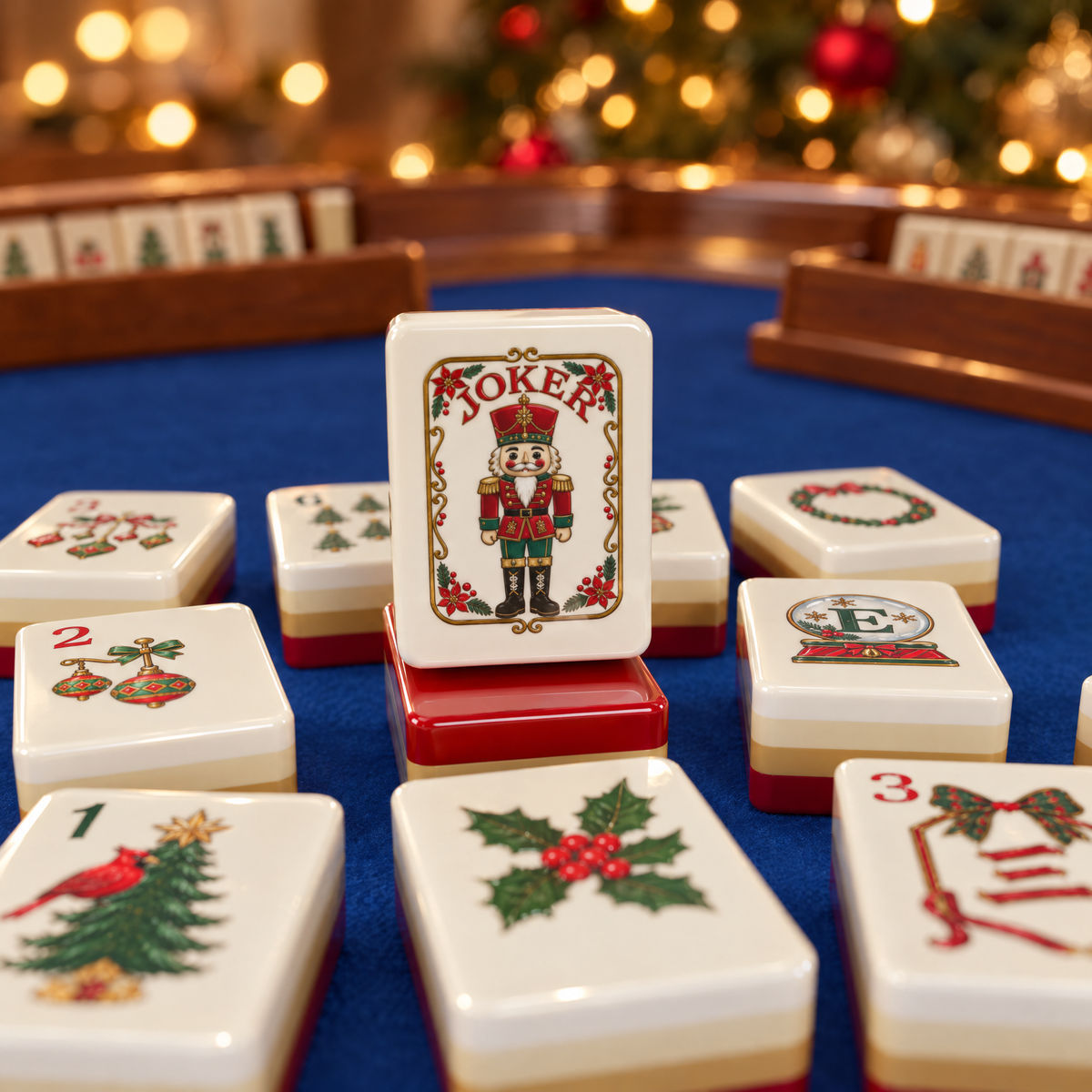
Tile-counting mistakes happen when you lose track of how many tiles you've drawn, forget jokers are in play, confuse the spare tile rules, or miscount exposed melds against your hand. American mahjong uses exactly 152 playing tiles plus 8 jokers; most counting errors occur during the Charleston (tile-passing phase), while picking the live wall, or when someone claims a meld. The fix: before you pick from the wall, count your hand aloud to a neighbor; tally exposed melds on the table; verify the live wall sits exactly 14 tiles away from the break; and confirm no spare tiles enter play. Mahstead sets include all 160 tiles (152 playing + spares), so you have extras to verify your count without disrupting the game.
Counting tiles correctly in American mahjong is harder than most beginners expect. You're managing 14 tiles in hand, watching three opponents' melds, tracking the live wall, and reading the discard pile—all while staying aware that the game contains exactly 152 tiles (plus 8 jokers). One slip—calling a meld from a tile that's already been played, or picking a 15th tile when the hand is complete—collapses your entire play.
We've hosted weekly games for years, and we see the same six counting errors week after week. Most are easy to fix once you know what to watch for.
How many tiles should you hold at game start?
You hold exactly 13 tiles after the Charleston; the 14th tile comes from the wall when your turn begins. If you're counting 15 before anyone picks, you've picked too early or miscounted the Charleston. Count aloud—point at each tile as you say the number. If a neighbor confirms your count, you stay in sync with the table.

What happens when someone forgets how many jokers are left?
You start with 8 jokers in the wall. Once a joker is exposed (placed on the table as part of a meld), it's gone from the hidden wall. If three jokers are showing in exposed pungs or kongs, only five remain in the wall. Forgetting this leads players to assume a joker is still available for a discard or to complete a late-game meld—then they panic when they can't find it. Always glance at the table and count exposed jokers before you commit to a hand strategy.
How do spare tiles cause counting chaos?
What's in an American mahjong set explains that 160-tile sets contain 152 playing tiles plus spares (extra jokers and blanks). Never add spare tiles to the game. We keep spares in the box or set them in a separate pile at the table. Some players accidentally grab a spare while picking from the wall—then later realize they have 15 tiles in hand. If you've bought a set from us, mark the spare tiles clearly (we've heard stories of players setting them apart with a small notepad on top) or keep them in the original bag until after play ends.
What's the fastest way to verify the live wall is legal?
The live wall holds tiles that haven't been picked yet. Before anyone draws from it, count 14 tiles forward from the break tile. If the wall holds 14 tiles per player and you've had one turn each (say, East picked 14 tiles), the wall should sit about 56 tiles forward from East's original break. A quick rule: after each player has taken a full turn (four picks of one tile each, or one pick of four tiles), exactly 16 tiles should be gone from the wall. Count the discards—they match. Wall count wrong? Stop and recount before the next draw.
Can you fix a hand after picking from the wall?
Not really, but you can catch the error before laying it down. After you draw your 14th tile, count your hand immediately. If you have 15, announce it to the table: "I picked wrong—I have an extra tile." You can't undo the pick, but you can discard before checking the mahjong card, and the table resets. If you count 14, show your hand to a neighbor for a quick double-check—this takes 10 seconds and catches mismatches before someone calls a meld that wasn't actually won. Many hosts we know keep a small notepad at the table and jot down each player's hand count after the Charleston; this sounds fussy, but it cuts errors by half.
Counting Step | What to Check | Who Verifies | Timing |
After Charleston | 13 tiles in hand | Left neighbor | Before first turn |
Before picking from wall | Live wall = 14 tiles per player (56 total, four players) | Right neighbor or dealer | Before East's first draw |
After picking your tile | You now hold 14 tiles | You (then neighbor if needed) | Immediately after draw |
Before calling mahjong | You have exactly 14 tiles in a legal hand | Neighbor + second neighbor | Before laying tiles down |
How does the card reading go wrong during counting?
The mahjong card shows legal hands as visual patterns (Pung, Kong, Quint, etc.) and suit/number combos. A common error: you read a hand as "three Bams, three Dots, three Craks, three Honor" and count only 12 tiles, then call mahjong with 14. The card row shows five groups, not four—you missed a quint or a second pung. Always read the entire row left to right and count the total number of groups; multiply: each group has at least three tiles. Before you lay your hand down, tally the groups on your tiles and match the card. If the count is off by one tile, stop and re-read—never assume the card is wrong.

What about joker miscount during kongs?
A kong (4 identical tiles) can include jokers in American mahjong, but a joker cannot be a pair (only appears in groups of 3 or more). If you expose a kong of "three 5 Dots and one joker," you've used one of your eight jokers. Later, if you assume nine jokers are still in play, you'll hunt for a joker that doesn't exist. Count exposed jokers each time someone kongs: 1 joker used → 7 left; 2 jokers used → 6 left. This sounds repetitive, but it stops the late-game panic when a joker you thought was there isn't.
🀄 Shop best-selling mahjong sets →
How to set up a table so counting stays easy
Start with a clean mahjong mat so every player has a defined space. Place exposed melds in a visible row in front of each player—not scattered. Use racks with pushers so you can slide tiles as you pick them; sliders help you count by touch (14 tiles = four rows of three plus two). Keep the discard pile in a grid (three by four, or a line) so everyone can count how many tiles have been played. Ask players to call out their hand count after picking. Slow? Yes. Error-free? Almost always.
Step-by-step count-before-you-call checklist
Draw your 14th tile.
Count aloud: "14."
Neighbor confirms with a nod.
Read the mahjong card and find your hand pattern (e.g., "two Pung, two Kong, one Pair").
Point to each group on your tiles and match the card row.
Recount: groups × tiles per group = 14?
Check that no joker is alone (jokers only in groups of 3+).
Verify no pair contains a joker.
Lay down the tiles.
Announce "Mahjong."
If any step fails, stop and recount instead of calling.
What if the whole table is unsure about the count?
Call a recount. Have each player count their hand aloud; write it down. Count the dead wall (14 tiles). Count the live wall (should be 14 × remaining players). Count exposed melds (add them up). Total should equal 152. If you're short a tile, stop the hand—someone misplayed or a spare got mixed in. If you're over, a spare tile is hiding in someone's hand or the wall. Better to halt for five minutes than to finish a hand that was illegal from the start.
🎁 See our most-loved mahjong sets & accessories →
What to check before you buy a mahjong set for regular play
Before ordering a set for your group, confirm you're getting a full 160-tile set (152 playing tiles + spares). Check the tile material—acrylic and bone both work, but acrylic is easier to count because tiles slide smoothly. Read the description to see if engraved designs match your group's style. For serious weekly hosting, buy a mat and a rack set too; the extra 10-15 dollars buys you four fewer counting errors per session. Keep the spare tiles in the original bag, labeled; don't leave them loose in the box. If you're traveling with your set, use a padded travel bag so tiles don't shift during transport—loose tiles can lead to false counts when you set up at a new venue.
✨ Find your Mahstead set — free US shipping →
For a full walkthrough of American mahjong rules, see how to play American mahjong.

FAQ
Can I fix a hand if I realize I miscounted after I've discarded?
No. Once you've called or discarded, your turn ends. If you spot a count error in another player's hand before they lay tiles down, you can speak up—but you can't undo your own. This is why counting aloud before picking is essential.
What if the discard pile count doesn't match the tiles in the wall?
Stop immediately. Count all discards, all hands, all exposed melds, and all tiles in the wall. One tile is stuck somewhere (usually dropped under the table). Find it before proceeding. A single miscount cascades across the entire game.
Are jokers harder to count because they're "wild"?
Yes. Jokers replace specific tiles in melds, so they blur the line between "which tiles are played" and "which are still in the wall." Always count exposed jokers separately from numbered tiles. Mark them mentally as "used" the moment they're laid down.
Should I recount my hand after every single turn?
After every pick, yes. After every discard, no—your hand shrinks by one tile (the discard), so the count stays at 13 until your next turn. Recount only if you feel unsure or if someone questions the count.
Can a mahjong mat help prevent counting errors?
Partly. A good mat defines spaces for your hand, discards, and exposed melds, which keeps tiles organized and visible. It won't catch math errors, but it does reduce the chaos that leads to miscounts.


View More
View More
View More
