
Mahjong Table Size Guide: Pick the Right Mat for Your Game
Last updated: Nov 23, 2026
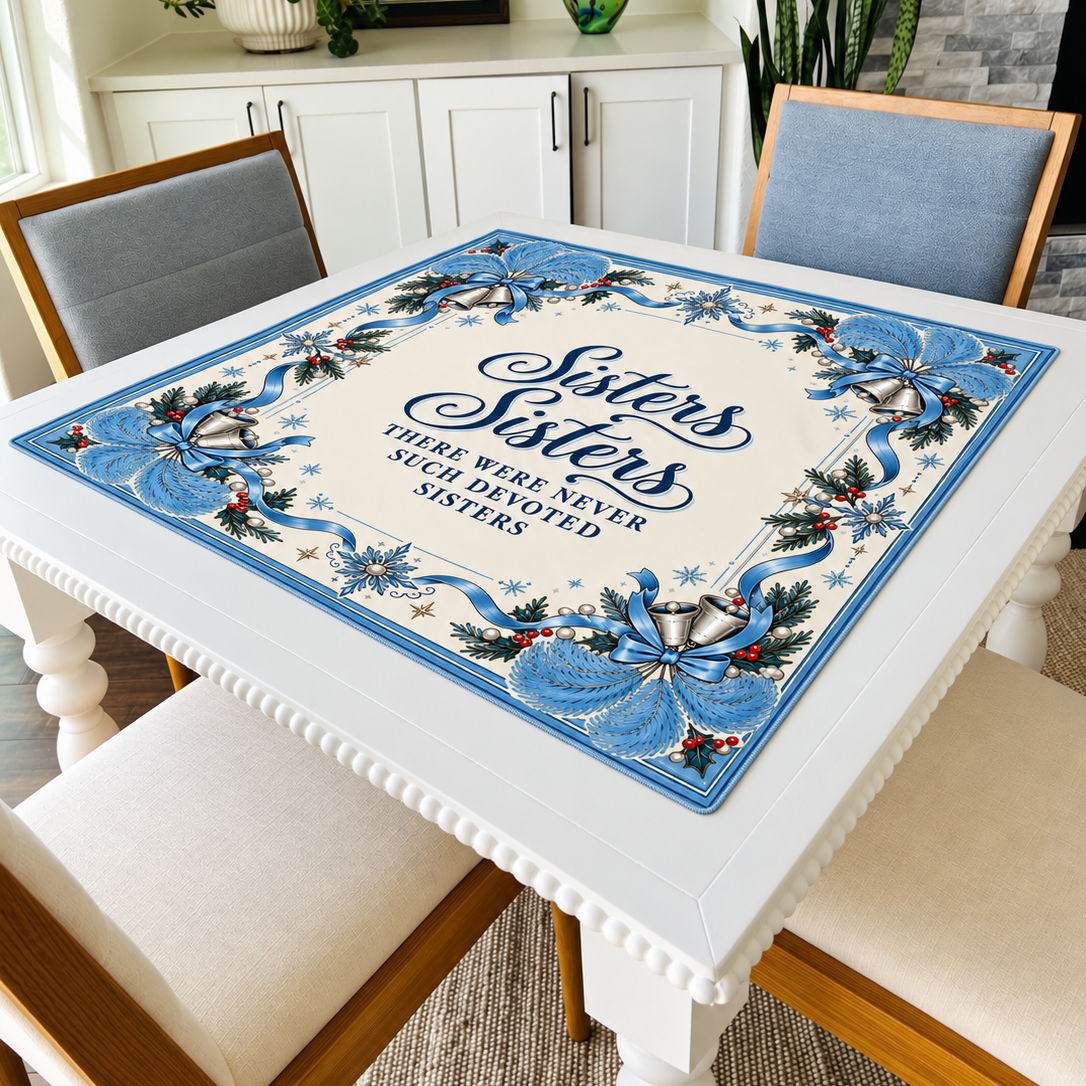
Most mahjong players use a mat between 28–36 inches square for a standard four-player game at home. A mat sits on top of your dining table or is laid directly on the floor; American mahjong requires exactly 152 playing tiles plus 8 jokers, so the surface must hold four racks (one per player), a wall, a discard pile, and enough room to draw and organize tiles without knocking pieces over. Smaller mats (under 28 inches) work for casual two-player games or tight apartments; larger mats (over 36 inches) suit tournament-style play or groups of six who rotate in. The mat's primary job is containment—it keeps tiles from sliding onto your floor and marks the sacred playing zone. Explore our mahjong mat collection for dimensions, materials, and designs suited to your space and hosting style.
How big does my playing surface actually need to be?
The playing surface must accommodate four racks (each roughly 7–10 inches long when arranged vertically), a wall of undealt tiles in the center, a discard zone, and shuffling space. A mat measuring 32–36 inches square gives each player roughly 8–9 inches of depth and allows racks, drawers, and active play without crowding. Smaller spaces (28 inches) squeeze comfort but work if you're sitting on cushions or standing. Larger mats (40+ inches) reduce tension and let hands rest on the table surface itself between turns.
🀄 Shop best-selling mahjong sets →
What's the difference between a mat and a tablecloth?
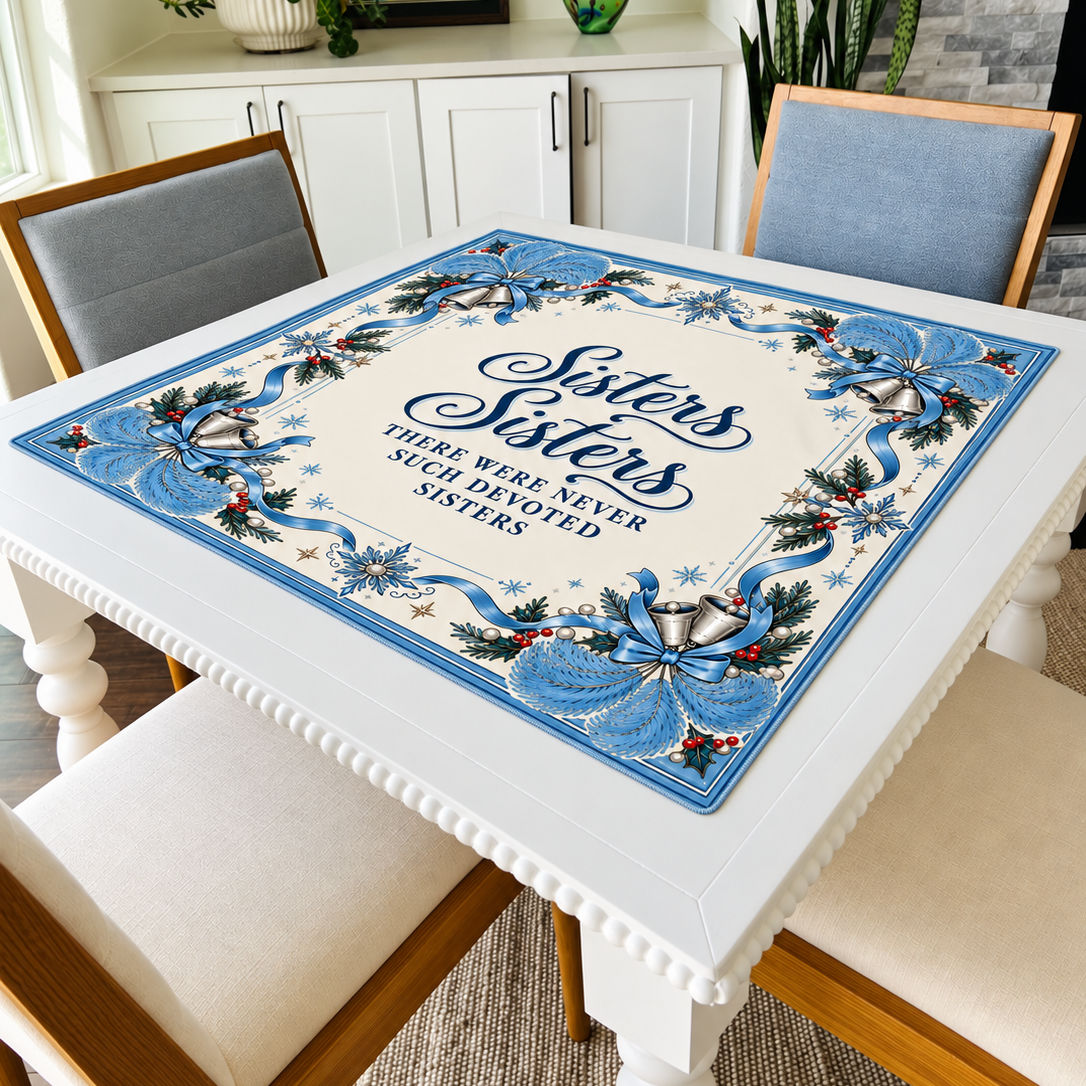
A mat is rigid, portable, and designed to define a play zone—you roll it up, store it, and carry it to games. A tablecloth sits flat on a table for decoration and some grip. Mats typically have a felt or quilted base that prevents tiles from skidding and defines the boundary; tablecloths offer less control and no portable storage advantage. For serious play, a mat is the standard. Learn how to pick between mat and table cover to decide which suits your hosting setup.
Will the same mat work for two, three, and four players?
A 32–36 inch mat handles four-player American mahjong best and is the game's standard format. Two-player games require a smaller layout (no wall, simplified tile organization) and fit comfortably on a 24–28 inch mat. Three-player variants exist in Chinese mahjong but are rare in American play and need custom space planning. If you rotate between player counts, a mid-range 32 inch mat works for four players and adapts to smaller groups if you use only part of the surface. Check our guide to 2 and 3 player mahjong for layout specifics.
What materials hold tiles steady without damage?
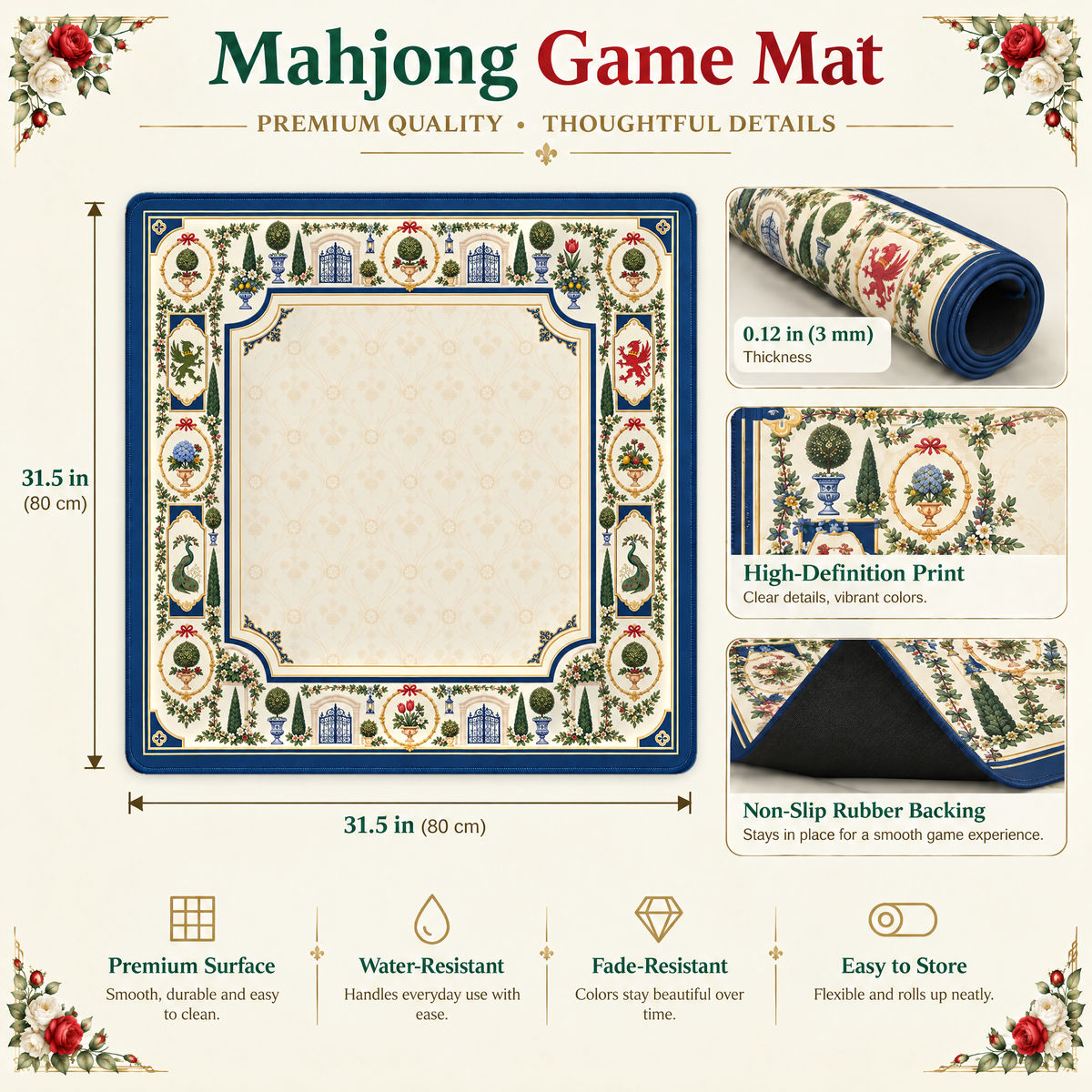
Felt, microfiber, and quilted nylon are industry standards. Felt provides grip and a soft base that won't scratch tile edges; microfiber offers durability and is easier to wipe clean; quilted nylon adds cushioning and reduces noise. All three prevent the rapid sliding you'd get on bare wood or glass. Avoid plastic, rubber, or glossy surfaces—tiles skid too easily and can chip. Our mahjong mats collection includes designs in these materials, each balancing grip, portability, and lifespan.
🎁 See our most-loved mahjong sets & accessories →
How do I measure my space before ordering?
Measure your table or floor in inches (end to end, side to side) and subtract 3–4 inches on each edge to leave clearance for player arms, racks, and reaching without overhang. If your table is 48 × 48 inches, a 36–40 inch mat fits well. If your space is an apartment corner (36 × 36 inches), a 28 inch mat prevents spillover. Most mats sold as 32, 34, or 36 inches refer to the finished playing surface; confirm exact dimensions on the product page before checkout. A tape measure and a quick calculation prevent returns.
Comparison Table: Mat Size, Player Count & Space Fit
Mat Size (inches) | Ideal Players | Table Needed | Best For | Space Check |
24–26 | 2 (casual) | 30×30 min | Apartments, occasional play | Tight quarters |
28–30 | 2–3 or 4 (cozy) | 36×36 min | Small dining tables | Moderate use, shared space |
32–34 | 4 (standard) | 40×40 min | Most home games | Regular weekly play |
36–40 | 4 (spacious) | 48×48 min | Tournament prep, teaching | Large tables, frequent hosting |
40+ | 4+ (premium) | 50×50+ | Studio or club play | Dedicated mahjong room |
Why this matters: Undersizing (e.g., 24 inches for four active players) causes tile spillover and frustration; oversizing (40+ inches for a small apartment) wastes storage and carrying space. Match the mat to your table or floor footprint first, then your player count.
What to check before you buy
Measure twice. Note your table's exact dimensions and subtract 4 inches per side. If you're unsure, round down—a slightly smaller mat is easier to store and move than one too large to fit your car trunk.
Know your material preference. Felt is classic and affordable; microfiber cleans easily; quilted nylon is softest. Each trades grip, durability, and price differently—no single "best" material, only the right one for your use case.
Verify the finished size. Some mats are labeled by their packaged dimensions, not playing surface. Check the product page for actual gameplay width and length in inches.
Plan for racks. If you use mahjong racks with pushers, add 2 inches to your mental footprint per side—racks extend beyond tiles when pushers are used.
Test portability. A mat you'll carry to friends' houses or storage needs to roll small. A 32 inch mat in a bag stays compact; a 40+ inch mat may require a hard case. Our bags and cases collection includes sizes matched to common mat dimensions.
Confirm shipping. We ship all mats across the US for free. Check the delivery window on your order and plan setup time.
Why size matters beyond comfort
The mat is your game's contract. It tells players where tiles stay, where arms belong, and when someone's crowding the play zone. A too-small mat breeds tension and mistakes (tiles knocked into each other, miscounts); a too-large mat dilutes focus and makes it harder to spot discards. The right size—typically 32–36 inches for four-player American mahjong—creates a shared understanding of space and reduces friction. When you host consistently, investing in the correct mat size pays dividends in player retention and game quality.
✨ Find your Mahstead set — free US shipping →
Our pick: Mahjong mats that match your game
We design mats in standard sizes (28, 32, 34, 36 inches) with professional felt and quilted bases, available in classic and custom designs. Many of our best-selling mahjong sets include a mat recommendation based on player count and hosting frequency. If you're building a complete setup from scratch, start with a 32–34 inch mat for four players, a standard 160-tile American mahjong set, and racks with pushers—that trio forms the core of any reliable game.
FAQ
Can I use a mahjong mat on carpet?
Yes. Place the mat directly on clean carpet; it stays put due to friction and won't slide during play. Avoid very shaggy carpet, which creates uneven tile contact. A thin rubber nonslip underlay (sold separately) adds grip if your carpet is slippery or high-traffic.
What's the smallest mat I can get away with?
24 inches square works for two casual players or teaching new hands one-on-one, but it's cramped for four. Most weekly game groups use 32 inches or larger because comfort and error-free play matter more than portability.
Do I need a mat if I already have a mahjong table with a built-in playing surface?
No. Tables with inlaid cup holders, wells, and cup racks replace the mat function. A mat is essential only if you play on a flat surface (dining table, floor) without built-in containment.
How often do mahjong mats need replacing?
A quality felt or microfiber mat used weekly lasts 3–5 years before showing wear (pilling, staining, fraying edges). Occasional players (once a month) see longer lifespan. Spills and direct sunlight accelerate aging; store in a cool, dry place.
Can I wash my mahjong mat?
Most felt and microfiber mats tolerate spot cleaning with mild soap and cool water. Avoid bleach and high heat. Quilted nylon is most washable; air-dry flat. Check the product care instructions before submerging or machine washing—many mats benefit from hand care only.
Should I buy a mat with my tiles or separately?
Either works. Buying together simplifies shipping (one package), and colors can coordinate. Buying separately lets you choose mat size and material independently of your tile set design. Most players decide mat size first based on their space, then choose tiles to match.


View More
View More
View More
