
Mahjong Solitaire Scoring: Rules & Hand Values
Last updated: Nov 23, 2026
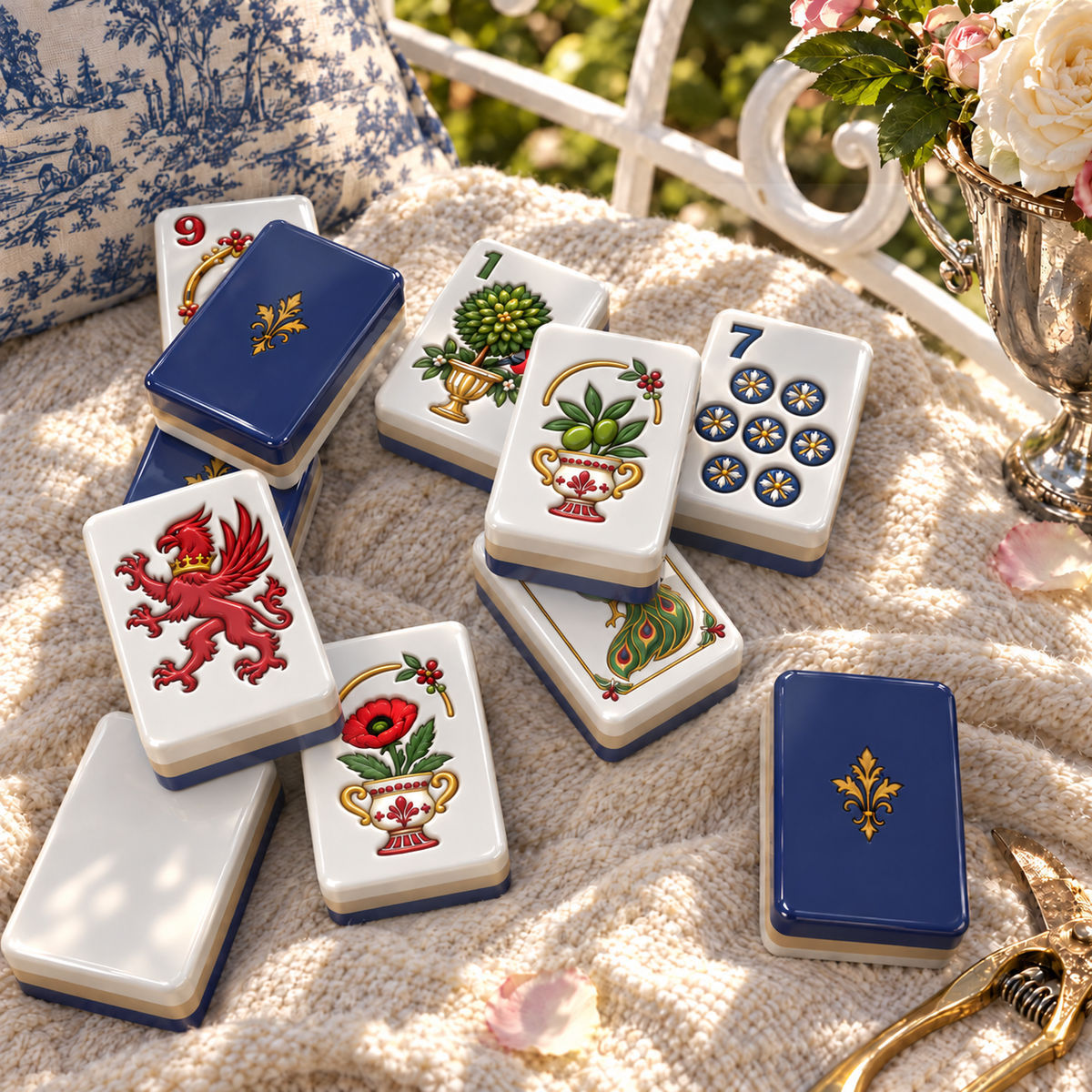
Mahjong solitaire scoring depends on the variant you play. In American mahjong, a completed hand earns a base value (typically 30 points for the "limit hand") that multiplies based on doubles—earned by matching tile combinations, joker usage, or special pattern bonuses printed on the year's National Mah Jongg League card. Winners collect from all three opponents; payouts scale with hand difficulty and doubles stacked. Chinese and Hong Kong mahjong use fan (pattern multiplier) and base points, with final payout calculated by fan level and penalty structure. Scoring is settled immediately after hand completion. Each variant has its own card or rulebook; check your region's standard before your game starts to avoid disputes.
Mahjong solitaire scoring isn't about chance—it's about how many tiles you combined, how many "doubles" you earned, and which variant's math you're using. We host weekly games and see new players fumble payouts every session. Here's how to score like you've been at this for years, whether you play American, Chinese, or Hong Kong rules.
What is mahjong solitaire scoring, exactly?
American mahjong scoring is a multiplier system built into the National Mah Jongg League card. When you declare "mahjong," your hand (13 tiles plus the winning tile) must match one exact pattern on the current year's card. Each pattern has a point value—usually between 20 and 70 points—and a number of "doubles" (bonus multipliers). You add the doubles together, then multiply the base value by that sum (minimum 1× if no doubles). The total is what each of the three other players pays you. If your hand is worth 30 points with three doubles, each opponent pays you 30 × (1 + 3) = 120 points. In Chinese and Hong Kong variants, a different system applies: points are earned based on fan level (1 to 13 fan, depending on pattern rarity) and a base score, then adjusted for seat position. Each variant requires its own scorecard or reference—never mix systems mid-game.
🀄 Shop best-selling mahjong sets →

How do doubles work in American mahjong?
Doubles are bonus multipliers earned in addition to your hand's base value. The card lists which tile combinations, sequences, or joker placements give you doubles. Common doubles include: using all four jokers in your hand, completing a "limit hand" pattern, or stacking specific tile groups (like all Bams, or all numbers 1–3). Some hands reward two or three doubles just for the tile selection—these are often considered high-value "2-double" or "3-double" hands. You count every applicable double your completed hand qualifies for, add them all to 1 (the base multiplier), then apply that sum to your base point value. Example: a 30-point hand with jokers double, no pairs double, and "all terminals" double = 30 × (1 + 1 + 1 + 1) = 120 points per opponent. Never double-count a single tile rule. Knowing the card is essential—that's why every player needs to read the reference card carefully during play, not after.
Can you show a scored hand example?
Let's walk through a real hand. You've drawn your 14th tile and see you can form: three 7 Bams, four 8 Craks (a kong with a joker), three Red Dragons, three 2 Dots (a pung), and a pair of Souths. Checking the card, you find this pattern listed under "Like Numbers" section as "three 7 Bams / four 8 Craks / three Reds / three 2 Dots / pair Souths" worth 30 points. The card notes: one double for using a joker in the kong, and one double for no pairs (meaning your only pair is the required South pair). Total: 30 × (1 + 1 + 1) = 90 points per opponent, so you collect 270 points for the hand. Three opponents each pay you 90. If someone else goes out first, you get zero—American mahjong is winner-take-all each round. Write the score down immediately to avoid disputes later.
🎁 See our most-loved mahjong sets & accessories →
How does Chinese mahjong scoring differ from American?
Chinese mahjong (and most Hong Kong variants) uses fan and points instead of a single multiplier card. A completed hand earns a fan value (1–13) based on the complexity of the pattern—simple patterns like "all one suit" = 1 fan, rare patterns like "all winds + all dragons" = 13 fan (nearly impossible). Each fan converts to base points: typically 8 points × 2^(fan−1), or a simpler fixed-scale table. The dealer (East wind) collects double from each non-dealer; non-dealers split the payout equally. There's no "card" to reference—scoring tables are memorized or printed on a scoresheet. Example: a 2-fan hand is worth 16 base points. If you're the dealer, each of three opponents pays 32 points (double). If you're not dealer, each opponent pays 16. Total payout varies by seat. Hong Kong rules often cap the maximum payout (e.g., 500 points) and apply limit hands. Riichi (Japanese) mahjong adds a bonus "fu" (base unit) score and limits your final payout as well. Always confirm the scoring table before the first hand of the session.
What are common scoring mistakes to avoid?
Mistake 1: Double-counting jokers. A hand may list "joker double" as one of three doubles—you add it once, not per joker used. Check the card text carefully.
Mistake 2: Forgetting the base multiplier (the "1"). Many players forget that doubles add to your multiplier, not replace it. Three doubles = 1 + 1 + 1 + 1 = 4×, not 3×.
Mistake 3: Paying the wrong opponent. In American mahjong, all three players pay the winner equally. In Chinese/Hong Kong, the dealer and non-dealer positions matter; if the dealer goes out, non-dealers usually pay double.
Mistake 4: Scoring after the next hand starts. Settle payouts immediately, or arguments will bloom. If someone is unsure of the value, flip the card and agree before moving on.
Mistake 5: Mixing variants mid-session. If your group usually plays American but visits friends who play Chinese rules, confirm the scoring system in writing first. A 30-point American hand is not the same as 30 fan in Chinese play.
Mistake 6: Using an outdated card. The National Mah Jongg League issues a new card every spring. Using last year's card will give you incorrect patterns and doubles. Update your set annually if you play American mahjong competitively or regularly.

How do you score a kong or quint in play?
In American mahjong, kongs (4 identical tiles) and quints (5 identical tiles) are exposed during play and don't directly "score" until the hand concludes. They're part of your final pattern. When you expose a kong, you draw an extra tile from the dead wall; when you expose a quint (less common), you also draw extra. These exposed melds must match the tiles listed on the card pattern you're pursuing. The points for the complete hand only apply once you declare mahjong at the end. There's no mid-hand scoring bonus in American play. Chinese and Hong Kong mahjong do award bonus points for kongs (typically a small payment from each player, called a "kong payment") in addition to the final hand score. This happens immediately when the kong is declared, before the hand completes. Keep a running subtotal if you're playing with kong payments—it's easy to forget a 4-point kong fee when three of them were called during the hand.
Scoring Comparison: American vs. Chinese Mahjong
Aspect | American | Chinese | Hong Kong |
Reference | Year's NMJL card | Memorized fan table | Memorized limit table |
Base unit | Fixed points (20–70) | 8 base points | Fixed by fan level |
Multiplier | Doubles (1 + count) | Fan (1–13) | Limit or cap |
Dealer bonus | All players equal | Dealer × 2 from others | Dealer × 2 or cap applies |
Kong payment | None mid-hand | Yes (small fee) | Yes (varies) |
When settled | After hand declared | After hand declared | After hand declared |
Card updates | Every spring | N/A (rules-based) | N/A (rules-based) |
What you'll need to score accurately
A completed game requires clear scoring references. If you play American mahjong, your best-selling mahjong sets should always include the current year's National Mah Jongg League card. If you host regularly, keep a printed copy or scoresheet handy and update it each spring. For a mat-side experience, a durable mahjong mat with a card pocket or attached card reference reduces fumbling. Some groups laminate their card or use a small card stand. If you play Chinese or Hong Kong variants, print or screenshot the scoring table and post it on the wall, or memorize the first 5 fan levels (most hands fall there). For tracking scores across a session, a simple paper scoresheet works—write player names across the top, scores down columns, tally at the end of four rounds. Many players use a small calculator app on their phone, but pencil and paper stays faster and dispute-free.
✨ Find your Mahstead set — free US shipping →
What to check before you buy or play
Confirm the variant. Ask your host or group which mahjong system they play. "American" and "Chinese" are not interchangeable; they use completely different scoring.
Get the current card or table. American mahjong players must have the spring 2026 National Mah Jongg League card. Chinese or Hong Kong players need the official fan/point table for their region.
Understand your seat position. In Chinese and Hong Kong play, being dealer (East) affects your payout—confirm whether the dealer collects double.
Write down the base value and any doubles. Don't rely on memory. Announce the score aloud before collecting payment.
Settle immediately. Pay each other before the next hand shuffles. Disputes are 100 times easier to resolve mid-session than after four rounds.

FAQ
Can you score a hand if you use fewer than four players?
Yes. In 2 and 3 player mahjong rules, the scoring system adapts: 2 players often use a modified card or fixed payout structure; 3 players might use a single discard pile or draw from a smaller wall. Always agree on payouts before starting.
What happens if two players go out on the same tile?
In American mahjong, the player in the earlier position (closer to East) wins. They collect full payment; the other player gets zero. In Chinese variants, the player who called it first wins. If simultaneous, house rules apply—agree beforehand.
Do bonus points carry over between rounds?
No. Each hand is scored and settled independently. A new Charleston begins; the score is recorded but doesn't affect the next hand's value. Tallies across four rounds determine session winner.
Is scoring the same for all tile combinations on the card?
No. The National Mah Jongg League card lists hundreds of patterns, each with its own base value and doubles. A "Like Numbers" pattern and a "Consecutive Run" pattern have different values. Always check the exact pattern on the card.
Can you score a hand after someone else reveals their tiles?
No. In American mahjong, once another player declares mahjong, the round ends and only that player scores. If you were close but didn't declare, you get zero. Speed and accuracy matter.
How do you handle a miscount or dispute after payment?
Stop play, verify the hand against the card, and recalculate openly. If the score was wrong, collect or return the difference immediately. Many groups use a neutral "scorekeeper" for close calls to avoid tension.


View More
View More
View More
