
Famous Mahjong Players: Who Leads American & World Play
Last updated: Nov 23, 2026
Mahjong has no single "famous player" in the celebrity sense—the game prizes collective skill and rule mastery over individual stardom. In American mahjong, prestige flows to National Mah Jongg League (NMJL) tournament champions, whose names appear in annual rankings but remain largely known within playing circles. Chinese mahjong boasts professional leagues (notably in Shanghai, Chengdu, and online platforms like Tencent) where top players earn sponsorships and compete for prize pools. Hong Kong and Riichi (Japanese) mahjong have established pro circuits with televised events and recognized champions. The barrier to fame: mahjong remains a niche skill game, not a mass-spectator sport. Success depends on memorizing the current year's hand card, reading opponents, managing the Charleston, and mastering joker placement—mechanics that took these players years to internalize. Mahstead players often study championship patterns by watching recorded games and studying hand archives rather than following individual personalities.
Mahjong's legendary figures earned recognition not through media hype but through sustained excellence in rule systems that shift constantly. Unlike chess or poker, where champions become household names, mahjong excellence stays rooted in tight-knit regional and national communities. Understanding who leads the game—and why—reveals what separates casual players from those who win consistently.
Who Actually Wins in American Mahjong?
The National Mah Jongg League crowns regional and national champions annually, but their names rarely cross outside the playing world. Tournament organizers publish results—available through the NMJL's official structures—rather than mainstream media. Winners typically excel at three skills: rapid hand recognition against the current year's card, aggressive defense to prevent opponents from melding, and managing the luck factor inherent in tile draws. A champion's competitive edge isn't charisma; it's pattern memory, probability instinct, and emotional discipline. Regional tournaments occur in cities with large American mahjong populations (California, New York, Texas, Illinois), where players compete for rankings that matter within their clubs and leagues. The NMJL publishes official standing information through member clubs and league publications; individual achievement gets celebrated in local game circles but rarely beyond. This decentralized structure means a Dallas champion is famous in Dallas, a Manhattan master known in her synagogue's weekly game—each excelling in systems where rule knowledge, not personality, determines winners.

Top Chinese Mahjong Professionals: The Tournament Circuit
Chinese mahjong has produced the closest equivalent to mainstream professional players, particularly in Guangdong, Shanghai, and online competition. Professional leagues hold televised tournaments, stream matches on platforms like Douyu and Bilibili, and offer prize money that attracts dedicated competitors. Chengdu hosts annual national championships; Shanghai maintains active professional clubs; online platforms connect players across China in ranked matches. These pros specialize in the standard 108-tile game (three suits 1–9, winds, dragons, no flowers or jokers), where skill in reading discards and calculating probabilities becomes measurable and repeatable. Professional status requires passing rating thresholds, often earning titles like "Master" or "Grandmaster" based on win percentage over 500+ matches. Chinese mahjong's pro culture mirrors chess or Go—transparent ranking systems, sponsorships, and public recognition—making it the variant with the most visible "famous" players outside the West. However, rule variants (Sichuan rules, Guangdong rules, Shanghai rules) mean a champion in one region may face different hand-winning logic in another. This fragmentation prevents a single unified "world champion," though national tournaments attempt standardization.
Hong Kong, Riichi, and Taiwanese Masters
Hong Kong mahjong players compete in structured clubs and tournaments, particularly through the Hong Kong Mahjong Association, with established rankings and seasonal championships. The game uses a 108-tile deck (no flowers, jokers, or blanks) and emphasizes reading tile sequences and defensive discard strategy. Riichi mahjong—the Japanese variant played with a 136-tile set—has produced internationally recognized professionals, especially through the Japan Professional Mahjong Association (JPMA). Riichi tournaments are televised in Japan and streamed globally; top players achieve celebrity status comparable to professional poker or esports competitors in that region. The variant's complexity (concealed melds, wait patterns, scoring multipliers based on concealment and hand value) rewards deep study; mastery takes years. Taiwanese mahjong, typically played with a 144-tile set and house rules that vary by family or region, has fewer formalized professional structures than Hong Kong or Riichi but maintains strong regional competitive communities. Each variant's top players are famous within their rule system and geographic region but unknown across variants—a Riichi champion competing in American mahjong faces the same learning curve as a beginner, since hand recognition, meld types, and scoring are entirely different. Success in mahjong, across all variants, flows from systematic mastery of that particular rule set's card, not transferable skill.
What Sets Champions Apart: A Practical Breakdown
Skill | American Focus | Chinese/HK Focus | Riichi Focus | How to Practice |
Card memorization | Current year NMJL hand card (152 tiles, 8 jokers) | Standard 108-tile melds and patterns | 136-tile sets, scoring multipliers, concealed patterns | Drill hands daily; study archives; play weekly |
Discard reading | Identify opponent's likely wait; assess meld danger | Count remaining tiles; read suit runs and pairs | Analyze wait patterns; track concealment sequences | Record games; note opponent tendencies |
Defensive timing | Know when to hold safe tiles; when to push | Calculate tile probabilities; manage neighbors' melds | Assess outer waits; balance offense and safety | Play defensive scenarios; study hand books |
Joker management (if applicable) | Maximize joker placement in exposed melds; never pair | N/A in most variants | N/A in Riichi | Study joker-heavy hands; practice substitution logic |
Pressure/psychology | Stay calm; read opponents' confidence; exploit hesitation | Adapt to regional house rules; manage pace | Maintain focus; recognize tilt patterns | Join clubs; play in tournaments; debrief losses |
The table reveals a hard truth: famous mahjong players invested years mastering one system. A Hong Kong master moving to American mahjong must relearn hand patterns, meld rules, and joker logic from scratch. This specialization explains why championship titles are highly localized and why there's no universally "famous" mahjong player—success is rule-specific and region-bound.
🀄 Shop best-selling mahjong sets →

Learning from Champions: How They Study
Top American mahjong players study by replaying hands from league tournaments, annotating decisions, and discussing outcomes in study groups. They collect archived game records (where available), memorize the current year's NMJL card, and play practice games against different opponent styles—conservative, aggressive, pattern-focused, psychology-driven. Many champions attribute wins to: (1) knowing every hand on the card by sight, (2) tracking discards with obsessive precision, and (3) managing emotions across 10–15 game sessions. Chinese and Riichi professionals stream matches, analyze losses with coaches, and compete in online ranked systems where draw-heavy variance is minimized over hundreds of matches. They study probability—which tiles are statistically likely to remain in the wall, which discard sequences signal specific hand shapes. Taiwanese competitive players often belong to clubs where house rules are standardized, allowing deep pattern study specific to their regional variant. The common thread: champions don't rely on intuition. They systematize. They record. They drill. They play thousands of hands. For amateur players wanting to elevate play, the framework is clear: join a regular weekly game (community centers, libraries, synagogues, or country clubs often host open mahjong nights), study the current year's hand card obsessively, play as many full games as possible, and debrief losses honestly. Playing against better opponents accelerates learning faster than playing against peers.
Where to Find Competitive Mahjong Communities
American players seeking competitive play start with the National Mah Jongg League's official website, which publishes regional club directories. Local libraries, synagogues, and community centers often host weekly games or tournament notices. Dallas, Los Angeles, New York, and Chicago have robust club networks; searching "mahjong club [city]" or checking Meetup boards reveals active groups. Chinese mahjong players access professional leagues through Tencent Games, Douyu (streaming platform), or regional mahjong associations in major cities. Hong Kong players connect through clubs affiliated with the Hong Kong Mahjong Association. Riichi players join clubs or online platforms (like Mahjong Soul or Tenhou) that offer ranked play against international competitors. Taiwanese communities often coordinate through family networks and regional meetups. The barrier to entry is low—most clubs welcome newcomers—but the commitment to learning the specific rule set's hand card and strategic depth is high. Amateur players who eventually become "known" in their circles typically invested 2–5 years of weekly play, studied archived games, and joined tournaments. None became famous overnight; all became skilled through repetition and study.
✨ Find your Mahstead set — free US shipping →
What to Check Before You Buy (or Join)
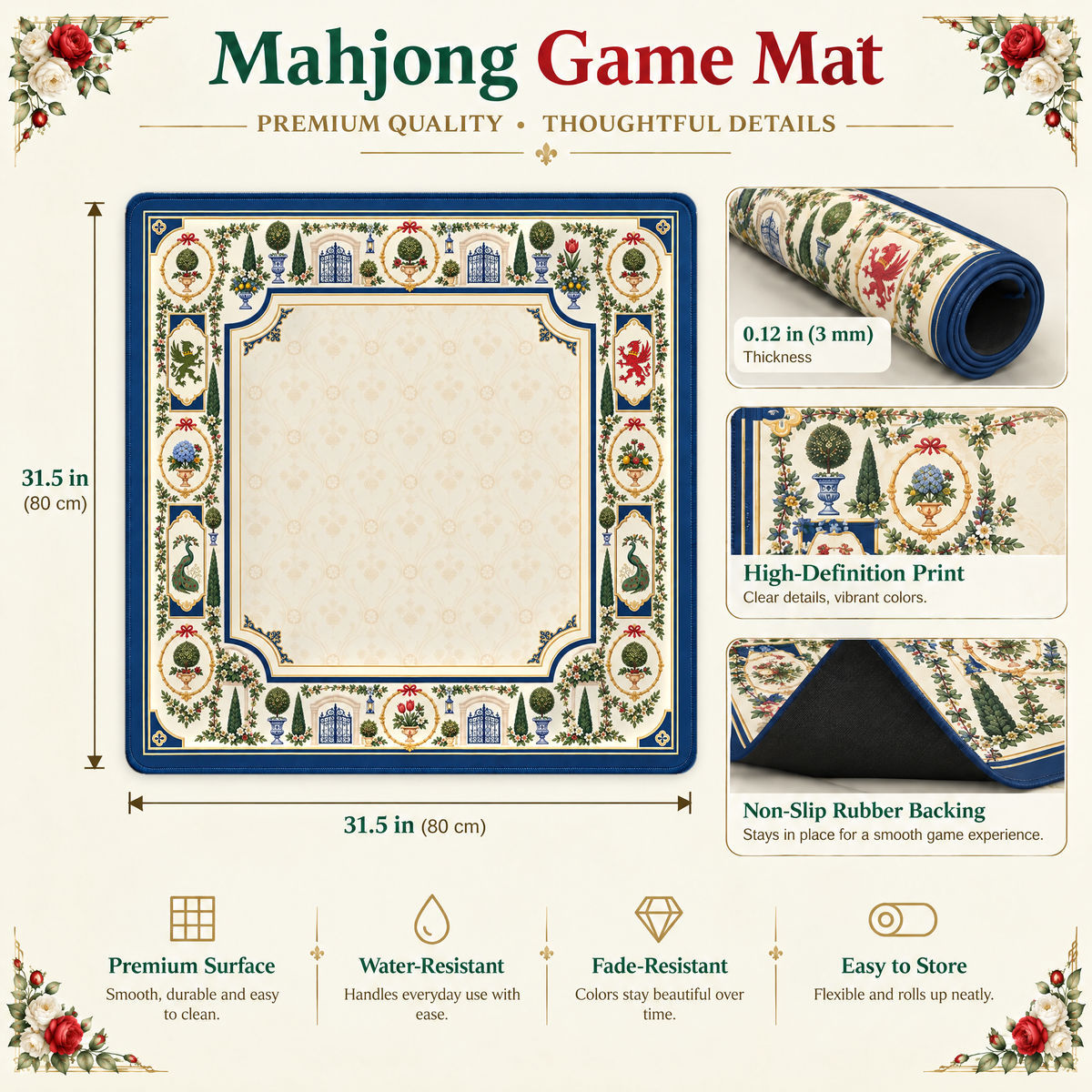
When selecting a mahjong set to practice like the pros, prioritize clarity—tiles must be readable at a glance, since hand recognition speed separates winners from learners. Our best-selling mahjong sets collection features durable acrylic American sets with bold numbers and symbols, sized for quick scanning during fast-paced games. If you're hosting weekly study sessions or tournament preparation, a quality mat prevents tiles from sliding; pair your set with a mahjong mat that offers firm grip. For travel to out-of-town tournaments, invest in a mahjong bag or case that protects tiles and keeps them organized. Racks with pushers help newer players organize hand tiles quickly, reducing the cognitive load so you can focus on strategy. Champions often use sets without racks (pure pattern recognition is faster), but racks are a legitimate stepping stone. Choose engraved tiles if you're building a keepsake set for a weekly group—many clubs collect sets that commemorate seasons or tournament runs. Avoid sets with faded or unclear symbols; poor visibility tanks learning speed. Quality matters most when you're drilling thousands of hands.
🎁 See our most-loved mahjong sets & accessories →

FAQ
Do any mahjong players have celebrity status outside their home region?
Riichi mahjong professionals in Japan achieve the closest equivalent to mainstream celebrity through televised tournaments and sponsorships. Chinese professional players gain visibility through streaming platforms and prize tournaments, especially in Shanghai and Chengdu. American, Hong Kong, and Taiwanese champions remain famous only within their local competitive communities. Mahjong's niche status prevents global celebrity figures.
How long did it take famous players to reach competitive level?
Most champions trained for 3–7 years through weekly play, tournament participation, and strategic study. Chinese professionals often started in childhood. American league champions typically played 20+ hours weekly for at least 3 years before winning tournaments. Riichi professionals undergo formal coach-based training programs lasting 2–5 years before licensing.
Can I learn championship strategy from watching recorded games?
Yes. Study archived tournament matches from the NMJL, Chinese professional leagues, or Riichi streaming platforms (Mahjong Soul replays, for example). Focus on discard patterns, meld timing, and defensive positioning rather than memorizing specific hands. Combine video study with playing practice games weekly; observation without play doesn't build pattern recognition.
What's the difference between being good at American mahjong and famous at it?
Being good means winning most casual games, understanding the current year's hand card, and managing jokers skillfully. Fame requires winning regional or national tournaments, building a years-long record, and becoming known in league circles. Fame is also regional—a NMJL champion in Texas is unknown in Los Angeles without published tournament results.
Do famous mahjong players use special tiles or equipment?
Professional players use standard-rule-compliant tiles (American sets use 152 tiles plus 8 jokers; Chinese use 108; Riichi use 136). Equipment quality (mat grip, tile clarity, rack ergonomics) helps but doesn't create skill. Champions prioritize fast, accurate hand recognition, which depends on tile legibility and drill repetition, not exotic equipment. Consistent, quality tiles matter more than rare ones.
Which mahjong variant has the most competitive international presence?
Riichi mahjong has the most formalized international structure through the JPMA and global tournaments. Chinese mahjong has the largest player base and prize pools but remains largely domestic. American mahjong has strong regional tournaments but no unified international circuit. Hong Kong and Taiwanese variants maintain robust local competition without mainstream international expansion.


View More
View More
View More
