
Mahjong vs Mexican Train: How They Compare
Last updated: Nov 23, 2026
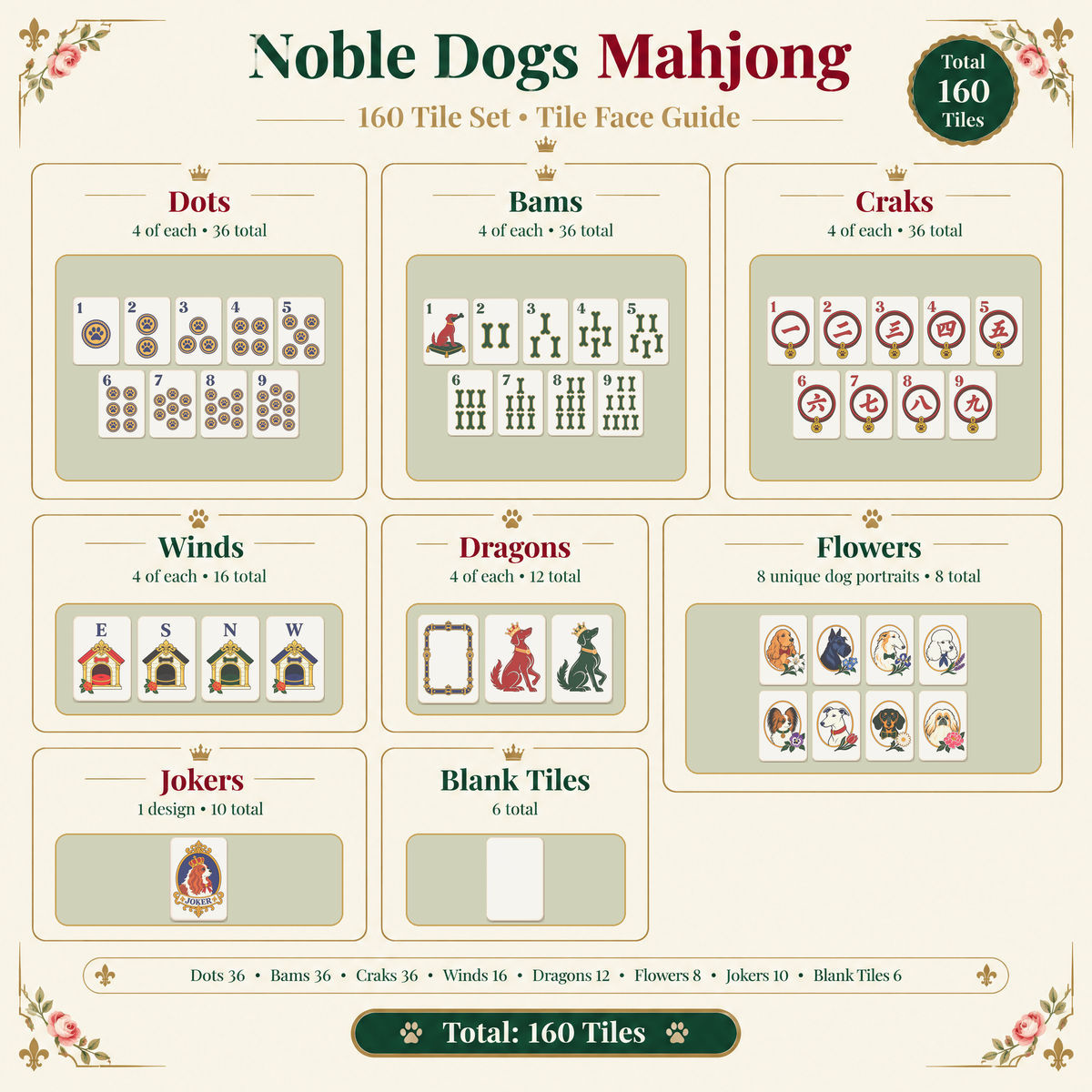
Mahjong and Mexican Train are entirely separate games. American mahjong uses 152 tiles (108 numbered suit tiles, 16 winds, 12 dragons, 8 flowers, 8 jokers) and requires players to form specific hand patterns from the current year's National Mah Jongg League card—a strategic game that demands knowledge and memory. Mexican Train uses dominoes (not tiles), where players lay chains in a shared layout, aiming to empty their hand by matching pip counts; it's simpler, faster, and more luck-driven. Mahjong sessions run 45–90 minutes per round; Mexican Train rounds finish in 15–30 minutes. Mahjong rewards skill and pattern recognition; Mexican Train emphasizes blocking opponents and adapting to an open board. Choose mahjong if your group loves strategy and ritual; choose Mexican Train if you want quick, social games with less rules overhead. Our best-selling mahjong sets start at entry-level quality and go up to premium acrylic with engraving.
What's the core rule difference between mahjong and Mexican Train?
Mahjong hands are predetermined by the National Mah Jongg card—you must match one exact pattern per hand to win, collecting tiles that form pungs (three identical), kongs (four identical), or exposed melds. Mexican Train has no card: you win by laying all your dominoes first, matching ends, and playing to the main line or your personal side chain. Mahjong is rigid by design; Mexican Train is fluid and reactive.

How long does a typical game take?
A single round of American mahjong averages 45–60 minutes once everyone learns the rhythm—the Charleston tile exchange takes 5–10 minutes, then play unfolds as players draw and discard. Four rounds (one East, South, West, North seat per player) runs 3–4 hours, the standard evening. Mexican Train rounds complete in 15–30 minutes per hand, so you can play 6–8 hands in the same window. If your group has limited time, Mexican Train moves faster; mahjong rewards deeper commitment and ritual.
Which game requires more strategy?
Mahjong demands you memorize patterns, track discards, recognize call opportunities, and calculate odds—new players spend weeks learning before competitive play. Strategy involves reading what other players are fishing for, deciding which tile to discard safely, and spotting when to expose melds. Mexican Train requires tactical blocking (keeping dominoes that prevent opponents from playing) and hand management, but the strategy layer is shallower; luck matters more because the board is visible and open. Mahjong players report that the game rewards study; Mexican Train players enjoy that it stays accessible to newcomers.
What equipment does each game need?
Mahjong requires a set of 152 tiles, a mat with rack space, and typically racks with pushers to organize your hand and prevent tiles from shifting. You'll also want a current-year National Mah Jongg League card (purchased separately) and a scorecard. Mexican Train needs a set of double-12 dominoes (91 tiles total), a unique star-shaped center hub (the "train station"), and a scoring pad—dominoes are simpler to store and transport. If you host regularly, mahjong's visible table footprint is larger; Mexican Train fits a smaller surface but takes the hub setup. Mahjong players often upgrade to travel bags and cases to protect their sets; Mexican Train dominoes survive in a basic box.
Aspect | Mahjong | Mexican Train |
Tiles | 152 pieces (4 suits + honors + flowers + jokers) | 91 dominoes (double-12 set) |
Game length | 45–90 minutes per round | 15–30 minutes per hand |
Skill floor | High (pattern memorization, card reading) | Low (match pips, basic blocking) |
Luck vs. skill | 40% luck, 60% skill | 70% luck, 30% skill |
Setup time | 10–15 minutes (Charleston, shuffling, sorting) | 3–5 minutes (distribute, hub) |
Social pace | Slower, deliberate; conversation between turns | Fast, high interaction, blocking moments |
Replayability | High (new hands yearly; card changes annually) | Moderate (dominoes don't change) |
Hosting cost | Medium (quality set, mat, racks, card) | Low (dominoes, hub, scorepad) |
🀄 Shop best-selling mahjong sets →
Which game should my group play?
Choose mahjong if your players enjoy games with depth, historical tradition, and a learning curve; if you host weekly and want rounds to flow the same way each season; or if your group has played before and wants to deepen skill. Choose Mexican Train if your gatherings include people new to tile games, if you want flexibility (multiple short rounds in one sitting), if you prefer luck-leveled odds, or if you're short on table space. Many groups play both—mahjong on Friday nights when everyone is focused, Mexican Train on casual Sundays. If you're just starting out, mahjong for beginners offers a full how-to; Mexican Train has a simpler entry but fewer resources online.
One honest note: mahjong requires annual investment in a new card (rules and hands change every spring), whereas Mexican Train dominoes stay the same year to year. Mahjong rewards practice and table memory; Mexican Train stays fresh because shuffle randomness resets often. If your group values ritual and progression, mahjong wins. If you want pick-up-and-play accessibility, Mexican Train is lighter. Most of us who host both find that mahjong becomes the "real game" we focus on, while Mexican Train fills gaps or welcomes newcomers.
What to check before you buy
For mahjong: Confirm your group will commit to learning the current-year card before ordering a set; buy a mat and racks so tiles don't shift during play; test a friend's set first if possible. Choose acrylic or bamboo based on how often you host—acrylic is durable and easier to clean; bamboo feels traditional but requires care. Check that your table fits a 2–3 foot spread (mahjong takes real estate).
For Mexican Train: Ensure your hub has a secure center post (loose ones spin mid-game, fouling plays). Verify all 91 dominoes are present before sealing a purchase. If you play multiple hands in one session, confirm your scorepad handles many rounds.
🎁 See our most-loved mahjong sets & accessories →
Why host both games?
Many of us run a standing weekly or monthly mahjong night, then keep Mexican Train on hand for social gatherings where time is tight or the crowd is mixed skill-levels. Mahjong builds loyalty and skill; Mexican Train welcomes chaos. Neither is superior—they serve different moments. If you're building a game library, mahjong is the investment; Mexican Train is the safety valve. Start with whichever matches your group's first priority: depth or speed.
✨ Find your Mahstead set — free US shipping →

FAQ
Can I play mahjong with dominoes or Mexican Train with mahjong tiles?
No. Mahjong tiles are marked with suits (Bams, Craks, Dots), winds, dragons, and flowers—sets of matching symbols. Dominoes are blank on one end and marked with pips (dots). The tile counts, shapes, and rules don't overlap. You need the right set for each game.
Is mahjong harder than Mexican Train?
Yes. Mahjong requires memorizing hand patterns, reading the annual card, tracking discards, and calculating odds. Mexican Train is accessible within minutes—match the domino pips and block opponents. Mahjong rewards study; Mexican Train rewards quick thinking and luck.
How much table space does each game need?
Mahjong needs a 2–3 foot play area (four players, each with a rack and exposed melds). Mexican Train needs a smaller footprint—the hub sits center, dominoes radiate outward. Mahjong is the space hog; Mexican Train fits coffee tables.
Can I learn mahjong from YouTube, or do I need a teacher?
Video tutorials work for the basics, but having someone experienced at your table speeds learning dramatically. Mistakes in hand recognition or discard strategy happen frequently; a live coach corrects them immediately. Many community centers, libraries, and country clubs offer beginner classes. Online coaching is available via Zoom groups if you're in a rural area.
What's the annual cost difference between playing mahjong and Mexican Train?
Mahjong requires a new card every spring (roughly the cost of one dinner out), plus eventual tile replacement if you play intensively. Mexican Train has almost no annual cost once you own a domino set and hub. Mahjong's per-game cost is higher, but many players view the annual card as part of the tradition and skill-building, not an expense.
Why do mahjong players use racks and pushers?
Racks keep 13–14 tiles upright and organized so you and other players can see your hand shape without fumbling. Pushers help you advance tiles cleanly when you call a meld, preventing accidental tile drops or misreads. Casual players skip them; serious players consider them essential to avoid fouled hands and table disputes.


View More
View More
View More
