
Mahjong Set for 4 Players: What to Buy & Why
Last updated: Nov 23, 2026
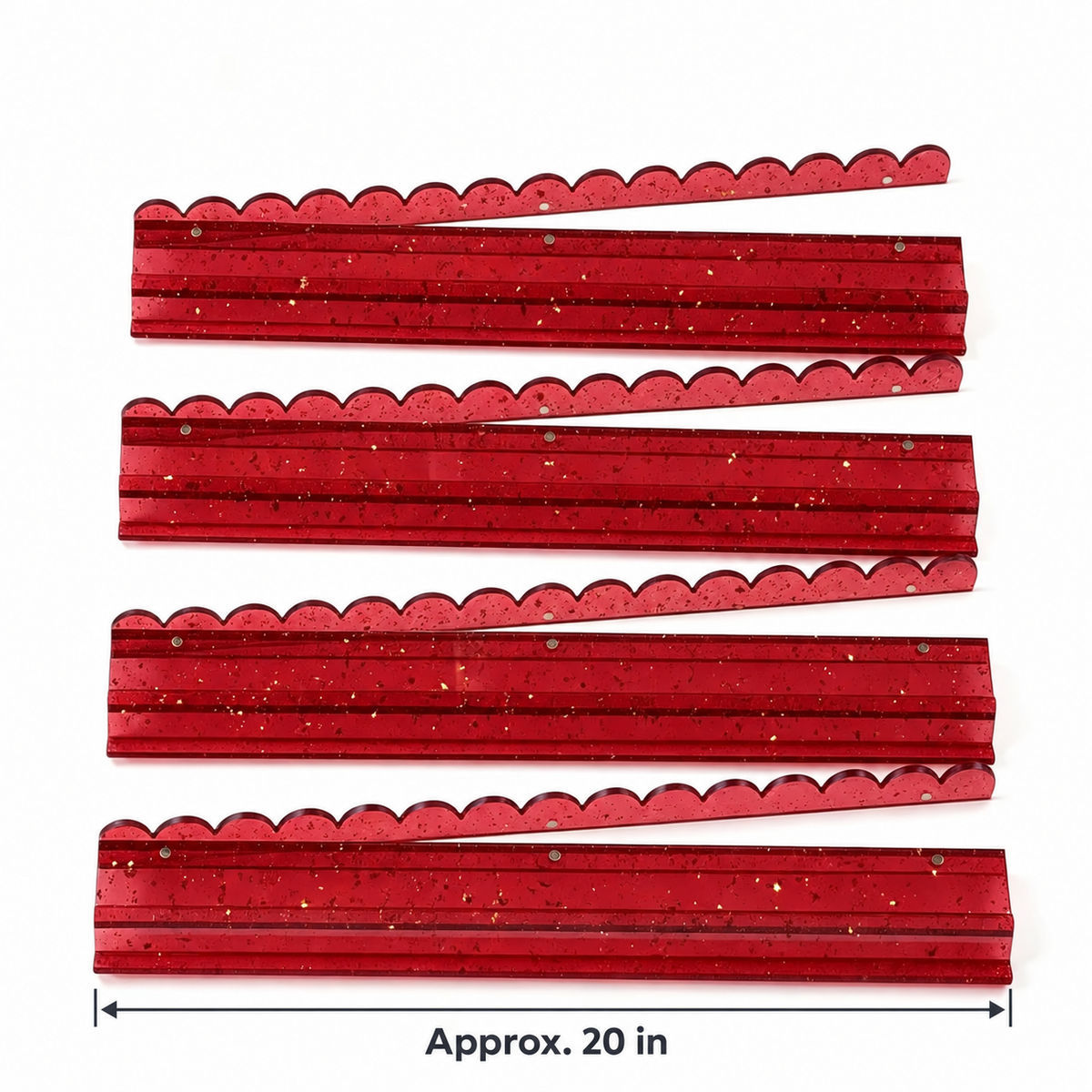
American mahjong is always played with exactly four players and a standard 160-tile set containing 152 playing tiles plus spares. A complete set includes three suits (Bams, Craks, Dots numbered 1–9), 16 winds, 12 dragons, 8 flowers, and 8 jokers—enough for one hand per player plus the wall. You'll also need this year's National Mah Jongg League card to play legal hands. The tiles themselves are usually acrylic, bone, or bamboo; acrylic sets from our best-selling mahjong sets collection range widely in style and cost, from bright modern designs to engraved tournament-grade options. Before ordering, check tile size (large tiles suit aging eyes and casual play; smaller tiles pack flatter), weight preference (lighter acrylic travels easily; heavier feels more premium), and whether you want personalization or a themed design for your regular group.
Every group of four needs the same foundation: exactly 152 playing tiles, 8 jokers, one set of racks, one mat or cloth, and four copies of the current year's League card. The only real variable is how the tiles look, what the case is made from, and whether you're playing once a month or every week. We've spent years hosting games with different sets, and we've learned what breaks quickly, what feels good to push for two hours, and what actually changes the game experience.
What size tiles work best for your group?
Tile diameter matters more than most players realize. Standard American mahjong tiles come in roughly two dimensions: larger tiles (about 1.5 inches) suit players with less precise vision, casual players, and anyone whose table is wider than four feet; smaller tiles (about 1.25 inches) save space and travel weight. Before you buy, measure the distance from your group's closest player to farthest—if it's beyond six feet, larger tiles prevent strain. Ask yourself: are we playing at a dining table (smaller tiles fine), a dedicated 32×32-inch mat (either works), or a 36×36-inch or larger setup (larger tiles shine)? Our best-selling mahjong sets include both sizes, so check the product page dimensions before checkout.
How much does a solid four-player set actually cost?
Price depends on tile material, design detail, and case type. An everyday acrylic set with a cloth bag costs less than one with storage for racks and personal engravings. A themed or engraved set from our mahjong titles collection costs more but lasts longer—we've seen engraved acrylic sets played weekly for a decade. The baseline rule: if you're playing the same four people every week, spend enough that the tiles feel solid and the racks don't slip. If you're a casual host, a standard acrylic set with a carry bag works. See current price on the product page for exact details on your chosen design.
Should you get a mat, racks, and case all together?
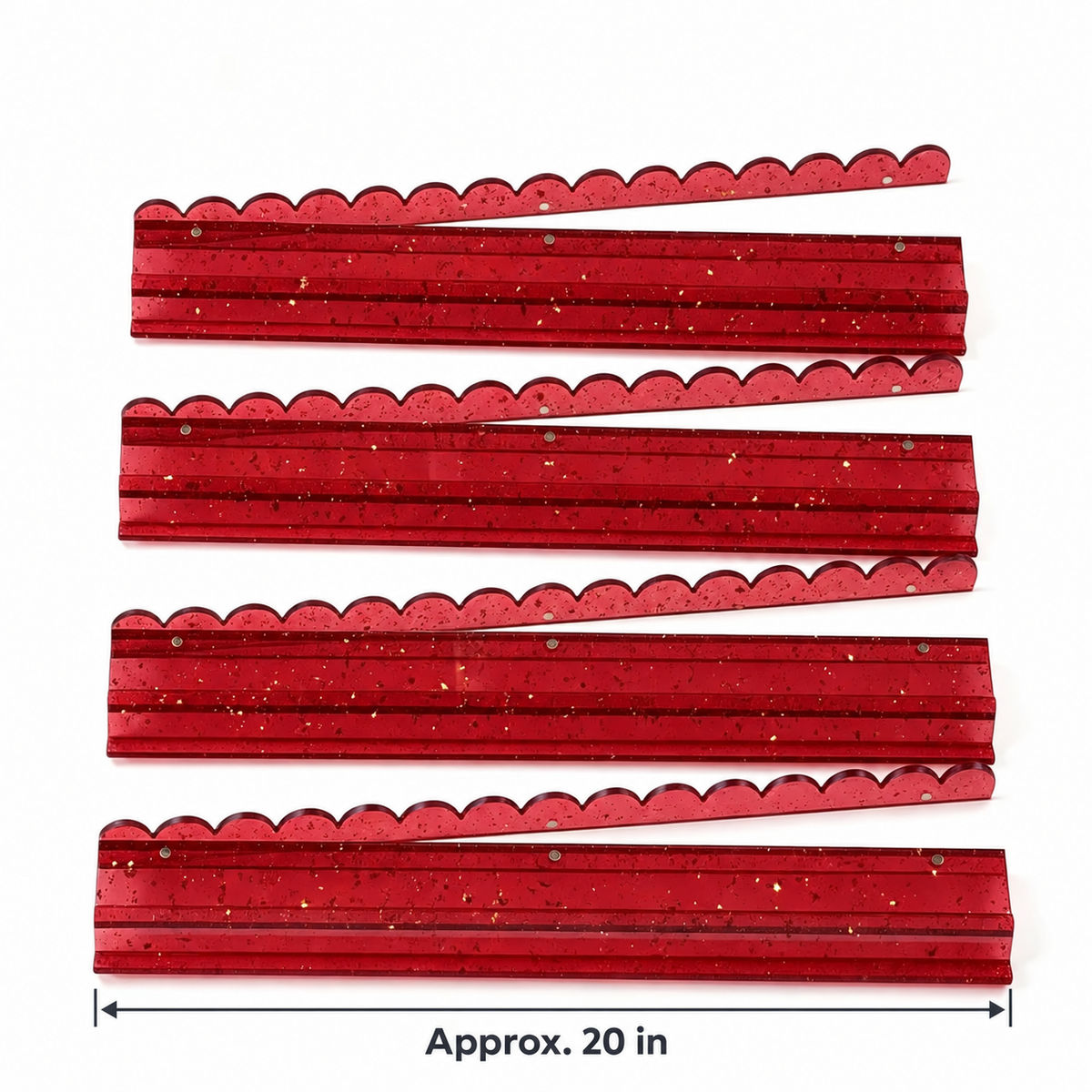
Buying as a bundle saves money and ensures compatibility. A mat keeps tiles from sliding and defines the play area; four racks with pushers let each player organize their hand cleanly; a case protects tiles during storage and transit. You can buy each separately, but many groups buy one complete best-selling mahjong sets bundle and realize they should have earlier. If your group rotates hosting, a mat and case become essential—they protect the tiles and make setup identical every week. Our mahjong racks with pushers guide walks through why pushers matter for newer players. Consider a padded travel bag if anyone drives the set to a different home each week.
Engraved or plain: which lasts longer?
Engraved tiles (etched with names, dates, or jokes) cost more upfront but hold personalization permanently and build group identity. Plain tiles are cheaper and work fine for casual or rotating groups. If you're hosting the same four people for years, engraved tiles become a keepsake—we've seen sets with "The Tuesday Crew" or a year and location engraved on the back, played every single week and passed down. Plain tiles are more flexible if your group changes. Both are acrylic and equally durable. Browse our engraved mahjong titles to see the style options; if you don't see what you want, Mahstead also offers custom engravings.

What common mistakes cost money later?
Mistake | Why it happens | What to do instead | Saves you |
Buying undersized tiles for a big table | Thinking "compact" saves money | Measure table width; choose larger tiles for >6-foot distance | Eye strain, replaced set |
Skipping a mat or cloth | "We'll just play on the table" | Buy a mat with your set; it defines play zone and protects tiles | Tile damage, lost game flow |
Choosing a bag without racks pocket | Bags are cheaper without compartments | Get a case with dividers for racks, jokers, and extras | Racks lost or damaged in transit |
Not owning spare jokers | Sets come with 8; players mistake them for regular tiles | Keep spares in your case; mark them clearly | Misdealt hands, restarted games |
Mixing old and new League cards | Playing hands from 2024 card with a 2026 set | Update your card every spring when the League releases the new one | Illegal hands, disputes |
The cheapest mistake is underestimating how much your group will play. Buy the set you'd be happy to use 50 times—not 5.
What to check before you buy
Tile feel: If you can see the set in person (at a local game, community center, or store), hold one tile. Does it slide smoothly on a cloth? Does the engraving feel sharp or dull? Does the weight feel premium or plastic-thin?
Case structure: Open it. Can racks fit in the lid compartment, or do they rattle loose? Is the cloth lining padded? Will your mat fold flat into the base?
Joker count: Confirm the set includes 8 jokers (never fewer; extra jokers in a 160-tile set are spares and don't change play). Ask the seller if you're unsure.
Dimensions: Write down tile diameter (in inches) and total set size (length × width × height when packed). Compare to your storage space and table size.
Shipping and returns: Mahstead offers free US shipping; confirm the policy for damage in transit before you order.
🀄 Shop best-selling mahjong sets →
Real-world setup for four players
Here's how a typical group of four organizes play:
Before the first game: Set up the mat on your table center (if using one). Place one rack at each cardinal point (North, East, South, West). Put the tile case nearby so all four can reach spare jokers if needed.
The Charleston: Each player passes 14 tiles to the right, then 14 to the left, then 14 across. (See our Charleston explained guide for full steps.) This ritual takes 2–3 minutes and sets play energy.
Drawing the hand: East player draws first. Players then draw tiles one at a time, cycling through North, West, South, and back to East until all four hold 13 tiles (East holds 14 and plays first).
Rack discipline: Each player pushes exposed melds (three identical tiles = pung; four identical = kong) forward on their rack so all can see them instantly. This prevents disputes and keeps the game pace even.
Scoring: After a hand completes, check the League card, verify the hand shape, and award points. Mahstead sets don't include a score sheet, but many groups keep one on paper or a phone app.
🎁 See our most-loved mahjong sets & accessories →
Choosing between Mahstead collections
We offer several paths depending on your group's style:
Best-selling collection: Our flagship options are acrylic, durable, and proven by weekly players. Start here if you don't have a strong design preference.
Engraved titles: Want your group's name or a joke engraved on the back of every tile? Browse our mahjong titles collection. Engravings range from simple dates to full-line jokes and make the set feel like yours.
Seasonal designs: If you're buying as a gift or for a holiday game, our Christmas mahjong sets arrive with festive tiles and themed cases.
New arrivals: We add designs every month. Check new arrivals if you want the latest styles before older stock runs low.
All Mahstead sets are 160 tiles (152 playing + spares), ship free across the US, and come with a carry case.
✨ Find your Mahstead set — free US shipping →

FAQ
Can a four-player mahjong set work for two or three players?
Yes, but the rules change. A 4-player set has too many tiles; you'd remove some from play or adopt a different variant (like 3-player "Sanhma"), which changes tile distribution and hand structure. Most groups just stay at four. Our 2 and 3 player rules guide explains how if you want to try it.
Do I need a mat if I'm playing on my dining table?
No, but it helps. A mat defines the play zone, protects tiles from sliding, and creates a barrier so nobody knocks tiles onto the floor. If your table is smooth (glass, plastic laminate), a mat or cloth is almost essential; if it's felt or wood with friction, you can skip it for casual play.
What if one tile gets damaged or lost?
A 160-tile set includes spare tiles (jokers and blanks beyond the 152 in play). If a single playing tile breaks, you can replace it individually if the seller stocks spares—contact Mahstead directly. Losing a tile mid-game is rare but means that hand ends in a draw.
How often do you need a new card?
Every spring, the National Mah Jongg League releases a new card. Hands are only legal if they appear on the current year's card. You need only one printed copy per table (shared), but many players carry their own. New cards are inexpensive; don't play with old ones.
Is acrylic durable enough for weekly play?
Yes. Acrylic tiles from our best-selling collection are designed for exactly that—we have players who've run the same set weekly for five years without chipping. Keep them in a case and avoid dropping them on hard floors, and they'll outlast most groups.


View More
View More
View More
