
Mahjong for Gen Z: Why Young Players Are Loving the Game
Last updated: Nov 23, 2026
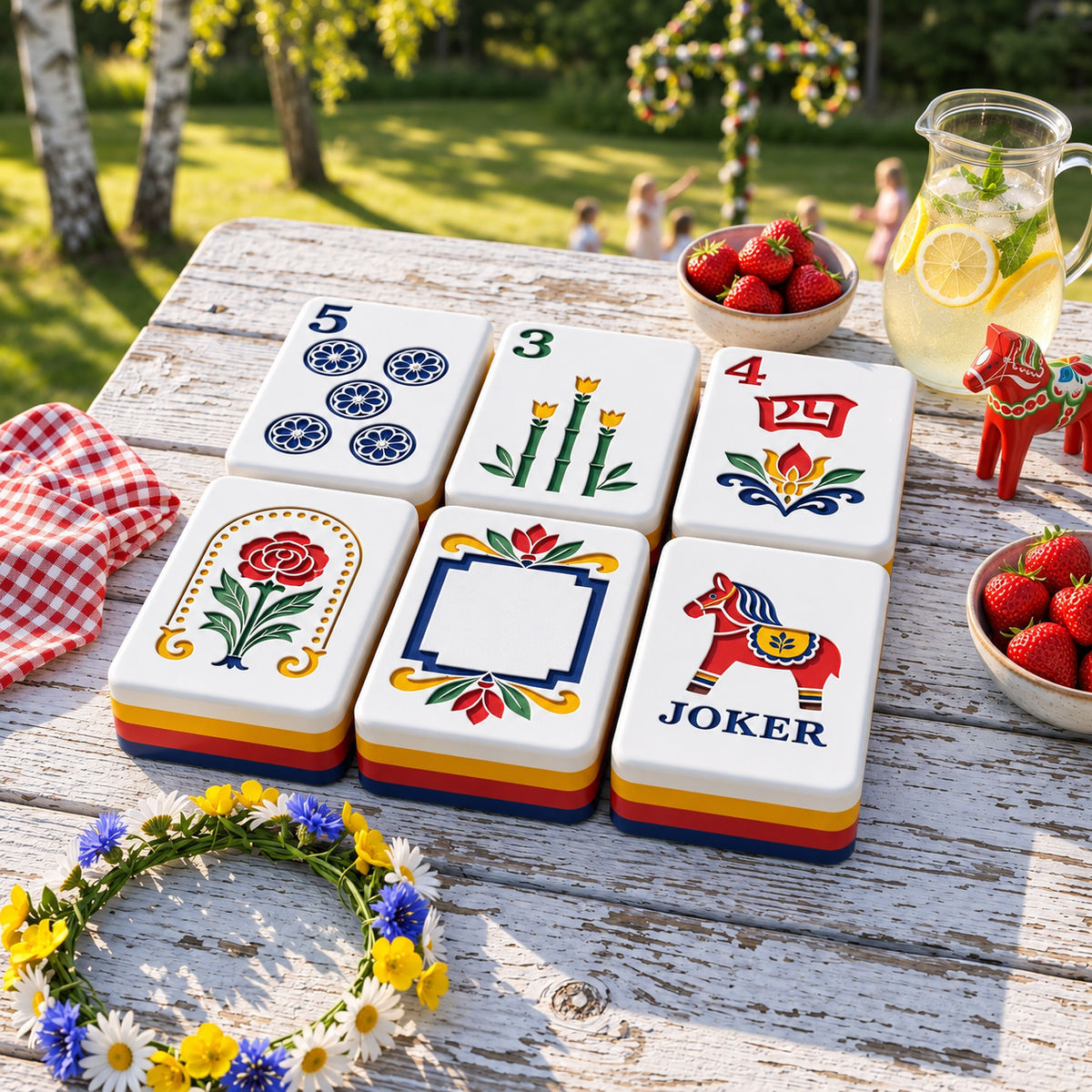
Mahjong appeals to Gen Z for three core reasons: it's deeply social (four players, no phones), it rewards pattern recognition over luck, and the tiles themselves are visually striking. American mahjong—the most common variant in the US—uses 160-tile sets with bamboo or acrylic tiles, takes 30–90 minutes per game, and requires learning one year's hand card (released each spring by the National Mah Jongg League). Unlike chess, you don't memorize thousands of positions; you learn the card, practice the Charleston (pre-game tile exchange), and play. The barrier to entry is low: most communities have free beginner groups at libraries, community centers, or online. Mahstead makes acrylic sets with free US shipping, perfect for players who want durability and style without the price tag of traditional bone-and-bamboo sets.
Why is mahjong suddenly everywhere on Gen Z social media?
Gen Z gravitates toward games that demand presence. Mahjong requires eye contact, live strategy, and real-time decision-making—none of which happen on a screen. TikTok, Instagram, and BeReal have amplified visibility (players film unboxing videos, tile shuffles, and winning moments), but the core appeal is older: it's a four-player game where luck matters less than reading your opponents, managing your hand, and adapting to a changing card each year. The aesthetic—ivory and jade tiles, bamboo racks, felt mats—photographs beautifully, which doesn't hurt. But players report the real hook is the social ritual: weekly games become recurring friend dates, a non-negotiable block on the calendar.
How is American mahjong different from what my parents play?
American mahjong is one of five major variants worldwide, and it's uniquely rigid by design. Chinese, Hong Kong, and Riichi (Japanese) mahjong allow hand sequences (chows: three consecutive tiles like 2-3-4) and let players call tiles on the table. American mahjong forbids sequences entirely—every exposed group must be a pung (three identical tiles), kong (four identical), quint (five), or sextet (six). Hands come only from the current year's National Mah Jongg League card, which resets each spring. This constraint removes argument: if your hand isn't on the card, it doesn't win, period. For Gen Z, this clarity is appealing—no house-rule debates, no gatekeeping. If you learned a variant from relatives, that knowledge doesn't transfer; American mahjong is its own language. The upside: games play faster (30–90 minutes), new players can compete on day one, and the card creates a shared learning curve for everyone.

What does a beginner actually need to buy?
Start with one complete set. A 160-tile American mahjong set includes 152 playing tiles (four copies of each of 38 designs: the suit numbers 1–9 in Bams, Craks, and Dots; four winds; three dragons; flowers; and jokers) plus spare tiles. You do not need a mat, rack, or bag immediately—many groups play on a kitchen table with hands held or propped up. However, if you're hosting weekly, a mat protects your table and speeds up play by giving tiles a sliding surface. The best-selling mahjong sets at Mahstead are acrylic: durable, lightweight, dishwasher-safe, and available with personal engravings (names, jokes, group mottos). Acrylic is louder than bone—tiles click instead of whisper—but Gen Z players often like that; it adds ritual to the draw. If aesthetics matter (they do to this generation), pick a design before you buy; you'll reach for it more often.
🀄 Shop best-selling mahjong sets →
What's the real learning curve—weeks or months?
Competency takes 4–8 weeks of weekly play; mastery takes years. Week one, you learn the tile names and the card layout. The card is a grid of hand patterns; you learn to scan it fast. Week two, you practice the Charleston (the ritual tile-passing before each game) and exposure rules. Week three, you play slowly, checking the card after every turn. By week six, you're playing near-normal speed and reading opponents' discards to infer their hand structure. The hardest concept for Gen Z players is that you're not trying to draw one specific winning hand; you're adapting to tiles as they come, pivoting between three or four possible hands on the card. Your brain adjusts. New players often expect dominance; experienced players know humility. That gap narrows fast if you play consistently. Use the pillar guide on mahjong for beginners to sidestep the most common first-month mistakes (calling tiles in the wrong order, misreading flower exposure, joker placement).
Where do you actually find a Gen Z mahjong group?
Most cities have online communities (Meetup, local Facebook groups, subreddits) where mahjong players post weekly games. Community centers, libraries, and synagogues often host open play Thursday or Sunday evenings. If you know one player, ask them—most groups welcome newcomers at a casual game. Virtual play (Tile Master or similar apps) is not a substitute; you need to hold tiles and see faces. If no group exists in your area, start one: post on Meetup, invite friends, and buy one good set. People will come. Gen Z groups tend to skew younger than traditional mahjong circles, play faster, text between turns (less etiquette friction), and often blend it with snacks or music. Set a regular day—Tuesdays at 7 PM—and stick to it. Consistency builds habit. Once three friends are in, you have a game.

What should a Gen Z beginner avoid?
Mistake | Why it hurts | What to do instead |
Buying a 144-tile "travel" set | Missing tiles; you can't complete a legal game | Buy a full 160-tile American set |
Mixing variants | Rules conflict; game stops | Ask your group which variant they play; learn one |
Ignoring the yearly card | Hands become invalid mid-spring | Buy the current year's card; toss last year's |
Placing jokers carelessly | Exposure rules collapse; scoring breaks | Use jokers only in groups of 3+ identical tiles |
Skipping the Charleston | Game becomes unfair; tile distribution fails | Learn it in 15 minutes before your first game |
🎁 See our most-loved mahjong sets & accessories →
How to read the mahjong card (and not panic)
The yearly National Mah Jongg League card is a 4×5 grid of hand patterns. Each cell shows a winning combination: a specific mix of pungs, kongs, pairs, and jokers. Your job is to spot which pattern on the card matches the tiles you're drawing. The card uses shorthand: "2024 Like" means a hand with 2024 tiles; "Like" is the pattern label. Learn to scan by hand type (all Bams? All winds? Mixed?). Most groups play with the card printed and laminated. How to read the mahjong card details every notation. Week one, you'll flip the card constantly. Week four, you'll glance at it twice per hand. The card isn't meant to slow you down forever; it's a reference you internalize. Gen Z players often screenshot the card or use a phone PDF at home but play with the physical card in-game (house rule varies).
What hosting gear actually makes a difference?
If you host a weekly game, three things matter: a mat, a set you like enough to leave on the table, and light. A mahjong mat protects your table, gives tiles a soft non-skid surface (so they don't scatter when someone sneezes), and signals to guests that you're serious. Mats cost less than a set and last years. Acrylic mahjong racks with pushers are optional—many players prefer to hold their hand—but they speed play and reduce table collisions. A dedicated set (not a loaner) means your friends associate Tuesday night with your tiles; they'll show up. Get a set you genuinely love looking at; it matters more than you'd think. Finally, sit under a lamp. Tiles are small; lighting is everything. Gen Z players also appreciate a speaker for lo-fi beats or ambient music; it keeps the vibe social without distraction.
✨ Find your Mahstead set — free US shipping →
What to check before you buy a set
Tile size: American mahjong tiles are roughly 1.25 × 0.75 inches. Check the product photo or specification; your hands should feel comfortable holding 13–14 tiles.
Material: Acrylic is dishwasher-safe and durable; better for frequent play and homes with kids or pets. Bone-and-bamboo is traditional but fragile and pricey.
Tile count: Buy a full 160-tile set. Smaller "travel" sets lack enough tiles to play a complete game.
Weight and storage: Acrylic sets are lighter; easier to transport if you play at friends' houses. Check whether your set ships in a bag or box; either is fine, but know what you're getting.
Jokers and spares: A 160-tile set includes spares beyond the 152 playing tiles. Don't worry about the exact count; you'll use the 152 tiles for play and keep spares in the box.
Card included: Most sets do not come with the current year's mahjong card. Buy or download it separately (the National Mah Jongg League publishes it each April).
Gen Z mahjong is thriving because it solves a real need: community, strategy, and beauty all at once. Start with one set, find a weekly game, and give yourself six weeks before you judge. You'll be teaching friends by fall.

FAQ
Is American mahjong easier than Chinese mahjong?
American mahjong has fewer hand possibilities (the yearly card limits options) and no sequences, making it simpler to learn fast. Chinese mahjong has more ways to win but takes longer to master. Both are equally fun; American is faster to play competitively as a beginner.
Do I need to buy special tiles, or can I use an app?
Apps teach the rules, but real mahjong—the social connection Gen Z seeks—requires physical tiles and in-person players. Apps don't replace the tactile ritual or face-to-face reading of opponents. Buy a set and play with people.
Can four Gen Z players with zero experience teach each other?
Yes, but slowly. One person should learn the rules first (watch a YouTube tutorial or read our beginner guide), then teach the group. Without any reference, you'll loop back to questions repeatedly. One expert accelerates the group by weeks.
What's the cheapest way to get started?
Buy one 160-tile acrylic set and share the current year's card (print it free or download a PDF). Invite three friends. Play on any table. No mat or rack needed week one. The set is your only hard cost; everything else scales with how serious you become.
Can Gen Z play mahjong online with their friends?
Online apps (Tile Master, Mahjong Soul) exist but lack the social magic in-person play delivers. Gen Z players often use apps to learn rules, then switch to physical sets for the weekly ritual. The tiles matter as much as the game.
How often do Gen Z groups actually meet?
Most player groups meet once weekly (usually 2–4 hours). Some meet biweekly or monthly. The consistency matters more than frequency; a Tuesday at 7 PM every week builds habit faster than sporadic games.


View More
View More
View More
