
Mahjong Safe Discards Tips: How to Avoid Giving Opponents Winning Tiles
Last updated: Nov 23, 2026
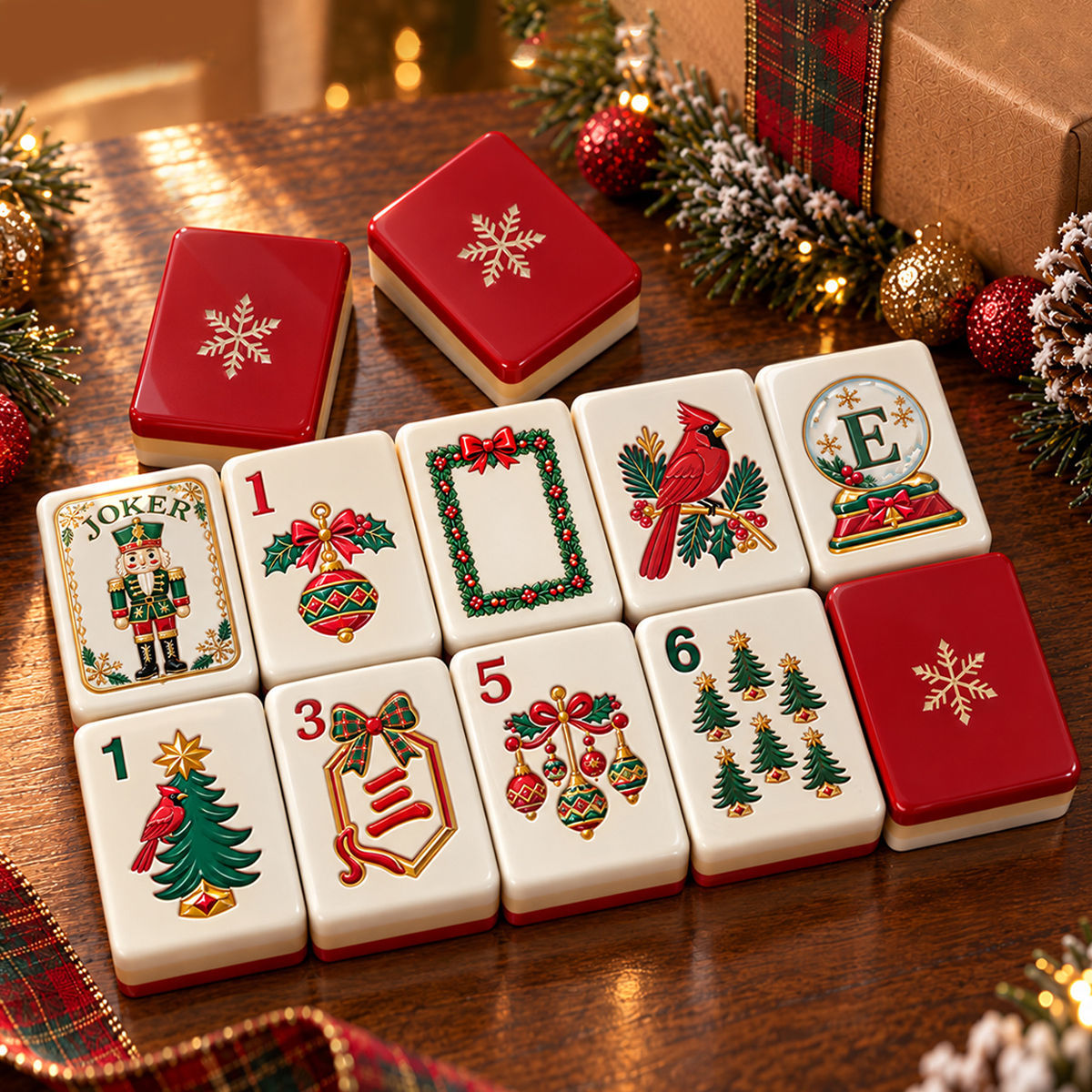
Safe discards in American mahjong are tiles you throw when you can't play them in a hand, and ones that appear to offer opponents the least advantage. The core principle: discard early (before exposures appear), discard honors and terminals first, and avoid matching tiles recently exposed or called. Watch what other players pick from the wall or dead wall—if someone calls a pung of 5 Dots, throwing a 4 or 6 Dot invites chows in adjacent games or suggests you're collecting that suit. Discard tiles in discard piles that haven't been stolen; avoid completing obvious pairs or sequences for neighbors. The earliest discards (the first 8–12 tiles your hand sheds before the first exposure) are statistically safest because the card hasn't revealed hand patterns yet.
🀄 Shop best-selling mahjong sets →
Why does discarding order matter more than tile rank?
The first 8–12 discards you make before anyone calls an exposure carry almost no information about your hand shape. Once exposures appear, every discard becomes a tell—you're either playing a hand that doesn't need a certain suit, or avoiding that suit to protect a different one. Discard early (from your original 13 tiles) before the card strategy becomes visible. After the first few calls, opponents are already mapping your tendencies: if you haven't thrown a single Bam in six turns, they know you're either collecting them or avoiding them deliberately. Discard your safe tiles (honors, outer numbers like 1s and 9s) before your hand narrows to a specific suit or number range; it's harder for opponents to steal what they can't anticipate.

What tiles should you throw first to stay safe?
Start with honors (Winds and Dragons) unless they're in your hand. Dragons are often the first casualties because three identical Dragons are a pung, and the card rarely demands all four of one Dragon type. Winds vary by seating—East is usually less common on your hand than West or North, depending on the current year's card. Throw outer numbers (1s and 9s in each suit) early; they're restrictive in sequences and rarely appear in three-number groupings. If you're holding 1 Bam, 1 Crak, and 1 Dot, discard them in turn—you need only one if any, and three of the same number across different suits signals weakness in that number. White dragons (Soap) are almost always safe early unless you're holding multiple 0-tiles or blanks in a specific hand. Flowers are wild cards—they're free exposure for any player, so don't worry about feeding them; just add them to your collection when they appear. Once you've cleared honors and outer numbers, you're left with mid-range tiles (4, 5, 6) and inner numbers (2, 3, 7, 8), which are your hand's real decisions.
How do you spot which numbers opponents are collecting?
Watch the discard piles and any exposed melds (pungs, kongs, quints, sextets) on the table. If East has called three 5 Dots already (exposed as a pung or stolen from a discard), and North has picked a 5 Dot from the wall earlier, assume 5 Dots are highly active. Throw your 5 Dots early if you have them; throw them sooner if no one has called them yet (you're less likely to feed a winner). If a player hasn't thrown any tiles from a suit for five turns but has thrown every number in another suit, they're building in the first suit. Never throw a tile that's "clean" (not yet called or exposed) if the player to your right just cleared a pung—they're deep in one hand and may be desperate for a common tile to complete it. Track the first discard of each player in each suit; it's often the tile they're least interested in defending. If West discards 3 Craks as their first Crak, they either don't need Craks or are willing to risk it; if they later discard 7 Craks, they were right—they were avoiding that suit. The discard pile order matters too: a tile thrown in the first ten discards is safer than one thrown after three calls, because early discards predict less.
🎁 See our most-loved mahjong sets & accessories →
What's the "clean tile" rule and why does it protect you?
A clean tile is one that hasn't been exposed, called, or discarded yet in the current game. If you're discarding in a round where no one has played Winds, throwing a North Wind is cleaner than throwing a 5 Dot (which may have been called or exposed elsewhere). Clean tiles are statistically safer because if an opponent steals your discard, they're cycling a tile they haven't yet shown—it reveals less about their hand and commits them less visibly. However, the timing of the clean tile matters: discard clean tiles early (turns 1–4 for most players), when the card is still forming. Late in the hand (after three or more calls), clean tiles become suspects; an opponent holding a clean tile late usually means they're saving it intentionally. If you're the last player to discard before a win, and you throw a tile that's still clean everywhere, you've likely lost—you should have discarded it earlier when the risk was lower. The safest clean tiles are those that appear in many hands on the current card; if 7 Bam shows up in 60+ hands, throwing 7 Bam early is safer than throwing a rarer tile, because more discard activity has already "tested" 7 Bam and proven it's not winning anyone nearby.
How does seating position change your discard safety?
Your position relative to the dealer (East) and wind changes what you can safely discard. East seat (right side of dealer) plays first and discards into dead positions earlier; your early discards are genuinely safer because the hand hasn't formed. South seat (dealer's left) plays last in the round and sees three other players' exposures before acting; you have more information, so discard fewer honors and more calculated mid-range tiles. North and West seats (top and bottom) see partial information and often have the most pressure—you're in the middle of the decision flow. The player sitting to your left is most dangerous because they can steal your discard immediately; avoid throwing any tile that could complete their exposed pung or quint. The player sitting directly across is less urgent (they play third), but they're still close to your right neighbor; if both could use a tile, the one to your left will steal it first, which is actually good—it feeds a pung instead of letting a later player use it in a winning hand. The dealer (East) breaks the walls and sets the tone; if the dealer is calling everything they touch, discards in their direction are riskier. Use mahjong racks with pushers to keep your tiles organized and your hand hidden; organized hands reduce hesitation and let you discard faster (before you telegraph your holdings).

What mistakes should you avoid when discarding?
Never discard a tile you've just picked from the wall unless you're sure it's safe. If you draw a 6 Crak and no one has exposed Craks, you'll spend the next discard thinking—in those seconds, experienced opponents can already guess you picked something playable. Discard it immediately if you don't need it, or hold it if you do. Don't discard in patterns. If you throw Winds, then Dragons, then low numbers, you're signaling your hand's structure; vary your discards to confuse the table. Avoid throwing the same tile your neighbor just picked. If West just picked a 4 Dot from the discard pile, don't throw another 4 Dot two turns later; it looks like you're copying their strategy or that 4 Dots are abundant (which makes them a weak choice for you). Never throw a tile right after someone calls an exposure of that type. If North calls a pung of Red Dragons, don't throw another Red Dragon next; wait at least one turn. Don't hold onto mid-range numbers (5s and 6s) too long. If you throw 1s and 9s early but keep 5s and 6s until turn 8, you're screaming that you're building a hand with those central numbers. Avoid the "clean tile" trap late in the hand. If you're in turn 10+ and you still have a tile no one has called or discarded, it's probably not safe—someone else is holding it and waiting; throw something more active instead.
Mistake | Why It Hurts | How to Fix It |
Discard fresh pick immediately | Opponents see indecision and map your suit | Discard immediately if unneeded, or hold naturally |
Throw in predictable order | Players guess your hand's shape early | Vary honors, numbers, then suits randomly |
Mirror opponent's recent discard | Signals you're chasing their strategy | Wait one turn before discarding a similar tile |
Hold mid-range tiles too long | Reveals your hand structure blatantly | Shed 5s and 6s in the first six discards |
Throw clean tile late in hand | Suggests coordinated avoidance | Discard clean tiles early; late clean tiles are suspicious |
Copy a stolen discard too soon | Shows poor reading of table state | Vary your next discard by at least one tile type |
✨ Find your Mahstead set — free US shipping →
How does reading the card improve your discard choices?
Understanding how to read the mahjong card lets you anticipate what hands are likely and which tiles are overused. If this year's card has twelve hands that use 5 Dots but only two that use 5 Craks, 5 Dots are riskier—more opponents are probably hunting them. Hands with many Winds are less common than hands with many Bams, so discarding extra Winds is usually safer. If a hand uses a specific Dragon (say, Green Dragon in five of the year's hands) and that hand's other elements are exposed on the table, avoid throwing that Dragon. Conversely, if a Dragon appears in only one hand on the card and that hand's other elements haven't shown up yet, the Dragon is probably safe for a few more turns. Pay attention to hands with quints (5 matching tiles) and sextets (6 matching tiles); these are rare and require commitment, so if no one is exposing them, the tiles involved are safer to throw. Hands with complex sequences (many different numbers) use common tiles; hands with simple repeating patterns (lots of pungs and kongs) use fewer tile types but in higher volume. A hand with six pungs demands more of the same-number tiles across all suits, so if you see three identical numbers exposed early, throw the fourth copy of that number if you have it—someone is already committed and won't win with your tile.
What's the difference between safe and "dead" discards?
A safe discard is one that no one is actively hunting and that reduces your risk of feeding a winner. A dead discard is one that's been sitting in the dead wall or a discard pile untouched for multiple turns, or one that's so common that even if stolen, it doesn't strengthen anyone's hand. Dead discards are often honors, flowers, or very early-thrown tiles from the first two rounds. However, a dead discard isn't always safe late in the hand; if a tile has been dormant for eight turns and then appears in a critical position, it may be dead for a reason—maybe everyone avoiding it signals that no active hand needs it, or everyone needs it but can't afford to show it. The safest discards combine both properties: a tile that's early in the hand and not yet called. The riskiest discards are tiles that have just been called, exposed, or picked—they're active and dangerous. Mid-range tiles (like 5s and 6s) are rarely dead unless they're part of a saturated suit (all four copies are in play or discarded); numbers with only one or two copies in circulation are more dangerous because a third copy from your hand can complete a hand more easily than a fifth or sixth.
What to check before you buy your next set
When you're playing regularly and focusing on discard strategy, reliable tiles and good visibility matter. Look for engraved American mahjong sets with clear numbering and suit symbols; if tiles are hard to read mid-game, you'll hesitate, and hesitation broadcasts your hand. Acrylic tiles are durable and won't chip from table contact (a worn tile can flip your hand visibly). Check that your mahjong mat has a silk or velvet surface—it slows tiles just enough that you can discard deliberately instead of accidentally flinging a tile across the table. If you're playing at a fixed venue, a travel bag keeps your set protected between games. Many of our players also recommend keeping a small notebook at the table to track discards; a notepad fits inside a Mahstead bag alongside your set. For hosted games, a best-selling acrylic set with coordinated mat and racks creates a professional table that helps all players read the game more clearly.

FAQ
Can I discard a tile immediately after picking it from the wall?
Yes, but only if you're confident it's safe. Experienced players often discard instantly to avoid telegraphing their hand, but hesitation signals uncertainty and alerts opponents. If you must hold and think, do so before drawing the next tile, then discard your pick quickly once you've decided. The key is consistency—if you always hold and think, opponents won't read your specific choice as suspicious.
What does it mean if I keep throwing the same suit as my neighbor?
It likely means you're both avoiding that suit, or you're both hunting it but discarding mismatches. If you're throwing 2 Dots and they're throwing 3 Dots and 7 Dots from the same suit, you're not competing; you're both clearing that suit from your hands. If you're throwing mid-range numbers (4, 5, 6) from a suit and they're throwing terminals (1, 9), they're building in that suit and you're not—mirror their pattern only if you're also building, otherwise it looks like poor play.
Should I discard honors first or save them for when I really need space?
Discard honors first. Honors (Winds and Dragons) are restrictive and rarely appear in sequences or flexible patterns; if you're not collecting them intentionally, they're deadweight. Throwing early signals that you're not hunting honors, which is safer than holding them and signaling uncertainty. The exception: if the hand you're playing requires all three of one Wind type, hold those specific honors until you're sure they're not winnable.
How do I know if a tile is "alive" (someone wants it) vs. "dead" (no one is hunting it)?
Alive tiles are those that have been picked from the wall, called in exposures, or held in discard piles for only one or two turns before being picked by another player. Dead tiles are those that sit in discard piles for five or more turns untouched, or were discarded early and never recovered. Watch the dead wall zone; anything sitting there past turn six is probably dead. However, timing matters—a dead tile in turn three is not the same as a dead tile in turn ten; late in the hand, a truly dead tile is suspicious and may signal that everyone is avoiding it intentionally.
If I mess up a discard and feed someone a winning tile, what's the penalty?
In American mahjong, the player who discards the winning tile pays the full hand value to the winner (or a shared penalty depending on house rules). There's no "oops, take it back"—the hand is over. This is why reading discards and tracking table state is so critical. Many groups use a scoresheet or agreed house rules; always clarify before the game starts whether the discarder pays solo or if everyone chips in a penalty to the winner.


View More
View More
View More
