
Mahjong Rack Bag: How to Choose the Right Carrier for Your Set
Last updated: Nov 23, 2026
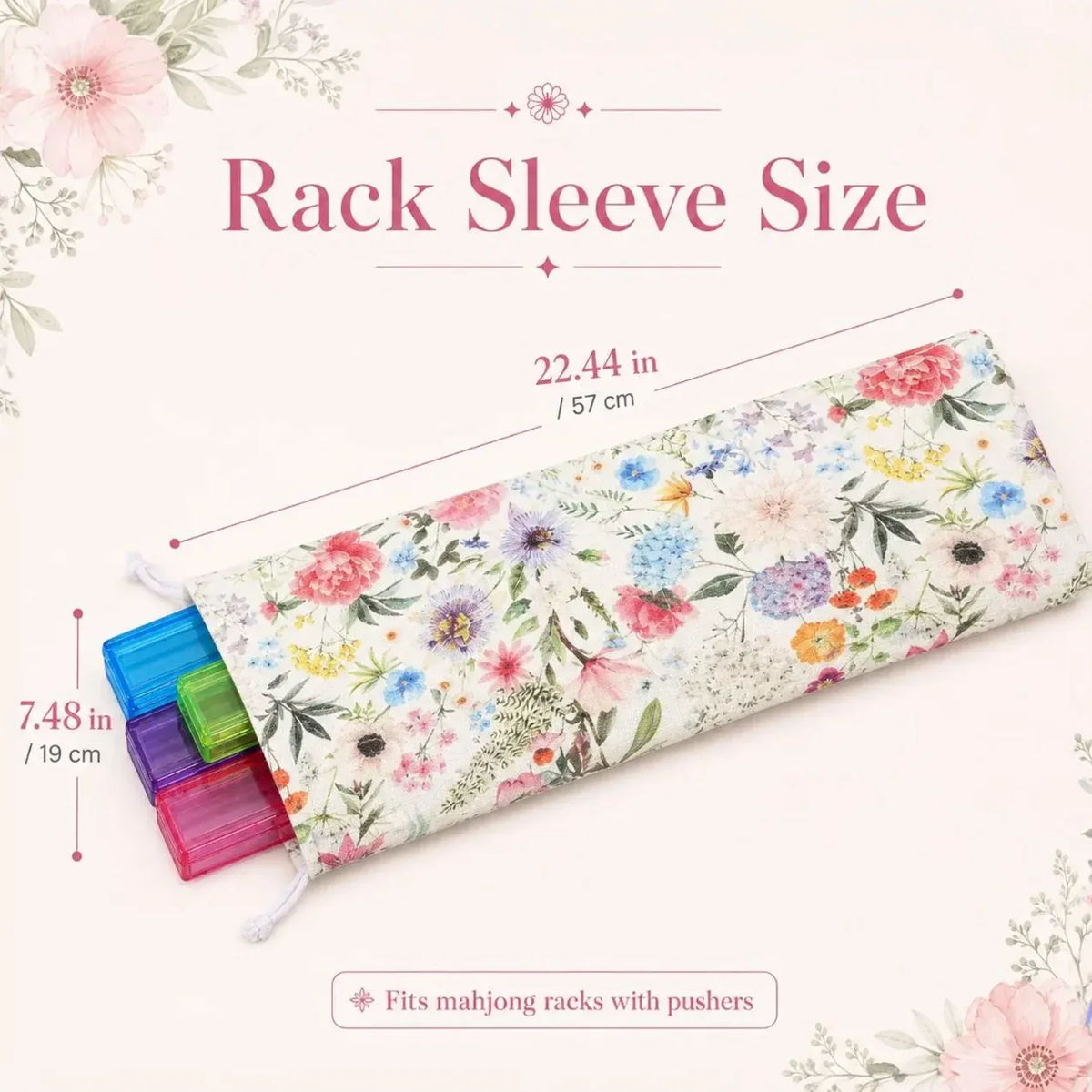
A mahjong rack bag is a protective carrier designed to hold your tiles, racks with pushers, mat, and accessories in one compact piece. Most combine a structured outer shell with padded compartments to prevent tile chips and loss during travel. They range from soft fabric cases (lightweight, portable) to hard shells (maximum protection) to roll bags (space-efficient for frequent movers). When shopping, prioritize internal padding thickness, compartment sizing, and whether the bag fits your mat (most American mahjong mats are roughly 27″×27″ when folded). Mahstead's bags and cases collection includes designs with tile-specific slots and reinforced handles for weekly game transport. Cost varies widely based on material and capacity; check the product page for current pricing. Before ordering, measure your mat when folded and confirm the bag's interior dimensions online—an oversized bag wastes money, while one that's too snug risks crushing tiles.
What's the difference between soft-sided and hard-shell mahjong bags?
Soft-sided bags use thick canvas, nylon, or synthetic leather over foam padding; they're lighter, fold flat when empty, and cost less. Hard-shell cases offer rigid protection like luggage, safeguard against crushing and theft, but add weight and don't compress for storage. For players who toss the bag in a car trunk between games, soft-sided wins. For frequent air travel or storage on crowded shelves, hard-shell pays off. Soft-sided is ideal for local weekly games; hard-shell suits tournament players and those with expensive engraved American mahjong sets.
🀄 Shop best-selling mahjong sets →

How do I know if a bag will fit my mahjong mat and set?
Measure your mat when folded in thirds (the standard carry fold). Most American mats compress to roughly 27″ × 9″ × 3″. Check the bag's interior dimensions on the product page—look for length, width, and depth in inches. A mat should slide in with at least 1″ clearance on all sides; if it's a tight squeeze, the mat creases and the bag zipper strains. American mahjong sets sit flat and occupy minimal depth once their tiles are in racks with pushers. Reserve the remaining space for tile pouches, dice, and spare jokers. Never force a mat into a bag smaller than 30″ × 12″ × 4″ interior.
What's the best bag style for weekly home games?
Weekly home players benefit from soft-sided cases with easy-access top zippers and carry handles you can grab with one hand after dinner. Compartments should separate tiles from the mat to prevent felt snagging and protect racks. Many players appreciate a bag that sits flat on a side table during play, letting you pull tiles mid-game without rummaging. Interior pockets for the score card, official mahjong card, and rules sheet keep everything together. Avoid bags with hard frames along the bottom if you plan to set it on a lap or fold it for storage in a closet; they're overkill for the den.
Should I buy a roll bag or a carry bag?
Bag Style | Best For | Carry Comfort | Storage Footprint | Protection Level |
Soft carry | Weekly home games | Shoulder strap; 5–8 lb | 30″ × 12″ standing | Good (padding, no rigidity) |
Roll bag | Car travel; active players | Wheeled handle | 24″ × 12″ standing or laying flat | Good (compact, flexible) |
Hard shell | Air travel; tournaments; expensive sets | Roller bag handle; heavier | 28″ × 15″ standing | Excellent (rigid walls) |
Over-shoulder tote | Casual players | One-handed grab | Folds flat when empty | Fair (minimal padding) |
Roll bags excel for players who ferry the set between three homes (yours, your mom's, the country club). They're narrow enough to fit car doors and closet shelves. Hard shells work for tournament circuits where bags survive airport baggage handlers and get stacked. For a best-selling mahjong set used at one or two weekly locations, soft carry wins on value and convenience. Choose based on how often you move it and how far.
🎁 See our most-loved mahjong sets & accessories →
What padding thickness do I need to protect tiles?
Tiles are ceramic, bone, or acrylic; they chip if dropped or crushed by pressure. Most quality mahjong bags feature 0.5″ to 1″ of closed-cell foam padding glued to interior walls. Padded dividers between tile compartments are critical—they prevent tiles from grinding against each other during car braking or luggage shifts. If the bag feels thin when you press the sides, tiles have no margin of safety. Check product photos and descriptions for explicit padding depth; if none is listed, email the seller. Never rely on a bag that's only lined with thin fabric; padding saves tiles and your money.
How do compartments and pockets improve organization?
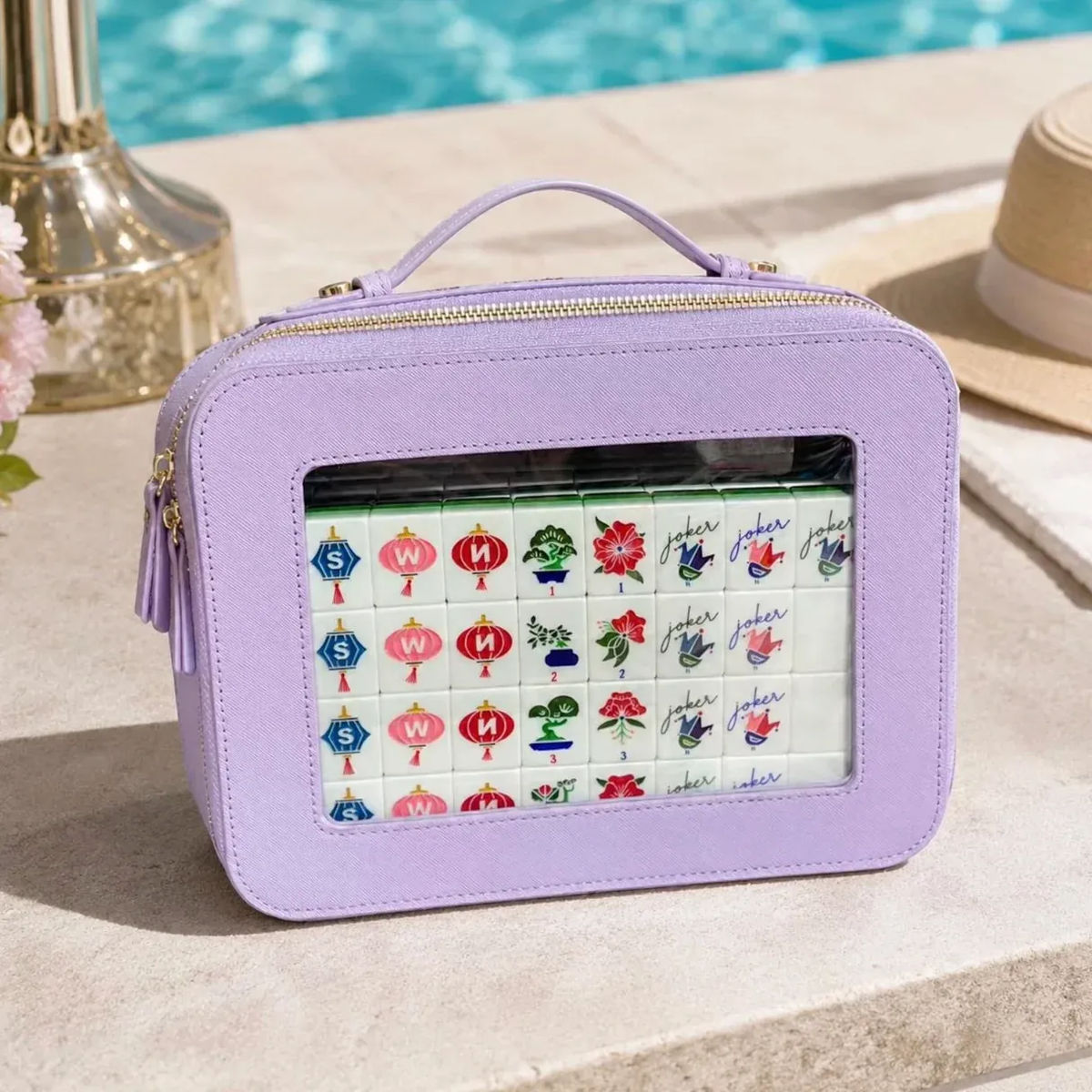
A well-organized bag has separate slots for tiles (grouped by suit or in the set's original box), racks with pushers, the mat folded in thirds, and a top pocket for small items. Tile compartments with dividers mean you find a specific suit instantly—no dumping tiles on the table before play. Mesh or clear pockets let you see dice, markers, or spare jokers without unzipping everything. An external zippered pocket holds the annual mahjong card, pen, and score sheet. Good compartments also reduce tile rattle during transport; movement causes chips. Bags with fewer than three interior zones tend to become jumbled after two or three road games.
What should I check before ordering a bag online?
Before clicking "buy," verify these five points to avoid costly returns:
Interior dimensions – Measure your folded mat and confirm it fits with 1″ clearance; multiply length × width × depth in inches and compare to the product listing.
Padding thickness – Confirm the product description or photo shows at least 0.5″ foam on walls; if silent, ask the seller.
Weight capacity – American mahjong sets with accessories weigh 8–12 lb. Check the bag's stated capacity is at least 15 lb to allow a safety margin.
Zipper quality – Read reviews or ask: are zippers brand-name (YKK, Riri) or generic? Cheap zippers jam after 20 trips.
Compartment count – Count the interior pockets and dividers. Fewer than three zones means you're hunting tiles every game.
Read product photos from multiple angles, check the dimension chart against your mat, and confirm the seller offers returns within 30 days. Mahstead ships free across the US, so ordering is low-risk; incorrect sizing is the only downside.
✨ Find your Mahstead set — free US shipping →
Which bag pairs best with an engraved mahjong set?
If you've invested in a personalized or engraved American mahjong set, upgrade to a padded case with at least 0.75″ foam and a hard-shell option. Engraved tiles are slower to replace than stock sets, so protecting them matters. A bag with a reinforced handle (double-stitched, rated for 20+ lb) and a lockable zipper adds peace of mind for tournament play or storage. Avoid over-shoulder totes for precious sets; a structured bag with handles and a shoulder strap offers both hands-free carry and full protection.
What does free shipping mean for heavy bags?
Mahstead offers free US shipping on all orders, including heavy mahjong bags and complete set packages. You pay no surprise fees at checkout, and bags typically arrive in 5–10 business days via standard ground service. If you're combining a mahjong set, a mat, and a bag, the free-shipping benefit applies to the full order. This removes the pressure to buy a cheaper bag locally to avoid shipping costs; buying online and bundling often saves money overall. Always confirm the tracking number when it ships.
Decision Framework: How to Pick Your Mahjong Rack Bag
Step 1: Define your use case. – Weekly home game? → Soft carry bag, 30″+ interior length. – Multi-location play (3+ homes)? → Roll bag or hard shell for durability. – Tournaments or air travel? → Hard shell with roller handle. – Casual monthly play? → Budget tote with basic padding.
Step 2: Measure your mat. Fold your mat in thirds (or check the product spec if you don't own one yet). Record length, width, depth. Add 2″ to each dimension for clearance inside the bag.
Step 3: Check compartments and padding. Count interior zones (aim for 3+). Verify foam padding listed as at least 0.5″. Confirm exterior pockets for small items.
Step 4: Compare price and weight. Soft bags typically weigh 2–4 lb; hard shells 4–7 lb. Lighter is better for hand-carry; heavier is more durable for frequent moves.
Step 5: Read the return policy. Most online sellers, including Mahstead, accept returns within 30 days if a bag doesn't fit or feels fragile. Try before committing to a second bag.
Once you've chosen, explore our travel bags in person or online to find one that matches your game style and set investment.

FAQ
Can I use a regular duffel bag for my mahjong set?
A plain duffel bag without padding risks tile chipping and loss. Tiles rattle during car braking, and heavy items stacked on top crush them. Always use a padded case designed for mahjong to protect your investment.
What's the typical interior size of a mahjong bag that fits a mat and set?
Most quality bags measure 30″ to 36″ in length, 11″ to 14″ in width, and 4″ to 6″ in depth inside. This fits a folded mat (roughly 27″ × 9″ × 3″) plus a tile set in racks. Measure your mat before ordering to confirm fit.
Do mahjong bags come with handles or should I buy one with wheels?
Many bags offer both: padded carry handles for short trips and an optional shoulder strap for hands-free carry. Hard shells often include a retractable roller handle like luggage. Choose based on whether you're walking (handle) or rolling (wheels through an airport or convention center).
How do I prevent tile noise inside the bag while traveling?
Use padded interior compartments and tile dividers to immobilize tiles. Wrap the mat around the racks to muffle sound. Avoid gaps between items by filling empty space with the score card, dice, and small pouches. A well-packed bag is nearly silent during transport.
What should I do if a bag's zipper breaks after three months?
Contact the seller or manufacturer immediately with photos of the break. Most reputable brands replace or repair bags within warranty. Mahstead stands behind product quality; if you experience a defect, reach out with order details and photos for a solution.
Can I fit both an American mahjong set and a mat inside a single bag?
Yes—most standard bags are designed for this. The set in racks occupies roughly 12″ × 8″ × 3″. A folded mat takes 27″ × 9″ × 3″. Together they need at least 30″ × 12″ × 4″ interior space, which is the baseline for quality mahjong bags.
Are hard-shell bags worth the extra cost?
Hard shells cost more but last longer and protect expensive or engraved sets better. If you play weekly for years or travel by air, the investment pays off. For casual home games, a soft padded bag is fine and saves money.


View More
View More
View More
