
Mahjong Flowers and Seasons: Meaning and Game Rules
Last updated: Nov 23, 2026
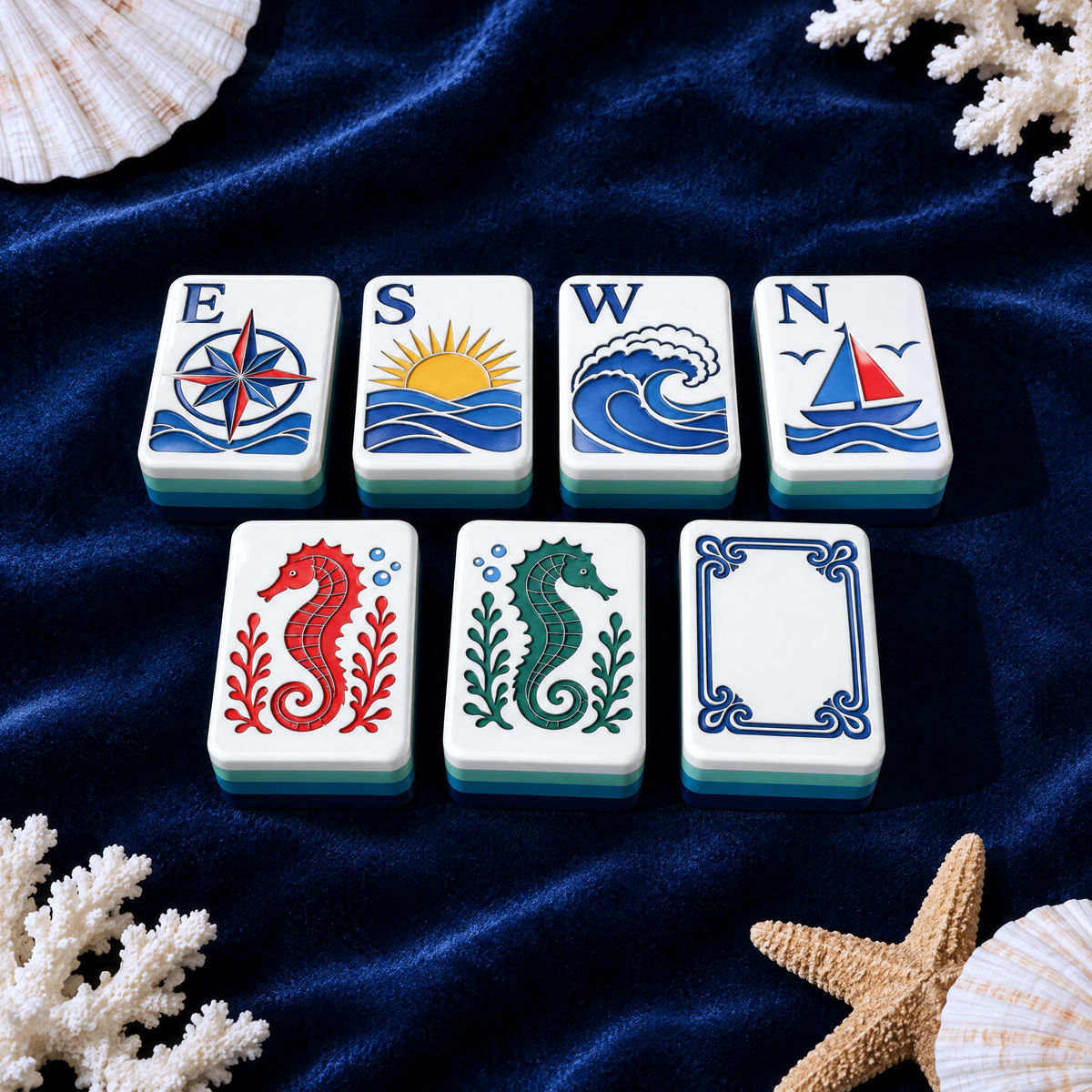
American mahjong includes eight bonus tiles—four flowers and four seasons—each tied to a month or celestial symbol in Chinese culture. Flower tiles (Spring, Summer, Autumn, Winter) and season tiles (numbered 1–4, traditionally representing spring through winter again in some variants) sit separately from the 152 playing tiles and are drawn directly into your hand when exposed during play, replacing the tile you just discarded. Unlike Bams, Craks, and Dots, flowers and seasons cannot be used to form melds; instead, they add points to your score and trigger bonus draws. In American mahjong, when you draw a flower or season, you replace it with a tile from the dead wall (the wall end opposite the dealer), then your turn continues—you still need to discard a regular tile to close your turn. Every flower or season you hold at the end of a winning hand adds value; the exact point bonus depends on the current year's National Mah Jongg League card. Mahstead's engraved sets display these tiles with clear artwork so you'll never confuse a flower with a wind or honor tile during fast play.
The eight flower and season tiles in American mahjong carry symbolic meaning tied to Chinese tradition, but in gameplay they function as bonus tiles that boost your hand and score. Understanding their names, seasons, and how to claim them will sharpen your strategy.
What do the four flower tiles represent?
The four flower tiles traditionally correspond to the four seasons and Chinese aesthetic symbolism. Spring (often shown with plum blossoms), Summer (orchid), Autumn (chrysanthemum), and Winter (bamboo) map to months and virtues in classical Chinese painting. In American mahjong, however, flowers are typically labeled 1–4 or simply named by season; the artwork on premium sets makes recognition instant during play, reducing the pause-and-verify delays that slow down a game. Whether your set shows botanical detail or simplified symbols, the function remains constant: draw one, replace it with a spare tile, continue your turn. The National Mah Jongg League card does not require specific imagery—only that the four tiles are distinct and marked as flowers.

How do season tiles differ from flowers?
Season tiles, also labeled 1–4 or named Spring through Winter, overlap conceptually with flowers in some regional variants but function identically in American mahjong. The key difference lies in tradition: in Chinese and Hong Kong mahjong, seasons are often treated as a separate honor suit with their own melding rules; in American play, they sit in the same category as flowers—bonus tiles that cannot form melds but grant points and a replacement draw. American mahjong does not distinguish gameplay between a "flower" labeled Spring and a "season" labeled Spring; both are drawn, replaced from the dead wall, and scored at hand end. Many newer players confuse this overlap; clarifying that American mahjong treats both as interchangeable bonus tiles eliminates that friction. Premium engraved American mahjong sets label each tile unambiguously so table talk stays focused on strategy, not tile identification.
Why do flowers and seasons award bonus points?
In American mahjong, flowers and seasons are not neutral tiles—they are rewards for luck and positioning. When you draw a flower or season, the tile-drawing mechanics grant you a replacement from the reserve (the dead wall's end tiles), giving you a "free" draw without losing a discard; this maintains your hand size while adding value. The point bonus itself, typically ranging from 2 to 5 additional points per tile held at win (exact value per the current year's card), incentivizes keeping your hand flexible and tracking which bonus tiles remain in play. If you hold two or three flowers by the end, that bonus compounds. Seasoned players factor this into their tile choices during the Charleston and their early melds—a hand strong in dragons and flowers may score less on the multiplier but more on the total because of the tile bonuses. The best-selling mahjong sets we recommend include clear, durable tiles so you'll catch a flower the moment it's exposed and calculate that bonus instantly.
🀄 Shop best-selling mahjong sets →
How do you claim a flower or season during play?
When a flower or season tile is drawn—either from the live wall during your turn or passed to you in the Charleston—you immediately expose it, announce it, and set it aside face-up. You then draw a replacement tile from the dead wall (the 14 tiles set aside at game start, positioned at the end of the wall opposite the dealer). This replacement tile stays in your hand; you do not immediately discard it. Your turn then proceeds normally: you now hold 14 tiles and must discard one regular tile to close your turn and pass play to the next player. If you draw multiple flowers or seasons in one turn (rare but possible), you claim and replace each one sequentially before discarding. The replacement tile drawn from the dead wall can itself be a flower or season—if so, claim and replace it too. This waterfall effect rarely lasts more than two or three tiles but can swing a hand from mediocre to scoreable. Table rule: announce each claim clearly so other players can track the dead-wall reserve and recalculate their tile counts.

What's the common mistake new players make with flowers and seasons?
The most frequent error is treating a flower or season like a regular discard: new players often draw one, panic, and discard it immediately to get back to 13 tiles, not realizing they've thrown away a bonus draw and points. The second mistake is forgetting to replace from the dead wall, leading to a 14-tile hand on your next draw, which breaks the game. The third—and most costly—is not reading the current year's National Mah Jongg League card for the point value: a flower might be worth 2 points in one year's hands and 5 in another, and building a flower-heavy hand without checking can mean committing to a lower-scoring strategy than intended. To avoid these, write the flower point value on a notepad at the start of the session, and teach new players the three-step sequence: draw flower → set it aside → replace from dead wall → resume normal turn. Veterans often hand a new player the card and say, "Show me a hand with two flowers this season"—it forces them to think about the value before committing. Engraved tiles with clear season markings eliminate the risk of misreading a worn tile as a flower or honor.
Scenario | Your action | Outcome | Why it matters |
You draw a Spring flower on your first turn | Expose it, draw from dead wall, discard a regular tile | 13 + flower (bonus) + 1 replacement = 14 tiles total; your turn ends | You stay in tile count and gain a bonus point |
You draw two flowers in one draw sequence | Expose first, replace. Draw next. Expose second, replace. Then discard. | Same count maintained; two bonus tiles scored | Multiple flowers compound; the replacement might be scoreable |
You forget to replace from dead wall after a flower | Your hand grows to 14 after your first draw | On next turn, you draw 15 tiles = illegal hand | Game stops; hand is void; restart from last legal state |
Flower appears in your final winning hand | Tally flower bonus points per current year's card | 2–5 extra points per flower tile held | Separates a 30-point hand from a 40-point hand |
🎁 See our most-loved mahjong sets & accessories →
How do flower and season tiles vary across mahjong variants?
In Chinese and Hong Kong mahjong, seasons are a separate honor suit that can be melded (punged, konged) and are integral to hand formation, not bonuses. In Riichi (Japanese) mahjong, honor tiles are static and flowers are absent; the game relies on sequences (chows) that don't exist in American play. Taiwanese mahjong sometimes treats flowers as in-hand bonuses similar to American rules but with different point structures. American mahjong is unique: flowers and seasons are strictly bonus tiles, cannot form melds, and grant a replacement draw—this design keeps the game fast and prevents the complex hand calculations that slow other variants. If you play across multiple variants, remember that American rules are the simplest: no flower melds, only bonuses. This simplicity also makes American mahjong more approachable for new players who might be intimidated by the point-counting rigour of Chinese variants. When hosting or joining a game, always confirm the variant before shuffling, because flower rules are one of the first things that differ.
What should you check before you buy a new set with clear flower tiles?
Before purchasing a best-selling mahjong set, confirm:
Tile clarity: Can you instantly distinguish a flower from a wind or honor tile under table lighting? Test this with the seller's close-up photos or by examining one in person if possible. Worn or faded sets slow play.
Dead-wall reserve included: Does the set include eight replacement tiles (the standard spare jokers and blanks) for drawing from the dead wall when you claim flowers? A complete 160-tile set includes these by design.
Readability in fast play: Engraved or painted artwork should be legible from across a card-sized table mat. Mahstead's engraved sets include tiles marked with both classical Chinese imagery and clear Roman labels, so even new players won't hesitate.
Durability: Acrylic tiles resist fading better than bone or bamboo. If you host weekly games, a premium material will outlast cheaper alternatives and stay clear for years.
Your variant: Confirm the set is designed for American mahjong (152 playing tiles + spares, no blanks in the main set) rather than Chinese or Riichi variants, which have different tile counts and compositions.
✨ Find your Mahstead set — free US shipping →

FAQ
If I draw a flower, do I skip my discard and pass play immediately?
No. Draw the flower, replace it from the dead wall, then discard a regular tile as usual to close your turn. Your turn has an extra step but does not skip.
Can I use a flower tile to complete a pung or kong?
No. Flowers and seasons cannot form melds. They are bonus tiles only and must be set aside immediately when drawn.
How many points is a flower worth if I win with it in my hand?
Check the current year's National Mah Jongg League card for the exact bonus per flower. This value varies year to year and is set at the start of each spring season.
What happens if all eight flowers and seasons are drawn before anyone wins?
The game continues normally. Some seasons and flowers may remain in the wall or dead wall when the hand ends; that is legal. Only the flowers and seasons in your hand at win time score the bonus.
If I draw a flower from the dead wall as a replacement, do I replace that too?
Yes. If your replacement tile is itself a flower or season, claim it, set it aside, and draw another from the dead wall to replace it. Repeat until you draw a regular tile.
Do flowers and seasons count toward the 152-tile playing count?
No. The 152 tiles are Bams, Craks, Dots, winds, and dragons only. The eight flowers and seasons are bonus tiles separate from the main count and are never drawn or shuffled into the wall at game start.


View More
View More
View More
