
Mahjong Printable Cheat Sheet: Tiles, Hand Patterns & Quick Rules
Last updated: Nov 23, 2026
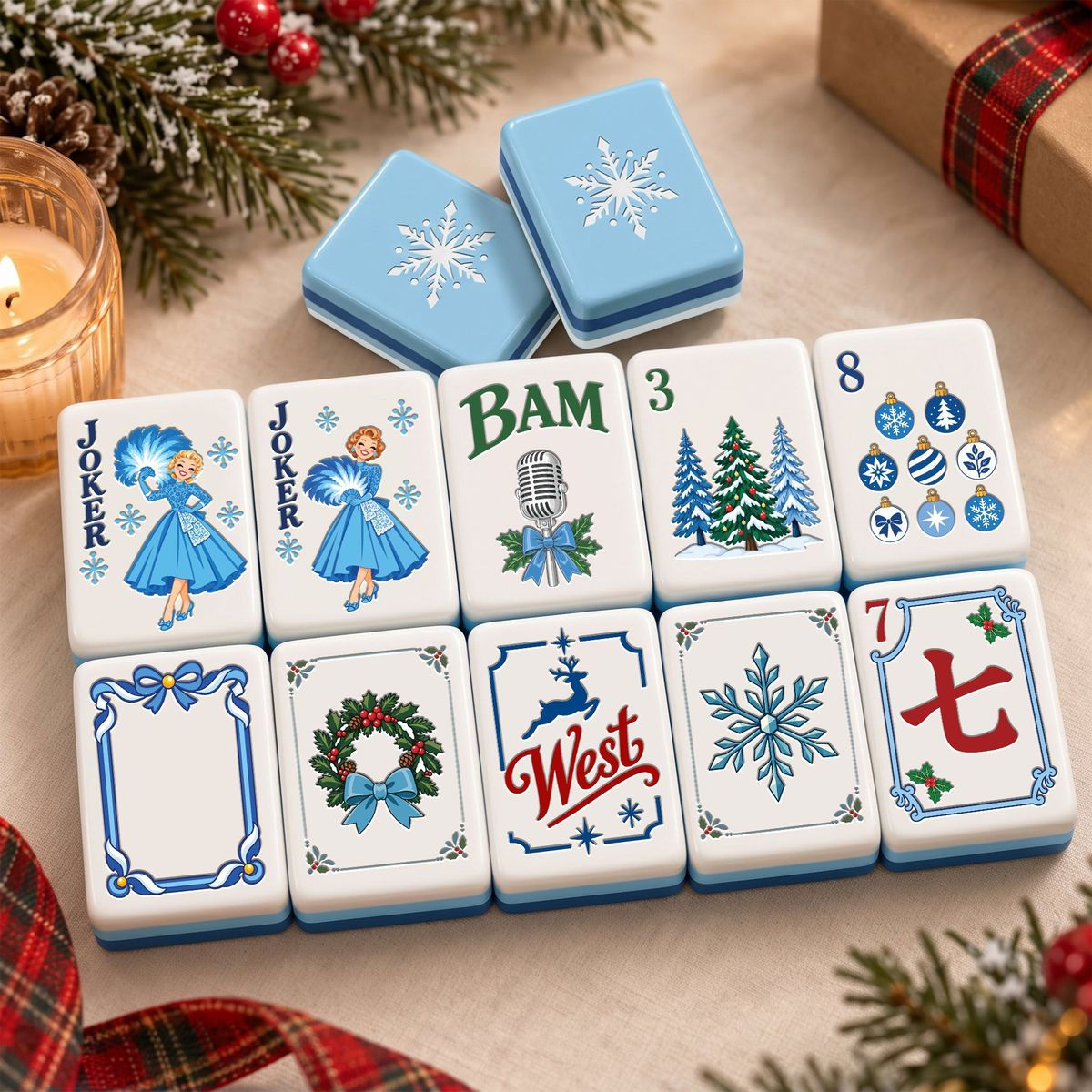
A mahjong printable cheat sheet is a one-page reference guide listing the 152 tiles (Bams, Craks, Dots, Winds, Dragons, Flowers, Jokers), their symbols and names, plus simplified hand patterns from the current year's National Mah Jongg League card. You can find free PDFs online or create your own. Print it, laminate it, and keep it at the table during early games. Most cheat sheets include which tile goes with which suit (Red Dragon with Craks, Green with Bams, White "Soap" with Dots), joker rules, and basic pung/kong/quint definitions. The best sheets avoid reproducing the official card (it's copyrighted) but describe pattern types—pairs, pungs, all-simples, like-numbers across suits. Cost: free if you print at home, or a few dollars laminated at an office supply store. Avoid sheets that claim to show "winning combos"—hands change every spring with the new card, so generic lists expire fast.
What tiles do I need to memorize for a cheat sheet?
Write down all 152 American mahjong tiles in organized rows: Bams (1–9), Craks (1–9), Dots (1–9), each copied four times; four Winds (North, East, West, South); four each Red, Green, White Dragons; four Flowers (1–4); eight Jokers. Next, add the suit colors and symbols—the 1 Bam shows a bird; Dragons use Chinese characters; Dots are circles. Your sheet should fit one page in 10–12 point font. A quick visual reference beats memory in your first five games.

How do I learn hand patterns without copying the official card?
The National Mah Jongg League card is copyrighted, so you cannot photocopy it. Instead, understand the types of hands on it: pairs of identical tiles, pungs (three identical), kongs (four identical), quints (five identical), and sextets (six identical). Hands use only these repeated groups—never sequences like 1-2-3. Describe patterns by structure: "all simples" (1–8, no terminals), "all terminals" (1 and 9 only), "honors-only" (Winds, Dragons, Flowers), "like-numbers" (same number across all three suits). Your cheat sheet can list these categories with one example from each—"all simples: 1 Bam pung, 4 Dot pung, 7 Crak pung"—to help beginners recognize hand types they can search for on the actual card during play.
What role do jokers play on a cheat sheet?
Jokers are wildcards used in any exposed pung, kong, quint, or sextet—they substitute for one tile you don't have. A cheat sheet must include two non-negotiable joker rules: (1) a joker can never form a pair by itself; (2) a joker can never represent a single tile standing alone. This stops one of the most common beginner mistakes. If a hand calls for "1 Bam pair + 4 Dot pung," you cannot use a joker for the pair—it has to be two real 1 Bams. Similarly, if you've drawn 8 Craks and the hand needs "8 Crak single," a joker won't work. Print this rule twice if you must; it's the single biggest stumbling block in early games.
When should I update my cheat sheet each year?
The National Mah Jongg League issues a new card every spring (around March–April). Once that card is official, hands from the previous year's card are no longer valid. Your cheat sheet can stay the same for tile definitions and joker rules, but you must get the new card and learn the new hand patterns that spring. Mark your sheet with the year—"2026 Cheat Sheet"—so you don't accidentally use an old one in 2027. Many players keep a laminated sheet and a printed copy of the current year's card side-by-side at the table.
How do I structure a cheat sheet so it's actually usable during play?
Start with three columns: Tile Type, Symbol/Color, Count. Below that, list joker rules and a quick reference for "pung" (3 identical), "kong" (4 identical), "quint" (5 identical), "sextet" (6 identical). Add a small section: "Calling a hand" (you need 14 tiles: one pair + four melds of 3 each). Include a row for the current year's card name and where to find the full version. Use large, clean fonts and avoid cluttering with irrelevant text. If your sheet is cramped, remove it and print two pages instead—readability during a live game beats fitting it into one page.
Comparison: Cheat Sheet Formats & When to Use Each
Format | Best For | Time to Create | Durability |
Plain PDF printed | First game, testing interest | 15 minutes | 1–2 games (tears/water damage) |
Laminated paper | Weekly player, frequent reference | 20 minutes + lamination | 6+ months with regular use |
Plastic wallet card | Travel, purse, always-on-hand | 30 minutes, cardstock | 1+ years |
Digital (phone/tablet) | No-paper games, searchable | 5 minutes | Infinite (battery dependent) |
Handwritten in notebook | Kinesthetic learner, memorable | 30 minutes | Until notebook wears out |

Can I make a cheat sheet that covers Chinese or Riichi mahjong too?
American mahjong is fundamentally different from Chinese, Hong Kong, and Riichi variants. Chinese mahjong uses sequences (chows) and open melds; Riichi mahjong uses concealed hands and specialized scoring; American mahjong has no sequences and hands come only from the current year's printed card. Mixing them on one sheet creates confusion. If you play multiple variants, create separate one-page sheets for each—label them clearly. Your American sheet should focus only on American rules: pung, kong, quint, sextet, no chows, hand card required.
What mistakes do beginners make even with a cheat sheet?
The most common: (1) thinking a hand can use a sequence like 1-2-3 (it cannot—American mahjong uses only repetition); (2) forgetting to pass tiles in the Charleston explained before play starts; (3) using a joker in a pair; (4) not checking the current year's card and playing last year's hands. A cheat sheet helps with #3 if you print the joker rule boldly. For top and #4, the sheet is just one tool—the other is owning a set with clear tile markings and always referencing the current card. When your group buys our best-selling mahjong sets, the tile quality and clarity make a sheet almost unnecessary for tile recognition; you can focus the sheet on hand patterns and joker rules instead.
🀄 Shop best-selling mahjong sets →
What to Check Before You Print
Is this the 2026 card? Mark the year on your sheet so you don't reuse an old one.
Are joker rules visible? Print them in bold or a contrasting color.
Is the font size ≥10 pt? You'll be reading it across a table under lighting.
Did you avoid copyrighted hand examples? Describe pattern types instead of exact hands from the official card.
Do you have the actual card nearby too? A cheat sheet is a helper, not a substitute for the real thing.
The Real Edge: Learn by Playing, Not Just Reading
Beginners often print a cheat sheet and expect it to do the work. It won't. Use it as a reference, not a replacement for watching experienced players and asking questions mid-game. After three or four games, you'll stop consulting it entirely—tile symbols and hand types become muscle memory. The sheet is a confidence tool for that bridge period between "I have no idea what I'm doing" and "I can spot a hand pattern in three seconds." Pair your cheat sheet with a quality set and mat so the table feels professional and play stays focused.
🎁 See our most-loved mahjong sets & accessories →
Go Deeper: Free Resources & Next Steps
Once your cheat sheet becomes old hat, read our full mahjong for beginners guide to understand how jokers work in exposed melds and how to read the mahjong card like a pro. Many beginners also benefit from learning American mahjong scoring early—it clarifies why certain hands matter more than others.
If you're hosting weekly games, invest in a durable mahjong mat and racks with pushers so everyone's tiles stay organized and visible. A good mat eliminates confusion and keeps the game flowing—no more scattered tiles or misread numbers.
✨ Find your Mahstead set — free US shipping →

FAQ
Can I print the National Mah Jongg League card as my cheat sheet?
No. The card is copyrighted. You must purchase the official card each spring or access it through a membership. Your cheat sheet should describe hand types (pairs, pungs, all-simples, honors-only) with generic examples, not reproduce specific hands from the card.
How often do I need to update my cheat sheet?
Tile definitions and joker rules never change, so that part lasts forever. Hand patterns change every spring when the League issues a new card. Update your pattern section annually, and mark the year on your sheet to avoid using an outdated version.
Is a digital cheat sheet (on my phone) as good as a printed one?
Yes, if you're disciplined. Digital is searchable and never runs out of copies. Printed and laminated sheets are easier to share, don't require battery, and feel less rude at a live table. Many experienced players use both—phone for quick reference, paper sheet for teaching newcomers.
Should my cheat sheet include scoring?
Only if you have room and want one-page reference. Full scoring is complex and deserves its own chart. If you add it, focus on one example per hand type rather than exhaustive calculations. Otherwise, keep the sheet focused on tiles and patterns, and learn scoring separately.
Can one cheat sheet work for all four players at the table?
Not well. Each player benefits from their own laminated copy to consult while others are playing. Print four copies and laminate them, or project one large image on a screen if your gaming space allows. Sharing one sheet slows play and frustrates newcomers.
Do I need a cheat sheet if I'm using Mahstead's acrylic set?
Our sets have sharp, readable tile markings, which eliminates confusion about what each tile is. A cheat sheet still helps with understanding hand patterns, joker rules, and current-year card patterns—the knowledge side, not the tile-recognition side. It's a great pairing for beginners.


View More
View More
View More
