
Taiwanese vs Singapore Mahjong: Key Rules & Gameplay Differences
Last updated: Nov 23, 2026
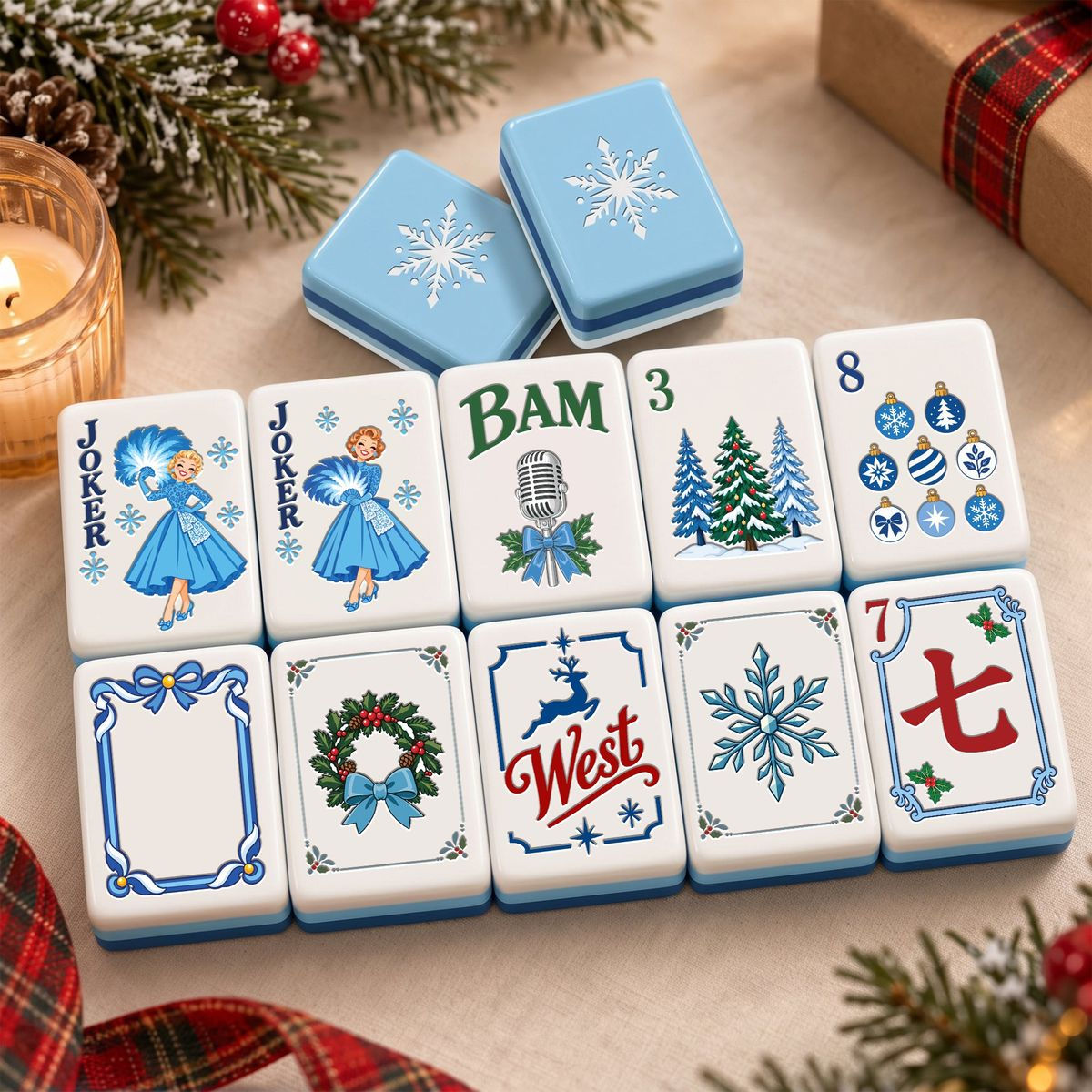
Taiwanese mahjong uses 144 tiles (108 suited tiles, 16 winds, 12 dragons, no flowers or jokers) and emphasizes rapid draws and kong sequences. Singapore mahjong—also called "Singapore style"—evolved from Cantonese traditions and typically uses 152 tiles, allowing flowers and more flexible melds. Taiwanese play draws a tile every turn (no passing phase), melds are mostly concealed until the winning hand, and scoring follows rigid point tables. Singapore play is faster-paced, with more open melding and flowers that count toward specific winning patterns. Both require lightning-fast decision-making, but Taiwanese suits competitive tournaments while Singapore dominates casual home games across Southeast Asia.
What tiles does each variant use?
Taiwanese mahjong uses exactly 144 tiles: 36 Bamboo, 36 Characters (Craks), 36 Dots, 16 winds (North, South, East, West × 4 each), and 12 dragons (Red × 4, Green × 4, White × 4). No flowers. No jokers. Singapore mahjong typically includes 152 tiles: the same 144 base plus 8 flower tiles (Spring, Summer, Autumn, Winter, Plum, Orchid, Chrysanthemum, Bamboo). Some Singapore games add jokers; others do not. The Taiwanese strict count reflects tournament standardization across Asia. Singapore's addition of flowers lets players build bonus melds tied to their seat wind, adding strategic depth.
Aspect | Taiwanese | Singapore |
Base tiles | 144 | 152 (144 + 8 flowers) |
Suited tiles (Bamboo, Character, Dot) | 36 each | 36 each |
Winds | 16 (4 each) | 16 (4 each) |
Dragons | 12 (4 each) | 12 (4 each) |
Flowers | None | 8 |
Jokers | None | Vary by house rules |
Typical hand size | 14 tiles | 13 tiles |
The tile-count gap is subtle but shapes every round's rhythm: Taiwanese players manage fewer total draws, forcing tighter hand-building and faster decisions.

How does the drawing and melding sequence differ?
Taiwanese mahjong begins with each player holding 13 tiles (East player draws first, making 14). There is no Charleston or pre-game tile-passing ritual. A player draws one tile each turn, then immediately discards one. If they draw a tile that completes a set (pung, kong, or quint), they may declare it and claim the meld. Most melds stay concealed (hidden in your rack) until you win. A kong (four identical tiles) is exposed and replaced from the live wall immediately. The game moves in strict turn order—no calling across turns.
Singapore mahjong also starts with 13 tiles per player (East draws to 14). After the game begins, players follow similar draw-discard flow but allow more flexibility in calling melds across turns. Flowers are drawn at game start; if you hold a flower, you draw a replacement immediately without affecting your hand. Open melds (pungs, kongs) are announced and exposed. Crucially, Singapore games often allow players to call a discard from any player to complete a pung or kong, not just the player who just discarded—this creates overlapping action and faster, more social play.
What are the winning hand requirements?
Taiwanese mahjong requires a hand of 14 tiles (the drawn or claimed tile is the 14th, making a winning hand) arranged as:
One pair (2 identical tiles), AND
Four melds (each a pung, kong, or quint—three or more identical tiles).
That's it. No sequences (chows). No flowers. All sets must be identical numbers (e.g., three 5 Dots). Scoring is then calculated from rigid tables based on the hand type (all pungs, mixed suits, all winds, etc.) and the current bonus round (a "hu" or win). Points are strictly defined; no judgment calls.
Singapore mahjong requires a hand of 14 tiles arranged as:
One pair, AND
Four melds (pungs, kongs, or sometimes quints/sextets).
However, flowers count as bonus melds: if you hold Spring, Summer, Autumn, or Winter (seat flowers) plus a matching dragon or wind, those form a special meld worth bonus points. Flowers are not part of the main hand but sit beside it, scoring extra. Singapore hands often aim for "mixed" patterns (Bamboo + Character + Dot together) or "clean" hands (one suit only). Scoring is more flexible and house-rule-dependent than Taiwanese play.
What's the game-flow difference, and how fast is each variant?
Taiwanese mahjong is rigorously paced. East player draws, all players watch the wall. Each turn takes 10–15 seconds. A draw-discard cycle repeats in strict rotation. If you declare a kong, you must draw a replacement tile immediately. The game clock ticks louder; no overthinking. A typical hand lasts 15–20 minutes. Tournaments enforce speed rules; slow play earns penalties. The rhythm is hypnotic—players describe it as "machine-like precision."
Singapore mahjong is socially paced but faster in wall movement. Players draw and discard with similar timing, but calling rules allow cross-turn action: if Player A discards a tile and Player C can use it (not just Player B), three simultaneous calls may erupt. The game pauses for a second to resolve the winner of the call, then resumes. Flowers and bonus melds add micro-decisions. A typical hand runs 12–18 minutes due to overlapping calls, but the sensation is more chaotic and celebratory. Groups often play faster as comfort rises.

Which variant should your group play, and why?
Choose Taiwanese mahjong if:
Your group enjoys predictability and fair competition.
You want to practice hand-building and probability (every meld follows the same rules).
You plan to play in tournaments or against varied opponents.
You value speed and structured gameplay.
Choose Singapore mahjong if:
Your group prioritizes fun and social banter.
You enjoy bonus mechanics (flowers, variable scoring).
You have regular, comfortable players who know the house rules.
You want more surprises and overlapping action.
Many Western players learn American mahjong first (which is closed—no calling, only concealed melds until you win). Transitioning to Taiwanese is easier because both emphasize pair + four melds. Singapore's open calling and flower bonuses feel like a step sideways. Your group's personality matters most: Taiwanese suits competitive minds; Singapore suits playful ones. If you're teaching newcomers, start with whichever variant your core players already know—consistency beats novelty.
🀄 Shop best-selling mahjong sets →
What equipment do you need for each variant?
Taiwanese mahjong:
A 144-tile set (Bamboo, Character, Dot, winds, dragons; no flowers).
A mahjong mat with wall sections marked (some mats have a 144-tile layout printed).
Racks with pushers or a simple tile rack (Taiwanese players often use minimal racks; tiles sit in stacks on the mat).
Dice (to determine East player and initial position).
A pen and paper for scoring (or a scorecard specific to Taiwanese hand rankings).
Singapore mahjong:
A 152-tile set (including 8 flowers).
A mahjong mat (Singapore-sized mats are less common in the West; standard 36×36 inch mats work).
Racks with pushers (flowers sit upright in the rack, visible to all).
Dice.
A pen and scorecard (house-rule scoring varies; many groups use simplified tallies).
Both variants benefit from mahjong racks with pushers to keep tiles upright and organized, especially under fast play. A quality mahjong mat marks walls and keeps tiles from sliding. If you travel to bring a set, a durable bag or case protects the tiles and mat during transit.
🎁 See our most-loved mahjong sets & accessories →
What should you check before you buy a set for either variant?
Tile count: Verify you have exactly 144 (Taiwanese) or 152 (Singapore) playing tiles. Spare jokers or blanks don't count toward play.
Tile size: Both variants use standard Asian mahjong tiles (roughly 1 × 0.75 inches). Check your mat or rack fits the tile dimensions; undersized tiles slide; oversized ones jam.
Character legibility: Taiwanese games move fast. Ensure suit symbols (Bamboo, Character, Dot) are clear on each tile. Numbering must be readable under table light.
Material durability: Bamboo tiles with bone or resin are traditional; acrylic is lighter and shinier but less period-authentic. Choose based on your play frequency and preference—both last years with care.
Weight and storage: Taiwanese tournament players often prefer heavier sets (bone and bamboo feel more premium). Home players tolerate lightweight acrylic sets, which pack smaller for travel bags and cases.
House rules: Before you buy, ask your group if they use jokers in Singapore play, how flowers score, and whether "stealing" (calling out of turn) is allowed. Some groups play joker-free; others don't. Ensure your set aligns with your group's standard.
✨ Find your Mahstead set — free US shipping →

FAQ
Can I use the same tile set for Taiwanese and Singapore mahjong?
No. Taiwanese requires 144 tiles (no flowers); Singapore uses 152 (includes 8 flowers). You need separate sets unless you remove flowers from a Singapore set and accept missing two jokers, but that's awkward. Buy the correct count for your variant.
Is Singapore mahjong slower or faster than Taiwanese mahjong?
Singapore feels faster due to overlapping calls and flower bonus draws, but both variants play 12–20 minutes per hand. Taiwanese enforces stricter turn order; Singapore allows simultaneous melding calls, so action feels more rapid and chaotic.
Do Taiwanese and Singapore mahjong use jokers?
Taiwanese mahjong uses no jokers (144-tile set only). Singapore mahjong traditionally uses no jokers, but house rules vary—some groups add jokers as wildcards in melds or as tile draws. Check your group's rules before buying a set.
What's the easiest variant for a beginner: American, Taiwanese, or Singapore?
American mahjong is easiest because you use a printed card to guide hand selection (no memorizing patterns). Taiwanese is next (rigid rules, no sequences). Singapore is hardest because it mixes open calling, flowers, and flexible scoring. Start with American, then transition to Taiwanese if you want tournament-level play.
Can I play Taiwanese or Singapore mahjong with three or two players?
Yes, but both are designed for four players. Two- or three-player variants exist (Taiwanese has official shortened rules; Singapore adapts less formally). You'll discard fewer tiles, draw more, and the game plays faster. Check online resources for your specific variant's two- or three-player rules before you start.
Where do I learn Taiwanese or Singapore mahjong rules in detail?
Search YouTube for "Taiwanese mahjong tutorial" or "Singapore mahjong rules"—many channels show live games with commentary in English or Mandarin. Online mahjong forums (Reddit's r/Mahjong is active) have rule sheets. Local Asia-Pacific cultural centers and community groups often host games and teach newcomers free or low-cost.


View More
View More
View More
