
Mahjong Playing for Pairs: Tips to Win More Hands
Last updated: Nov 23, 2026
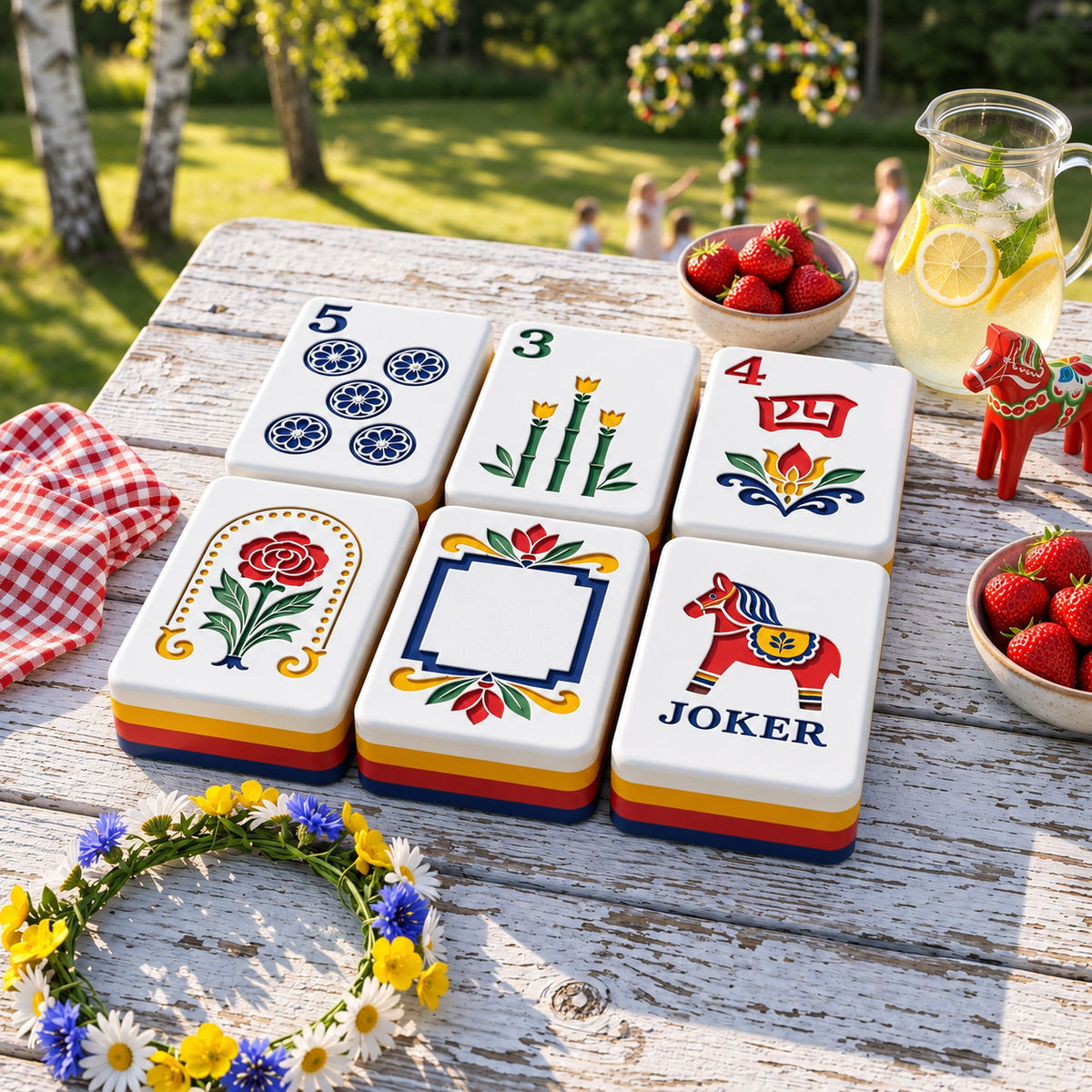
Pairs mahjong is played between two players, each drawing and discarding from the same wall. Each player draws from their side, building toward one hand that must match the current year's National Mah Jongg League card. The pace feels urgent because your opponent sees more of your play—every discard signals your strategy. Hands typically take 15–25 minutes. Focus on: reading discard patterns for gaps in their melts, holding flexibility longer than you would in four-player, and recognizing when to pivot from your target hand to block theirs. Unlike standard American mahjong where four players share attention, pairs demands constant opponent awareness. Beginners often discard their strongest tiles too early or commit to one hand too rigidly. Mahstead's best-selling sets are sized and weighted for comfortable two-player play across a standard table. 🀄 Shop best-selling mahjong sets →
What does "pairs mahjong" mean exactly?
Pairs mahjong is a two-player variant where you and one opponent compete to finish a legal hand first. Each player controls their own wall section and draw order. Unlike four-player American mahjong where nine tiles circulate among four players, pairs uses the same 152 tiles and 8 jokers but with half the players—meaning the wall cycles faster and tiles appear more predictably. You see roughly 40–50% of discards before drawing from the wall yourself, creating a tighter information loop. Games feel more tactical because pattern-spotting becomes your primary edge. The National Mah Jongg League card rules still apply; you must match one complete hand from the current year's card to win.

How do I read my opponent's discard pattern?
Watch which tiles your opponent discards in order—this reveals their hand structure. Early discards of high Bams or Craks often signal they're building in Dots and dragons. If they discard three Craks in the first seven turns, they likely don't need Crak sequences. Gaps in their discards matter: if they keep all 2s and 4s but ditch 3s, they may be hunting pungs rather than sequences. Track the flow: players typically discard their drawn tile first, then safer tiles, then dangerous ones. A mid-game shift toward wind tiles suggests they've abandoned a suit. Keep mental or written notes (many pairs players jot a small grid). Avoid discarding anything your opponent has not yet thrown—assume they want it. This pattern-reading replaces the diffused attention of four-player mahjong; pairs players who ignore discards lose consistently.
Should I stay committed to my target hand or adapt?
Adaptive play beats rigid commitment in pairs. Start the first half of the hand (roughly the first 10 turns) with your strongest option from the card, but monitor incoming tiles and your opponent's discards. If your target hand requires three specific wind tiles and your opponent keeps two of them, switch to a backup hand within the same suit or pung family. Write down 2–3 viable hands before the hand starts so you can pivot without losing mental footing. The best pairs players hold 40–50% flexibility through the midgame, then lock in during the last 5–8 turns. Beginners often force their original hand even when the odds collapse; experienced pairs players abandon a hand at turn 8 if it requires three specific jokers and only one remains visible. Your goal is to finish faster than your opponent, not to play the prettiest hand.
What's the most common pairs mistake?
The biggest mistake is discarding tiles that "feel safe" without cross-checking your opponent's holdings. New pairs players discard singletons and low Dots early, assuming they're worthless—but if an opponent hasn't discarded any 2 or 3 Dots, that singleton is likely the tile they're hunting. A second critical error: playing too many melds too early. In four-player mahjong, exposing pungs and kongs is a strength because it builds commitment and forces your hand into shape. In pairs, every exposed meld teaches your opponent exactly what you're building and removes tiles from future draws. Hold your melds closed 50% longer than you would in four-player games. A third slip: forgetting that pairs games are shorter. You'll draw roughly 50–55 tiles total in a pairs hand versus 40–45 in four-player. That means your wall cycles faster; duplicates appear sooner. Don't hoard tiles thinking "the wall is deep." The wall empties briskly.
Common Error | Why It Costs You | Fix |
Discarding "safe" low tiles without tracking opponent | Opponent finishes the tile you threw away | Cross-check every discard against opponent's discards first |
Exposing melds early | Opponent reads your entire hand structure | Keep melds hidden 40–60% longer than four-player |
Forcing your original target hand | Wrong hand finishes after opponent's | Choose 2–3 backup hands pre-game; pivot by turn 8 |
Playing without notes | Missing discard patterns | Maintain a simple grid of suits/numbers your opponent ditches |
Holding too many jokers closed | Opponent catches you with three jokers; you lose flexibility | Use jokers for risky melds; reserve only one or two wild |
🎁 See our most-loved mahjong sets & accessories →

How should I manage my hand's visible layout?
In pairs, your rack arrangement matters more than in four-player play because your opponent watches your hand constantly. Organize by suit and number, with jokers grouped at one end, so you can spot gaps and complete melds instantly. Many pairs players arrange melds in the order they'll expose them—grouping your strongest pung or kong at the player-side edge so it's the first meld visible when you finish. Leave jokers slightly separated so you can count them without fumbling. If you're using mahjong racks with pushers, the pusher mechanism lets you slide tiles forward as you commit melds, keeping your setup tight and your remaining tiles hidden. Bad hand layout lets your opponent estimate your progress; clean layout disguises how close you are to finishing. Spend the first 30 seconds after the Charleston arranging your tiles efficiently. You'll spot mistakes and playable combinations faster, and your opponent will take longer to read your progress.
When should I call a discard versus draw from the wall?
Call a discard only if it completes a meld you're certain you'll expose within the next 3–4 turns. In pairs, every called discard broadcasts your hand direction. Many beginners call too much, teaching their opponent the entire meld sequence. Call only when: (1) the tile finishes a pung or kong you already have, (2) it's a joker substitute you cannot obtain from the wall, or (3) you're within one or two turns of finishing and the tile is your final meld. If you're unsure, draw from the wall instead. Drawing keeps mystery alive. Calling a discard for a speculative meld (a pung that might complete a hand) often fails because your opponent either stops throwing that tile or reads that you need it and prepares to block. In four-player mahjong, obscurity is split four ways; in pairs, all attention focuses on you. Minimize calls unless they're high-confidence. This conservative approach often wins more hands than aggressive calling because your opponent stays confused longer.
What's the ideal discard order in the first half of your hand?
Discard your drawn tile immediately, unless it's a perfect fit for an existing meld or closes a hole in your plan. Next, eliminate singletons and high outliers in suits you're not building. Then discard the suit your opponent is signaling they don't want (based on their discards). Hold all duplicates of tiles your opponent has ditched—these tiles are safe because your opponent doesn't need them. By turn 6–7, you should have discarded at least 8–10 tiles with clear logic: thrown singletons, excess numbers in suits you've abandoned, and anything your opponent has already ditched. Avoid a scattered discard order where you throw Bams, then Dots, then Craks, then back to Bams—this signals indecision and makes you predictable. A disciplined discard sequence (eliminate one suit, then back-fill another) keeps your opponent guessing. After turn 10, shift to defensive discards: only throw tiles you're certain your opponent isn't hunting, and watch for their "danger zone" (the point at which one more meld finishes their hand).
✨ Find your Mahstead set — free US shipping →
What should I check before I buy a set for pairs play?
Pairs mahjong demands a set that's easy to handle and read under intense focus. Look for:
Tile size and weight: Acrylic tiles should be substantial enough to push smoothly into your rack without tilting. Lighter or too-small tiles move erratically, costing you seconds when you need to hide or reveal melds quickly.
Clarity of markings: Ensure all suit symbols (Bams, Craks, Dots) and number markings are crisp and visible from across the table. Wear on tiles makes pattern-reading harder when you're tracking your opponent's discards.
Rack stability: A quality rack with pusher mechanism lets you slide tiles forward silently—your opponent won't hear a shuffle every time you adjust your hand layout.
Mat surface: A non-slip mahjong mat prevents tiles from sliding during rapid draws and discards. Pairs games move faster than four-player, so mat grip matters.
Storage fit: A durable bag or case protects your set between games. Tiles wear faster in pairs play due to frequent handling and rapid reshuffling.
Joker count: Ensure your set includes all 8 jokers. Pairs hands often rely on jokers for flexibility, and missing even one creates a disadvantage.
Inspect tiles for chips or cracks before committing to a set—these flaws amplify in pairs play where every tile must be instantly identifiable. Review the full guide to choosing a mahjong set for additional standards.

FAQ
Can you play American mahjong with two players?
Yes. American mahjong rules apply fully to pairs play—same tiles, same card, same blocking rules. The core difference is that with two players, the wall cycles faster and your opponent is your only rival, making pattern-reading and strategic adaptation more critical. Games finish quicker (15–25 minutes) than four-player rounds.
Should I use the same National Mah Jongg League card for pairs as I do for four-player?
Yes, absolutely. The card is the same for all American mahjong variants. Your legal hand must match a line on the current year's card, regardless of player count. The rule set remains identical; only the table dynamics and strategic focus shift.
Is it harder to win in pairs than in four-player?
Pairs is strategically deeper but not necessarily harder to win. The skills are different: you must read one opponent intensely rather than manage four, and your discards carry more weight. Many players find pairs more engaging because the game tightens around two sharp minds. Beginners often adapt well if they focus on discard patterns and adaptive hand selection.
How many hands should I play before trying pairs competitively?
Play 15–20 four-player hands first to master tile recognition, hand selection from the card, and basic blocking. Then play 8–10 casual pairs hands to internalize the faster pace and opponent-focus. By hand 10 of pairs, you'll feel the tempo shift. Competitive pairs players typically have 50+ pairs-specific hands under their belt.
What if I can't see my opponent's discards clearly?
Use a larger discard row, or ask your opponent to place discards in a straight line. Pairs games hinge on discard pattern recognition; if you can't see what your opponent threw, you lose your primary strategic tool. Good table setup—adequate lighting, a clear mat, and organized discard piles—is non-negotiable for pairs play.
Can I play pairs online?
Yes, many online platforms and apps support two-player American mahjong. The rules are identical, but you lose the ability to read physical discard patterns in real time. Online pairs often relies more on memory and game theory than in-person play, where you track live tiles.


View More
View More
View More
