
Easter Mahjong Tournament Format: How to Run a Seasonal Game
Last updated: Nov 23, 2026
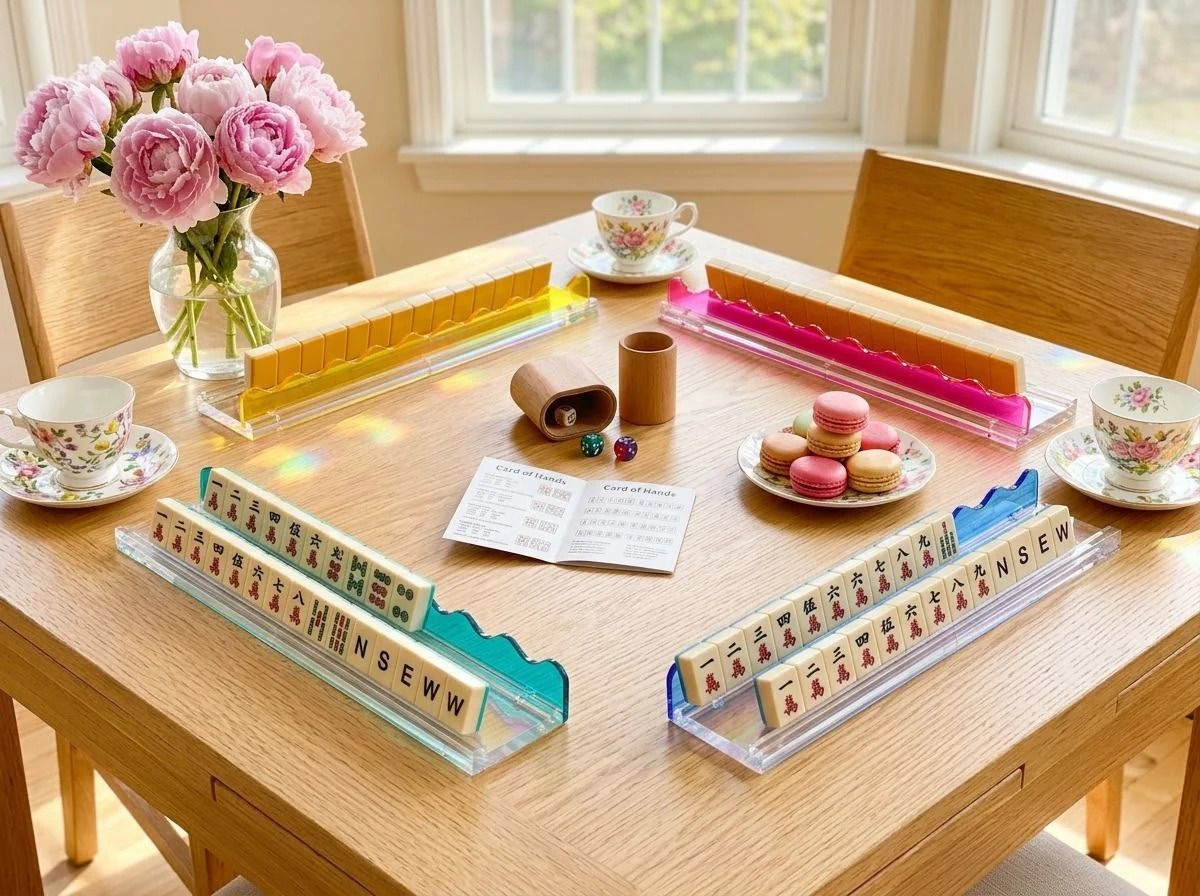
An Easter mahjong tournament is a casual, themed competitive event—usually a one-day gathering of 8–16 players in round-robin or bracket format, following standard American mahjong rules and current-year NMJL card hands. Most run 4–6 rounds of 90–120 minutes each, with cumulative scoring across all games; players rotate tables so everyone faces different opponents. Some groups add a "spring renewal" twist: play with a bonus hand or use the year's new card early. Entry is social, not formal (no NMJL sanctions needed). Scoring follows American mahjong points (hand base + multipliers), and winners are crowned by total points, not wins alone. You'll need one 160-tile set per table, clear mats, racks, and a simple spreadsheet to track scores. Hosting an Easter event builds community and gives irregular players a reason to gather.
What makes Easter tournaments different from regular games?
Easter mahjong tournaments tap into a seasonal moment—spring break, school holidays, renewed energy—to gather players who might otherwise play monthly or less. The format isn't governed by any league; you and your co-hosts design it. Most groups keep core American rules (152 tiles, NMJL card hands, jokers, the Charleston) but add theme: a decorated table, small spring-themed prizes, or a special hand category (e.g., "flower pungs only" in one round). The vibe is festive, not cutthroat. You choose whether to keep score loose (first-to-500) or strict (tournament point system). Easter timing also favors longer sessions—people block Saturday or Sunday afternoon—so running 5–6 games instead of the usual 2–3 is doable. This format works especially well for drawing casual players who love the game but skip weeknight leagues.
🀄 Shop best-selling mahjong sets →
How do you structure a round-robin bracket?
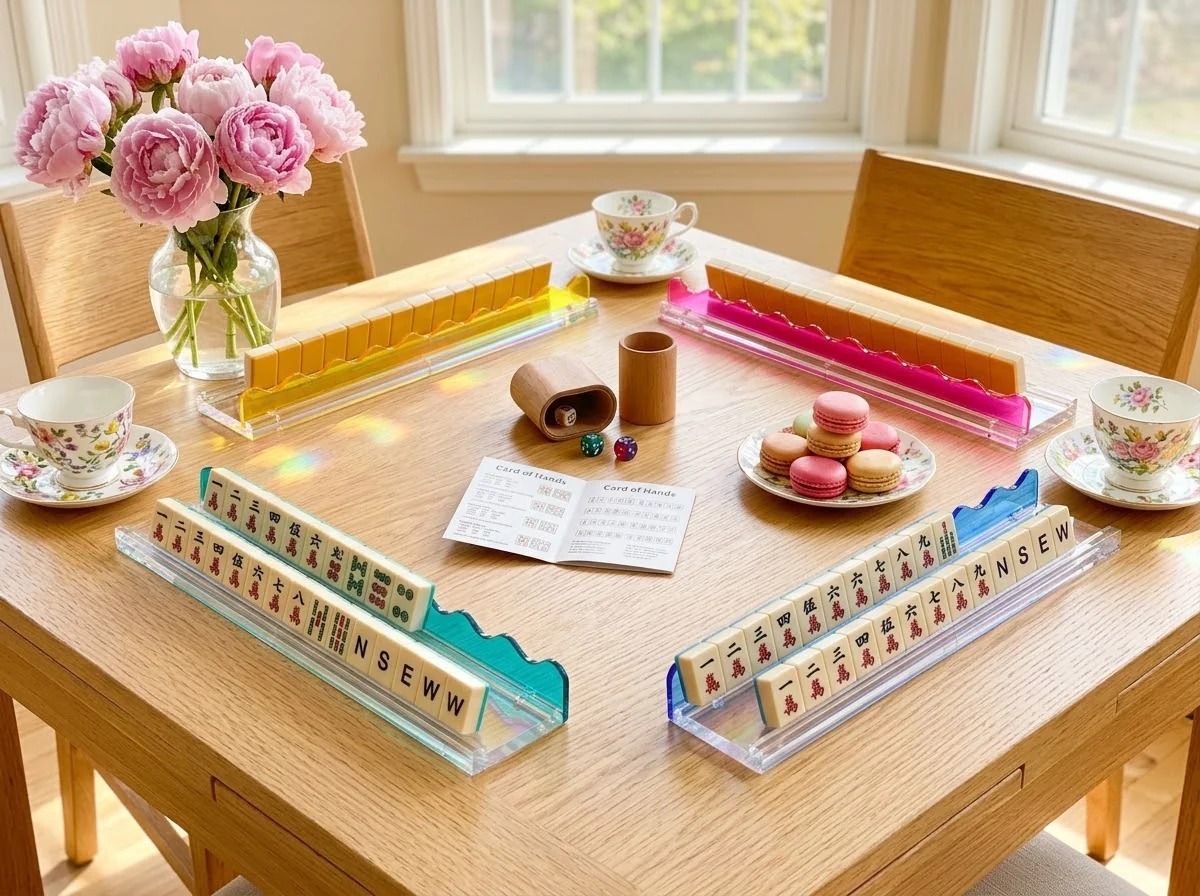
A round-robin is the fairest Easter format for 8–16 players: everyone plays everyone (or nearly everyone) once, and total points across all games determine the winner. For 8 players, split into two tables of four; run two 90-minute rounds, then reshuffle so each player faces new opponents in rounds 3–4. For 12 players, run three simultaneous tables of four; use 4–5 rounds and track who's played whom to avoid repeats. For 16 players, either split into two eight-player round-robins or run a partial round-robin (each player faces 5–6 opponents instead of all 15) to keep the day under 6 hours. Assign seating randomly for round 1 to avoid cliques. Use a shared spreadsheet visible to all; update points after every game. Winners are the player (or sometimes a team of two) with the highest cumulative total, not the most games won. This format is democratic: a single big hand can swing the tournament, just like real mahjong.
What scoring system works best for a tournament day?
Use cumulative American mahjong scoring across all rounds, but decide upfront: cash scoring or points-only. Most Easter tournaments use points-only (easier, more social). Here's a tested structure: each game awards points based on the hand value (base points × multipliers per the current NMJL card rules). If a player wins with a 30-point hand (2× multiplier), they score 60 points that round. Losers contribute to that hand (splitting the cost per American rules). After 5 rounds, total all points earned. To avoid a runaway leader, some groups add a "consolation" rule: if one player is ahead by more than 150 points after round 3, winners in round 4 earn bonus points (e.g., +20). Others use a final "playoff" round: top 2–4 scorers play one last game, and the winner takes the title. Keep the math public and update the board after each game—transparency keeps energy high and disputes low. A clean scoresheet (digital or laminated paper) beats memory every time.

What equipment do you need to host smoothly?
You'll need at least one high-quality mahjong set per table (typically two tables for 8 players, three for 12). Our 160-tile acrylic sets are durable through back-to-back games and easy to shuffle; having a spare set lets you prep while one is in use. Pair each set with a protective mat—a padded, marked surface prevents tiles from sliding and shows the discard wall clearly. Racks with pushers keep hands organized and speed up play, especially important in a tournament where downtime stalls momentum. Bring dice (included in most sets) or use a dice app; you'll need one pair per table for seating and determining who draws first. If you're hosting 12+ players, a travel bag or case keeps sets organized between rounds and protects tiles during setup. Have copies of the current-year NMJL card at each table (or a laminated poster) so players can verify hands quickly. Set up one station with a timer (phone or kitchen timer) to keep rounds on schedule—90 minutes per game keeps energy flowing and lets you fit 4–5 games in a day. If players are traveling to your Easter event, secure their tile sets ahead and store them safely.
Setup Item | Why It Matters | Who Needs It |
Acrylic set (160-tile) | Durable, shuffles fast, survives 6 consecutive games | Every table |
Padded mat | Prevents tiles sliding, marks discard wall clearly | Every table |
Racks + pushers | Speeds play by 10–15%, reduces fumbles | Every table |
Printed/laminated NMJL card | Avoids disputes over hand validity, keeps flow fast | Every table |
Travel bag (if 12+ players) | Organizes multiple sets, protects tiles in transit | Host or tournament coordinator |
Timer | Enforces 90-min rounds, lets you fit 5–6 games/day | One per venue |
Scoresheet (digital/laminated) | Public tracking, eliminates "who won round 2?" arguments | One visible to all |
How do you invite players and manage RSVPs?
Spread the word 3–4 weeks before Easter through community channels where mahjong players gather: library bulletin boards, synagogue or community center notices, meetup apps, or WhatsApp groups from your regular games. Keep the invitation simple: date, time (e.g., 1–6 PM), location, cost (if any), number of players (cap at 16 for a one-day event), and deadline to RSVP. Include the format (round-robin, number of games) and a note: "Beginners welcome—we'll explain scoring." Ask for RSVPs at least 10 days out so you can buy or borrow enough sets and mats. If you hit capacity, start a waitlist; players always cancel. Send a reminder email 48 hours before with the schedule (e.g., Round 1: 1:00–2:30 PM, 15-min break, Round 2: 2:45–4:15 PM). On the day, arrive 30 minutes early to set up mats, sets, racks, and the scoreboard. Have a brief rules huddle: "We're playing American mahjong. If you're new, sit with an experienced player first game. Ask questions anytime." Assign the first table seating randomly; confirm winds (who's East, South, etc.) before each round to avoid conflicts.
🎁 See our most-loved mahjong sets & accessories →
What common mistakes should you avoid?
Overcrowding the day. Running 7+ games in 8 hours burns people out. Cap it at 5–6 rounds (about 5–6 hours of play) plus breaks; add a light lunch or snack break midway. Players travel to your Easter event; respect their stamina.
Not confirming tile sets beforehand. If you assume everyone has a set and three people no-show, you're short. Email RSVPs asking: "Do you have a set, or shall we provide one?" Borrow or buy spares in advance.
Unclear hand rules. New players hold up games asking, "Is that hand on the card?" Print a current NMJL card and laminate it; post one at each table. Designate one experienced player per table as the "card keeper" for disputes.
Sloppy scoring. A missed +10 multiplier or a transcription error can swing the tournament. Use a shared spreadsheet (Google Sheets, shared in real-time on a tablet or printout) updated after every game, never in bulk at the end.
Mixed tile conditions. If some tables use worn sets and others use new, shuffles and draws vary unfairly. Use uniform sets (all same brand and age) or distribute new and old evenly across rounds.
No bathroom or break protocol. In a tournament, someone will need to step away mid-round. Decide upfront: "If you need a break, sub out for one round or sit out the hand." Avoid halting games for a single player.
What to check before you buy equipment
Tile count: All sets for American mahjong must play with exactly 152 tiles + 8 jokers; buy 160-tile sets so you have spares.
Material: Acrylic tiles are louder but durable for tournaments; bamboo/bone is prettier but fragile in rapid-fire play.
Mat size: Ensure your mat fits your table and allows each player arm room to draw; a 36"–48" mat typically works for four players.
Racks & pushers: Check that pushers are sized for your tiles; mismatched racks slow play.
Set count: For 8 players (2 tables), buy 2 sets minimum; for 12 players (3 tables), buy 3. Borrow if needed, but confirm quality first.
Tile readability: In a tournament, tile markings must be clear under indoor lighting; test your sets before the event.
✨ Find your Mahstead set — free US shipping →

FAQ
Do Easter tournaments follow official NMJL rules?
Easter tournaments are informal and don't require NMJL sanction. You and your co-hosts design the format, but most use American mahjong rules (current-year card, 152 tiles, standard Charleston) for consistency and fairness.
Can I run an Easter tournament with mixed experience levels?
Yes. Pair new players with experienced ones in early rounds. Assign seating randomly so the advantage doesn't compound. Most casual Easter events thrive on a mix; it brings energy and gives regulars a teaching moment.
How long should each game last?
Standard American mahjong games run 60–90 minutes depending on table pace. For a tournament, enforce 90 minutes per round; set a timer and end the game at that mark (count hands in play). This keeps the schedule tight and the day under 6 hours.
What if someone doesn't show up on tournament day?
Contact your waitlist immediately. If no one is available, that table plays three-player mahjong (see our 2 and 3 player mahjong rules for how points adjust). Avoid replaying the game with a late substitute—it's unfair to early finishers and stalls the schedule.
Should I charge entry fees or keep it free?
Depend on your group. Free events draw casual players and build community (costs: your time, space, or host's equipment). Small entry fees ($5–10 per person) can fund prizes or cover refreshments and make the day feel more "official." Disclose this upfront in invitations.
What's the best way to track scores across multiple rounds?
Use a shared Google Sheet (visible to all on a tablet or printed after each round) or a laminated scoreboard. Update it in real-time after every game; assign one person as scorekeeper. Public tracking eliminates disputes and keeps energy high.


View More
View More
View More
