
Is Mahjong Harder Than Dominoes?
Last updated: Nov 23, 2026
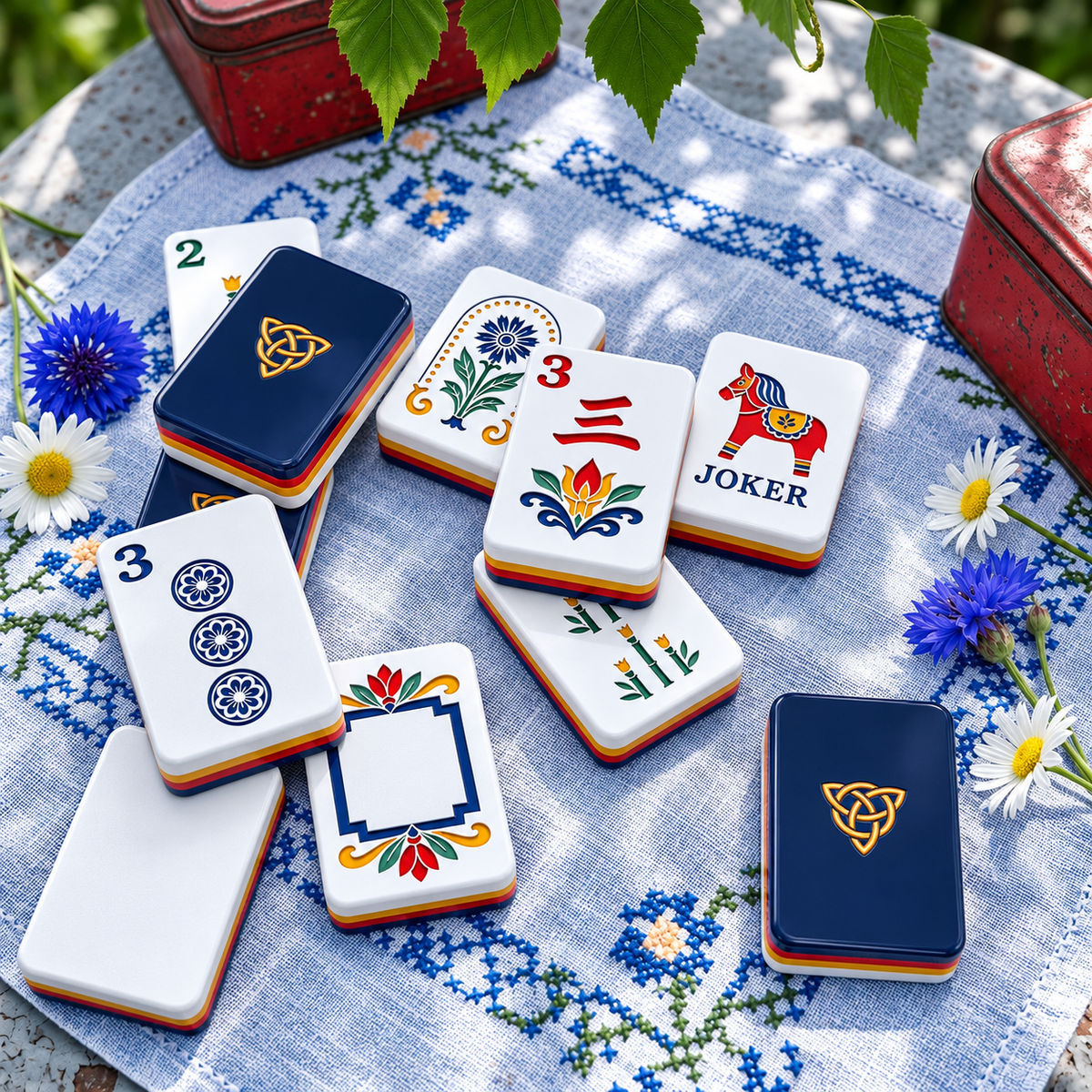
No simple answer exists—they're hard in different ways. Dominoes is faster to learn: match pips, play a tile, done. Mahjong requires memorizing a yearly hand card, understanding 152 tiles (not 28), managing the Charleston (a pre-game tile-pass ritual), and spotting patterns across suits, numbers, and honors. Dominoes rewards speed and hand management; mahjong rewards pattern recognition and risk calculation. A casual player picks up dominoes in one sitting; mahjong typically takes 3–5 sessions before confident play. Both demand attention, but mahjong's learning curve is steeper and longer. If you crave quick social play, dominoes wins. If you enjoy puzzle-solving at the table, mahjong's complexity is the draw. Most players find our best-selling mahjong sets paired with a printed hand card make the learning phase manageable.
What makes mahjong feel harder at first?
Mahjong introduces more working memory than dominoes. You juggle 13 tiles in hand (dominoes often use 7), track eight jokers acting as wildcards, watch three other players' discard piles, and match patterns to a hand card that changes every spring. Dominoes ask: "Can I play this?" Mahjong asks: "Which hand am I building, how many ways can I complete it, and what's my risk if I discard?" The rulebook is thicker, the tile count is much higher, and the outcome depends on strategy—not just pips and luck.

How many rules do you actually need to start playing?
Fewer than you'd think. You need the current National Mah Jongg League hand card (the official legal list of winning hands), eight jokers masquerading as any tile, four players, and one core rule: expose only pungs (three identical tiles), kongs (four identical), or jokers—never sequences like dominoes. Learn the Charleston (tile-passing round), discard into the center, call "mah jongg" when you match a complete hand on the card. Most players grasp the basics in one night; confidence arrives after three games. Dominoes, by contrast, has one main rule—match the pips on either end—and a few optional variations, all playable in minutes.
Can you play casually without memorizing the entire card?
Yes. Keep the hand card face-up and reference it every turn—we do. The card is your map; ignoring it is the most common beginner mistake. Unlike chess or bridge, you're allowed to study it openly. New players who treat the card as "cheating" struggle and quit. Players who treat it as a tool play comfortably within two sessions. Dominoes requires no such aid; a player who knows pips knows the game. For mahjong, the card is non-negotiable, and embracing it cuts your learning time in half.
How does luck compare to skill in each game?
Dominoes is luck-heavy: which tiles you draw is largely fortune. Mahjong is skill-heavy: you control which tiles you discard, which hands you pursue, when you claim a tile from another player's discard, and when to "pass" on completing a hand. Experienced mahjong players beat novices consistently; experienced dominoes players have a smaller edge. If you enjoy games where better play wins most of the time, mahjong is the choice. If you prefer a luck-based social leveler where any player can win on any night, dominoes suits you better.
What's the time investment to reach "I enjoy this" level?
Dominoes: one evening. Mahjong: 3–5 evenings (each 90 minutes).
After your first mahjong session, you'll feel confused but intrigued. After your third, you'll spot hands forming and anticipate other players' moves. After your fifth, you'll play a full game without referencing the card for half the decisions. Dominoes reaches "enjoy" in one sit-down. Mahjong's payoff is longer-term: the intellectual reward deepens every game.
Quick comparison: Dominoes vs. Mahjong
Factor | Dominoes | Mahjong |
Tiles in play | 28 (pips 0–6) | 152 (Bams, Craks, Dots, winds, dragons, flowers, jokers) |
Tiles in hand | Usually 7 | 13 (plus 1 drawn each turn) |
Rulebook length | 1–2 pages | 6–10 pages for full reference |
Hand card needed? | No | Yes, required (changes yearly) |
Time per game | 15–30 min | 45–90 min |
Learning curve | Gentle | Steep |
Skill vs. luck | 40% skill, 60% luck | 70% skill, 30% luck |
Best for | Social quick-play | Strategic, puzzle-loving players |

What should a beginner actually buy to start playing?
Start with a 160-tile set (the American standard), the current hand card, and a mat to keep tiles organized. Avoid single-suit travel sets; they won't let you play full hands. A best-selling mahjong set with clear tile markings saves weeks of squinting. Add a printed hand card at arm's length and a mahjong mat to contain the tile chaos. These three purchases—set, card, mat—lower frustration and keep new players engaged long enough to reach the "aha" moment.
🀄 Shop best-selling mahjong sets →
Common beginner mistakes that make mahjong feel harder than it is
Treating the hand card as optional. Players who hide the card to "memorize" hands waste two seasons learning what they could reference in two minutes.
Ignoring the Charleston. This tile-passing ritual at game start feels like extra work but levels the luck. Skipping it creates unfair starting hands and sours new players.
Holding onto tiles that don't match any hand on the card. Beginners keep a "pretty" 2 Dot hoping it will someday fit. Check the card: if that tile isn't in any hand you're building, it's dead weight. Discard it early.
Discarding without thinking about what others need. Dominoes is reactive; mahjong is predictive. If you discard a 5 Bam and the player to your left just claimed two 5 Bams, you've probably lost the game. Pause before discard.
Playing too many hands at once. Beginners try to keep every hand "alive." Expert players commit to one or two hands early and discard ruthlessly to feed those lanes. This mistake adds 20 minutes to your game and tanks your odds.
Is mahjong still worth the steeper learning curve?
Absolutely—if you value the payoff. Dominoes is a game. Mahjong is a puzzle that happens to be social. The complexity that makes mahjong harder also makes it rewarding: every hand teaches you something about risk, pattern, and timing. After five nights, mahjong players report deeper satisfaction than dominoes; after fifty nights, the gulf widens. If your game night centers on speed and laughter, dominoes wins. If you want a game that holds your brain as well as your hand, mahjong is worth the climb.
🎁 See our most-loved mahjong sets & accessories →
What to check before you buy your first set
Tile clarity: Can you read the suit symbols clearly in standard lighting? Cheap tiles fade; our sets use deep engraving so markings remain sharp after years.
Joker count: The game uses exactly eight jokers. A 160-tile set includes playing tiles plus spares; confirm your set ships with eight jokers available for active play.
Mat fit: Measure your table. A mahjong mat should leave room for three discard piles around the center. Too small and you're stacking tiles; too large and reaching becomes tiring.
Hand card size: Ensure the card is readable from arm's length without glasses (or with them, depending on your habit). Tiny hand cards defeat the purpose.
Storage plan: After three games, you'll want a bag. A dedicated mahjong bag keeps tiles safe and organized between sessions, preventing the "where's the white dragon?" problem on game night.
✨ Find your Mahstead set — free US shipping →
How to ease into mahjong if dominoes is your current comfort zone
Find a patient group. Ask local community centers, libraries, or synagogues for beginner-friendly mahjong evenings; experienced players expect questions and won't rush you.
Bring the hand card. Leave ego at the door. Referencing the card is standard; dominoes players often feel self-conscious looking it up, but it's the game's design.
Play one full game before judging. Your first game will feel chaotic. By game three, you'll recognize patterns. By game five, you'll prefer mahjong's strategy to dominoes' luck.
Invest in a readable set and mat. Struggling to see tiles or locate your discard pile adds 30 minutes of friction. A clear best-selling set and dedicated mat remove that barrier and let the game shine.
Since you're exploring mahjong for beginners territory, keep in mind that the "harder" label sticks mostly because dominoes is faster, not because mahjong is truly complex. The complexity is front-loaded: learn the card, learn the tile count, play three games, and you're competent. After that, every game deepens your skill. Dominoes plateau faster; mahjong rewards long-term play. Choose based on your appetite for intellectual challenge, not the learning slope.

FAQ
Can I play mahjong with dominoes rules?
No. Mahjong is turn-based hand-building; dominoes is sequential play. The games share "take turns with tiles," but the mechanics don't translate. Trying to play mahjong like dominoes frustrates both rule sets.
How long does a typical mahjong game take vs. a dominoes game?
Dominoes usually runs 15–30 minutes; mahjong ranges 45–90 minutes depending on player speed and the hand card's complexity. Expect slower games when players are learning the card.
Do I need to memorize the mahjong hand card?
No. Keep it face-up and reference it every turn. Memorization comes naturally after 20–30 games. Using the card openly is standard practice, not cheating.
Is mahjong mostly luck, like dominoes?
Mahjong is roughly 70% skill, 30% luck. Dominoes is roughly 40% skill, 60% luck. In mahjong, good discard choices and hand selection matter far more than the draw. Expert mahjong players consistently beat novices; dominoes players have a smaller skill advantage.
What's the biggest trap for dominoes players trying mahjong?
Thinking sequences (1-2-3) are valid melds. In American mahjong, you can only expose three or more identical tiles (e.g., three 5 Dots). Dominoes players expect runs to be legal; they're not, and this rule confusion derails their first few games.
Can I play mahjong with fewer than four players?
Yes, with modified rules for two or three players. See 2 and 3 player mahjong rules for specifics. Standard four-player game is the easiest entry point for beginners.


View More
View More
View More
