
Mahjong Party Ideas in The Woodlands: Host & Rules Guide
Last updated: Nov 23, 2026
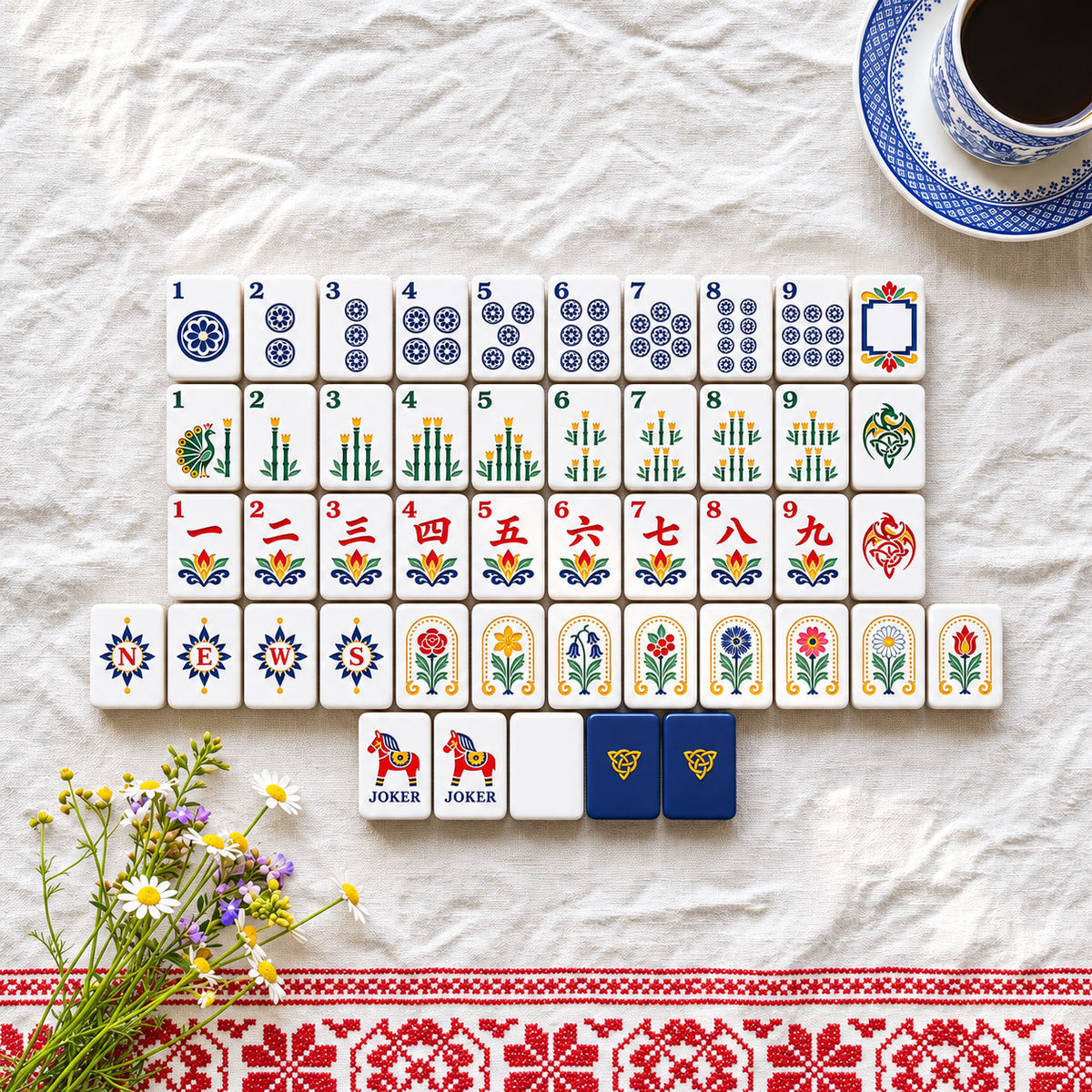
Hosting a mahjong party in The Woodlands means inviting four players, setting up a sturdy playing surface, and having a complete 160-tile American mahjong set with jokers ready. Start with the Charleston—a three-round tile-passing ritual that randomizes hands before the first discard. Each player draws 13 tiles (the dealer draws 14); players aim to complete hands matching the current year's National Mah Jongg League card. Games last 30–50 minutes. The Woodlands community centers, libraries, and country clubs often host open games or beginner classes, but home parties are easiest: a dedicated mat keeps tiles organized, racks with pushers reduce hand fatigue during long sessions, and quality acrylic tiles stay durable after dozens of plays. Expect to spend the evening laughing at near-wins and wild joker calls; most groups rotate dealer position clockwise after each hand, and house rules about bonus scoring or joker penalties vary by table.
What tiles and gear do you actually need to start?
A complete 160-tile American mahjong set contains the 152 playing tiles (108 numbered suits, 16 winds, 12 dragons, 8 flowers, 8 jokers) plus spare tiles. You'll also want a mat to define play zones, racks to hold tiles vertically so other players can't peek at your hand, and pushers (wooden sticks that rest atop rack tiles and slide them forward when you call a hand). Dice come next—two or three dice determine where the wall break happens, speeding up wall selection. A dedicated bag or case protects your tiles during transport between The Woodlands homes and parties. Explore our best-selling mahjong sets to find durable acrylic options that hold up through years of weekly games.

How do you actually run the Charleston before play begins?
The Charleston is a three-round passing sequence that randomizes your starting hand before any official play. Round 1: each player passes three tiles face-down to the right; everyone passes simultaneously. Round 2: pass three tiles to the left. Round 3: pass three tiles across (to the player directly opposite). After Round 3, any player may opt for a "second Charleston" (repeat the cycle) or a "courtesy pass" (pass single tiles for one more round). Once all players pass or decline, the dealer draws the first tile from the wall, and play begins. The Charleston prevents anyone from locking in an advantage before the hand starts; many Woodlands groups treat it as sacred ritual, laughing and trash-talking through it. Skip the Charleston only if playing casual 2-player or 3-player variants, where it's rarely used.
What's the easiest beginner-friendly hand pattern to teach new players?
New players grasp "Like Numbers" or "Consecutive Run" hands fastest. A Like Numbers hand is three identical-number pungs (for example: three Pung 5 Dots, three Pung 5 Craks, three Pung 5 Bams, plus a pair). A Consecutive Run hand chains two or three consecutive pungs (three Pung 1, three Pung 2, three Pung 3, plus a pair). Both are clear visual patterns that even someone playing their first night can recognize and call. Harder patterns involve dragons, winds, flowers, or mixed number/honor combinations—save those for week two. Read our mahjong for beginners guide to see real pattern types and why the 2026 League card emphasizes clarity over exotic scoring.
How do jokers work—and what are the most common mistakes?
Each mahjong hand allows up to eight jokers, and they act as wild tiles. If you need a 7 Crak and have a joker, use it. Jokers cannot substitute for a pair (the final two tiles must be identical non-joker tiles), and jokers cannot fill single-tile calls where you're exposing just one tile—they're only valid in exposed melds (pungs, kongs, quints, sextets). The biggest mistake beginners make is using jokers carelessly early in the hand, then running dry when a crucial tile appears near the end. Smart players preserve jokers for tiles that are genuinely scarce. Understand joker strategy fully so you don't waste them on easy substitutions.
What layout and setup mistakes kill a smooth Woodlands game night?
A mat defines the discard zone (center), each player's rack position (four sides), and the wall (dead tiles undrawn). If your mat is too small or absent, tiles slip, rack tiles topple, and discards mix with hands—chaos. Racks should sit upright and angled so you see your tiles but opponents can't. Pushers let players slide tiles forward when calling, reducing hand exposure. Dice belong in the center, ready for the next wall break. Many new hosts skip the mat entirely, using a bare table; this leads to accidental tile reveals, slow play, and irritation after 45 minutes. Choose a mat that fits your table and pair it with racks that hold 13–14 tiles comfortably. Our mahjong racks with pushers are sized for standard American sets and won't wobble mid-game.
Setup Element | Why It Matters | What Happens Without It |
Mat with zones | Defines play areas, speeds calls | Tiles scatter, confusion about discard pile |
Racks (4 sets) | Protects hands, prevents peeking | Players see each other's tiles, game feels unsafe |
Pushers (4) | Slides tiles forward on call | Tiles flip or expose, slow reveals, hand mess-ups |
Dice (2–3) | Determines wall break | Everyone argues where to start drawing |
Tile bag | Stores set safely between parties | Tiles lose engraving, crack from loose storage |
Current year NMJL card | Only valid hands listed on card | Invalid hands called, scores disputed |
🀄 Shop best-selling mahjong sets →

How do scoring and end-of-hand payout work in The Woodlands home games?
Scoring in American mahjong is standardized by the National Mah Jongg League card: each hand shows a point value (typically 20, 30, or 40 points per winning hand). Players calculate payouts based on who called the winning hand and who discarded the final tile. Most Woodlands groups play "points for pizza"—tracking points across multiple hands or an evening, then the highest scorer gets bragging rights or buys the next round. Beginners often fumble scoring on first play; many groups simplify by saying "all players pay the caller 30 points" (flat payout per win, no scoring card lookup). Master American mahjong scoring before your first money game, if you're playing for stakes.
🎁 See our most-loved mahjong sets & accessories →
What to check before you buy your party set
Tile count: You need exactly 152 tiles in play plus 8 jokers. A 160-tile set from Mahstead includes spares; use only the standard 152 during games.
Material: Acrylic tiles resist wear better than bamboo or bone in high-rotation party play. Check that tiles are smooth and numbers/suit marks are engraved, not printed (printing fades fast).
Size and weight: Standard American tiles are about 1⅛ inches wide. Smaller "compact" sets tire hands during long nights; oversized tiles are hard to manage in racks.
Mat fit: Measure your table; a standard mat is 36–40 inches across. A mat too small forces racks off the edge.
Bag or case: If you're hauling your set between parties, a padded bag prevents tile chipping and keeps everything organized.
Spares included: Your 160-tile set comes with spare tiles (extra jokers and blanks) in case of loss or breakage—keep them safe.
✨ Find your Mahstead set — free US shipping →
Finding and joining Woodlands mahjong groups
Start by checking community centers, public libraries, and country clubs in The Woodlands—most post open mahjong times or beginner classes on their websites or bulletin boards. Meetup-style platforms and local Facebook groups often list weekly game times and skill levels. If no group exists, start one: post at a library, invite neighbors, and host a home night on a fixed day (Tuesday or Thursday evenings work well). New players should bring a beginner's mindset—veterans love teaching, and Woodlands groups are famously casual and welcoming. Bring your own set if you have one, but most hosts provide a complete engraved mahjong set for consistency.
Why accessories matter for long party nights
A 90-minute mahjong evening means three or four hands played in sequence. Without racks, players hold tiles in their hands the whole time—fingers cramp, tiles flash accidentally, and the night feels exhausting. A rack with pushers guide shows you exactly how to set them up and why they reduce hand strain by 70% (players lift tiles into the rack, then push forward on call rather than lifting and displaying each tile). Mats also speed play: everyone knows where the discard pile is, wall breaks are consistent, and no one wastes time explaining tile positions mid-hand. First-time hosts often skip these "extras," then realize by hand two that they regret it—invest upfront and your friends will thank you every week.

FAQ
Can we play mahjong with just three people, or do we need four?
American mahjong is designed for exactly four players. Three-player and two-player variants exist but follow very different rules (fewer tiles drawn, different hand patterns). For your first Woodlands party, invite four; if someone cancels last-minute, invite a neighbor or reschedule.
How long does one complete game session usually take?
One hand (from Charleston through payout) takes 30–50 minutes; a typical evening is three to four hands, so 2–3 hours total. Beginners run longer because they slow down to read the card and verify hands.
Do we have to use the official National Mah Jongg League card every time?
Yes, in American mahjong. Only hands printed on the current year's card are valid. House rules (bonus points, joker penalties) can be layered on top, but hand patterns themselves come only from the official card—no exceptions.
What if someone claims a hand that isn't on the card?
The hand is invalid, the call is cancelled, and play continues to the next player. If this happens repeatedly, remind the group to check the card before calling; many groups appoint a "card keeper" to resolve disputes instantly.
Is it cheaper to host mahjong parties than go out weekly?
A quality 160-tile set with mat and racks costs less than five restaurant dinners out. Reused for years across dozens of parties, your cost-per-game drops to pennies. Hosting beats going to clubs every time financially—and friends remember home nights longer.
Can we customize our mahjong set with our group name or date?
Yes. Mahstead offers engraved American mahjong sets with custom titles and designs, perfect for Woodlands home game groups, anniversaries, or family traditions. Order lead time varies; check the product page for current turnaround.


View More
View More
View More
