
Cantonese Mahjong Minimum Points to Win
Last updated: Nov 23, 2026
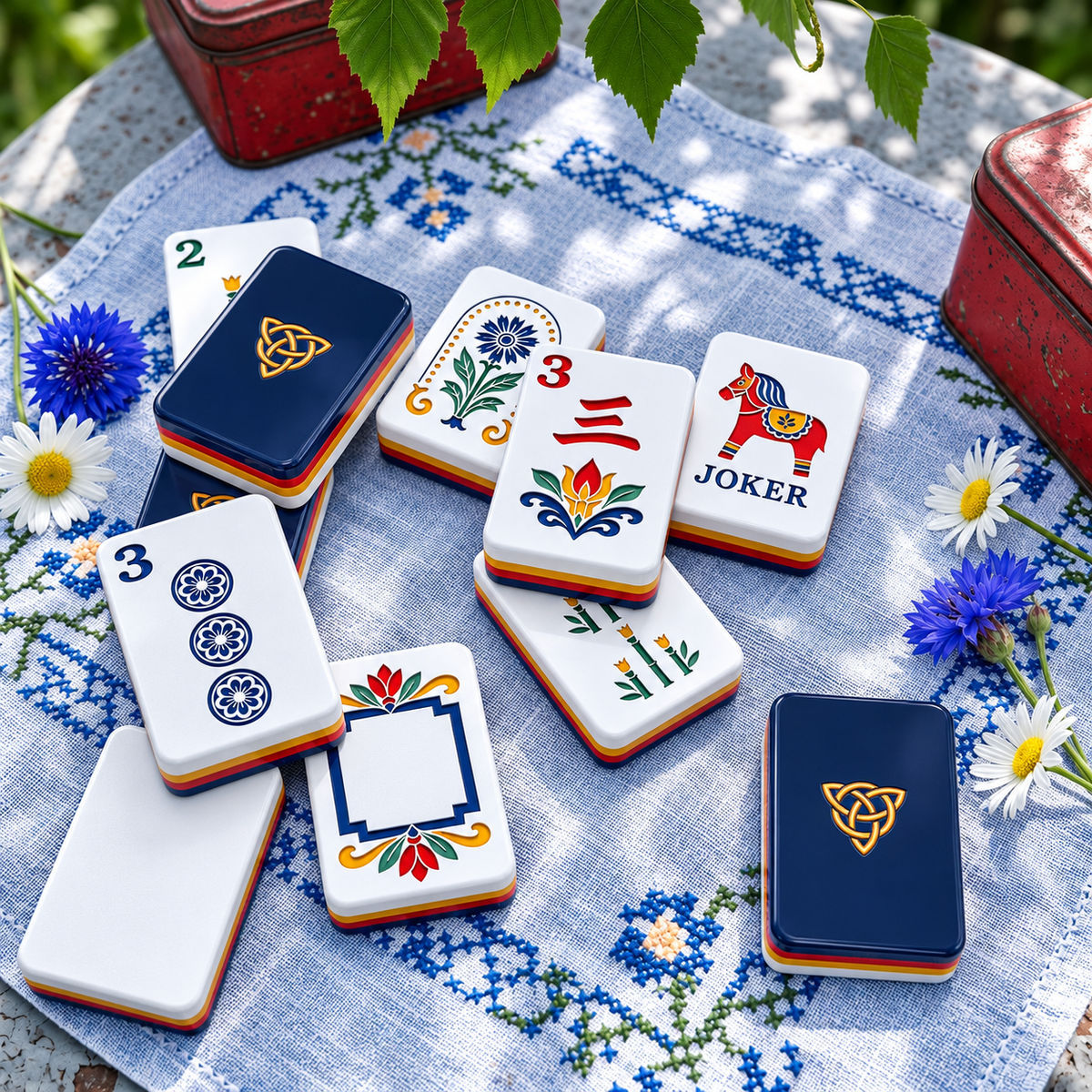
Cantonese mahjong has no universal minimum points to win—it depends entirely on house rules agreed before the game starts. Most casual Cantonese circles play "any complete hand" (a winning pattern with no tile remaining unpaired), meaning no point threshold exists; the hand itself is the only requirement. In competitive or money games, players often set a minimum (commonly 1 point, 2 points, or higher) to discourage rapid wins or to establish stakes. The National Mah Jongg League card used in American mahjong sets formal minimums by section; Cantonese play skips this entirely. Before your game, ask the hosting group or dealer what minimum applies—it's always negotiable and must be stated upfront.
How do house rules set the Cantonese minimum?
A Cantonese circle decides its minimum points before dealing tiles—usually during the pre-game chat or by reference to prior seasons with the same group. A casual home game might declare "any hand wins," while a regular weekly table might enforce "minimum 1 point" to slow down the game and increase strategy. Money games often impose higher minimums (2–5 points) to reduce luck and reward skilled play. The dealer (or the person who won the previous round) typically calls out the rule before the Charleston begins. Once stated, it applies to all four players for that session. Breaking this rule mid-game confuses settlement and breeds disputes—so confirm verbally and let everyone hear it.

What counts as a complete hand in Cantonese mahjong?
A winning hand in Cantonese play must be "ready" (or "waiting")—all 14 tiles form winning patterns with exactly one tile missing, and drawing any tile that completes the pattern triggers a win. Most Cantonese hands consist of four melds (each three or four tiles in a sequence or trio) plus a pair, totaling 14 tiles. A meld can be a pung (three identical tiles), a kong (four identical), or a chow (three consecutive tiles, e.g., 4–5–6 Dots). Unlike American mahjong, Cantonese play does allow chows and considers them standard, not special. A hand is "dead" if no remaining tile completes it, so you cannot win even if a draw occurs. This rule is why Cantonese players spend time reading what others discard—each discarded tile narrows the possible winning draws for every player at the table.
Does Cantonese mahjong differ from American mahjong rules?
Yes, significantly. American mahjong (played with National League hands) forbids chows entirely; you win only by exposing pungs, kongs, quints, or sextets plus a pair, with jokers filling gaps. Cantonese mahjong allows chows, kongs, and pungs in any combination and treats jokers differently (often as wild tiles, not essential for every hand). American mahjong requires a valid hand from the current year's card and no joker in a pair; Cantonese play is freestyle and relies on memorized patterns. Scoring is also different: American mahjong counts points by hand type and section on the card, while Cantonese scoring hinges on the number of "faan" (points multiplied by a base unit and doubled for each fan). The minimum-points rule is a Cantonese invention partly driven by this scoring system; American mahjong instead enforces which hands are legal by the card itself. If your group plays American mahjong, ignore Cantonese minimums entirely and rely instead on how to read the mahjong card to check if your hand is valid.
🀄 Shop best-selling mahjong sets →

How do you calculate faan (points) in Cantonese play?
Faan (or "fan") is the point value of a completed Cantonese hand, based on bonus combinations, melds, and win conditions. A basic hand (no bonus) is worth 1 faan; adding a bonus (e.g., winning on a drawn tile vs. another player's discard, or completing a hand with all pungs) increases the faan count. The payment formula is typically: base unit (e.g., 1 coin) × 2^(faan count). So a 1-faan hand pays the base; a 2-faan hand pays 4 times the base; a 3-faan hand pays 8 times the base, and so on. The minimum points your group sets determines whether a low-scoring hand (say, 1 faan) is even allowed to win or must be rejected. Some circles let 1-faan hands win only if no other player can draw a winning tile in the next rounds; others force players to skip any 1-faan win and wait for a higher-scoring hand. The exact faan rules vary by region (Cantonese, Taiwanese, Hong Kong styles are different), so always ask your host which version is in play.
What's the best way to ask about minimum points before joining a game?
Arrive early or contact the host in advance: "What's the minimum points to win tonight?" or "Do you play any hand, or is there a faan minimum?" Most regular players appreciate the question and will confirm the rule clearly. If joining an online Cantonese mahjong community, the room or app usually posts the minimum in its description. If playing at a community center, library, or casual meetup, watch one round before joining to see how hands are scored and whether any win is accepted. If unsure after asking, politely decline until a trusted friend or the host clarifies in writing or verbally, one-on-one. Jumping into a game without knowing the minimum risks losing money, offending the group, or wasting time on invalid hands. A good host will explain house rules in plain language; a vague answer is a red flag.
Scenario | House Rule | Reason | Typical Play |
Casual home game | Any hand wins | Speed, fun | Same-day friends, no money |
Weekly regular table | Minimum 1–2 faan | Skill over luck | Consistent group, small stakes |
Money game (coin/card) | Minimum 2–3 faan | Risk control, fair payout | Experienced players only |
Tournament or charity event | Published beforehand | Fairness, transparency | Advertised in invitation |
Online Cantonese app | Room-specific setting | Platform rule | Varies by app and room level |
🎁 See our most-loved mahjong sets & accessories →
What to check before you buy or join a Cantonese game
Before spending money or tiles on a Cantonese game, confirm these facts:
Minimum points rule: Ask the host or dealer upfront. Confirm it's written or stated in front of all players.
Faan calculation method: Is doubling used? (2^faan or 2×faan per level?) Some regions use different formulas.
Tile set variant: Standard Chinese sets (144 tiles) are common for Cantonese play, though American 152-tile sets work if everyone agrees. Check that all tiles are present and legible before the Charleston.
Win conditions: Can you win on a self-drawn tile? On another player's discard? Are there dead hands? These vary by house.
Settlement method: Do winners collect from all players equally, or does the player who discarded pay double? Know this before the first hand.
Language: If new to the group, ask whether hand names are called in Cantonese, Mandarin, or English. A simple translation guide on your phone helps.
Getting these answers upfront prevents disputes and lets you play with confidence. Mahstead's best-selling mahjong sets include full tile counts so you can verify everything is present; a mahjong mat also keeps tiles organized during sorting and reduces accidental loss.

FAQ
Do all Cantonese mahjong circles use the same minimum points?
No. The minimum is always set by the specific group before play. One circle may allow any hand to win; another may demand at least 2 faan. Always ask your host or dealer what the rule is for that session.
Can I win with a hand that scores 0 faan in Cantonese mahjong?
Not in money or regular games. A 0-faan hand (a basic win with no bonuses) is invalid under most Cantonese rules. You must score at least 1 faan to declare a win, and many groups require 1–2 faan minimum anyway.
How does the Cantonese minimum differ from American mahjong's rule?
American mahjong uses a formal National League card issued yearly; a hand is valid only if it appears on the card that season—no points threshold. Cantonese mahjong has no card; instead, players memorize patterns and set a minimum faan count by agreement before the game starts.
What if someone wins a hand below the agreed minimum?
It's a foul. The hand is invalid and does not pay out. Play passes to the next player. If disputes arise, the rule should be clarified in writing or by the host before the next round begins.
Can the minimum points change between rounds?
Not during a session. Once stated before the first hand, the minimum stays in place for all four rounds or until the group formally votes to change it. Changing rules mid-game causes confusion and is considered poor form.
Is there a Cantonese mahjong minimum points card like the American League uses?
No. Cantonese mahjong relies on memorized hand patterns and house rules set by the group, not a published card. Some regional variants (e.g., Hong Kong Cantonese) have informal guides, but they are not enforced universally like the American League card. ✨ Find your Mahstead set — free US shipping →


View More
View More
View More
