
Mahjong Party Ideas in Savannah: Host Your First Game
Last updated: Nov 23, 2026
Savannah offers several natural homes for mahjong parties: community centers, public libraries, country clubs, and synagogue social halls often host game nights or rent private spaces by the hour or evening. Start by calling your local library or community center's events coordinator to ask about game room availability and reservation fees. American mahjong needs exactly four players, a 160-tile set with 152 playing tiles, a mat (optional but steadies your hand), racks with pushers to organize tiles, and a flat table. Games run 1–3 hours depending on skill and house rules. Before buying, check the current National Mah Jongg League card (released each spring) to confirm which hand patterns your group will play—this determines whether you need jokers and how you'll read your tiles. Many Savannah newcomers find our best-selling sets are a good entry point because they include everything needed without guesswork.
Savannah's warm hospitality and leisure pace make it a natural fit for mahjong, a game that thrives on steady rhythm and conversation. Whether you're hosting four coworkers for a weeknight game or a weekend tournament among friends, the city offers venues and the know-how to get started. Here's a practical roadmap to planning a mahjong party in Savannah—from securing the space to assembling your gear.
Where can you host a Savannah mahjong party?
Community centers, libraries, and civic spaces across Savannah rent or provide game rooms for group activities. Contact your local branch of the Savannah Public Library system or the Savannah Recreation Department to ask about room reservations, table availability, and any membership or hourly fees. Country clubs, synagogues, and civic associations often host game nights and may welcome a mahjong group—call ahead to confirm the space fits four players, has good lighting, and a sturdy table. Private homes work too: a kitchen or dining table with clearance on all four sides works fine for one game, though multiple tables need more room.

What's the minimum setup you actually need?
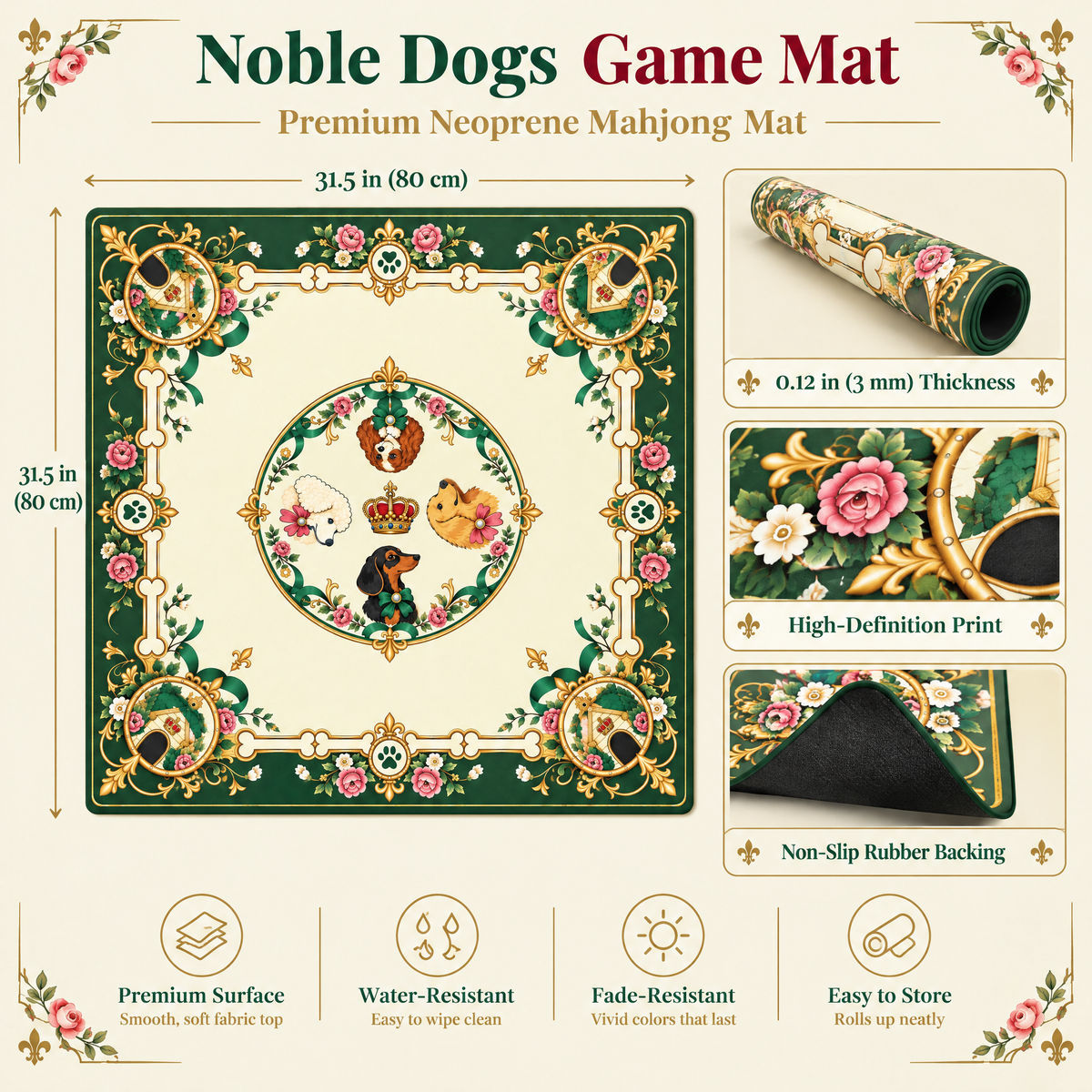
American mahjong requires four players, one complete 160-tile set, and a level table at least 48 inches across. A mahjong mat isn't mandatory but prevents tiles from shifting and muffles noise—helpful in shared venues. Racks with pushers let each player organize their 13 tiles neatly and push them in when complete; most new groups appreciate this visual clarity. A current National Mah Jongg League card (updated yearly) is essential—it lists every legal hand and tells you which tiles you're chasing. Bring a notepad to track scores and a speaker if you want soft background music. Skip fancy decor; focus on comfort, good sightlines, and no distractions.
How do you handle learning if nobody at your party plays yet?
All four players should skim how to play American mahjong or watch a beginner video the week before—don't rely on one "expert" to teach everyone mid-game. Designate a host who reads the rules aloud for the first hand and remains the tiebreaker for gray areas. Pick the simplest hand patterns from the yearly League card (usually the 1-Pung section or simple Like patterns) for your first 3–4 rounds. Expect the first game to take 45 minutes; by game three, hands will run 20–30 minutes as people get comfortable. Have snacks and drinks—players stay relaxed and engaged when fed and hydrated.
Setup Item | Why It Matters | Who Leads |
Current League card | Defines legal hands for the year | Host prints one for the table |
160-tile set (152 playing tiles) | Ensures all tiles are present | Buyer verifies before first game |
Flat 48"+ table | Tiles don't shift, everyone reaches comfortably | Host confirms venue table size |
Racks with pushers | Each player organizes their 13 tiles visually | Optional but helps beginners |
Mahjong mat | Muffles noise, steady tile grip | Optional; helpful in shared spaces |
Notepad & pen | Tracks scores across multiple rounds | Host or scorekeeper role |
🀄 Shop best-selling mahjong sets →
What mistakes do Savannah hosts make on the first game?
The most common: buying a set without confirming it's a full 160-tile American set (152 tiles to play, spares included). Some older or imported sets have fewer tiles or wrong designs, and missing even one tile creates mid-game chaos. Second mistake: not reviewing the Charleston—the tile-passing ritual before players sit down. The Charleston confuses newcomers because it's nothing like the draw; practice the three passes at a table before the real game. Third: playing hands that aren't on the current year's League card. The card changes annually; using an old card means half your hands won't be valid. Fourth: not setting a house rule on speed—agree upfront whether you're playing "take your time" or "30-second draws." Savannah's leisure culture can mean a relaxed pace, but undefined speed creates tension mid-game.

What's your equipment shopping checklist before the party date?
Order your set at least two weeks ahead (all orders ship free across the US). When it arrives, open the box and count the tiles: you should have 108 tiles from three suits (Bams, Craks, Dots), 16 winds, 12 dragons, 8 flowers, and 8 jokers—152 total. Check that tile faces are legible (no fading or flaws) and backs are uniform. If you're hosting in a shared venue, a mahjong bag or case protects your set during transport and looks professional. Test racks and pushers at home to confirm they fit your table height and that pushing tiles feels smooth. Print two copies of the current League card and laminate one for durability. Buy simple scorecards or make your own in Excel; everyone needs to see the tally. If your party includes four or more games, consider engraved sets with your group's name or the party date—they're a keepsake and a conversation starter.
🎁 See our most-loved mahjong sets & accessories →
How do you adapt for Savannah's weather and venues?
Savannah's humidity and salt air can warp cheap tiles or mats over time. Store your set indoors in a cool, dry closet and keep mats rolled flat, not folded. If you're hosting outdoors on a porch or patio (common in Savannah's temperate months), use a waterproof mat and tie the set bag down—afternoon breezes move light tiles. In summer, ensure strong lighting since Savannah's afternoon glare washes out tile faces; overhead ceiling lights or a large lamp work best. If you're in a shared venue like a library, ask in advance whether the room has air conditioning and if the table surface suits tile play (avoid slick plastic; wood or felt is best). Bring a small roll of painter's tape if you need to mark table edges or steady the corners of your mat.
✨ Find your Mahstead set — free US shipping →
What to check before you buy
Tile count: Confirm 152 playing tiles plus spares; count or ask the seller.
Suits & dragons: Verify Bams (with bird on 1), Craks, Dots, winds, and dragons are all present.
Joker clarity: Ensure 8 jokers are visibly marked and distinct from blanks.
Legibility: Tilt tiles under light; faces should be sharp, not faded.
Case or bag: Check if included; if hosting off-site, budget for protective case.
League card currency: Print the current year's card before your party; old cards invalidate hands.

FAQ
Do I need a mahjong mat to play at home?
No. A mat keeps tiles from sliding and muffles noise—handy in shared venues or if your table is slick. On a rough wood table, tiles grip fine without one. A mat is comfort, not requirement.
Can we play mahjong with fewer than four people?
Standard American mahjong is designed for exactly four players. If your group is smaller, you'd need modified 2- and 3-player rules, which play very differently.
Where do I get the National Mah Jongg League card in Savannah?
Most complete sets ship with the current year's card printed. You can also download or purchase cards online through the National Mah Jongg League website. Print a copy for your table.
How much table space do four mahjong players actually need?
Roughly 4 feet across by 4 feet deep minimum. Each player needs about 18 inches of edge for their rack and draw area. A standard dining table works; a card table is too small.
What's the difference between engraved sets and standard ones?
Engraved sets have custom text (your name, group name, party date) etched into the tile box or a label. They're a keepsake and perfect for a memorable Savannah gathering. Gameplay is identical.
How long does a typical mahjong game take?
Beginners: 45 minutes to an hour. Regular players: 20–30 minutes per hand. Plan 2–3 hours for four games with casual chat and snack breaks.


View More
View More
View More
