
Mahjong Party Ideas in Philadelphia: Hosting & Where to Play
Last updated: Nov 23, 2026
Philadelphia hosts mahjong players in community centers, libraries, synagogues, and country clubs—start by calling your local rec center or library to ask about open-play groups or bulletin boards. Many neighborhoods have informal home games; ask at fabric stores, gift shops, or post flyers at cafés frequented by retired players. If you're hosting, plan for four players, a quiet flat surface, clear light, and an acrylic American mahjong set with tiles, a mat, racks, and pushers. The National Mah Jongg League publishes the official card each spring—your game must use only hands from that year's card. Expect 2–4 hours per session; serve snacks and water, but keep alcohol light so players stay sharp. New hosts often skip the Charleston (the three-round tile-passing ritual before play), rush explanations of the card, or mix up which tiles can form pairs—avoid these by reading the rules first and joining an existing game as an observer.
Philadelphia's mahjong landscape ranges from formal clubs to casual weeknight home games. Community centers in Center City, Northeast, and Upper Darby neighborhoods often host open-play hours or offer beginner lessons; your local rec center's website or a phone call will reveal what's available. Libraries—especially larger branches—sometimes organize game nights or maintain bulletin boards where players post meeting times. Synagogues and senior centers frequently host Friday-afternoon or weekend games, welcoming both members and newcomers. Check Meetup, Facebook community groups, or ask at local dim-sum restaurants, where longtime players often gather. If you can't find an organized group, posting a flyer at a community space or asking at a fabric store (a traditional hub for players) can connect you with home-game circles.
How do I find other mahjong players in Philadelphia?
The easiest first step is phoning your neighborhood community center or public library and asking whether they host or know of mahjong groups. Many centers hold weekly open-play sessions or beginner classes during off-peak hours. Post flyers at local cafés, community boards, or senior centers with your name and preferred play times. Online: search "Meetup Philadelphia mahjong," check Facebook groups for city or neighborhood mahjong circles, and browse neighborhood NextDoor threads. Word-of-mouth from local restaurants, especially those with a large Asian-American clientele, often yields the quickest leads.

What do I need to host a mahjong party at home?
A proper game requires four players, a quiet space with a flat surface at least 3 feet square, clear overhead or adjustable lighting, and an American mahjong set—152 tiles plus 8 jokers, a mat to protect the table and muffle tile noise, individual racks with pushers so each player can hold and organize tiles neatly, and a current-year National Mah Jongg League card (the only hands allowed in American mahjong). Add snacks (nuts, fruit, crackers), water, and pens for scoring. If players are new, print or display the card prominently and give yourself extra prep time to explain it. Our best-selling mahjong sets come complete with tiles and can be engraved with your hosts' names or a memorable date—a nice touch for regular game groups.
What's the difference between a mahjong mat and a tablecloth?
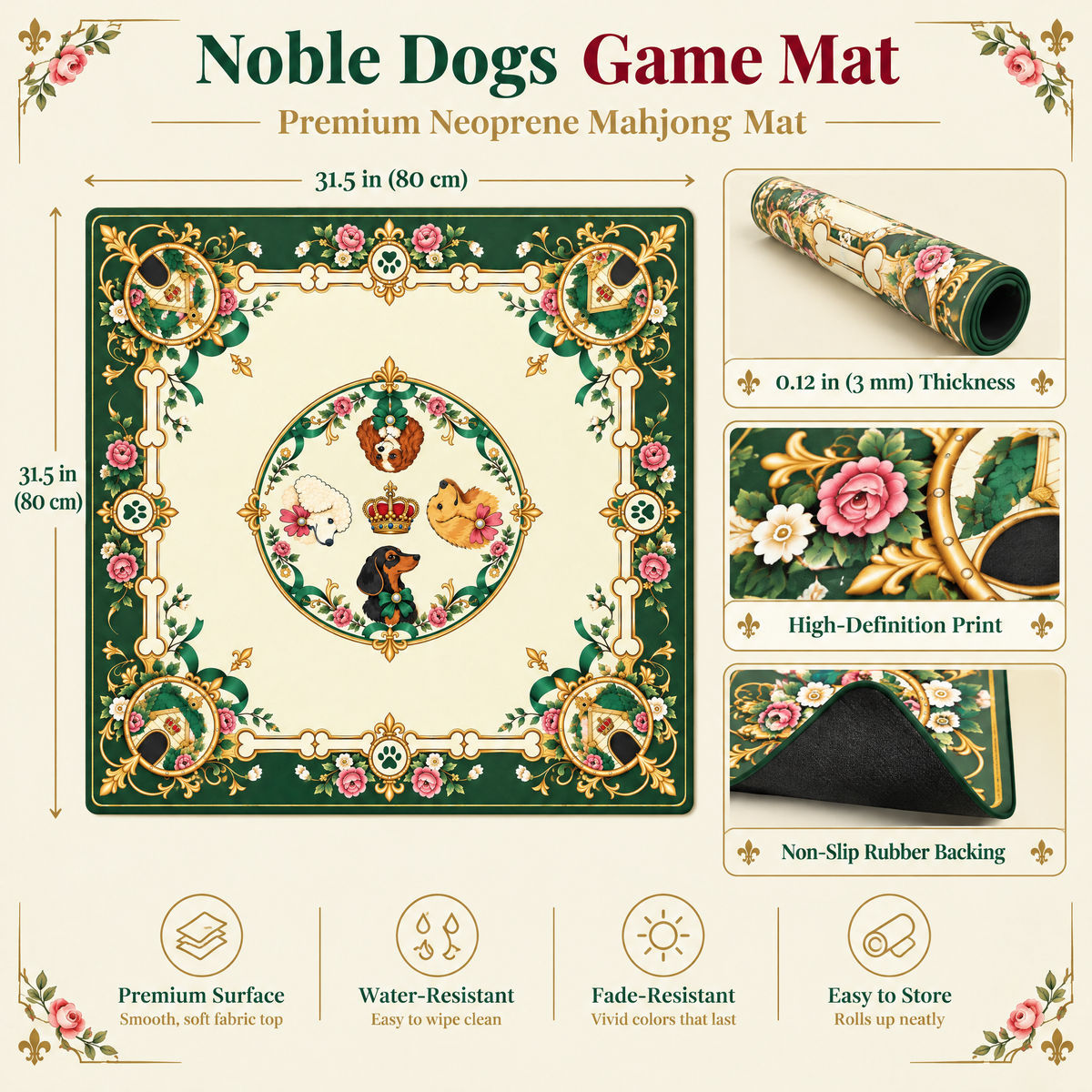
A mat is a padded, reinforced surface designed to protect your table, muffle tile clatter, and provide a defined play zone; it's typically 27–31 inches square, with a raised rail or border to prevent tiles from sliding off during shuffling. A tablecloth is just fabric draped over your table and offers no cushioning or tile control. For hosting, a mat is essential—it keeps the game quiet and organized, protects your furniture, and signals to players that you take the game seriously. Check our guide on choosing a mahjong mat for size and material options that suit your space and table shape.
🀄 Shop best-selling mahjong sets →
What rules should every Philadelphia host know?
American mahjong uses only hands from the current National Mah Jongg League card—no improvisation. You must have exactly four players; two- or three-player variants exist but use different rules entirely. Before each game, conduct the Charleston: a three-round tile-passing ritual in which each player passes tiles right, across, and left in a specific sequence. Tiles can only be exposed as a pung (three identical), kong (four identical), quint (five), or sextet (six)—never as sequences like 1-2-3. Jokers cannot form a single tile or pair, only substitute for missing tiles in melds. Learn how jokers work and the Charleston explained to avoid common errors that frustrate new players.

How long does a typical game take, and how should I plan my party?
A single hand of American mahjong typically lasts 15–30 minutes, depending on player speed and whether melds are called. Most home sessions run 2–4 hours and include 4–8 hands, with breaks for snacks and scoring. Host tip: start at a consistent time (e.g., 7 p.m. Thursdays), set a clear end time, and warn players if you plan to serve food halfway through to avoid tile grease. Provide a designated scoreboard or paper scoresheet so players can track cumulative points across hands. If you're hosting regular games, players will appreciate a quiet, well-lit space and a mat that stays in place—invest in quality racks with pushers so players aren't fumbling with loose tiles mid-hand.
Hosting Essentials Comparison
Item | Purpose | Why it matters | Estimated placement |
American mahjong set (152 tiles + 8 jokers) | Core gameplay | Without it, no game | Center of mat |
Padded mat (27–31 inches) | Play surface & noise control | Protects table, keeps tiles from sliding | Under the set |
Racks with pushers (4 sets) | Player tile organization | Players can see and manage hands without showing tiles | In front of each player |
Current-year NMJL card | Hand validation | Only hands on this year's card are legal | Visible to all players |
Scoreboard & pen | Tallying points | Prevents disputes over scoring | Accessible to all |
Snacks & water | Host hospitality | Keeps energy and mood positive over 2–4 hours | Side table |
🎁 See our most-loved mahjong sets & accessories →
What's the best way to introduce complete beginners to American mahjong?
Invite beginners to watch a full hand before they play, and pair each newcomer with an experienced player for their first round. Explain the Charleston once, then do it step-by-step: pass right, then across, then left. Walk through the card together—point out the sections (dots, bams, craks, dragons, winds, flowers) and give one example hand before play starts. Avoid playing for high stakes in the first session; a low or zero-money game removes pressure and lets people focus on learning. Our mahjong for beginners guide and the full how to play American mahjong article will help you prepare talking points.
Where can I buy or rent a mahjong set in Philadelphia?
Search "mahjong set Philadelphia" online; local game shops, import stores, and community centers sometimes stock or recommend sets. For reliable delivery and a set built to last through weekly home games, order online with free US shipping. Look for acrylic sets (easier to clean and handle than bone or bamboo) with engraved tiles so you can personalize them for your group. Our engraved American mahjong sets let you add your host names or game year, turning a functional tool into a keepsake.
✨ Find your Mahstead set — free US shipping →
What to check before you buy or host
Verify the year's card: get a copy of the current National Mah Jongg League card before hosting—hands from past years are not legal.
Count tiles: any American set must contain 152 playing tiles plus 8 jokers. More tiles are spares; never add extra tiles to the game.
Test the mat: lay it on your chosen table and check that it's flat, doesn't slide, and fits comfortably for four players around the perimeter.
Recruit consistent players: consistency builds camaraderie and skill; aim for the same four people at the same time each week if possible.
Watch a game first: if you're new to hosting, attend another player's game or watch online to see how the Charleston, card reading, and scoring flow in real time.

FAQ
Where in Philadelphia can I find a regular mahjong game to join?
Call your neighborhood community center or public library; many host weekly open-play sessions. Post flyers at senior centers, synagogues, and Asian-owned restaurants. Search Meetup and Facebook for local mahjong groups, or ask at fabric stores, which are traditional gathering points for players.
Is American mahjong the only version played in Philadelphia?
American mahjong is most common in Philadelphia, but some players also enjoy Chinese or Riichi variants. Always confirm which version your group plays before joining—rules and tile counts differ significantly between versions.
What is the Charleston, and why do I need to do it?
The Charleston is a three-round tile-passing ritual (right, across, left) before the game starts. It randomizes your starting hand and is a required part of American mahjong to ensure fair play and prevent collusion.
Can I host a mahjong game with only two or three players?
Standard American mahjong requires four players. Two- and three-player variants exist but follow entirely different rules; confirm with your group which format you're playing before starting.
How much does an American mahjong set cost, and what's included?
Sets vary by material and design. For current pricing and what's included in each set, see the product pages on our site. All Mahstead sets come with 152 tiles, 8 jokers, and free US shipping.
Do I need to buy expensive bamboo or bone tiles, or is acrylic okay?
Acrylic tiles are durable, easy to clean, and handle beautifully for weekly home games—no need to buy vintage or expensive materials. Acrylic is our standard for hosting and travel alike.
How often should a regular mahjong group meet?
Most home groups meet weekly on the same day and time—consistency builds skill and friendships. Some play biweekly or monthly. Choose a schedule your regular four can commit to.


View More
View More
View More
