
Mahjong Party Ideas in Jacksonville: How to Host Your First Game
Last updated: Nov 23, 2026
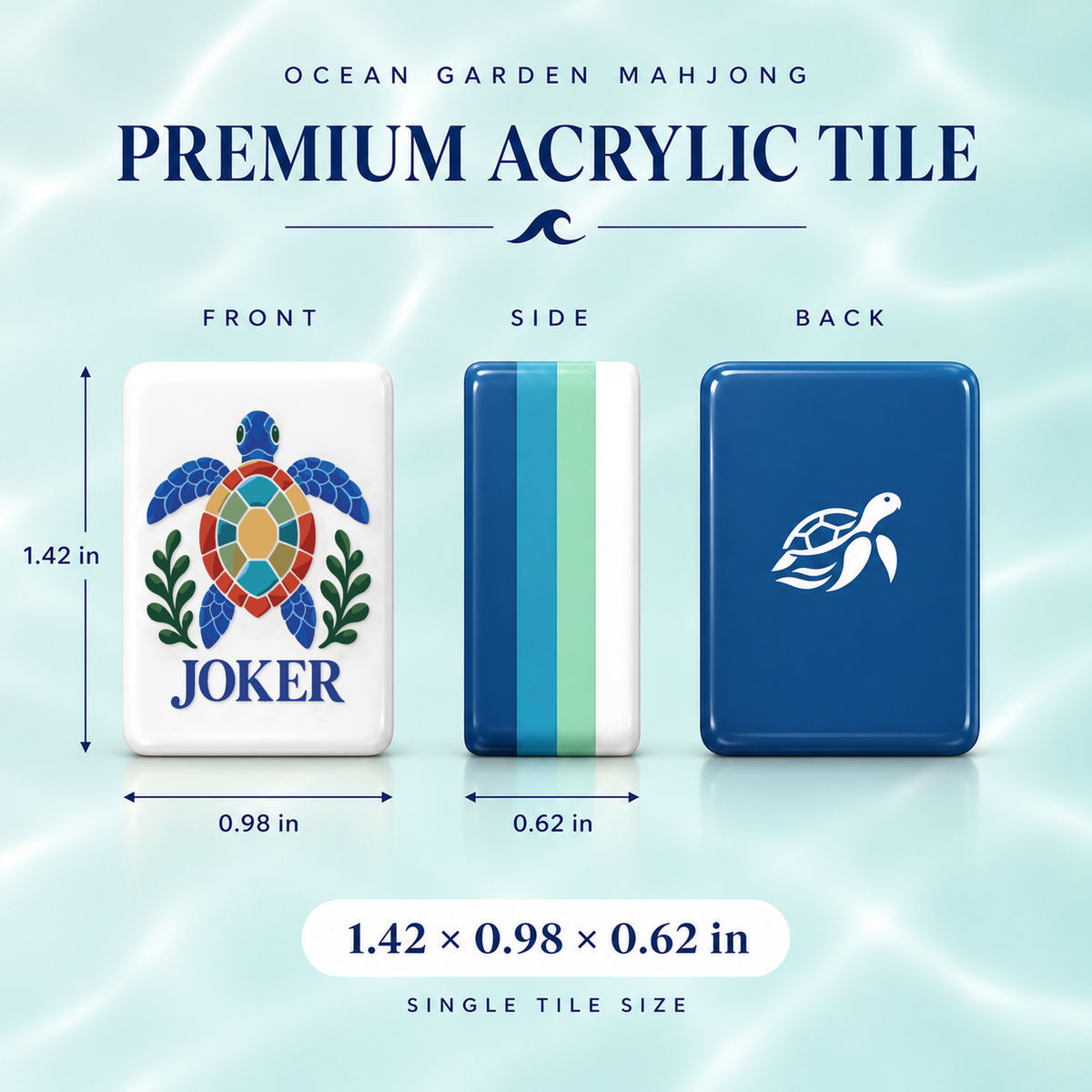
Hosting a mahjong party in Jacksonville starts with four decisions: invite 4 players, secure a table and mat, gather a 160-tile American mahjong set with the current year's card, and designate a dealer. American mahjong follows the National Mah Jongg League card (issued each spring), runs about 30–45 minutes per hand, and suits players aged 8 to 80. Jacksonville's community centers, libraries, synagogues, and country clubs often host open games or can recommend venues; check their bulletin boards or call ahead. The basic setup: shuffle tiles face-down, each player draws 13 after the Charleston (a pre-game tile pass), and play proceeds with draws and discards until one player completes a hand matching the card. A quality best-selling mahjong set with a mat, racks, and pushers removes guesswork and keeps the game smooth. Avoid common mistakes: skipping the Charleston, using last year's card, or mixing tile editions mid-game.
Jacksonville's humid subtropical climate and year-round social calendar make mahjong ideal here. Outdoor venues near the riverfront need protected mats; indoor community spaces offer reliable lighting and climate control. The key: plan two weeks ahead, confirm venue access, and arrive 45 minutes early to set up.
Where should you host a mahjong party in Jacksonville?
Libraries, community centers, parks with pavilions, synagogues, country clubs, and retirement communities all welcome mahjong groups—many actively schedule games. Call ahead to check table availability, noise policies, and whether you can bring your own set or need to use theirs. Riverside parks work well April–October; indoors beats August heat and humidity. Post your interest on neighborhood Meetup boards, Facebook community groups, or ask at local senior centers to find established players who may already have a steady venue.

How do you set up the table and teach new players quickly?
Arrange four chairs equidistant around a sturdy table (48 inches square is standard). Place a protective mahjong mat in the center to muffle tile noise and define the play zone. Set racks with pushers on each side—these keep tiles organized and prevent cheating by hiding tile counts. Before the game, hand each player a current-year National Mah Jongg League card, walk through one sample hand (about 5 minutes), explain the Charleston, then play. Jokers and the discard pile sit in the center; print or laminate a quick reference card on tile meanings (Bams, Craks, Dots, Winds, Dragons, Flowers) for first-timers.
What's the step-by-step flow for a beginner-friendly game?
1. Shuffle tiles face-down for 1–2 minutes. Everyone mixes them evenly.
2. The Charleston. Each player passes three tiles right, then three straight across, then three left. Optionally repeat backwards (players choose). This ritual randomizes hands fairly.
3. Deal 13 tiles per player. The East wind (dealer) draws one more, starting with 14.
4. East discards one tile face-up. South draws from the wall or calls a discard if it completes a meld.
5. Play proceeds counterclockwise (North → West → South → East). Each turn: draw, discard, check the card.
6. Winning hand: First player to meld 14 tiles matching a hand on the card wins the round—typically 30–45 minutes.
7. Keep score (scoring varies; see the back of the card or simplified charts online).
8. Rotate dealer position and replay.
New players often rush; enforce a 10-second "think time" per turn to avoid confusion and frustration.
What equipment do you need to host a stress-free game?
Item | Why It Matters | Notes |
160-tile American set | Ensures all 152 playing tiles + spares exist; no confusion mid-game | Check tiles are numbered 1–9, suits match (Bams, Craks, Dots), winds are clearly marked |
Current-year card | Hands are only valid on that season's card; using an old card voids the game | Available free online or printed from the National Mah Jongg League |
Protective mat | Protects table, mutes noise, centers play | See mat buying guide for size & material |
Racks with pushers (4 sets) | Holds tiles upright, hides tile counts, speeds organization | Makes play 20% faster and looks professional |
Dice or scoring chips | Determines who sits where, tracks points | Standard dice or laminated scorecards suffice |
Laminated reference sheet | Explains suits, dragons, winds for beginners | Print one copy per player; saves 10 interruptions |
Comfortable chairs | Game lasts 30–45 minutes per hand; poor seating kills enjoyment | Height-adjustable or firm backs recommended |
🀄 Shop best-selling mahjong sets →

What common mistakes wreck a Jacksonville mahjong party, and how do you prevent them?
Skipping or rushing the Charleston. New players think it's optional or hurry through it. Enforce it every single game—it ensures fair randomization and is part of the ritual.
Using the wrong year's card. The National Mah Jongg League issues a new card every spring. Hands are valid only on that year's card. Confirm all players have the same card before dealing.
Mixing tile editions. If you combine tiles from two different sets (e.g., one with bamboo scenes, one plain), someone will misread a tile mid-game. Use one set only.
Insufficient jokers or blanks. American mahjong includes 8 jokers (no blanks are played; blanks in 160-tile sets are spares only). Verify your set has all 8 before the game.
Poor light or glare. Tiles with numbers are small; play indoors or under a pop-up canopy with overhead lighting. Avoid direct sun on the table.
No agreed scoring beforehand. Scoring can vary. Decide on house rules (points per hand, penalties, pay-out structure if any) before the first hand. Write it on a reference sheet.
Seating four strangers without introduction. Spend 5 minutes letting players chat, share why they love mahjong, and level-set expectations (casual vs. competitive).
How do you find local Jacksonville players to invite?
Join neighborhood Facebook groups ("Jacksonville Residents," "Riverside Community," "San Marco Social"), Meetup.com (filter for "mahjong" + your zip code), or search "[your neighborhood] mahjong club" on Google Maps. Call your library or community center directly—many maintain lists of game groups. Synagogues and Jewish community centers often host established mahjong nights; visitors are usually welcome. Post a simple invite: "Beginner-friendly mahjong game Thursdays 6 p.m., [neighborhood/venue]. Bring curiosity, we'll teach rules. RSVP [email/phone]." Respond to replies within 24 hours to keep momentum. Jacksonville's active retirement communities also welcome younger players at their games—ask neighbors or check Nextdoor.
🎁 See our most-loved mahjong sets & accessories →
What should you check before you buy a mahjong set for your party?
Verify the set includes all 152 playing tiles (not 144 or 166; 160-tile sets are standard). Open the box and confirm: 36 Bams (numbered 1–9, four of each), 36 Craks, 36 Dots, 16 Winds (4 each: North, East, West, South), 12 Dragons (Red, Green, White), 8 Flowers, and 8 Jokers. Check that tiles are acrylic or bone/bamboo (durable), numbers are clear and not worn, and suit symbols (bamboo for Bams, circles for Craks, dots for Dots) are unmistakable. Confirm the set includes a mat, racks, and pushers or budget for them separately—all three save setup time and look professional. Read product descriptions carefully; if unclear, email the seller. For Jacksonville parties with multiple players, a best-selling set is worth the investment; it eliminates borrowed-set friction and lasts decades with care.
✨ Find your Mahstead set — free US shipping →
Before hosting, review how to play American mahjong and the Charleston explained to answer player questions confidently. Print one copy of the current-year card per player and laminate a rules summary—this cuts explanations in half and sets a professional tone. Most first-time players are anxious; your calm, prepared setup transforms nervousness into excitement.

FAQ
Do I need exactly 4 players, or can I host with 2 or 3?
American mahjong is designed for 4 players. Two or three-player variants exist but follow different rules and card layouts; they require advance agreement and a different rule set. Stick to 4 for your first party.
Where can I find the current year's mahjong card in Jacksonville?
The National Mah Jongg League card is available free at their website and at most libraries; many mahjong shops print it for free or low cost. Ask at your local community center or order online and print at home.
What's the best time of year to host a mahjong party outdoors in Jacksonville?
October through April offer comfortable temperatures and lower humidity. May–September requires indoor venues or early morning games; afternoon heat and storms make outdoor play difficult.
Can I host a mahjong party if I've never played before?
Yes, if you learn the basics first. Watch a 10-minute YouTube tutorial, read one hand example, and practice the Charleston once. Teaching while learning is hard; prep for 30 minutes beforehand to stay confident.
Should I charge admission or keep it free for beginners?
For first games, keep it free to lower barriers and build the group. Once regulars form, small stakes ($1–$5 per round) can add fun without pressure; make participation in gambling purely optional.
What if someone doesn't know how to play—should I pause the game to teach?
Brief pauses are fine for clarification. Before play starts, walk through one complete hand with everyone so mid-game interruptions stay under 1 minute. Patience builds loyalty.


View More
View More
View More
