
Mahjong Opening Hand Strategy Tips for American Play
Last updated: Nov 23, 2026
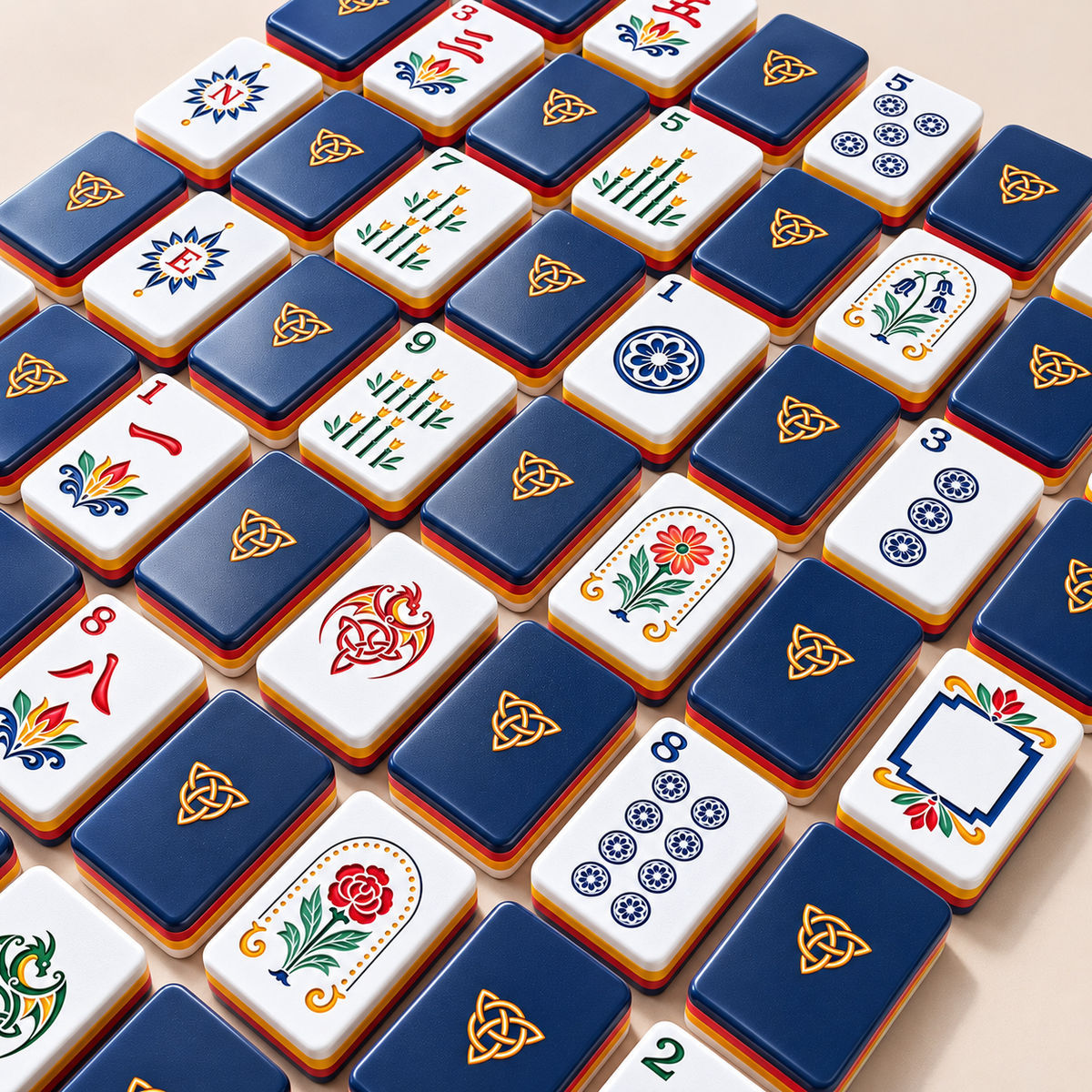
Opening hand strategy in American mahjong means reading your 13 tiles against three factors: (1) what the current year's card offers, (2) which suit or number range appears most, and (3) how many jokers and blanks you hold. At the table, look first for pairs—the foundation of every hand—then count consecutive numbers and honor tiles (winds, dragons). If you hold two or three potential pairs in one suit, you have flexibility; if your tiles scatter across all three suits with no sequence, you're likely dead and should discard aggressively to pick up discards. The National Mah Jongg League card drives all legal hands, so no opening is truly "bad"—only under-read. Most winning players spend 10–15 seconds on their first look, then adjust as the Charleston and wall play reveal what's available. 🀄 Shop best-selling mahjong sets →
What Should You Look for in Your First 13 Tiles?
Your opening 13 tiles tell you what might go down, not what will. Scan for pairs first: two identical tiles (two 3 Bams, two East Winds, two Red Dragons) are your anchor. Then look for runs—numbers that sit next to each other within one suit, like 4-5-6 Dots. Count jokers: each joker is a free pass to any missing tile in a meld. Honor tiles (winds and dragons) are wild cards; the card usually clusters them into specific hands. If you see four to six tiles that could work together, you're flexible. If everything sits isolated, mentally flag this as a "break-up" opening where you'll discard freely and wait to see what comes.

How Do Position and Seat Wind Shape Your Tactics?
Your seat (East, South, West, North) and current discarder matter before the wall closes. East player (the dealer) acts first after the break and often captures the best early discards because three players feed before the next turn. If you're East with a two-pair opening, hold and watch; if you're West or North and your hand is scattered, feed tiles quickly to influence what others discard. Seat Wind and Dragon tiles that match your position are slightly more valuable because the card tends to hide them—players often dead-end on their own seat wind. Count how many seat-wind or season-wind tiles the card shows; if your seat wind appears in only one or two hands, it's premium stock to hold early.
When Should You Discard Aggressively vs. Slow-Play Your Opens?
Aggressive discard—throwing tiles you'll never use—works when you have three or more potential pairs or a clear suit focus. Example: you hold two 2 Bams, two 5 Craks, and a Red Dragon. The 2 Bams feel strong (could anchor a Bam hand), so hold it and throw the 5 Craks if it's not in your top three hands on the card. Slow-play (discard only tiles you're certain you won't need) happens when your opening is thin: one weak pair, scattered honors, no clear path. In that case, keep three or four tiles and test what others feed before you commit. If nobody's discarding Dots in the first three turns, Dot hands are live and you're undergunned—break up early. If the first player to discard throws a Red Dragon, that tile is hot; don't pick it up unless it's a pung anchor.
🎁 See our most-loved mahjong sets & accessories →
How Do You Spot a Dead Opening Hand?
A dead hand has no pairs, no runs, and no clear path on the card. You draw: 1 Bam, 3 Dot, 7 Crak, South, Green, Red, North, 2 Dot, 8 Crak, White, 4 Dot, West, 1 Crak—thirteen isolated tiles. Check the card: no hand uses six different tiles across two suits with no pair. Dead hands happen; they're not a failure. The move is to discard the tile that looks least useful to others and watch the discards. Often a dead hand becomes a 2-pair or 3-pair within two turns when players feed you trash. Never panic-pick a discard just because it's in front of you; a dead opening is your freedom to cherry-pick only what helps.
Opening Hand Decision Framework
Situation | Your Move | Why It Works |
Two+ pairs in one suit | Hold and slow-discard | Flexibility keeps options open |
One pair, isolated honors | Discard one honor per turn | Test what others feed |
No pairs, scattered tiles | Break up aggressively in turn 1–2 | Prevent others from reading your weakness |
Pair + run (e.g., 3-4-5 Bams) | Hold run, discard far honor | Meld speed often beats slow pairs |
Three jokers, weak pair | Discard least-likely honor | Jokers mask which suit you want |

Which Cards and Hands Should You Pre-Study Before the Game?
Before you sit down, learn the current year's card layout. Spend 5 minutes scanning which hands use honor tiles, which use only one suit, which are all runs. Flag the three hands you see most often (often: all-Bam hands, mixed suit with honors, all-run hands in one suit). When you draw your opening 13, you can instantly map your tiles to those patterns. Also note which hands have the fewest jokers—those are the hardest to complete and the least likely to beat you if an opponent pursues them. If a hand requires four Craks and a specific pair, and you're holding three Craks by turn three, you know that opponent is stuck; don't feed more Craks. Study the card during the Charleston (the tile-passing before play starts) so you're ready the moment the wall breaks.
How Do Jokers Change Your Opening Assessment?
Each joker is a blank tile you can substitute for any single tile in a meld (pung, kong, quint, sextet). If your opening has one or two jokers, you're stronger than your raw tiles suggest. Two jokers + two 5 Dots + three 6 Dots = near-pung already (jokers stand in for missing 5s or 7s). Three or more jokers in your opening is rare and powerful; you can complete almost any two-suit or honor-heavy hand. Jokers do not work in pairs, and they cannot be called or exposed alone. So count jokers as multipliers: they free you to pursue hands with gaps. If you hold zero jokers and your opening has scattered suits, you're dependent on picking up live discards—riskier, so discard more cautiously.
What Wins at Your Home Table?
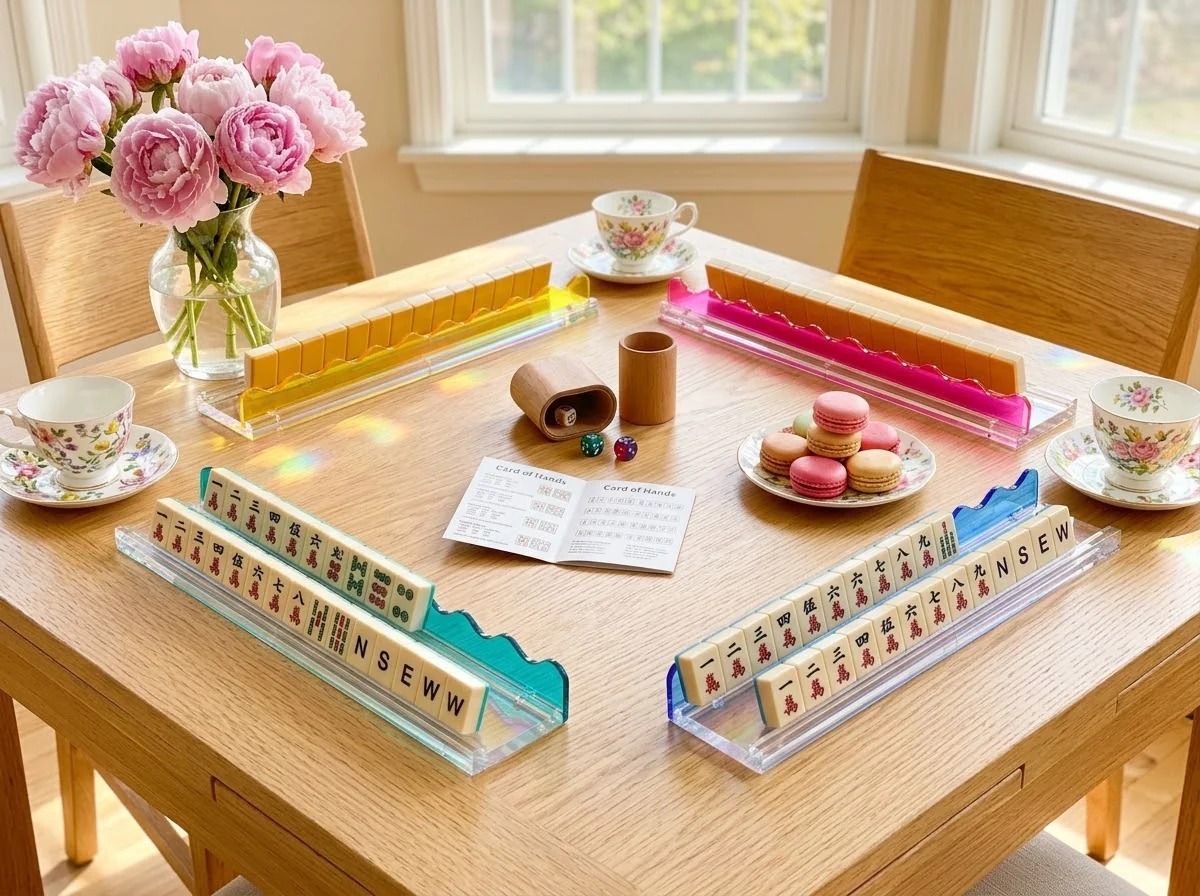
We've hosted weekly games for years, and we see the same patterns. The players who win most weeks aren't the fastest readers—they're the ones who break decisively, watch discards like hawks, and adjust their pair priority after turn two. They also play on clean, organized equipment: a mahjong mat that holds tiles firmly so misreads don't happen, racks with pushers that let you rotate your hand without fumbling, and a set with clear tile faces so you're not squinting at numbers. Your opening strategy is only as good as your setup; a chaotic hand holder or a mat that slides around costs you seconds and clarity.
✨ Find your Mahstead set — free US shipping →
What to Check Before You Buy Your First Set
If you're new to the table, make sure your set has acrylic or bone tiles (they're durable and easy to read) and includes eight jokers clearly marked. A quality mat with a strap or bag saves you mental load—you're not reorganizing tiles mid-game. Look for sets with pushers and racks that fit your hand size; undersized racks force you to squeeze tiles, and oversized ones make opening reads slower. A good set should include all 152 playing tiles plus spare jokers. If you're hosting, test the setup with friends before your first serious night; a 15-minute practice round on the mat beats a chaotic first night.
FAQ
Should I always pick up the first discard if it fits my pair?
No. If your opening is scattered and you're not alive to that hand on the card, pass. Picking up early signals your hand to others and reduces your discard options. Pick up only when you're sure the hand is on your card and the pair is solid.
What's the difference between an opening I should pursue vs. trash?
Pursue if (1) you see two or more potential pairs, (2) at least four tiles sit in one suit, or (3) honors align to one hand on the card. Trash if tiles are isolated across all suits with no pair in sight; discard that and wait.
How many tiles should I keep in my opening hand?
Start with eight to ten "live" tiles (ones you'd actually use in a hand on the card). Discard three to four that you're certain won't fit. After the first turn or two, adjust based on what others feed.
Do I read my opening hand differently if I'm East (dealer) vs. North?
Yes, slightly. East acts first and should slow-play strong pairs to capture more discards. North or West acting third or fourth can discard harder because two opponents have already shown their priorities.
Can I change my strategy mid-game if my opening doesn't work?
Absolutely. If you open with a weak Bam hand and players immediately stop feeding Bams by turn three, pivot: look at the card for mixed-suit or honor hands that use your isolated tiles. Flexibility beats stubbornness.
What's the fastest way to memorize the card?
Focus on the first five to eight hands you see most in your group. Spend five minutes before the game scanning those patterns. You don't need to memorize every hand—just the common ones in your meta.


View More
View More
View More
