
Mahjong Open Play in Boston: Where to Join & How to Get Started
Last updated: Nov 23, 2026
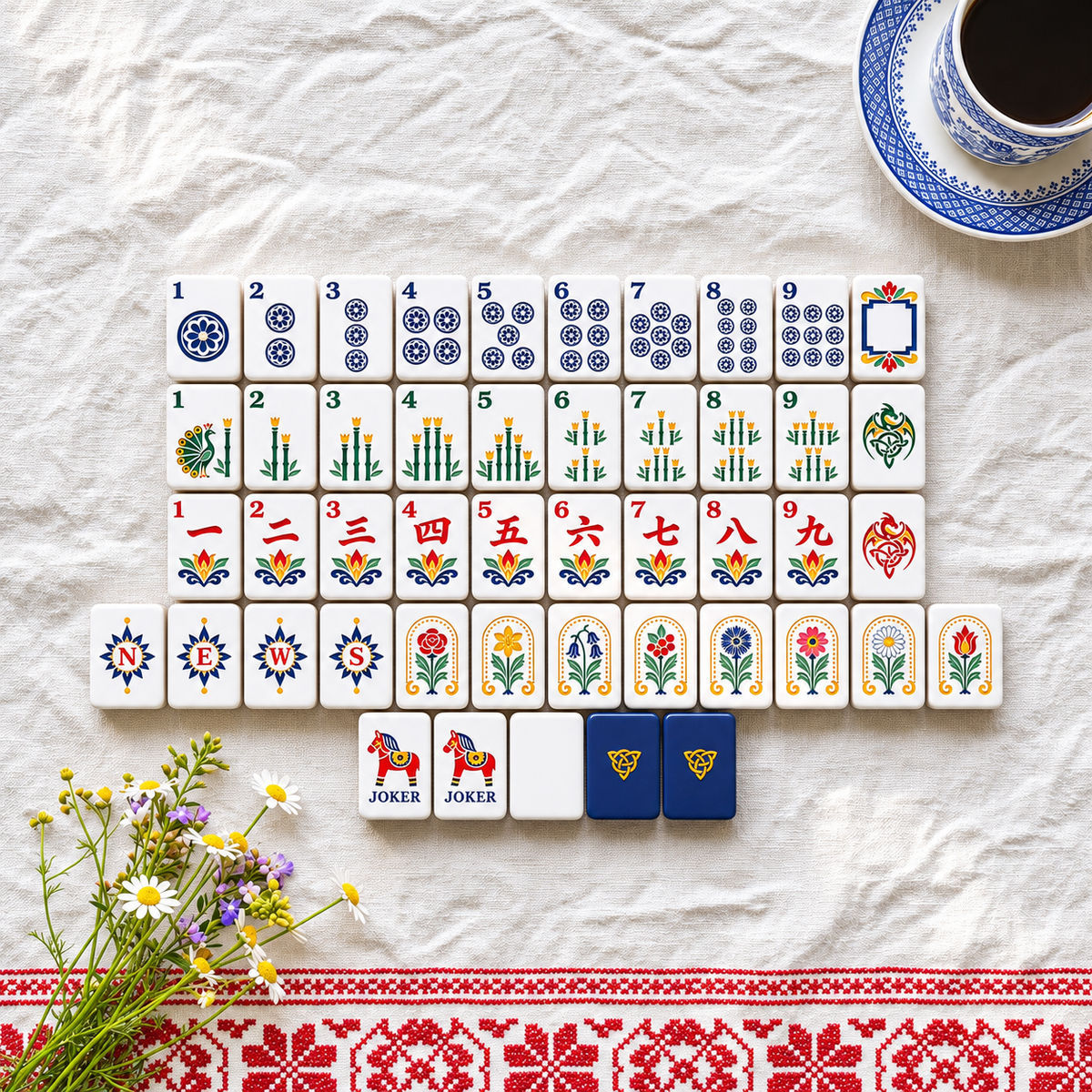
Boston's mahjong community gathers for open play—casual, drop-in games where players of mixed skill levels join at community centers, synagogues, libraries, and informal meetup venues across the metro area. Open play typically runs on weekday afternoons or Saturday mornings, with sessions lasting two to four hours. Cost per session ranges from free (at library groups) to a small donation or modest table fee. You'll need a full 152-tile American mahjong set with eight jokers, knowledge of the current year's National Mah Jongg League card (available free online), and familiarity with basic hand-reading—our guide to reading the mahjong card covers this in detail. Bring a mat if you have one to protect the playing surface. Most groups welcome new players; arrive early and ask where to join. Avoid showing up without the NMJL card or expecting to play hands outside the official list—groups enforce these strictly to keep games fair. 🀄 Shop best-selling mahjong sets →
How do I find an open play group in Boston?
Boston hosts mahjong games through several channels: check your neighborhood library's event calendar and ask the reference desk—many run weekly circles. Contact local synagogues (particularly in Newton, Brookline, and downtown Boston), country clubs, and Jewish community centers, which sponsor regular games. Search Meetup.com and Facebook groups for "Boston mahjong," "Massachusetts mahjong," or "New England mahjong"—active pages post weekly sessions with times and locations. Ask at game shops or craft stores if they know of regular players. Many groups use closed mailing lists; once you find one group, they'll refer you to others. Start by calling ahead to confirm you're welcome as a beginner and to learn what you need to bring.

What should I expect at my first open play session?
First sessions feel welcoming but brisk. You'll sit with three other players, each assigned a wind (North, East, South, West). The most senior player leads the Charleston—a tile-passing ritual before play starts—then everyone draws tiles and builds a hand from the current NMJL card. Hands last roughly 15 minutes; expect six to eight rounds per hour. Players talk, laugh, and call out tiles in rhythm; it's social but focused. No one plays for high stakes in Boston open play (penny or nickel scoring is typical, often just for pride). If you hesitate or ask questions, experienced players help without judgment. Bring the NMJL card, a pen, and a small notepad if you want to track scores. Most groups have spare sets if yours isn't yet assembled—call ahead to confirm.
What's the difference between open play and league play?
Open play is informal: drop in any week, mixed skill levels, low or no money, flexible rules enforcement, games played for enjoyment. League play—run by the National Mah Jongg League or official clubs—requires membership, standardized scoring, strict hand verification, tournament-style rankings, and often higher per-game fees. Boston's league chapters meet less frequently (monthly or seasonal) and enforce the official card strictly. Open play is better for beginners because the pace is easier and mistakes don't count against a permanent record. Once you've logged 20 or 30 sessions and feel confident reading hands and executing the Charleston, you can decide whether to join league play. Both coexist in Boston; many players do both.
Which mahjong set should I bring to open play?
Buy a best-selling acrylic or bamboo set with bright, easy-to-read tiles—acrylic sets work best at open play because tiles don't shift during the game and shine under fluorescent lights. Bring a full 152-tile set with eight jokers; never remove or add tiles. If you're nervous about damaging nice tiles, start with an affordable acrylic set—it will outlast wood over years of weekly play. Many players own two sets: a daily-play set for open games and a fancier engraved set for tournaments or special occasions. Always inspect your set before leaving home to confirm all 152 tiles and eight jokers are present; a missing tile ruins a session. Carry your set in a dedicated travel bag or case to avoid losing pieces during the commute.

Do I need to know American mahjong rules before I show up?
Yes—at least the basics. Learn how to play American mahjong before your first session: understand pungs, kongs, quints, and sextets; memorize that jokers cannot be used in a pair or as a single tile; know that you may only expose these melds (never chows or sequences); and grasp the concept of the NMJL card. Spend one evening reading the card with a set in front of you—our guide covers how to read it in plain language. Understand the Charleston: the tile-passing ritual where each player passes tiles left, right, and across before play begins. You don't need to know scoring details before you arrive, but get comfortable with the rhythm of drawing and discarding, and how to spot a winning hand. Most groups will spend five minutes walking a beginner through a practice round; use that time to ask.
🎁 See our most-loved mahjong sets & accessories →
Consideration | Open Play | League Play | Best For You? |
Cost per session | Free to small donation | NMJL membership + per-game fee | Beginners start with open play |
Skill level mix | All levels welcome | Intermediate to advanced | New players thrive in open play |
NMJL card enforcement | Flexible, teaching-focused | Strict verification | Open play allows questions |
Frequency | Weekly year-round | Seasonal or monthly | Open play offers more sessions |
Scoring | Casual (penny/nickel or pride) | Official rules, ranked | Open play is lower pressure |
Commitment required | Drop in anytime | Membership, scheduled rounds | Open play = no long-term lock-in |
What to check before you buy a set for open play
Tile clarity: Hold tiles at arm's length and confirm numbers and suits are crisp, not faded or blurry—you'll read tiles across a mat from several feet away.
Joker count: Count all eight jokers before leaving the shop; a missing joker stops the game.
Racks and pushers: If your set includes racks, test that they hold 14–15 tiles without warping and that pushers slide smoothly—faulty racks make your hand awkward to hold during play.
Set completeness: Verify all 152 playing tiles are present (36 each of Bams, Craks, Dots; 16 winds; 12 dragons; 8 flowers; 8 jokers) using our checklist in what's in an American mahjong set.
Storage: If you plan to carry your set weekly, pair it with a padded travel bag to avoid chips, scratches, and lost tiles during transit.
Mat compatibility: Acrylic and bamboo tiles slide on cloth mats; if your venue doesn't provide a mat, consider a personal mat to protect both the table and your tiles.
Getting comfortable: a first-session checklist
[ ] Confirm session location, time, and "beginner-friendly" status by phone or email a day before.
[ ] Download and print the current-year NMJL card (available free at nmjl.org); laminate or slide it into a plastic sleeve.
[ ] Count all tiles and jokers in your set at home; take photos of your tile count as backup.
[ ] Pack your set in a protective bag, bring a pen, notepad, and a bottle of water.
[ ] Arrive 10–15 minutes early; introduce yourself and say you're a first-timer.
[ ] Watch one round silently before playing.
[ ] Ask for a practice round and permission to ask questions during it.
[ ] Keep the NMJL card visible and refer to it without hesitation—every player does.
[ ] Thank the group at the end, get contact info for the next session, and return the following week.
✨ Find your Mahstead set — free US shipping →

FAQ
Do I need to be from Boston to join an open play group?
No. Boston groups welcome players from surrounding towns and suburbs. The commute varies; some groups meet in central locations like Cambridge or Brookline, others in neighborhood libraries. Check the session location before committing.
Can I play open play if I only know Chinese or Hong Kong mahjong rules?
Not without study. American mahjong uses a different tile set, different hand structure, and different rules—the NMJL card is unique to American play. Spend a few hours learning how American mahjong works before joining to avoid confusing yourself and other players.
What if my set is damaged or missing a tile mid-game?
Stop play immediately and tell the group. Borrowing a spare tile from another set's storage is not allowed—a full, complete set is required to continue. Most groups keep one spare set on hand for this reason; ask if they do before you arrive, or bring a backup set if you're worried.
How much money should I bring for open play?
Bring petty cash for optional donations (often $2–5 per session) or penny/nickel scoring at the end. No Boston open play group charges high stakes. Confirm the cost structure when you call ahead; some sessions are completely free.
Can I bring a friend who's never played mahjong?
Yes, and groups appreciate it. Call ahead to give the organizer a heads-up, and plan to spend the first 20 minutes helping your friend understand the basic rhythm before you both play. Most groups will slow one round for a pair of beginners.
Where do I buy the NMJL card in Boston?
Download it free from nmjl.org every spring when the new year's card is released. Print and laminate it, or request a printed copy from the group—many keep extras to lend. Game shops in the Boston area sometimes stock printed cards; call ahead if you prefer a physical copy.


View More
View More
View More
