
Mahjong Open Play in Boise: Where to Join & What You Need
Last updated: Nov 23, 2026
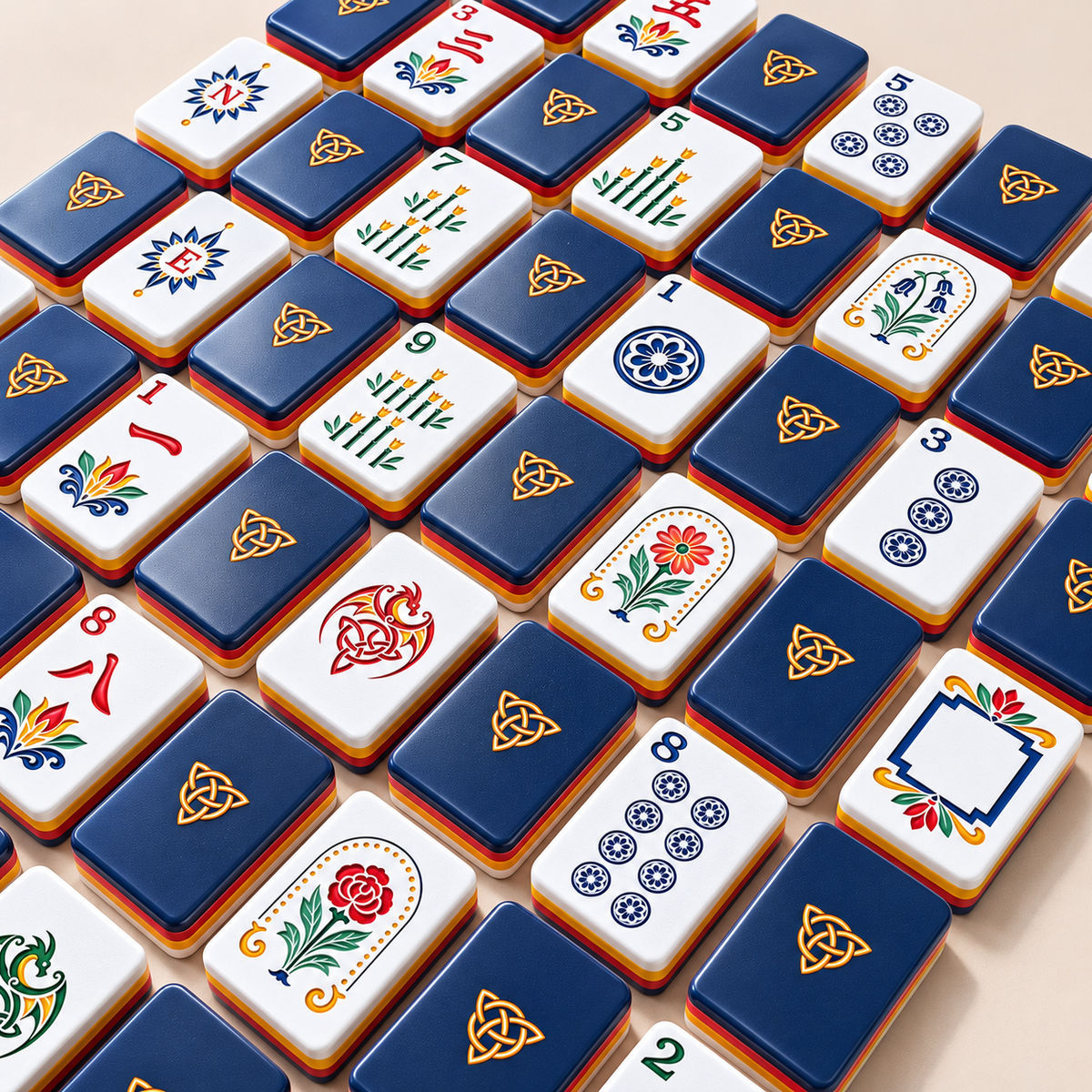
Mahjong open play in Boise happens at community centers, libraries, senior centers, and private hosted groups—check Meetup, your local library bulletin board, and community center activity calendars first. American mahjong uses 152 tiles (Bams, Craks, Dots, Winds, Dragons, Flowers, and 8 jokers), and every game draws hands only from the current year's National Mah Jongg League card. Most open groups play 4-player games on Thursday or Saturday afternoons, beginning with the Charleston (a structured tile-passing ritual), then working through the hand in turns—discard, draw, repeat—until someone completes a hand shown on the card and calls "Mahjong!" Most groups welcome beginners, though you'll want to learn the basics before sitting down and bring your own set or ask if the group has spares. Cost runs from free to a few dollars per game, depending on whether you're playing for fun or a small ante.
🀄 Shop best-selling mahjong sets →
Where do Boise players gather for open mahjong?
The easiest way to find open games is to search Meetup.com for "mahjong" and filter by Boise—active groups list their meeting times and locations. Check your local library website (most post community events on their bulletin boards) and call nearby community centers or senior centers to ask about mahjong sessions; many host games on weekday afternoons. Private players also host rotating games in homes or restaurants—ask at local game shops or yoga studios, and join neighborhood social-media groups or NextDoor to find these informal circles. Some country clubs and women's groups in the Boise area have standing games, though they may require membership or a referral.

What version of mahjong do open players use in Boise?
Nearly all open groups in North America, including Boise, play American mahjong—the variant using 152 tiles (not the 144-tile Chinese game). American mahjong relies on a printed hand card issued every spring by the National Mah Jongg League; players memorize or reference the card to know which tile combinations count as winning hands. The rules differ sharply from Chinese mahjong: you cannot form or call sequences (chows like 1-2-3), you can only expose pungs (three identical tiles), kongs (four identical), quints (five), or sextets (six), and the joker rules are strict—jokers cannot represent a single tile or form a pair. The Charleston precedes every game, a formal tile-passing exchange where each player passes three tiles to the player to the right, then two more to the player across, then one to the left, creating randomness and strategy before the hand begins. If you've learned Chinese mahjong elsewhere, American rules will feel unfamiliar at first; the card is your guide.
How does a typical open-play session actually run?
A standard Boise group game follows this sequence: four players sit around a table, each with a rack and pusher. The group shuffles all 152 tiles (plus 8 jokers), builds a wall, and determines the dealer by rolling dice. Each player draws 13 tiles; the dealer draws a 14th. Players study the National Mah Jongg League card to spot a hand they can build. The Charleston begins—three rounds of tile-passing, then the hand play: dealer discards first, players take turns drawing and discarding until someone matches a card hand exactly and declares "Mahjong!" Scoring happens next (points vary by hand type), then players agree whether to play another round or take a break. Most groups meet for 2–4 hours, playing 6–12 hands. Beginners should expect a learning curve—your first session will be slower as you absorb the card, but experienced players are usually patient.
🎁 See our most-loved mahjong sets & accessories →
What gear do you need to bring or have at hand?
A complete setup includes a 152-tile American mahjong set, a mat to protect the table surface, individual racks and pushers, and the current-year National Mah Jongg League card. If you host or attend regularly, quality matters: acrylic tiles are durable and loud (easy to hear the satisfying click when sets are popular for regular open play), bamboo sets feel classic but chip with heavy use, and plastic sets work for beginners but sound hollow. A padded mat with edge railings keeps tiles from sliding, protects your host's furniture, and signals respect for the game. Racks with pushers let you hold and organize 13 tiles cleanly—essential if you have hand dexterity concerns or just prefer a polished look. A good travel bag keeps your set, mat, and accessories organized and protected during transport; soft cloth bags suit light players, while cases with foam inserts protect sets used in tournaments or group rotation.
Item | Use | Why It Matters for Open Play |
American mahjong set | Hold & play 152 tiles | Required; affects sound, feel, durability |
Rack with pusher | Organize & hold 13 tiles | Steadies hands, keeps tiles hidden from opponents |
Mat | Table protection & tile grip | Prevents sliding, protects host's furniture, speeds play |
Travel bag or case | Transport set safely | Prevents tile loss, keeps gear organized, shows commitment |
Current-year League card | Reference hand combinations | Non-negotiable; rules change yearly |
The best-selling mahjong sets we stock tend to be popular among open-play groups because they're designed for frequent use, with clear numbering and visible suit markings that matter when you're reading tiles from across the table.

What mistakes do newcomers make when joining open play?
Not learning the card beforehand: Showing up to your first game without studying the League card slows the table. Spend 20 minutes the night before scanning hand patterns—you don't need to memorize, but you should recognize major patterns like "like numbers," "consecutive," and "odd/even."
Misunderstanding the Charleston: If you pass tiles in the wrong direction or count wrong, the game stalls. Practice the sequence once: three tiles right, two tiles across, one tile left—then stop. Ask the dealer to confirm before the hand starts.
Using jokers incorrectly: Jokers cannot fill a single-tile space or form a pair (e.g., you cannot have "Joker-Joker" as a pair, or "Joker" standing alone). This trips up beginners; ask for clarification before you play an illegal hand.
Bringing a worn or incomplete set: If tiles are chipped or stained, or if you're missing jokers, you'll need a substitute mid-game. Test your set at home: count all tiles, shuffle them, and verify no pieces are cracked.
Not respecting tempo: Open groups rely on steady pacing. Don't spend three minutes analyzing every hand; if you cannot build a card hand within 30 seconds, pass and wait for the next deal. Speed comes with practice.
✨ Find your Mahstead set — free US shipping →
What to check before you buy or bring a set
Before you commit to open play, verify these details:
Tile count: An American mahjong set contains 152 tiles (plus 8 jokers). If you own or plan to buy a set, confirm it has all 152; missing tiles = no play.
Suit spelling: Confirm your tiles read "Bam," "Crak," "Dot"—not "Bamboo," "Character," or "Circle" (those are Chinese terms that confuse American players).
Rack height & pusher fit: If you use a rack, check that it holds 13 tiles comfortably and that your pusher doesn't jam. Borrow or test before buying.
Mat dimensions: Measure your table or the host's table—mats range from 27" to 34" square. An oversized mat is better than too small.
League card currency: The card is issued every spring; check that you have the current year's version. Using a 2025 card in 2026 means hands won't match.
Most open groups will lend a set for your first visit; ask in advance. Many Boise players appreciate newcomers and offer informal lessons before the first hand—don't hesitate to ask questions.
How to find your first game in Boise right now
Search Meetup: Visit meetup.com, search "mahjong Boise," and sort by nearest or most active. Join the group and attend an open session.
Call your library: Ask the librarian if they host or know of a mahjong group; many library staff know the local scene.
Check community-center activity calendars: Boise Parks & Recreation and local recreation centers often list games in their seasonal activity guides.
Ask at game or card shops: If Boise has board-game cafes or game clubs, staff can point you to mahjong players.
Post on neighborhood social media: Join Boise NextDoor, Facebook community groups, or Slack channels and ask "Anyone know open mahjong games?" People respond quickly.
Once you've located a group, show up 10 minutes early, introduce yourself as new, and watch the first hand before asking to join. Bring a set if you have one, or ask if the group has a spare. Most importantly, expect to learn—open play is where real mahjong happens, and the table will teach you faster than any guide.

FAQ
Do I need to buy my own mahjong set to play open games in Boise?
No. Most open groups have spare sets or can lend you one for your first few visits. However, owning what goes into an American mahjong set shows commitment and ensures you can join any table confidently. Many regular players bring their own set within 2–3 visits.
Is American mahjong harder to learn than Chinese mahjong?
Neither is objectively harder; they're different games. American mahjong relies on a printed card and limits exposed tile combinations, while Chinese mahjong uses only memory and allows sequences. If you know Chinese mahjong, expect a 2–3 week adjustment to learn the American card and rules.
Can I play American mahjong with fewer than four players?
Yes. American mahjong exists in 2 and 3 player variants, though most open groups in Boise play 4-player. Ask the group if they offer 2 or 3 player games, or whether they can modify rules for a smaller group.
What does the Charleston actually do, and why is it necessary?
The Charleston explained is a structured tile-passing ritual—three rounds where each player passes tiles in a set direction (right, across, left). It randomizes the initial 13 tiles you receive and prevents players from "gaming" the tile draw. Without it, play becomes predictable and some hands would be far easier to build.
How much money does a typical Boise open-play game cost to enter?
Open play costs range from free (casual hobby groups) to a small ante per hand or per session (a few dollars). Some groups play for nominal stakes; others play purely for fun. Always ask the organizer before your first visit what the cost structure is, and whether money is involved. Most beginner-friendly groups offer free or very low-cost sessions.
Where can I find the current-year National Mah Jongg League card in Boise?
The card is issued every spring and can be ordered from the National Mah Jongg League (search online for their official site), or purchased from game shops, mahjong clubs, or online retailers. Many Boise groups also have laminated cards at the table you can reference during play. If you're new, borrow a card from the group or buy a copy before your first visit.


View More
View More
View More
