
How Many Tiles in Fujian Mahjong: Variants Explained
Last updated: Nov 23, 2026
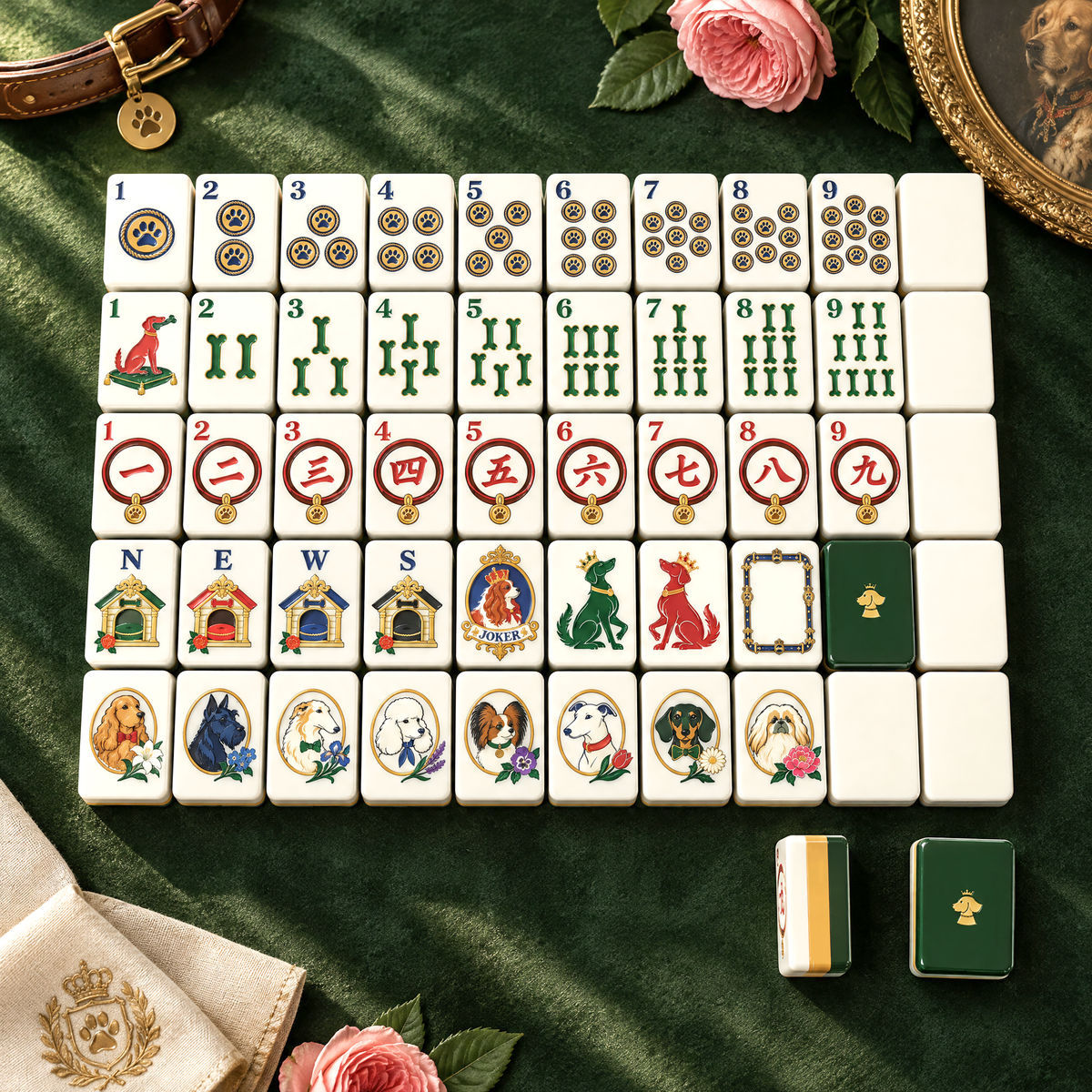
Fujian mahjong uses exactly 144 tiles: three suits (Bams, Craks, Dots) numbered 1–9 with four copies each (108 tiles), plus 16 winds (four each of North, East, West, South), 12 dragons (four each: Red, Green, White), plus 8 flowers. This contrasts with American mahjong, which plays with 152 tiles (identical to Fujian except American adds 8 jokers that act as wild tiles). Fujian mahjong is primarily played in Fujian Province and parts of Guangdong; it uses sequences (chows) and pungs like Hong Kong mahjong but with different hand-winning patterns and scoring. If you're learning Fujian rules, you'll need a 144-tile set designed for Chinese variants—different from the 160-tile acrylic American sets we carry—and rules specific to your local version, since Fujian mahjong has regional sub-variants.
Fujian mahjong sits between the simpler, older Chinese regional games and the more rigid structures of Hong Kong mahjong. Many Western players encounter it when traveling or learning from family, and the tile count confusion matters: buying an American set won't work for Fujian games. We've helped players understand these differences so they can play confidently at the right table.
What is the exact tile composition of Fujian mahjong?
Fujian mahjong plays with 144 tiles total. You get three number suits—Bams (sticks), Craks (circles), Dots (numbers)—each with numerals 1 through 9, four tiles per number, giving you 108 numbered tiles. Honor tiles include 16 winds (four North, East, West, South), 12 dragons (four Red, four Green, four White), and 8 flowers (usually numbered 1–4 with two copies each, or stylized as Plum, Orchid, Bamboo, Chrysanthemum). No jokers, no blanks. The 144-tile format is standard across most Chinese regional variants.

How does Fujian tile count differ from American mahjong?
American mahjong uses 152 tiles: the same 144-tile base (suits, winds, dragons, flowers) plus 8 jokers. Jokers in American play are true wild tiles—they can substitute for any tile in a meld, appear in exposed or hidden melds, and are not treated as a named suit. Fujian mahjong has no jokers; every tile is named and fixed. If you swap an American set for a Fujian game, you'll have extra tiles that don't belong and no way to play standard Fujian hands. Conversely, if you use a 144-tile Chinese set for American mahjong, you're missing jokers and can't complete American-legal hands from the current year's card.
What tile variations exist across other Chinese regional mahjong games?
Several Chinese variants use the 144-tile base but differ in hand patterns, melding rules, and scoring. Hong Kong mahjong (also called Cantonese mahjong) plays the same 144 tiles but emphasizes sequences and specific winning patterns tied to cultural numerology. Sichuan mahjong, Taiwanese mahjong, and Shanghai mahjong each have regional tweaks to bonuses and hand types, but all work with 144 base tiles. Riichi mahjong, the Japanese variant popular internationally, uses 136 tiles (removes flowers and some winds in some versions, though traditional Riichi uses the same 144 base). The key: tile count is secondary to rules and winning hands—two tables with the same 144 tiles can play entirely different games based on which patterns count and how scoring works.
Variant | Total Tiles | Has Jokers | Key Difference | Best For |
Fujian (Chinese) | 144 | No | Regional hand patterns, sequences allowed | Learning family tradition |
American | 152 | 8 jokers | Annual card, melds only (no sequences) | Formal US clubs, weekly groups |
Hong Kong | 144 | No | Numerology-tied hands, fast-paced scoring | Asian mahjong communities |
Riichi (Japanese) | 136–144 | Varies | Dora tiles (bonus indicators), limit hands | Growing international clubs |

Why does Fujian mahjong matter if you live outside China?
Fujian mahjong has a global diaspora: immigrant communities in Southeast Asia, North America, and Australia play home games weekly. If you have family in Fujian or grew up playing this variant, joining a local game means needing the correct tile set and rulebook. Many Western players conflate "Chinese mahjong" into one category; learning which variant your table plays prevents embarrassment and wasted games. Additionally, some players learn Fujian as an easier entry point before moving to Hong Kong or American mahjong, since Fujian typically has fewer bonus scoring rules and simpler hand structures—good for beginners.
How do you choose the right set if you play multiple mahjong variants?
If your table switches between Fujian and American mahjong, you'll need separate sets: a 144-tile Chinese set for Fujian games and a 160-tile American set (152 playing tiles plus spares) for American mahjong nights. Don't try to play Fujian with jokers or American without them—the games simply don't work. Clarify with your host before buying: ask which tiles are used, whether sequences (chows) are legal, and what the current scoring rules are. Many Fujian games have evolved house rules, so written confirmation matters. If you're the host and play both, label your sets clearly: a customized mahjong set with your name or game type engraved eliminates confusion. Pair each set with a matching mat designed for your table size so your guests can tell the games apart and play comfortably.
🀄 Shop best-selling mahjong sets →
What to check before you buy
Tile count: Verify whether your table plays 144 tiles (Fujian, Hong Kong) or 152 (American before jokers). Ask your host or refer to a rulebook for your specific region.
Suit and honor composition: Confirm your variant includes flowers and whether dragons are Red, Green, White (or other color schemes in some regional versions).
Jokers: If playing American, the set must include 8 jokers. If playing Fujian or Hong Kong, jokers should not be present.
Tile size and material: Fujian and Chinese-variant tiles are often slightly smaller and lighter than American acrylic tiles. If you're traveling to a Fujian game, check whether the host has a set or expects you to bring one—sizes and weights matter for comfort.
Rulebook or card: Unlike American mahjong, which uses the official National Mah Jongg League card each year, Fujian games often rely on printed or digital hand charts specific to your region or house rules. Before playing, get a copy of the hands your table recognizes.
🎁 See our most-loved mahjong sets & accessories →
Understanding tile counts across variants—Fujian's 144 tiles versus American's 152—is the foundation for joining the right game and buying the right equipment. If you're new to a Fujian or other regional variant, ask your host or fellow players to walk you through one hand before committing to a set. If you host games for multiple variants, keeping sets labeled and stored in separate bags or cases ensures clarity and prevents mix-ups mid-game.
✨ Find your Mahstead set — free US shipping →

FAQ
Can I play Fujian mahjong with an American mahjong set?
No. American sets have 8 jokers; Fujian games don't use jokers. You'd have extra tiles and no way to follow Fujian hand patterns. Use the correct 144-tile set for Fujian games.
Do all Chinese regional mahjongs use 144 tiles?
Most do, including Fujian, Hong Kong, Sichuan, and Shanghai. Riichi (Japanese) traditionally uses 136 or 144 depending on regional rules. Always confirm with your table, as house variants exist.
What happens if I bring a Fujian set to an American mahjong night?
Your set won't have the 8 jokers American hands require. American games depend on jokers as wildcards to complete melds and achieve hands from that year's card. You'd be unable to play legal American hands.
Is Fujian mahjong easier to learn than American mahjong?
Fujian typically has simpler scoring and fewer bonus rules than American mahjong, making it a gentler entry point for beginners. However, difficulty depends on your specific house rules and how well you learn the hand patterns unique to your table.
Where can I find a rulebook for Fujian mahjong?
Ask your host or fellow players for printed rules, WhatsApp hand charts, or online resources specific to your region or family tradition. Fujian rules vary by locality, so community-sourced guidance is usually more reliable than generic online rules.
Should I label my sets if I play both Fujian and American mahjong?
Yes. Engraving or labeling prevents mix-ups, especially if guests or family members help set up. A custom set with your name or "Fujian" and "American" makes hosting multiple variants seamless.


View More
View More
View More
