
Mahjong Lessons in Honolulu: Where to Learn & What to Bring
Last updated: Nov 23, 2026
Mahjong lessons in Honolulu are available through public recreation departments (check your nearest community center), public libraries (many host weekly games or maintain referral lists), and organizations tied to cultural centers—particularly those serving the large Filipino, Chinese, and Japanese communities. Most beginner classes run 6–8 weeks and focus on tile recognition, hand-reading from the National Mah Jongg League card, and the Charleston (the pre-game tile-passing ritual). Expect to spend time learning that American mahjong requires exactly 152 tiles, 8 jokers, and hands drawn only from the current year's official card—different from Chinese or Hong Kong variants. Many instructors recommend joining a weekly social game after lessons; that's where real learning happens. Cost varies by venue but typically ranges from donation-based to modest fees per session. For home practice between lessons, you'll want a quality tile set from our best-selling collection with clear markings, a mat for grip and organization, and racks to hold your tiles comfortably—all help cement what you learn in class.
How do I find beginner mahjong lessons in Honolulu?
Start by calling or visiting your local recreation center—most city parks departments offer seasonal mahjong classes or can connect you to instructors. Public library branches often host weekly player groups or maintain bulletin boards listing active clubs and teachers. Search Facebook groups for "Honolulu mahjong" or "Hawaii mahjong" to find informal meetups; many longtime players advertise lessons there. Senior centers, community colleges, and cultural organizations (especially those serving Chinese, Filipino, or Japanese communities) often run spring and fall beginner series. Ask your instructor whether they teach American mahjong (the 152-tile variant with jokers and the National Mah Jongg League card) or another variant—lesson quality depends on teaching the style your local games use.

What's actually taught in a beginner mahjong course?
Most Honolulu instructors start with how to play American mahjong—tile names, the four suits (Bams, Craks, Dots, and honors), and winning hand patterns from the official card. Week two typically covers the Charleston, the formal tile-passing sequence before each hand begins. By week three, students practice reading the mahjong card and spotting which hands are actually possible in play. Later sessions drill common mistakes (declaring too early, using jokers incorrectly, misunderstanding pungs vs. kongs). The final classes are usually informal games where the instructor watches and corrects on the fly. A good course teaches you to play one complete hand flawlessly before moving to speed or strategy. Expect homework: memorizing tile symbols and reviewing the card at home between sessions.
🀄 Shop best-selling mahjong sets →
What do I need at home to practice between lessons?
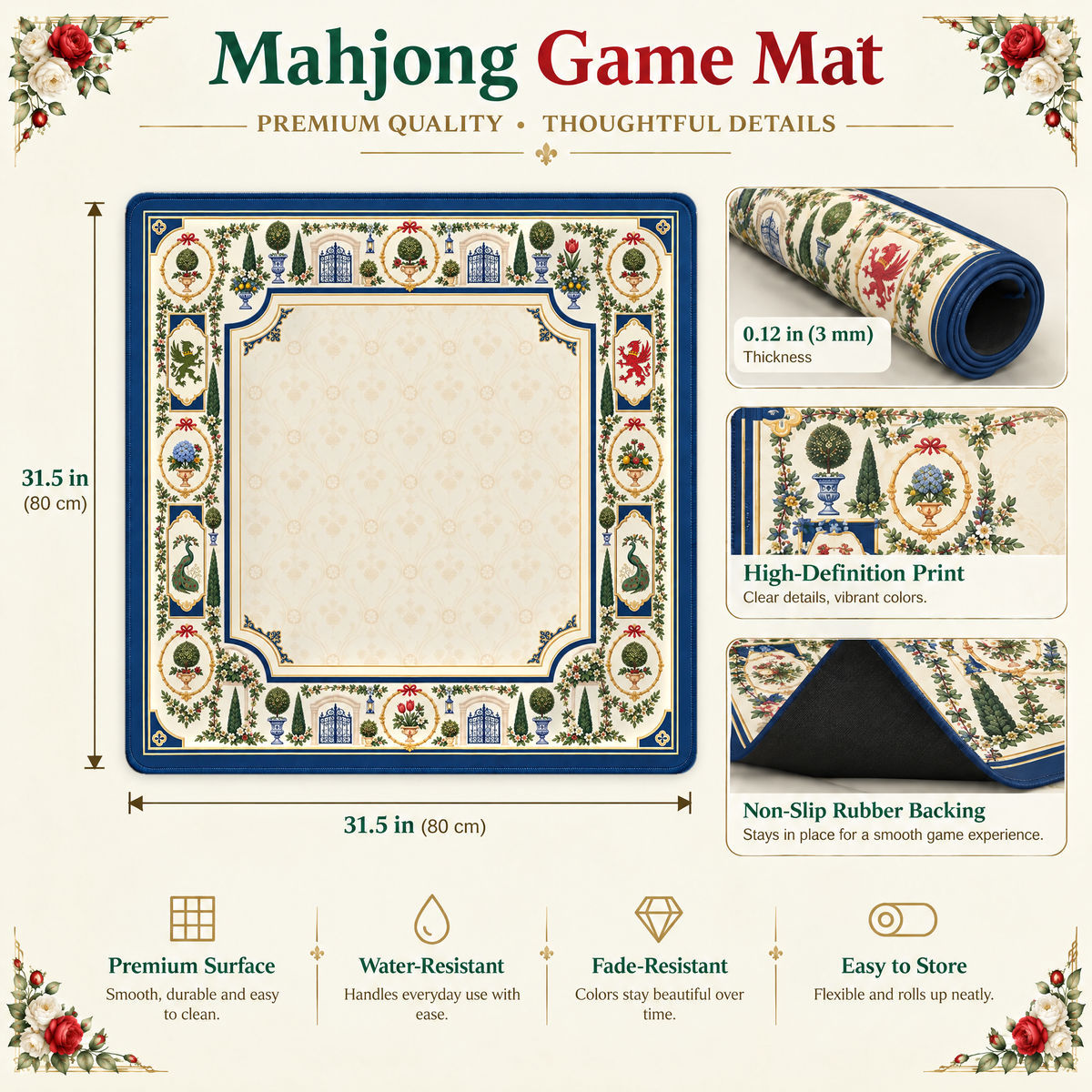
You'll need three things: a tile set, a mat, and racks with pushers. An American mahjong set contains 152 playable tiles plus 8 jokers—never add blanks or extra tiles to your game. Acrylic tiles (easier to read than bone) with clear Chinese characters and English numbers work best for learners; engraved sets with titles are popular for gift-giving and club play. A mat prevents tiles from sliding, protects your furniture, and has a rack area for your hand—pick one with high-contrast printing so card patterns show clearly under house lights. Racks with pushers let you organize and sort your hand without touching tiles unnecessarily, which keeps you from telegraphing your strategy. Avoid plastic tile holders without pushers; they slow the game and frustrate other players. If you live in a small space or travel between lesson venues, a mahjong bag or case keeps everything protected and portable.

How do I move from lessons into a regular game group?
Ask your instructor if they host a weekly social game after the course ends—many do, and it's often the cheapest way to keep learning. Check community center bulletin boards and local Facebook groups for standing games; Honolulu has enough players that finding a Tuesday or Thursday night game is realistic. Attend as a visitor first; don't expect to win, and tip your instructor or the host. Bring your own set if you're new to a group; it shows respect and saves setup time. Play for fun or low stakes (most Honolulu groups play for small coin amounts, not large money). Listen more than you talk in your first six sessions. Most groups welcome new players who are serious, on time, and willing to buy refreshments. Once you're a regular, you'll pick up house rules, local shortcuts, and the rhythm of fast, friendly play. The real education happens here—not just reading hands, but predicting what others need, managing your discards, and developing table feel.
Learning Stage | Time Commitment | Best Option | Why It Works |
Complete beginner | 6–8 weeks, 2 hrs/week | Community center or library class | Structured, affordable, makes friends |
Post-beginner | 2–4 hrs/week | Attend social games after lessons end | Real play + correction + community |
Confident player | 4–8 hrs/week | Join a standing weekly group | Consistent partners, house rules, speed |
Advanced/competitive | 8+ hrs/week | Multiple groups or club play | Tougher opponents, tournament prep |
🎁 See our most-loved mahjong sets & accessories →
What mistakes should I avoid in my first lessons?
Don't memorize the card; learn to read it—the card layout is organized by pattern type, and you'll spot hands faster by understanding zones than by brute memory. Don't assume all mahjong is the same—Honolulu games are American mahjong; Chinese and Riichi variants have completely different rules. Don't ignore the Charleston—it's not optional ceremony; it's where the hand is truly shaped, and poor Charleston strategy loses games before play even starts. Don't mix joker rules—in American mahjong, jokers can't be used as a single tile, a pair, or in a chow (sequence); they can only replace tiles in pungs, kongs, and larger sets. Don't declare a hand until you're 100% sure it matches the card—misreading costs money and embarrasses you. Don't skip playing after lessons end—one class teaches you the rules; weekly games teach you the game. Don't buy a cheap tile set and keep it forever—plastic tiles warp, jokers crack, and racks wear out; replacing your set every 3–5 years keeps games smooth for everyone at the table.
What should I check before I buy a mahjong set for home practice?
Before you order, verify that your set is American mahjong format (152 tiles + 8 jokers, no blanks mixed in) and acrylic or bone (plastic cracks and fades). Check that tiles are engraved or printed clearly—avoid sets with paint that flakes or tiny characters. Confirm the mat is reversible or has a non-slip backing so it doesn't slide during the Charleston. If you're new to the game, choose racks with pushers included—they're not luxury; they're essential for learning hand management. Inspect photos for joker markings—you need to distinguish jokers from numbered tiles at a glance. If you're buying as a gift for a beginner, pick a best-selling set with a mat and racks bundled; kits save money and ensure nothing gets left behind when someone moves their game venue.
✨ Find your Mahstead set — free US shipping →

FAQ
Is American mahjong the only variant played in Honolulu?
American mahjong dominates Honolulu's recreational scene, but some groups play Chinese or Riichi variants. Always confirm with your instructor or group which version they teach before enrolling in lessons.
Do I need to own my own tile set before my first class?
Most instructors provide sets for classroom use. However, buying your own set before lessons start helps you study the tile names and symbols at home, speeding your learning curve significantly.
How long does it take to become competent at American mahjong?
Most players grasp the basics (rules, card reading, one complete hand) in 6–8 weeks of lessons plus weekly practice. Becoming truly comfortable and competitive typically takes 6–12 months of regular play.
What's the difference between the Charleston and the actual hand-play?
The Charleston is the structured tile-passing phase before play begins; it sets up the initial hand distribution. Hand-play is the drawing and discarding phase where you build and declare a winning pattern.
Can I learn mahjong online or through video tutorials before taking a Honolulu class?
Videos teach rules and theory quickly, but in-person lessons let you ask questions instantly and see hands played at table speed. Combining short online tutorials with a local class is ideal for beginners.
Are there mahjong tournaments in Honolulu for newer players?
Most organized tournaments are for intermediate and advanced players. Your best entry point is friendly group play; after 12+ months in a weekly game, ask your group about local or regional tournaments for your skill level.


View More
View More
View More
