
Pair Mahjong Rule Explained: American Hand-Building Basics
Last updated: Nov 23, 2026

A pair in American mahjong consists of exactly two identical tiles—same suit, same number, no jokers allowed. You must hold one pair to win; it sits in your rack alongside your melds (pungs, kongs, quints, sextets) and any flowers or jokers in your hand. The pair is never exposed on the table; it stays hidden until you declare mahjong and reveal your complete hand. You form it during tile draw and discard play, and it must match one of the patterns printed on the current year's National Mah Jongg League card. The most common beginner mistake is trying to use a joker as part of a pair—the rules strictly forbid this. Pairs are critical because without one, you cannot win no matter how many melds you assemble. Learn more about American mahjong fundamentals here.
A pair is two identical tiles and the foundation of every American mahjong hand. You must hold one pair to win; it sits in your rack alongside your melds (pungs, kongs, quints, sextets) and any flowers or jokers in your hand. The pair is never exposed on the table; it stays hidden until you declare mahjong and reveal your complete hand. You form it during tile draw and discard play, and it must match one of the patterns printed on the current year's National Mah Jongg League card. The most common beginner mistake is trying to use a joker as part of a pair—the rules strictly forbid this. Pairs are critical because without one, you cannot win no matter how many melds you assemble.
What tiles can form a pair?
Any two identical tiles form a valid pair. This means two 5 Dots, two East Winds, two Red Dragons, two Flowers, or any other matching tiles. The pair must be real tiles—never jokers, never blanks. You cannot pair a 5 Dot with a 5 Bam or 5 Crak; they look similar but are different suits and therefore invalid. Flowers work as a pair only if you hold two of the same Flower tile (e.g., two Flower 1s). The pair must appear on your chosen hand pattern on the current year's National Mah Jongg League card to be legal.
Why can't jokers be part of a pair?
Jokers are wild tiles that substitute for any tile you need in a pung, kong, quint or sextet—but this flexibility is their limit. The rules explicitly forbid using jokers in a pair because pairs must be certain: two real, identical tiles that prove you actually held them. If jokers could substitute for pairs, players could claim almost any hand as a win, collapsing the game's integrity. A pair is your proof that you completed your hand legitimately. Every hand on the card requires one genuine pair; this is the non-negotiable foundation. When you win and reveal your hand, your pair is always visible as two real tiles sitting visibly on the table.
How do you place a pair in your rack?
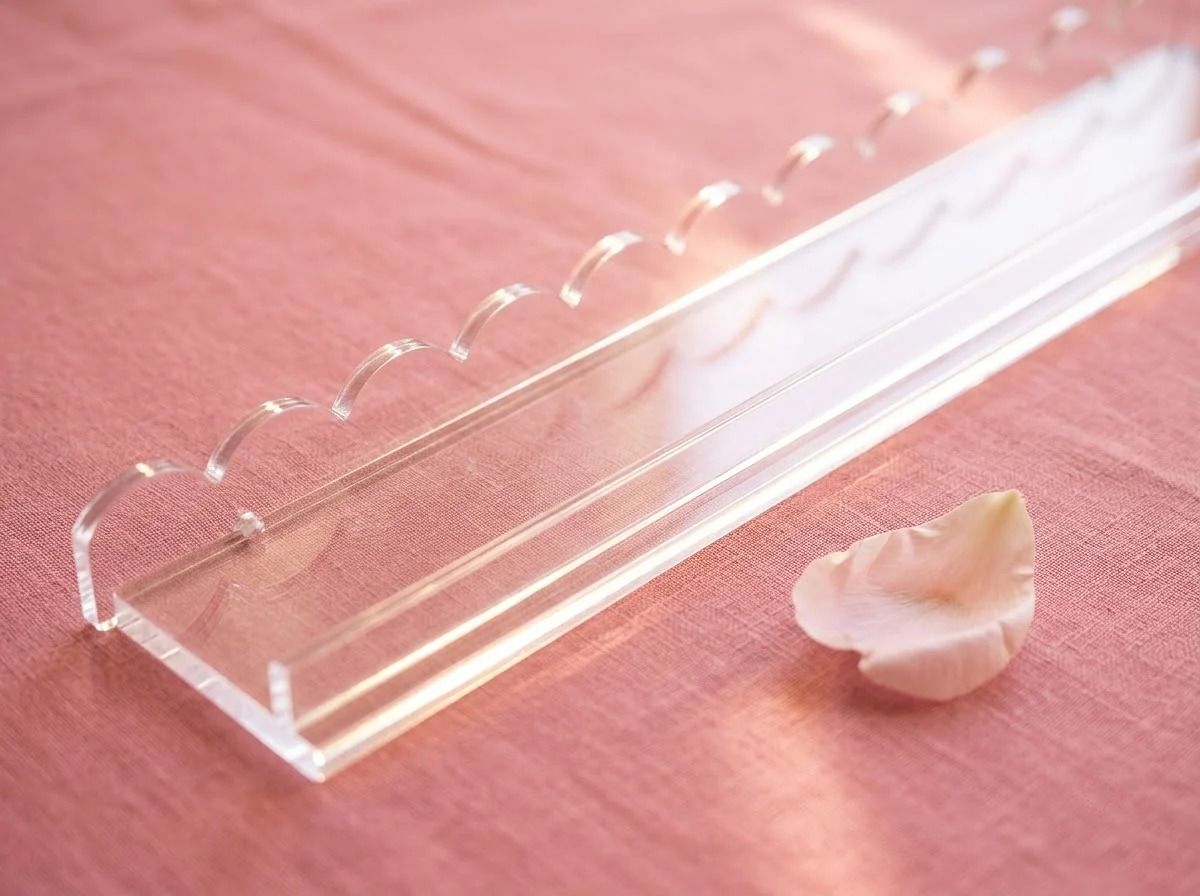
Keep your pair hidden in your mahjong rack like any other tiles until you win. Arrange your tiles left to right as melds: pungs and kongs first (exposed or face-down), then any quints or sextets, then your pair at the right end. Never announce your pair before you call mahjong, and never lay it on the table until you declare your win and reveal all your tiles. Your pair should be indistinguishable from the other tiles in your hand until the moment you win. Many players use a mahjong rack with pushers to keep all tiles upright and organized; this makes it easier to spot your pair at a glance without telegraphing it to other players.
What happens if you're short a pair when you call mahjong?
If you declare mahjong but your hand has no pair—or has three or more tiles of the same kind instead of a pair—you have called an illegal hand. You lose your turn, pay penalties to all three other players (typically one per player or as agreed by your group), and your tiles re-enter the wall. You cannot call mahjong again that round. The player to your left resumes play. This is why checking the card before calling is essential: verify that your tiles match one complete hand pattern, including the pair, before you announce your win. Many newer players accidentally call without a pair after discarding one thinking they had two, so always count your tiles and confirm your pair visually before you call.
How do you know which pair to keep during the discard round?
At the start of each round, you receive 13 tiles plus the draw tile (14 total). Not all of them will form a pair yet. As you discard and draw during the game, you gradually build toward a complete hand. Your pair should emerge naturally as you work toward one of the patterns on the card. If you have two pairs early on, hold both tiles from each until your hand strategy narrows. As other players discard tiles, you may pick them up to complete your pair or your melds. The key is matching your tiles to a complete hand pattern on the card first, then checking that your pair is included. Play the hand the card shows, not a pair you wish you had.

Pair selection and hand-winning strategy
Scenario | Your pair | What to do | Why it matters |
You have two 5 Dots and two 5 Craks | Hold both pairs | Play the card pattern that needs one; discard the other pair's first tile | Only one pair can be your winning pair; the other becomes a meld or discard. |
You discarded your pair by accident | Check quickly if someone called it; if not, try to pick it from the wall | Losing a pair mid-game means you need to rebuild; slow recovery. | |
You're holding a pair and a joker for same tile | Keep both; joker fills a meld need | The pair stays hidden; the joker works elsewhere, maximizing flexibility. | |
You have two pairs but only one matches the card | Commit to the pattern; discard second pair tile | Clarity on which pair is your pair prevents illegal calls and penalties. |
🀄 Shop best-selling mahjong sets →
Common pair mistakes and how to avoid them
Mistake 1: Confusing suit tiles as identical. A 5 Dot is not the same as a 5 Bam or 5 Crak. Each suit is distinct. Always verify the suit symbol (circle for Dots, line for Craks, bamboo for Bams) before claiming a pair is complete. Look at the actual tiles in your hand; don't rely on memory.
Mistake 2: Thinking a joker can "help" a pair. Jokers cannot. If you need a second 7 Dot to complete a pair and only hold one 7 Dot and a joker, you do not have a pair. The joker must stay in a meld.
Mistake 3: Calling mahjong without verifying the pair on the card. Always cross-check your hand against the card's pattern before you call. Confirm: number of tiles (14 ✓), melds match (✓), pair is present and real (✓). One second of verification saves a penalty.
Mistake 4: Holding the wrong pair for your pattern. Two different pairs might both be on the table, but only one is part of your intended hand. Committing early to the correct pattern prevents you from discarding your actual winning pair by mistake.
Mistake 5: Forgetting flowers or jokers count toward your 14 tiles. If you're holding a Flower and a joker plus 12 other tiles, you have 14. Your pair still needs to be two real tiles; the Flower and joker fill other roles.
What to check before you buy a mahjong set for pair practice
When building a hand, you need a full 152-tile American mahjong set with clear suit markings and legible numbers. Look for sets with high-contrast designs so you can quickly verify suits during play. Test that your tiles are identical in thickness and weight across all suits; inconsistency makes it harder to spot pairs quickly. If you play frequently, invest in a mahjong mat with clearly marked discard areas; this keeps the game organized and reduces the chance you lose sight of your pair or accidentally discard it. For traveling to games, a mahjong bag or case protects your tiles and keeps them sorted by suit when packed.
✨ Find your Mahstead set — free US shipping →
How pairs differ in other mahjong variants
In Chinese mahjong, pairs work the same way: two identical tiles, required to win. Hong Kong mahjong also requires a pair and follows the same rule—no jokers. Riichi mahjong (Japan) uses pairs as well but with different hand patterns and scoring. Taiwanese mahjong combines some American elements with Chinese rules; pairs are still real, identical tiles. The universal principle across all variants is that a pair is never jokers, always identical, and always required for a win. If you learn American pair rules well, you'll understand the foundation for any variant you encounter later.
🎁 See our most-loved mahjong sets & accessories →

FAQ
Can I use a blank tile to complete a pair if I'm missing one tile?
No. Blanks are spares and do not enter play. Only real, identical tiles form a pair. Jokers cannot substitute for a pair either.
What if I discard my pair by mistake during the game?
Once discarded, a tile is gone. If no one called it, you cannot retrieve it. You must rebuild a new pair with remaining tiles or fold from that hand.
If I have two pairs (four tiles total of the same kind), how many can be my winning pair?
Only one pair. Two of those four identical tiles form your pair; the other two must be part of a different meld (pung, kong, etc.) or they invalidate your hand.
Do flowers count as a pair?
Only if you have two tiles labeled the same way (e.g., Flower 1 and Flower 1). Two different flowers do not form a pair.
Can the pair be part of a pung or kong instead of separate?
No. A pung is three identical tiles; a kong is four. Your pair is always two tiles and always separate from your melds on your winning call.
What if my hand has a pair but doesn't match any pattern on the current year's card?
That hand is not legal for that year. You must play only hands from the current National Mah Jongg League card. Even a perfect pair means nothing if the full hand isn't on the card.


View More
View More
View More
