
Mahjong Lessons in Hoboken: Where to Learn & How to Start
Last updated: Nov 23, 2026
Mahjong lessons in Hoboken are available through Hudson County community centers, public libraries, and private instructors advertised on Meetup and Facebook groups. Most beginner classes meet weekly for 4–8 weeks, teaching tile recognition, the Charleston tile-passing ritual, hand-reading from the National Mah Jongg League card, and basic scoring. Expect to pay per-session fees directly from the instructor. You'll need a 160-tile American mahjong set, a mat to protect the play surface, and racks with pushers to organize your hand—our best-selling mahjong sets suit all skill levels. Check your instructor's syllabus: they may teach American, Chinese, or Riichi variants, each with different rules.
Where do Hoboken area players actually find lessons?
Hoboken's public library branches often list recreation classes online; call the main branch to ask about mahjong offerings. Hudson County community centers in Weehawken, Union City, and West New York frequently host seasonal beginner classes. Check Facebook community groups for Hoboken and Hudson County—many players post local teacher recommendations and host informal games. Meetup.com lists mahjong groups across the tri-state; filter by zip code and distance. Senior centers and Jewish Community Centers (which exist throughout Hudson County) often offer structured lessons. The key: instructors post schedules 4–6 weeks ahead, so contact venues early each season (September and January are typical start months).

What's the difference between American, Chinese, and Riichi mahjong lessons?
American mahjong uses 152 tiles, hands come only from the current year's National Mah Jongg League card, jokers can substitute for any tile, and you expose pungs (3 identical tiles), kongs (4), quints (5), or sextets (6) but never sequences. Chinese mahjong uses 144 tiles, allows hidden hands, and permits exposed sequences (chows). Riichi mahjong, played in Japan, uses 136 tiles, hidden hands throughout, and strict hand patterns with rising difficulty levels. Lessons in Hoboken teach American almost exclusively because it's the regional standard; Chinese and Riichi are rarer and typically taught by specialist groups. Ask the instructor before signing up which variant they teach, because switching later requires relearning fundamentals—read how to play American mahjong to confirm it matches your interest.
🀄 Shop best-selling mahjong sets →
What equipment do you need before your first lesson?
A complete beginner setup includes a 160-tile American mahjong set, a mat (to keep tiles from sliding and muffle noise), racks with pushers (to keep your hand organized and face-up), and a small bag to carry everything to class. Most instructors allow shared sets in week one, but you'll need your own by week two. The mat protects your furniture and the mat's edge rails contain errant tiles—essential if you're nervous about dropping pieces. Racks with pushers let you hold 13–14 tiles tidily and push one forward to discard without fumbling. Here's the practical progression: buy your best-selling mahjong sets (used by players at all levels), add a mat designed for your table size, grab racks with pushers, and pack them in a sturdy travel bag. You're then ready to join a game after lessons end.
Item | Why beginners need it | When to buy |
160-tile set | Instructor might share week 1; you own by week 2 | Before lesson 2 |
Mat | Keeps tiles quiet, organized, off bare table | Before lesson 1 (can borrow) |
Racks with pushers | Holds 13–14 tiles tidily; standard play tool | Before lesson 3 |
Carrying bag | Protects set; makes transport easy | Optional, but helpful after week 2 |

What common beginner mistakes should you avoid in Hoboken lessons?
Confusing tile names early: Bams (characters), Craks (circles), and Dots (sticks) look nothing alike; some students mix them up for weeks. Bring a cheat sheet with photos to your first two lessons. Forgetting joker rules: Jokers can replace any tile except a pair, and you can never use a joker as a single tile—many beginners flip and lose hands because of this. Skipping the Charleston: This tile-passing ritual before play is mandatory in American mahjong and takes 3–4 minutes; it's not optional. Misreading the card: The National Mah Jongg League card, issued every March, shows valid hands for that year only. Some instructors hand out laminated cards; ask if your class provides one or learn to read the card yourself. Playing too fast: Beginner hands take 20–30 minutes; rushing leads to rule mistakes and frustration. Slow, deliberate play in weeks 1–4 builds confidence.
How do you transition from lessons to regular Thursday-night games?
After 6–8 weeks of lessons, you'll be ready to join a weekly game. Hoboken and Hudson County have informal home groups (find them via Facebook and Meetup) and more formal club games. Your instructor often invites graduates to join their personal game. Etiquette: bring your own set, mat, and racks; arrive 10 minutes early; ask before your first game if they use house rules (most don't deviate from NMJL standard). Expect to play 2–4 hands per evening and pay a small fee to cover snacks and host—ask beforehand. Keep the beginner guide handy during your first month of play; every table has a different rhythm, and refreshing the rules keeps you sharp.
🎁 See our most-loved mahjong sets & accessories →
What should you check before you buy a beginner set?
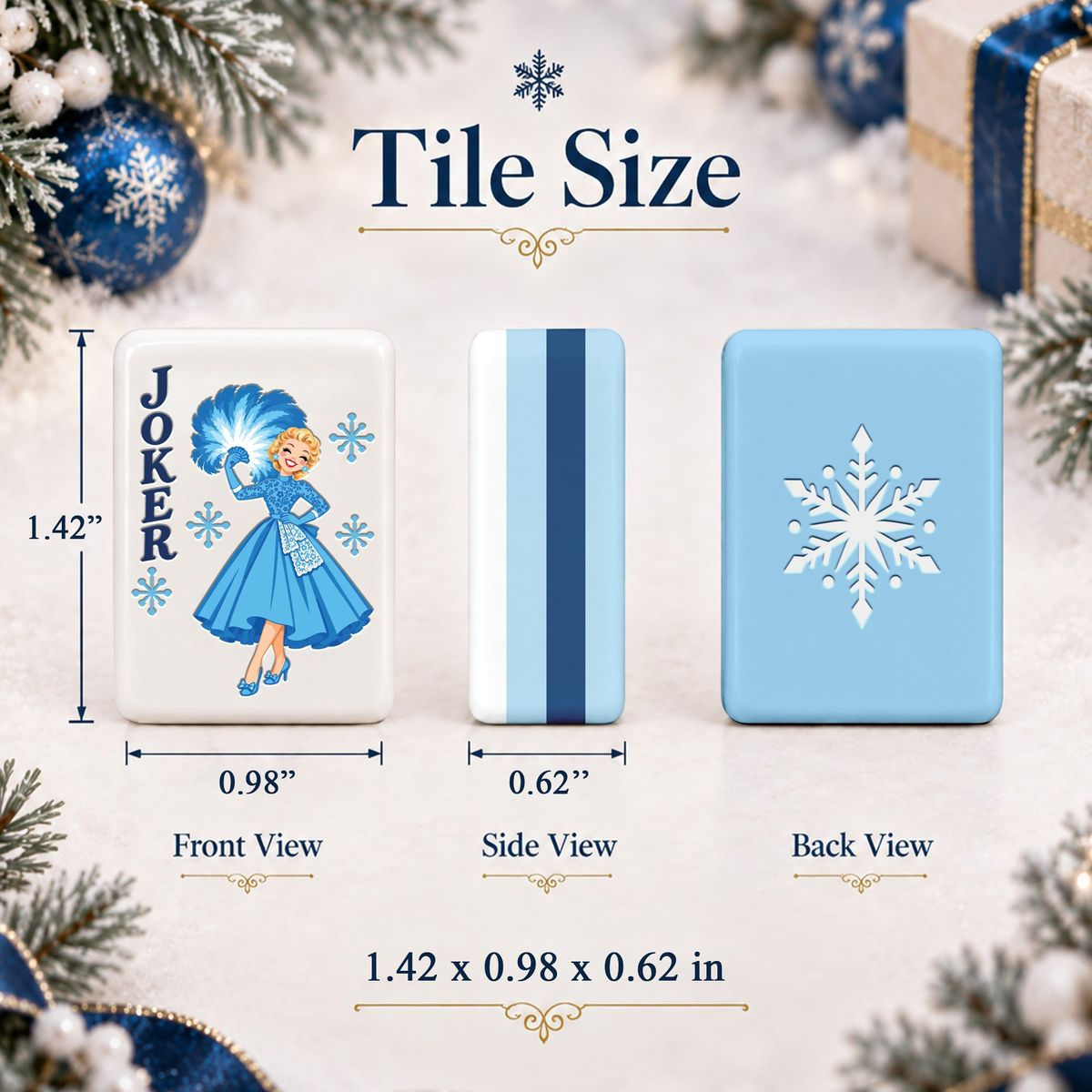
A beginner set must have clear, large tile markings (at least 1 inch per side), durable racks that hold 14 tiles without tipping, and a carrying case to survive weekly transport. Acrylic tiles are washable and noise-dampening; bamboo-and-bone sets look gorgeous but are heavier and more brittle. Check the set includes 160 tiles: 152 to play plus spares. Verify that racks accept standard-sized tiles (most universal sizes work, but measure your set's tiles before ordering). If hosting games, invest in a quality mat that fits your table—a misfit mat slides during play and ruins concentration. Our best-selling sets ship free across the US and are tested by weekly players; many instructors recognize our designs.
✨ Find your Mahstead set — free US shipping →

FAQ
Can you find mahjong lessons in Hoboken if you're over 60?
Yes—Hudson County senior centers, Jewish Community Centers, and libraries prioritize senior programs. Call your local senior center directly to ask about fall and spring mahjong sessions; many offer discounted or free lessons for residents 60+.
Do you need to speak Mandarin or Cantonese to take mahjong lessons in Hoboken?
No. American mahjong lessons are taught in English and use English tile names (Bams, Craks, Dots, winds, dragons). All players read the same National Mah Jongg League card, which is in English. Chinese or Riichi variants may include cultural context, but Hoboken's standard lessons are accessible to everyone.
How long does it take to go from beginner lessons to playing competitively?
Most players move from beginner (weeks 1–8) to casual home games (months 2–4) to confident weekly play (month 6+). Competitiveness depends on your goals; friendly games require months 1–4; tournament play requires a year of consistent practice.
What happens if your mahjong set breaks or gets lost during the lesson season?
Buy a replacement set immediately—you can't skip a week without falling behind, and borrowing at every lesson slows your learning. Our best-selling sets ship free; many arrive within a week.
Should you buy an expensive engraved set before taking lessons?
No. Use a standard set for your first 2–3 months. Engraved sets are lovely for gifts or after you've confirmed you love the game; most beginners stick with durable acrylic for years. Once hooked, engraved sets become treasured personal keepsakes or host gifts.
Do Hoboken lesson instructors provide mahjong sets, or do you bring your own?
Instructors typically provide shared sets for week 1 (to test fit before buying). By week 2–3, you must own your own set; this prevents mix-ups and helps you learn your tiles' feel and speed. Ask your instructor in your first email.


View More
View More
View More
