
Mahjong for Visually Impaired Players: Equipment & Strategies
Last updated: Nov 23, 2026
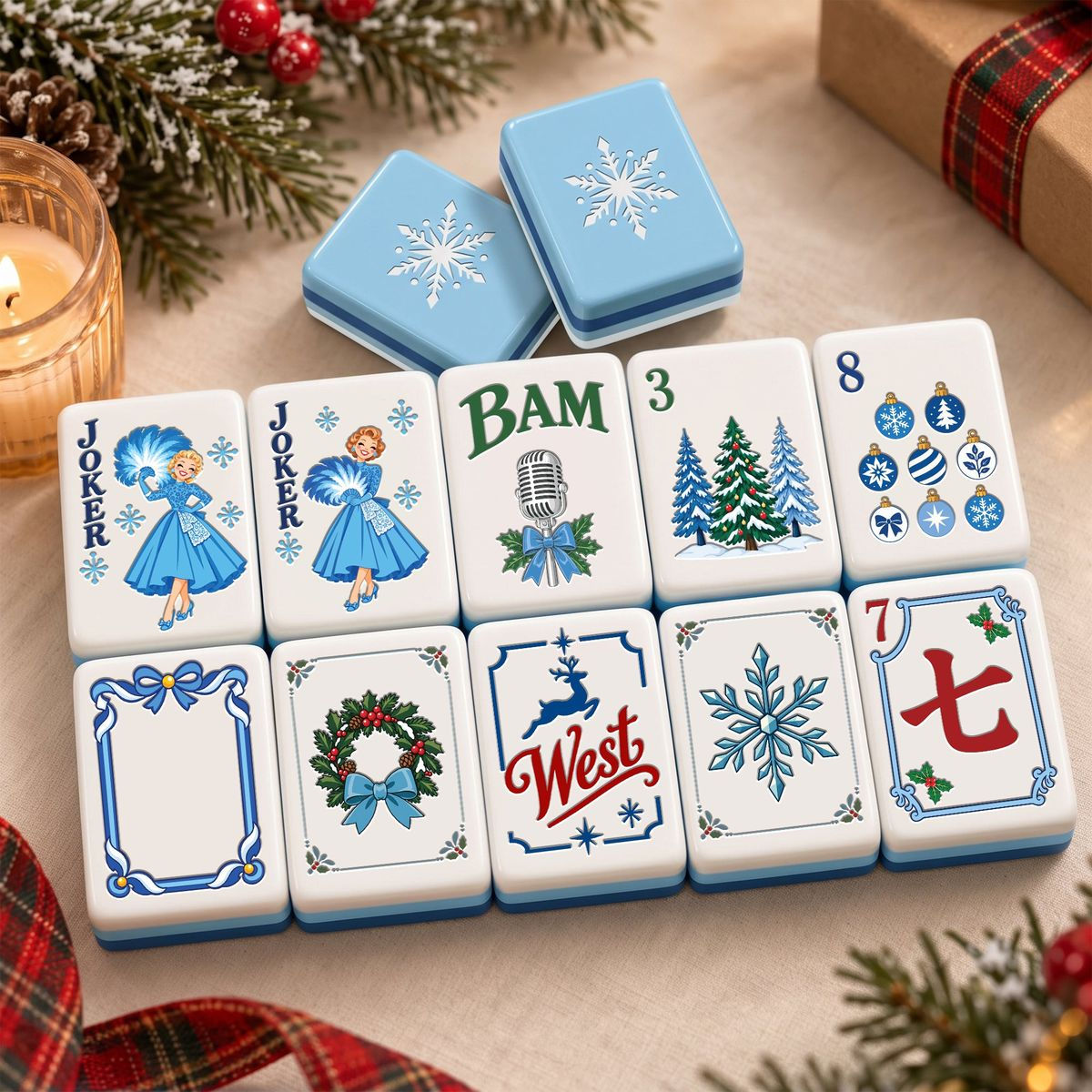
American mahjong can be fully enjoyed by visually impaired and blind players using large-print tiles, high-contrast acrylic sets, embossed or tactile markings, and audio aids like tile readers or verbal callouts. The game's turn-based structure—where players draw, discard, and announce melds—suits verbal coordination. Many groups use bamboo or wooden tiles with pronounced edges and raised suit symbols, though acrylic sets with bold engraved markings and good lighting work well too. Sighted players and peer assistants can read the hand or call suits aloud; some players use screen-reader technology or smartphone apps to track discards. The key is adapting the physical setup (mat size, hand racks, lighting) and communication style, not changing rules. Mahstead offers engraved acrylic sets with clear, durable markings that hold up to repeated tactile inspection.
Mahjong is a game of memory, strategy, and social rhythm—none of which depend on eyesight alone. Visually impaired and blind players have enjoyed mahjong for decades, and many communities now host accessible games. The barrier isn't the game itself; it's usually equipment design and communication. We'll walk through practical adaptations, tile choices, and hosting strategies that work.
How do visually impaired players learn to recognize tiles?
Tactile learning is the fastest route. Unlike card games, mahjong tiles have weight, shape, and texture—all exploitable for quick recognition. Most experienced visually impaired players develop a system: they memorize tile order by suit, learn to feel the thickness of bamboo or acrylic, and identify suit symbols through embossed markings or raised edges.
In a typical accessible game, one sighted player calls suits aloud as tiles are drawn or discarded—"Five Bam," "East Wind," "Red Dragon"—so no one player bears the reading load. Some players use a tile reader app (search your device's app store for "Mahjong tile reader" or similar) to photograph a tile and hear it announced aloud. Bamboo tiles, being thinner and lighter than acrylic, are often easier to shuffle and handle. Start with a single suit (Bams, Craks, or Dots) to build familiarity before adding winds and dragons.

What tile materials work best for touch?
Acrylic, bamboo, and bone-composite tiles all work; the difference is feel and durability. Acrylic tiles are the most uniform and durable; newer acrylic sets have clearly engraved markings that are readable by running a finger over them. Bamboo tiles tend to have more pronounced edges and a natural grip. Bone-composite (older vintage sets) offer excellent tactile contrast but are harder to source and can crack.
For accessibility, avoid glossy finishes—they reduce grip and make markings harder to feel. Look for engraved acrylic or matte bamboo with raised or recessed suit symbols. When inspecting a set in person or via photos, check that the Chinese characters and suit icons have depth (not just printed on). Run your finger over sample tiles if possible; you should feel a clear indentation or ridge.
How should the table be set up for accessible play?
Proper setup saves frustration. Use a mahjong mat (felt or rubber) to keep tiles from sliding; a raised edge or lip prevents tiles from rolling off the table. Position the mat in good lighting—a desk lamp or overhead light lets players with low vision see tile markings and lets sighted callers read hands clearly.
Arrange racks with pushers so each player's tiles tilt toward them at an angle—easier to inspect and manipulate one-handed. Leave the center area uncluttered for the draw pile and discard zone. If multiple players are sighted, seat them at different table sides so one isn't doing all the reading. Use larger-print or audio scorecards; keep a notebook of melds called aloud so players can verify later.
Our pick for accessible hosting: Start with a mahjong mat with thick backing and a clear center; pair it with racks with pushers that have good angle and easy tile grip. Bring extra lighting.
What communication style keeps the game flowing?
Verbal callouts are essential. Before each draw, the player or a caller announces: "West Wind draws. Draw pile is at 12 tiles. You have three Craks, two Dots, one Bam, four Winds…" This seems slow at first, but experienced groups develop a rhythm.
Create a standard call script your group uses consistently:
Draw phase: "Player name draws. Tile is [suit + number]."
Discard phase: "Player name discards [suit + number]."
Meld announcement: "Player name calls Pung: three Red Dragons. Sighted player pulls from discard pile."
Hand status: Every third turn or when requested: "You hold 12 tiles: three 1 Bams, two 5 Dots, East Wind, South Wind, Red Dragon, White Dragon, two 3 Craks, Green Dragon, Joker."
Assign one player (sighted or not) to manage the discard pile—they keep tiles in order so players can verify recent discards without asking twice. This role rotates each hand.
Can visually impaired players use the standard NMJL card and play competitively?
Yes, with accommodation. The National Mah Jongg League (NMJL) standard card is updated each spring and contains hundreds of legal winning hands. Visually impaired players can memorize hand patterns just as sighted players do; the card itself is the constraint, not the player's vision.
In informal home games, a sighted player can read relevant card sections aloud ("We're looking for Pungs and Kongs in 2024—let me check if your tiles fit Section A, Row 3…"). In competitive NMJL tournaments, players are allowed reader assistance or may use screen-reader software with a digital version of the card (check current NMJL rules for approved formats). Some tournaments now offer large-print cards or Braille reference sheets upon request—reach out to local clubs to confirm.
Read how to read the mahjong card for context on card structure; the same principles apply when a reader is calling out sections.

What equipment checklist should a host prepare?
Item | Why It Matters | Tip |
High-contrast acrylic or bamboo tile set (152 tiles) | Clear markings feel and read accurately. | Test tactile clarity before buying; run a finger over suit symbols. |
Mahjong mat with raised edge | Prevents tiles sliding or rolling; keeps play area organized. | Choose mat with backing for stability. |
Racks with pushers | Players manage tiles with one hand; pushers angle tiles for easy inspection. | Ensure racks have smooth glide and firm pusher grip. |
Good overhead or desk lamp | Sighted readers see tiles and cards; players with low vision navigate better. | Position lamp to avoid glare on tiles. |
Scoresheet in large print or audio format | Players verify scoring without asking sighted player repeatedly. | Use 16pt+ font; print a few copies or have a notebook. |
Tile reader app on smartphone or tablet | Backup tool for individual tile verification. | Test app compatibility and battery life before game night. |
Consistent vocabulary (call script) | Reduces confusion; players know what to expect each turn. | Write it down and hand it to all players. |
🀄 Shop best-selling mahjong sets →
How do you start hosting accessible mahjong in your community?
Partner with a local community center, library, senior center, or disability services nonprofit—they often have meeting space and may already host board game groups. Advertise through your city's accessibility office, disability social groups, or mahjong meetup boards. Recruit one co-host (sighted, ideally experienced) to help with reading and tile management at first.
Start with one game of four players (the standard). Have everyone—sighted and visually impaired—play with the same rules; the only accommodation is verbal announcement. Most sighted players find it clarifying and enjoyable. Schedule weekly if possible; consistency builds the group and lets newcomers learn faster.
What to check before you buy:
Tile material is acrylic, bamboo, or bone-composite (avoid plastic resin with printed markings only).
Suit symbols and numbers have visible depth when you run a finger over them.
Acrylic tiles are not slippery; test with fingertips and a mat surface.
Racks angle properly and pushers glide smoothly.
Mat has a raised perimeter or lip to contain tiles.
🎁 See our most-loved mahjong sets & accessories →
How does visually impaired play differ in other mahjong variants?
Chinese mahjong (also called Hong Kong) includes sequences (chows: 1-2-3 of the same suit) in addition to pungs and kongs. This adds verbal load—callers must announce which suits form sequences. The tile count is also slightly different (usually 136 or 144 tiles). Tactile play works but requires more memory for legal sequences.
Riichi mahjong (Japanese) has a smaller tile set, hands drawn from a shuffled wall, and concealed kongs. It plays faster but is less forgiving for verbal callouts because draws and discards happen in real time with less time for announcements.
American mahjong (the focus here) has no sequences—only pungs, kongs, pairs, and flowers/winds as specials. This simplifies verbal communication and makes the game more accessible. It's the most beginner-friendly for mixed-ability groups. We recommend starting with American mahjong for beginners if your group is new to accessible play.
What does a realistic first game look like?
Setup (15 minutes): Gather around a mat with good lighting. Each player draws a wind to set seating (North, East, South, West). Explain the call script aloud so everyone agrees on phrasing.
Charleston (5 minutes): Sighted players hand three tiles face-up to their right; caller announces each tile before passing. Visually impaired players can participate or opt out—they can keep their initial 13 tiles. (Some groups simplify to a single pass.)
Hand 1 (20 minutes): East Wind draws first. Caller announces: "East draws. Tile is 4 Crak." East either discards or keeps it. Caller announces discard: "East discards 2 Dot." South draws next. Every third turn or on request, caller reads each player's hand ("You hold 12 tiles: three 1 Bams, one Joker…").
First meld (10 minutes): When a player has a Pung (three identical tiles), they announce: "I'm calling a Pung—three Red Dragons." Sighted player pulls the Red Dragon from the discard pile and places it openly on the player's rack. Caller announces this so everyone knows the tile is gone from play.
Hand ends (5 minutes): A player draws their 14th tile and announces: "I have a hand—Pung, Pung, Pung, Pair. Checking the card…" Caller verifies the hand matches the current NMJL card and announces the win. Scoring is computed or simplified (many groups play for points only, not money).
Debrief (5 minutes): Ask: What worked? Was the call script clear? Do we need larger tiles next time? Adjust and play another hand.
Realistic timeline: 4–6 hands in a 2-hour session once everyone is comfortable.
✨ Find your Mahstead set — free US shipping →

FAQ
Do visually impaired players need special tiles?
No, but tiles must have clear tactile markings (embossed or recessed suit symbols). Acrylic and bamboo work well; avoid glossy plastic with only printed symbols. Verbal callouts during play eliminate the need for large-print cards.
Can one person read for all four players?
Temporarily, yes, but it's tiring and slow. Rotate reading duty or recruit a co-host. Ideally, sighted players also call their own hands to share the workload.
How long does it take a visually impaired player to learn mahjong?
3–5 hours of play (two sessions) to recognize tiles and understand turn order. Memorizing winning hands (from the NMJL card) takes weeks, just as it does for sighted players.
Is there a mahjong community for blind and visually impaired players?
Yes, informal groups exist in many cities; start by contacting your local blind services organization or disability meetup groups. Some synagogues and senior centers host accessible mahjong; ask staff if none is advertised.
What if someone is partially sighted—can they play?
Absolutely. Let them try the standard setup first; offer adjustments (larger mat, brighter lamp, high-contrast tiles) only if needed. Some players prefer verbal callouts as a backup, not a replacement.
Can I use a smartphone app instead of a physical set?
Apps work for solo practice but not for four-player games—everyone needs a physical tile to hold and verify. Combine physical tiles with an app (for reference or tile-reading) as a backup tool.


View More
View More
View More
