
Common Mistakes in Hangzhou Mahjong: Rules & Setup Guide
Last updated: Nov 23, 2026
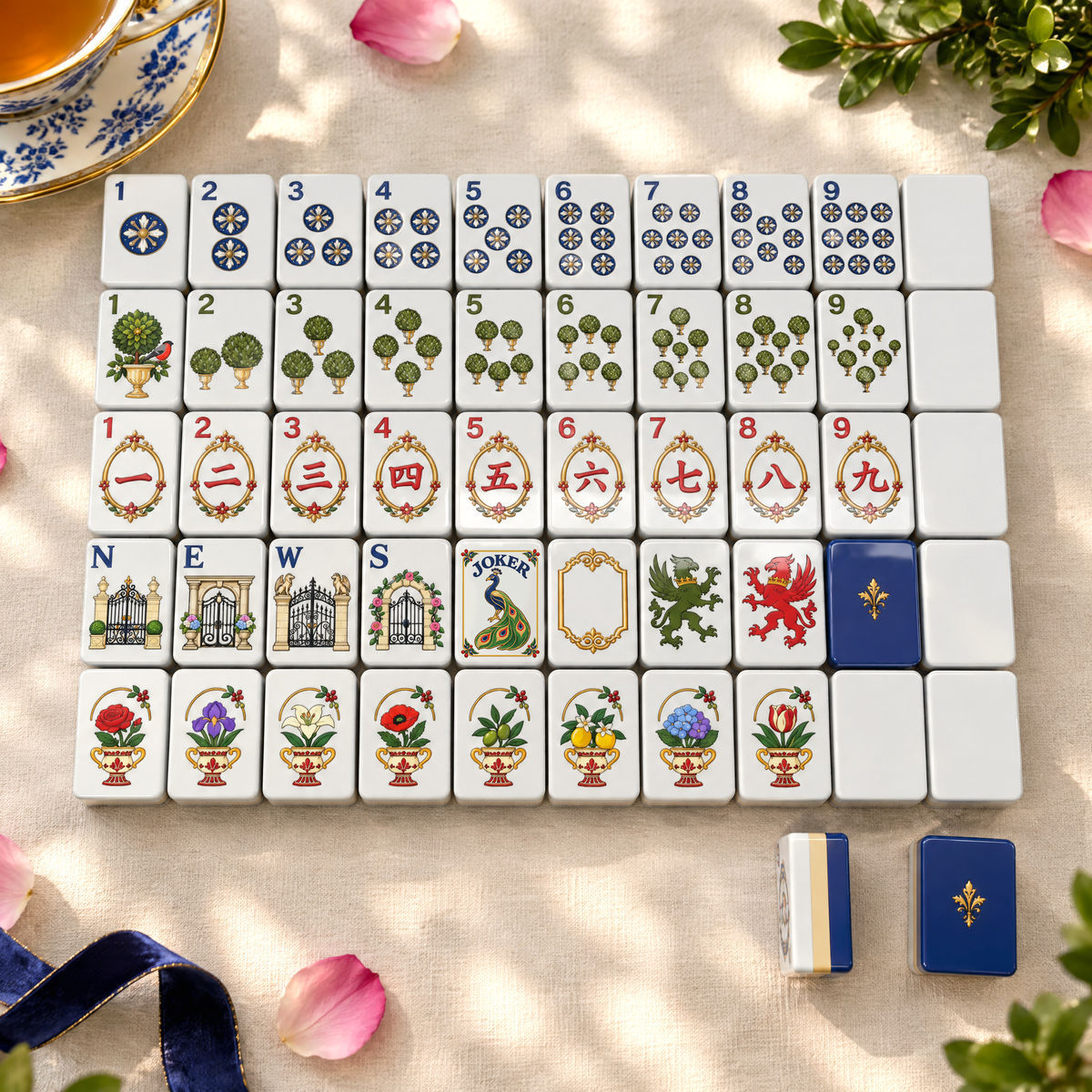
Hangzhou mahjong is a Shanghai-region Chinese variant using 144 tiles (36 of each suit: Bams, Craks, Dots, plus honor tiles and flowers). Play differs from American mahjong in that there are no jokers, no Charleston, and hands consist of melds plus one pair—called hu or win. The wall is built as a block of stacked tiles, and players draw from the wall's far end in a counter-clockwise rotation. Common mistakes include miscounting the wall during setup, exposing tiles incorrectly, miscalling sequences (chows) when flowers or suit breaks occur, and failing to declare ready hand status before drawing. Hangzhou rules emphasize strict hand-calling: once you've drawn, you must either discard or win immediately—no holding. Players unfamiliar with Hangzhou often rush wall setup or misread which melds are legal, leading to false wins and disputes. Mahstead sets support American play; if you're transitioning to Hangzhou, confirm your tile count matches the 144-tile standard and practice wall-building before live games.
What is Hangzhou Mahjong, and How Does It Differ From American Play?
Hangzhou mahjong is a regional Chinese variant from the Shanghai area with a fundamentally different tile set and hand structure than American mahjong. American sets contain 152 tiles with jokers and no sequences (chows); Hangzhou uses exactly 144 tiles—no jokers—and requires players to form melds that include sequences. In Hangzhou, a winning hand must contain at least one pung (three identical tiles), one sequence (three consecutive tiles in one suit), and one pair. The game flow is also distinct: there is no Charleston (the American tile-passing ritual), and wall-building follows a compact stacking method. American play allows exposed melds like pungs and kongs on the table; Hangzhou reveals melds only when declaring them as part of your win. Understanding these structural differences prevents rule collisions and reduces disputes at the table.
🀄 Shop best-selling mahjong sets →

Why Do Wall Builds Go Wrong in Hangzhou Setup?
The Hangzhou wall is built as two parallel rows of stacked tiles (each stack is two tiles tall), creating a compact rectangle rather than the open-wall format some players expect. Mistakes arise because players often fail to count the correct number of tiles per wall segment or place stacks at wrong intervals. In Hangzhou, after the dealer throws dice to determine where wall-breaking begins, players count around the wall in pairs of tiles. If your initial count is off by even one pair, the wall-break point shifts, and subsequent draws pull wrong tiles. Before breaking the wall, verify: your wall contains 36 complete stacks (144 tiles ÷ 4 players = 36 tiles per player's wall); each stack is built perpendicular to the previous one, creating a square; and the dealer has correctly thrown dice to identify the break point. A common error is counting individual tiles instead of stacks—count stacks, not singles. Mark your wall section with a token or note where it begins so rotations stay clear. Most fumbles happen in the first two rounds; once a rhythm is established, the wall rarely causes problems.
How Do Sequences and Melds Differ From American Rules?
In American mahjong, sequences (chows) cannot be called or exposed—only pungs, kongs, and certain other formations are legal. Hangzhou mahjong requires sequences as part of winning hands, and sequences are called just like pungs. A sequence is three consecutive tiles in the same suit (e.g., 2 Bam, 3 Bam, 4 Bam). When another player discards a tile you need for a sequence, you may call it and expose the sequence on the table; the discarder's turn ends, and you draw a replacement tile from the wall. The error many American players make is treating a sequence like an American pung—trying to win or call with a sequence that spans suit boundaries or contains non-consecutive numbers. Hangzhou sequences must follow the same suit and be consecutive in number order. Additionally, honor tiles (winds and dragons) cannot form sequences; they can only form pungs. If you misread a hand and think a wind sequence is legal, you've broken a core rule and your hand is void. Before calling any meld in Hangzhou, confirm: all three tiles are from the same suit, numbers are consecutive (e.g., 5–6–7, not 5–6–8), and honor tiles are only in pungs of three identical tiles.
🎁 See our most-loved mahjong sets & accessories →
When Should You Declare Ready Hand, and What Happens if You Don't?
In Hangzhou, a ready hand (ting or tingpai) is a hand one tile away from winning—you need only one specific tile to complete your win. Many regions require players to announce readiness before or after a specific draw, and failure to declare can result in penalties or an invalid win. American mahjong has no ready-hand declaration; you simply expose your hand when you win. The error occurs when Hangzhou players either forget to announce readiness altogether or announce it at the wrong moment. Rules vary by club or region: some require declaration before drawing, others after you've drawn and confirmed you are one tile away. If you don't declare and then win, your hand may be contested or penalized. To avoid this mistake, ask your table before the game whether ready-hand declaration is required, at what point, and what the penalty is for non-declaration. Write it down if the table uses house rules. During play, if you believe your hand is one tile from winning, state it clearly: "I am ting" or "Ready hand." This prevents silent accusations and keeps the table honest.

What Are the Most Common False-Win and Dead-Hand Scenarios?
A false win (calling win when your hand does not actually meet winning conditions) is costly: you typically lose points and may forfeit your chance to win that round. Dead-hand errors (drawing a tile that creates an illegal state, such as a duplicate pair or an impossible meld) end your round. American players frequently false-win because they miscount tiles in a meld or forget that honor tiles cannot form sequences. In HangZoo, a typical false-win happens when a player thinks they have a winning combination but overlooks that one meld is invalid (e.g., a sequence with a broken suit, or a pair that has already been used). A dead-hand error occurs if you draw a tile and realize you now have two separate pairs or a meld that cannot coexist legally. To prevent false wins, before declaring your hand, lay out each meld on the table in front of you and count the tiles: confirm each sequence is the same suit and consecutive, each pung is three identical tiles, your pair is two identical tiles, and your total is exactly 14 tiles (13 in melds + 1 pair). For dead-hand issues, during the draw phase, check your hand immediately after drawing—if an illegal state arises, discard at once and do not attempt to win. Many disputes stem from delays in recognizing errors; the faster you verify, the cleaner the round.
Mistake | What Happens | How to Prevent It | Hangzhou Only? |
Miscounting wall tiles | Wall break point is wrong; subsequent draws pull incorrect tiles | Count stacks (pairs), not singles; verify 36 stacks per section | Yes |
Calling a sequence with honor tiles | Hand is void; you cannot win | Honor tiles form pungs only, never sequences | Yes |
Not declaring ready hand | Win may be contested or penalized | Ask table rules before play; announce readiness clearly | Yes |
False win (invalid melds) | Lose points; cannot win that round | Lay out melds, verify each one before declaring win | Shared (but stricter in Hangzhou) |
Dead-hand state (two pairs, broken meld) | Round ends; hand is void | Check hand after each draw; discard immediately if illegal | Yes |
✨ Find your Mahstead set — free US shipping →
How Should You Practice Hangzhou Setup Before Playing for Points?
The fastest way to internalize Hangzhou rules is to run five practice rounds at a casual table or with friends before joining a ranked game. In each practice round, focus on one element: round one, wall setup only; round two, sequence calling; round three, ready-hand declaration; round four, full play without points; round five, full play with points. Ask an experienced Hangzhou player to sit in and correct mistakes in real-time. Build the wall slowly and out loud ("Wall section 1: one, two, three… 36 stacks—correct"). Call sequences aloud before exposing them ("2 Bam, 3 Bam, 4 Bam—sequence, calling"). Write down your table's house rules on a card and refer to it between rounds. Many new players rush because they fear slowing the table; in reality, a slow, accurate setup saves disputes and teaches muscle memory. After five practice rounds, you'll recognize the rhythm. If you're transitioning from American mahjong, expect to swap mental habits: American play has no sequences; Hangzhou requires them. The gear you use—tiles, racks, mats—won't change how you play Hangzhou, but a clear mat and well-organized racks help you verify melds before calling them. A mahjong mat with clearly marked tile spaces lets you lay out melds neatly so count errors drop sharply.
What Should You Check Before You Buy or Play With a Hangzhou Tile Set?
If you're sourcing a Hangzhou set, confirm the tile count is exactly 144—not 144 plus spare tiles. Some retailers sell 144-tile base sets with extra tiles for replacement; verify whether extras are included and whether they should be removed before play. Check that all tiles are the same thickness and face the same direction when stacked (uneven tiles cause wall collapses). Ensure each suit has 36 tiles (9 numbers × 4 copies each). Test a sequence: draw one tile of each number 1–9 in one suit and confirm all are present. Inspect honor tiles (winds and dragons, typically 16 total—4 each of four winds, 4 each of three dragons, though some sets include a fourth dragon tile) and make sure no duplicates are missing. If playing with a borrowed set, ask the owner whether house rules are printed on the set box or card; if not, request a written summary before starting. If you're accustomed to best-selling American sets, note that Hangzhou sets feel slightly different because they have no jokers and lack the Western-style art many American sets feature. The gameplay is the same in terms of physical handling—you stack, draw, and discard identically—but the tile distribution and hand-winning logic are wholly distinct. Double-check your set's documentation before a first game; a 30-second review prevents an hour of confusion.

FAQ
Can I use an American mahjong set to play Hangzhou?
No. American sets contain 152 tiles with jokers and no flower/honor tile balance for Hangzhou. You need a 144-tile set with four copies of each suit number 1–9, four winds, and three (or four) dragons. The rule sets are incompatible.
What is the penalty for a false win in Hangzhou?
Penalties vary by table and region. Typically, you lose a set number of points (often double the round's base value) and cannot win again that round. Ask your table before play; some clubs post penalty cards.
Do I have to expose my melds in Hangzhou before winning?
No. You keep your hand hidden until you win. Melds you call during play (from other players' discards) are exposed immediately. When you win, you lay out your entire hand—no melds need exposure before that moment.
Is ready-hand declaration mandatory in every Hangzhou game?
No. Rules vary by region and club. Some require declaration; others don't. Always ask before the first game. If your table uses it, learn the exact moment and phrasing your table expects—failure to declare at the right time can cause disputes.
What happens if I draw a tile and realize I now have a dead hand?
Discard immediately. You cannot win that round. Do not attempt to hide the error or continue playing; state it clearly so the table acknowledges it and play resumes. Most tables forgive dead hands if you discard at once.
How is scoring different in Hangzhou versus American mahjong?
American scoring uses the year's NMJL card and hand-specific point values. Hangzhou scoring is usually simple: each player who did not win pays the winner a fixed amount per round, sometimes doubled or tripled by special hands. Confirm your table's scoring card before play.


View More
View More
View More
