
Spring Mahjong Party Food: Easy Bites & Hosting Tips
Last updated: Nov 23, 2026
Spring mahjong parties thrive on finger foods that leave no residue on tiles or hands. Skip sticky sauces, fried snacks, and anything chocolate; instead serve cheese, nuts, fruit, cured meats, crackers, and hummus—foods you can eat with one hand and play with the other. Timing matters: set out snacks 15 minutes before the first Charleston so players eat before hands fill. Most spring games run four hours with one break; plan light appetizers at the start and a cheese-and-bread board mid-game. Keep wet napkins stacked at each player's corner and empty finger bowls between hands. A best-selling set with durable acrylic tiles shrugs off accidental crumbs better than bamboo—many of us choose acrylic for exactly this reason when hosting weekly games.
What foods actually work at a mahjong table?
Mahjong is a four-hour game where your hands are almost always full of tiles. Eat foods that require one hand only—never both. Skip sticky appetizers, sauces that transfer to fingers, fried items that leave grease, chocolate (a tile stainer), and anything that crumbles into tiny pieces.
Yes: cubes of hard cheese (cheddar, gouda), mixed nuts (salted or roasted), grapes, dried apricots, prosciutto or salami slices, whole-grain crackers, hummus with veggie sticks cut lengthwise, roasted chickpeas, olives, smoked almonds.
No: pizza, wings, guacamole, chocolate truffles, cookies, nachos, fried wontons, anything with barbecue or teriyaki glaze.
The golden rule: if it leaves residue on your thumb, it doesn't belong on the tile table. Keep serving platters low-profile and set them to the side, never in the center where players reach over tiles.
How should you time food service during a game?
Most spring mahjong nights follow this rhythm: players arrive, chat for 10 minutes, perform the Charleston explained (5–8 minutes of tile-passing), then deal and play. Serve appetizers after the Charleston ends but before tiles are picked. That window lasts 2–3 minutes—long enough to eat, not long enough to interrupt play.
A single game hand runs 10–20 minutes depending on whether the hand wins quickly or goes to the wall. Between hands, play pauses for 30 seconds while players reset. Don't interrupt that reset; instead, refresh snacks and napkins.
After two hours (roughly four hands), call a 10-minute break. This is when a cheese board, bread, crackers, and olives shine. Players relax their hands, talk strategy, refill drinks, and come back refreshed. If your group plays a second round after the break, light snacks stay out during play; a heavier spread stays in the break zone.
Never serve food during active play. Tiles move fast, hands shift, and a plate in the wrong spot derails the game.
What's the best drink strategy to protect your tiles?
Spilled drinks end games and ruin sets. Set a strict rule: all drinks sit behind each player's racks with pushers, never on the table or between players. Use cups with lids and handles—tall, narrow glasses tip too easily.
Water, iced tea, and dry white wine work best because they evaporate without staining. Avoid red wine, cola, coffee, and anything sugary that will leave a film on tiles even after it dries. Beer and light spirits are fine if contained.
One host trick we use: place coasters (cork or rubber, never absorbent paper) at each corner, and a roll of paper towels under the table. If a spill happens, blot immediately—don't wipe—and let tiles air-dry for 5 minutes before play resumes. Acrylic tiles tolerate minor spills far better than bamboo bamboo; if you're hosting often, durability matters.
Provide wet finger bowls (small bowls of water with lemon or cucumber) at each player's elbow. Players rinse their fingers between hands. This keeps the game cleaner and gives people a break from tile-handling tension. Empty the bowls between rounds.
How do you set up the table for eating without chaos?
A typical mahjong table seats four players around a square (usually 34–36 inches on each side). Each player occupies one side. Set all food and drinks outside this square—behind each player or on a separate side table nearby.
Here's the layout that works:
Item | Where | Why |
Snack platters | Behind north & south players | Far from tile zones; easy to reach without leaning over the table |
Cheese board | On a separate side table | Accessed during breaks, not play |
Napkins (stacked) | One pile at each corner | Immediate access without fumbling |
Water pitcher & cups | Grouped behind one player | Refill point; not scattered |
Finger bowls | At each player's elbow, outside the tile wall | Before and after each hand |
Trash bowl (small) | Center-bottom of table (if it has a hole) or under edge | Olive pits, napkins; never on the playing surface |
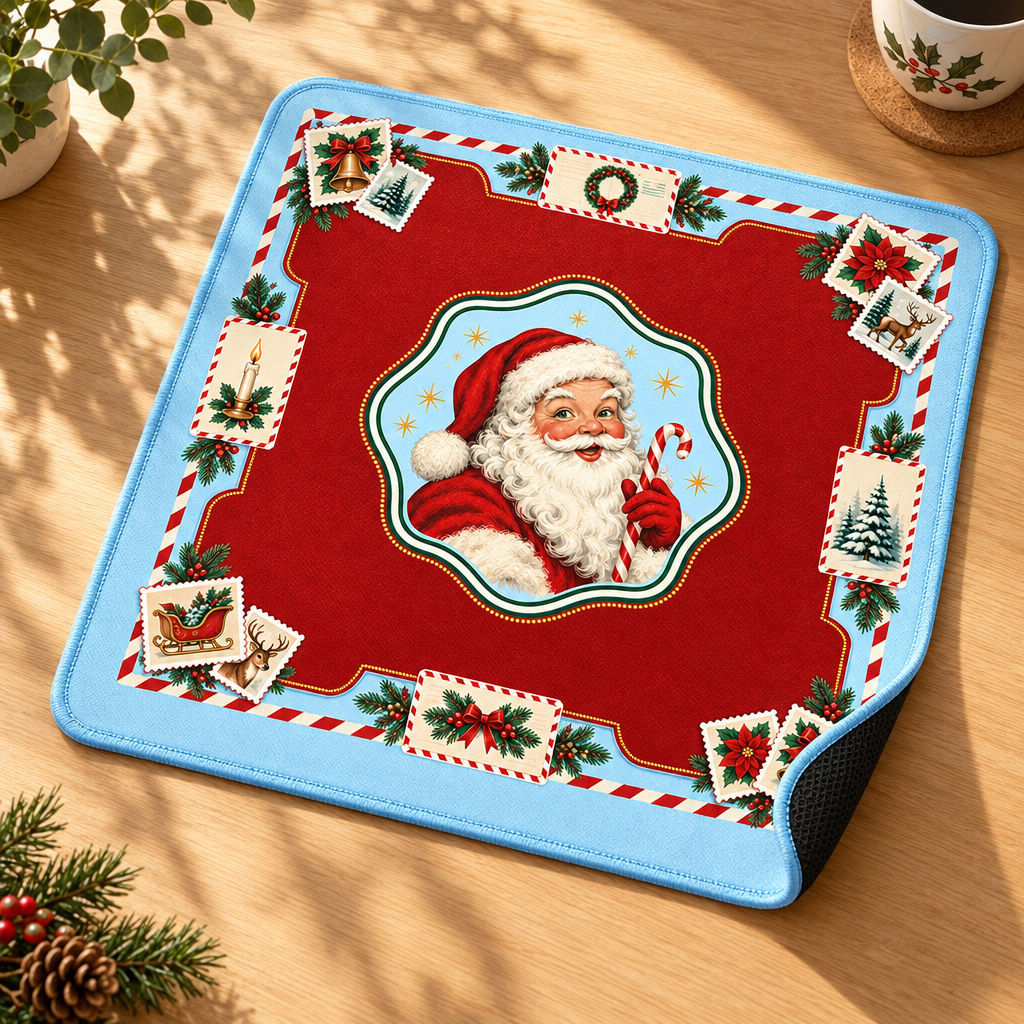
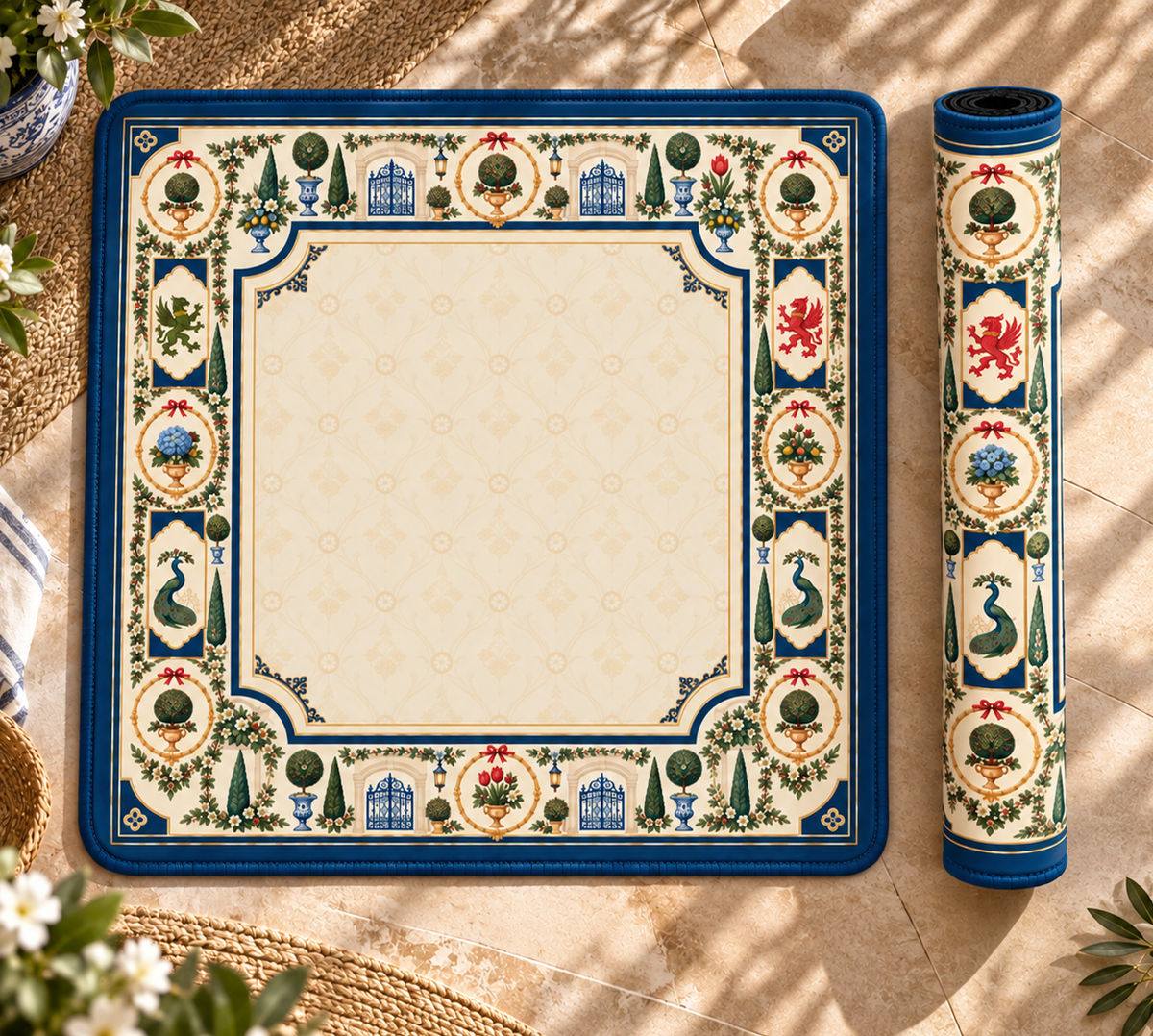
Use a mahjong mat with a slightly raised lip or edge; it creates a subtle barrier between the tile zone and the perimeter, so food trays stay back where they belong. Many mats have built-in compartments or a non-slip bottom that keeps everything stable even when players reach across the table.
What spring menu works for two hours of play?
A typical spring mahjong gathering runs two to four hands (about 1–2 hours of active play), followed by a break, then often a second round. Here's a seasonal menu that handles this timeline:
Before Charleston (light appetizer station, 10 minutes):
Marcona almonds or roasted cashews (spring harvest feel)
Grapes or strawberries (no pit-spitting at the table)
Sliced aged cheddar or gouda
Whole-grain crackers or breadsticks
During play (nothing new, just water & fingers bowls): Keep snacks minimal and still available; players who didn't eat before play can grab one handful between hands.
Mid-game break (after 90 minutes, cheese board style):
Soft cheeses (brie, chèvre, ricotta) with crackers or crostini
Cured meats: prosciutto, capicola, sopressata
Olives, cornichons, or pickled vegetables
Spring greens salad or asparagus tips (light, no dressing)
Crusty bread or unsalted breadsticks
Dried fruits: apricots, figs, cranberries
Why this works: Spring ingredients feel fresh. Cheese and cured meats don't spoil during a long game. Crackers are portable and don't crumble into tiles. Olives keep hands busy and offer a natural pause for sipping water. Avoid hot foods (they attract insects and create steam that fogs up tile-reading glasses) and anything requiring utensils.
🀄 Shop best-selling mahjong sets →
What should you do if someone spills on tiles?
Spills happen. Here's the action sequence we've field-tested:
Pause the game. Call time. Players hold their hands without placing tiles down.
Assess the damage. Is it liquid only? Is food involved? How many tiles touched?
Blot (don't wipe). Use a dry cloth or paper towel. Press gently; don't rub, which pushes liquid into grout or seams.
Wipe the table surface. Use a second cloth slightly damp with plain water. Wipe the spill zone only.
Let tiles air-dry. Set the affected tiles aside on a clean, dry napkin for 3–5 minutes. Don't use a hair dryer or place them in sunlight—heat can warp bamboo or loosen glue on old sets.
Resume play. Once dry, return tiles to the wall and continue.
If the spill involves sticky liquid (soda, juice, alcohol), rinse the tiles under cool running water (as a last resort) and air-dry thoroughly. Acrylic tiles tolerate rinsing; some bamboo tiles don't.
If you're buying a set specifically to host, choose engraved acrylic sets—they handle accidental spills with grace and look professional on a host's table.
🎁 See our most-loved mahjong sets & accessories →
Should you provide napkins or finger bowls?
Both. They serve different purposes. Napkins dry hands and face; finger bowls clean them between hands. Here's why both matter:
Napkins (at every corner): Use cloth napkins if you're hosting weekly players—they're washable and more durable than paper. Stack 10–12 per corner and add a small trash bowl underneath. Players wipe their hands every time they swap tiles, which is constantly. Paper napkins are fine if you're entertaining casually.
Finger bowls (one per player): Fill a small bowl (4-inch diameter) with cool water and add a slice of lemon or cucumber. Players rinse their fingertips before picking up a new hand and after eating. This keeps tile-reading crisp and reduces tile smudging, which matters during the late-game push when tension rises and hands shake slightly.
Replace finger-bowl water after every two hands—it gets warm and dirty fast. Set an empty, dry bowl underneath each wet one so water doesn't drip onto the mat or table.
The combination of stack napkins + fresh finger bowls signals to your guests that this is a serious, well-run game. It also protects your set and mat.
✨ Find your Mahstead set — free US shipping →
What to check before you buy (or host)
Tile material: Acrylic handles spills and stains better than bamboo. If you host weekly, durability wins.
Table height: A 28–30-inch-tall table is standard. Too high or low and players will lean awkwardly, making spills more likely.
Mat coverage: A mat should extend 4–6 inches beyond the tile zone on all sides so snacks and drinks sit safely outside the active area.
Napkin access: Have stacks at every corner, not just one. Reaching across the table is the top spill risk.
Break timing: Call a formal break after 90 minutes—don't wait for someone to ask. Refreshed players play better and eat more intentionally.
Alcohol policy: Set it before guests arrive. If you serve wine or beer, enforce the "behind the racks" rule strictly.

FAQ
Can I serve sushi or dim sum at a mahjong game?
Sushi and dim sum both involve chopsticks or hands and sauces (soy, sriracha, ginger). Soy sauce stains tiles permanently and leaves a slick that makes tiles hard to grip. Reserve these for the break, off the main table, or save them for after play. During active hands, stick to cheese and nuts only.
What's the best way to prevent grease from nuts or cheese on tiles?
Eat nuts and cheese before you pick up your hand, not while holding tiles. Between hands, napkins and finger bowls are your defense. If grease does transfer, a dry cloth and a 5-minute air-dry fixes it. Acrylic tiles are less porous than bamboo and shed grease faster—one reason many weekly hosts prefer acrylic for frequent entertaining.
How far ahead should I prep food for a spring mahjong party?
Prep hard items (cheese cubes, nuts, crackers) the morning of. Assemble platters 30 minutes before guests arrive. Keep the cheese board in the fridge until the break. Spring produce (grapes, berries, asparagus) stays fresher if not cut until 1–2 hours before play. Avoid hot foods unless you can serve them 10 minutes before the Charleston—steam and heat are enemies of tile-reading comfort.
Should I use a mahjong mat if I'm hosting with food?
Yes. A mat defines the tile zone and creates a physical barrier that keeps food back. It also protects your table if a spill happens. Look for mats with a non-slip base and a raised edge; they contain minor spills and keep the game surface stable when players lean in to see tiles. Many mats fold for storage, making them ideal if you host in rotating homes.
What's the best drink to offer at a spring mahjong game?
Water, unsweetened iced tea, or dry white wine. Avoid red wine, cola, coffee, and anything sticky or staining. Drinks must stay in cups with lids, positioned behind each player's racks—never on the table. One pitcher of water and a stack of cups work best; let guests self-serve to keep the hosting burden low and the game flowing.
Can I play mahjong outdoors in spring if I'm worried about spills?
Yes, but use a protective setup. Play on a sturdy outdoor table with a mahjong mat and a weather-resistant cloth underneath. Wind is the real enemy—it can scatter tiles or blow napkins. Covered patios work better than open decks. Keep food and drinks away from the immediate tile zone, and have extra napkins and a drying cloth nearby. Spring weather in most regions is mild enough that tiles and hands stay comfortable for 2–3 hours.


View More
View More
View More
