
How to Teach Mahjong to Canasta Players
Last updated: Nov 23, 2026
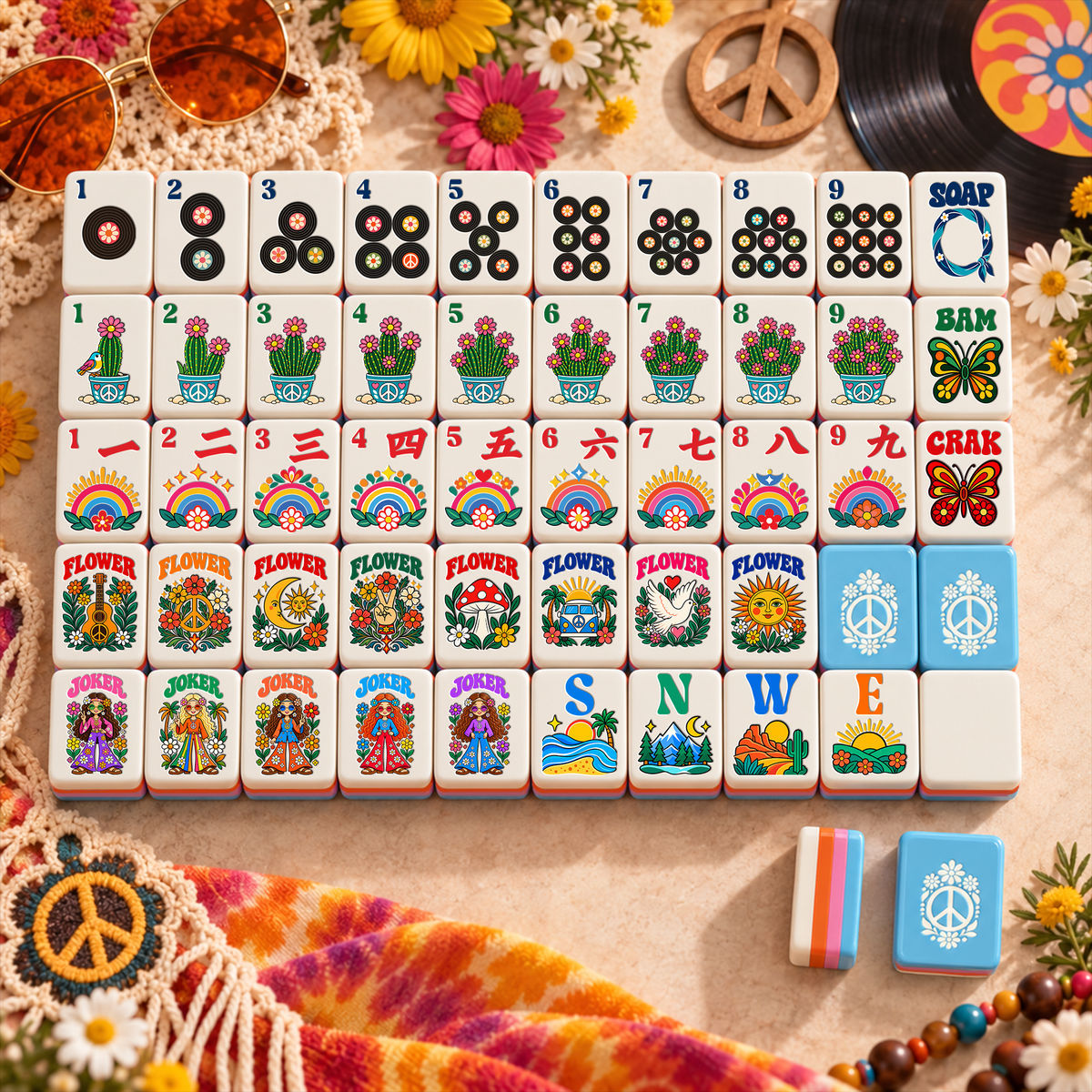
If your canasta group wants to try mahjong, start by telling them: "We're still drawing and melding, but now we have 152 tiles across four suits instead of cards, we use a chart to validate hands each year, and jokers are wildcards that can fill gaps in exposed groups—never stand alone or pair. The biggest mindset shift is that in American mahjong, hands are locked to the National Mah Jongg League's annual card; you can't just 'make up' a winning pattern. We spend about 10 minutes explaining the tile layout, 5 minutes walking through one hand from the card, then deal a practice round. Once they see how the Charleston shuffle works and how the hand chart works, the game clicks fast. Grab a best-selling acrylic set so everyone can see tiles clearly, and print or project the current year's card on your table—that's your referee."
How is canasta strategy similar to mahjong?
Both games reward hand-reading and tempo discipline. In canasta, you manage which cards you expose and which you hold; in American mahjong, you do the same with melds—expose a pung (three identical tiles) or kong (four) when it helps you, keep your concealed hand close. Discard order matters in both: throw tiles that block your opponents' patterns. The difference is speed: mahjong rounds are tighter and more explosive because you have fewer tiles to work with and the hand is fixed to the card. A strong canasta player often finds the tactical core familiar within one game.

What tiles replace cards?
American mahjong uses 152 tiles across three suits (Bams, Craks, Dots), each numbered 1–9 with four copies of each number. That's 108 tiles right there. Then add 16 winds (four each: North, East, West, South), 12 dragons (four each: Red, Green, White), plus 8 flowers and 8 jokers. Canasta players expect one "deck"; mahjong feels like three decks at once but organized clearly by suit and number. Show your canasta group the tiles in a physical set—once they see a Crak is just a number in a circle, and a Bam is a number in a circle with a slightly different shape, they'll orient fast. The flowers and winds are purely bonus tiles; you'll never need them all in a single hand.
Does the annual card work like canasta's meld book?
Not quite—it's stricter and refreshes yearly. Canasta's meld book says "three cards of the same rank, or a sequence of three-plus same suit." American mahjong's National League card specifies exactly which tiles, in which order and grouping, win that year. For example, one hand on the card might read "three Bams, three Craks, three Dots, plus a pair of winds"—you must match that exact pattern, or you don't have a hand. Canasta players love the clarity: "So there's no debate?" Correct. The card is your referee. Your first session, print the current year's card, highlight 5–6 simple patterns (often shown at the top of the card), and walk through them as a group. Within two rounds, they'll know how to scan it.
What does the Charleston do?
Before any round begins, players pass tiles three times around the table in a ritual called the Charleston. This is like canasta's initial hand-dealing—it's the equalizer that randomizes the game. In canasta you deal and go; in mahjong, after the 14-tile deal, each player passes three tiles to the left, then three tiles pass right, then three pass across the table. Canasta players often ask, "Why not just shuffle better?" The answer is that the Charleston levels the luck: even if the wall shuffle seemed unfair, the passes let you ditch bad tiles and fish for better ones. Learn the Charleston in depth here. It takes about 90 seconds once you've done it twice.
Where do jokers fit differently?
In canasta, a joker is a wild card that substitutes for one card in a meld. In American mahjong, jokers are wilds too—but with strict rules. A joker can fill a gap in an exposed pung, kong, quint, or sextet (you can't use them in concealed groups), and crucially, a joker can never be the single tile you're waiting for to go out, nor can it be a pair. That last rule trips up canasta players: "So I can't hold a joker as my winning tile?" Exactly. It teaches you to build your final hand with concrete tiles. On the upside, you have eight jokers in your set, so joker availability is generous.
Element | Canasta | American Mahjong | Why It Matters |
Hand size | 15 cards (7 in hand, 8 drawn) | 14 tiles (13 in hand, 1 drawn each turn) | Mahjong is tighter; fewer moving parts |
Melds | Three-plus same rank, or sequence | Pung (3), Kong (4), Quint (5), Sextet (6) identical tiles only | Mahjong has NO sequences; all melds are identical tiles |
Wild cards | Joker = any card in any meld | Joker = gap-filler in exposed groups only; never final tile or pair | Mahjong imposes strategic discipline |
Hand validation | Meld book (fixed, timeless) | Annual League card (changes each year) | Annual card keeps the game fresh; must relearn each spring |
Setup | Deal, sort, play | Deal, Charleston (tile passes), then play | Charleston adds fairness; no true analog in canasta |
Rounds | Variable, until stock depletes | Always exactly 4 players, 152 tiles, 4 hands per wind | Mahjong structure is rigid; predictable pacing |
Your canasta crew will adapt fastest if you acknowledge the table above in your first teaching session. Run a demo hand, narrate every step, and pause to ask "What would you do here?" Canasta players think turn-by-turn; let them apply that thinking to mahjong's narrower decision tree.
🀄 Shop best-selling mahjong sets →
How do I explain hand victory?
In canasta, you go out by melding down to zero cards (plus one final discard). In American mahjong, you go out by having all 14 tiles form valid groups and a pair—you "declare" with all tiles exposed or held concealed until the moment you claim victory. The winning hand must match the current year's card exactly. No creativity. Your canasta player might say, "So I can't just make a run of Bams?" Not unless that exact run is on the card for this year. Tell them: "The card is your blueprint. Find your tiles, build to the card, win." Within one game, they stop fighting the constraint and start hunting the card like a puzzle. It's actually more satisfying because the puzzle is public.
What if I want to add visuals for teaching?
Print the annual card (free online from the National Mah Jongg League website), laminate it or slide it into a page protector, and leave it at the table so players can reference it during play. Grab one of our engraved sets or best-selling options—the tiles are large and legible in acrylic, so everyone can see the suit symbols and numbers clearly from across the table. If your group is six people and you want everyone to play, run two games side by side with two separate sets. One set is never enough if you're teaching; you'll want a backup in case someone mishandles a tile or you want to demo a hand separately while the main game continues.
✨ Find your Mahstead set — free US shipping →
What's the hardest transition from canasta?
Accepting that sequences don't exist. Canasta players muscle memory says "1-2-3, 4-5-6, same suit = valid." In American mahjong, "1 Bam, 2 Bam, 3 Bam" is not a meld. Three identical tiles is a meld. Five identical tiles is a quint. That's it. Your canasta friends will test this boundary twice. After the second test, they'll internalize it. The psychological lift happens when they realize the game is simpler—fewer hand combinations to track, clearer patterns, faster rounds. Emphasize: "You are not learning harder. You are learning different."

Should I use a mat or a table cover for teaching?
Yes. A mahjong mat (or table cover) keeps tiles from sliding, gives everyone a defined playing zone, and adds a polished feel that makes canasta converts feel like they're joining a real tradition. Most mats come with corners for each player's wall and a center zone for the discard pile. For a teaching session, a mat is worth it because it organizes chaos and keeps your demo tiles where you put them. Learn more about mats here.
How long until they're ready to play unassisted?
One 2-hour session gets them through fundamentals: tile layout, the Charleston, scanning the card, melds, and one full hand. A second session, they're reading the card on their own. A third, they're confident. By game four, they play like they've always known it. Canasta players have the discipline and hand-reading skills; they just need to rewire three rules. That's fast.
🎁 See our most-loved mahjong sets & accessories →
What to check before you buy
Tile legibility: Your canasta group is probably 40-plus, so make sure numbers and suit symbols are printed in high contrast on the tiles. Acrylic sets with clear inlays win here.
Tile count: A 160-tile set (152 playing tiles plus spares) is standard and what you want. Never add spares to the game itself—they stay in the box.
Card access: Have the annual card ready before your first session. Print it, project it, or buy a laminated card if your group prefers. No card, no game.
Racks or just spread: Canasta players expect a rack to hold their tiles. Ask your group; if they're used to holding cards in hand, they'll want racks with pushers so they don't have to squint at hand-held tiles.
Travel bag if needed: If your game rotates between homes, a travel bag keeps tiles safe and the game portable.
How do I source the latest League card?
Visit the National Mah Jongg League website (search "mah jongg league card current year") and download the free PDF. It's updated every March. Some players buy a laminated physical card; others project it or print it each season. For teaching, one digital copy on a phone or tablet at the table works fine until your group is ready to invest.
Can I teach mahjong with a different variant (Chinese, Hong Kong, Riichi)?
Yes, but teach American first if your group is in the US. American mahjong has the clearest ruleset for beginners because hands come from a published card—no debate, no drift. Chinese mahjong is beautiful but uses a different tile count and scoring system; Hong Kong mahjong is faster and more aggressive; Riichi (Japanese) adds betting layers. Once your canasta players own American mahjong, they can explore variants later if curious. Stick to one system for your teaching cohort or you'll create confusion.
Do I need racks?
Not mandatory, but highly recommended for canasta players. A rack with pushers lets you sort and hide your concealed tiles neatly. It's the mahjong equivalent of a card holder. If your group is comfortable holding tiles in a fan in their hands, skip racks. If anyone is 50-plus or prefers to see their hand clearly, racks pay for themselves on night one.
Should I buy engraved sets?
Only if your group is playing long-term and you want a keepsake or a set tailored to your group's name (e.g., "Tuesday Mahjong Club"). For a first set or a teaching set, a standard best-selling acrylic set is perfect. Once they commit, engraved sets make a thoughtful upgrade or gift.
Where do I find the scoring rules?
American mahjong scoring is based on the hand pattern and tile count. It's printed on the back of the League card or in most rule guides. For your canasta group's first month, just teach "win first, score second." Scoring can feel dense initially; let them feel the rhythm of the game before you layer points.

FAQ
Is American mahjong harder than canasta?
No. Mahjong has fewer hand combinations (melds must be identical tiles, no sequences) and a published annual card that eliminates guesswork. Canasta players find the structure easier because there's one authoritative answer key.
How do I explain jokers to a canasta player?
In canasta, a joker replaces any card. In mahjong, a joker fills a gap in an exposed group (pung, kong, quint, sextet) but never serves as your final winning tile or as a pair. It's a strategic constraint that canasta doesn't have.
What if someone wants to learn Chinese mahjong instead?
American mahjong is the right entry point because the annual card removes ambiguity. Chinese mahjong uses a different tile count and honor system; teach American first so your group has a shared foundation, then branch to variants later if they wish.
How long does a single round take?
A full round with four players (East, South, West, North) is usually 10–20 minutes once everyone knows the rules. Your first two sessions will run longer (20–30 minutes per hand) because of rule lookups and card scanning.
Do I need a special table or mat?
A mat or table cover keeps tiles from sliding and defines playing zones. It's not mandatory but makes the experience feel polished and organized. Canasta players used to a felt surface often appreciate the parallel.
Can we play with five or six people?
American mahjong is designed for exactly four players. With more than four, run two separate games side by side, each with its own set and card. Never try to jury-rig a five-player game; the tile count breaks.


View More
View More
View More
