
Mahjong for Pai Gow Players: What Transfers and What Doesn't
Last updated: Nov 23, 2026
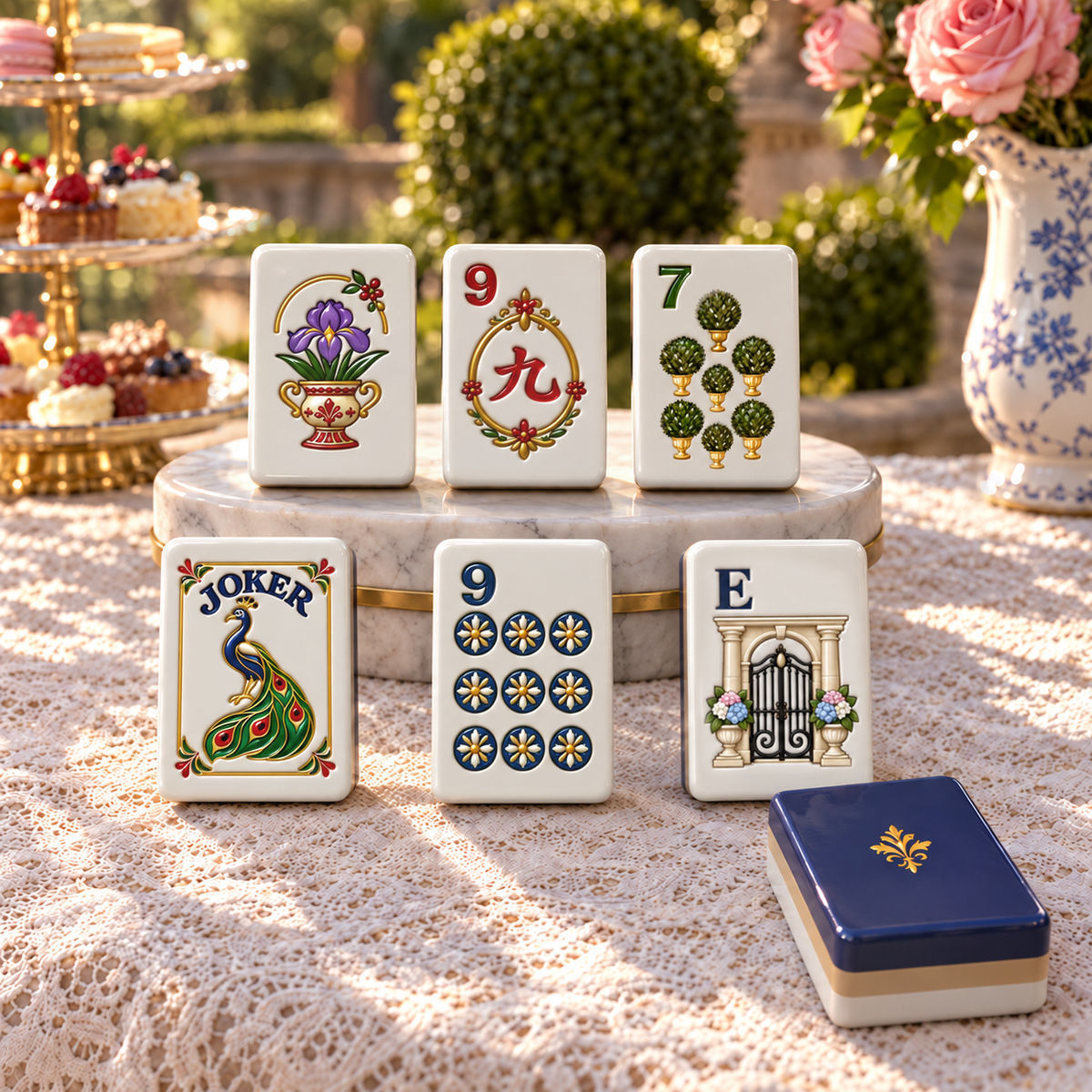
American mahjong and pai gow both use 152 tiles and dealer roles, but they diverge sharply: pai gow ranks hands by strength (straights, pairs, triples); American mahjong requires exact matches to a printed card updated yearly, plays only the current-year hands, and scores by hand difficulty rather than comparison. Pai gow allows sequences (1-2-3); American mahjong does not—only identical pungs (three copies), kongs (four), and higher multiples count. Pai gow payout is fixed (1:1, 2:1 per rules); American scoring uses points based on hand type and joker use. Both demand memory and table presence, but American mahjong's card-based system means you're learning a new vocabulary: the Charleston (tile-passing ritual), joker placement rules, and exposure protocols. Expect a 3–4 week learning curve if you know pai gow. Mahstead's best-selling mahjong sets come with printed quick-reference guides and quality tiles that make the transition smoother. 🀄 Shop best-selling mahjong sets →
What tile knowledge from pai gow actually helps?
Your pai gow experience with Bams, Craks, Dots, winds, and dragons transfers directly—those same suits and values exist in American mahjong. You already recognize 1 Bam (the bird), honor tiles, and the Dragon hierarchy. The muscle memory of handling tiles and the habit of arranging by suit carry over perfectly. However, pai gow's triples, quints, and the "gee joon" (wild tile) work differently here: American mahjong jokers are strict—they cannot fill a pair or stand alone as a single tile, and they follow explicit rules printed on the card. Your speed and tile recognition win the day; the logic framework does not.

Which pai gow habits will trip you up?
Pai gow teaches you to build hands by comparing values and making the strongest two-hand split. American mahjong flips that logic: you are not competing on rank; you are matching a specific pattern from the year's card. Sequences (1-2-3, 4-5-6) are illegal in American mahjong—only identical tiles form melds. Pai gow rewards memory of hand rankings; American mahjong rewards speed at reading the card and spotting matches. The dealer role exists in both, but American mahjong rotates it every hand, and scoring is not about pushing money hand-to-hand—it pools into a single settled score per game. Expect to unlearn comparison-based thinking and retrain your eye for pattern matching.
How does the card change everything?
In pai gow, all hands are legal and rank uniformly by rule. American mahjong has one rule: hands must appear on the current year's National Mah Jongg League card, issued each spring. This card lists hundreds of legal patterns—only those hands win; any other tile combination is a dead hand, even if it looks strong. The card is divided by hand type (pairs, pungs, kongs, mixed melds, etc.) and difficulty, and you study it like a reference manual. How to read the mahjong card takes about 30 minutes to learn; memorizing the entire card takes weeks or months. Pai gow players often rush this step—they assume tile strength matters more than the card. It does not. The card is law.
What's the scoring philosophy shift?
Pai gow scoring is transactional: you win or lose a fixed amount per hand. American mahjong pools scoring: all four players settle one final score. A hand is worth 30–70+ points depending on its complexity, the number of jokers used, and whether it "self-picked" (drew the winning tile). Winning with three jokers scores differently (and usually less) than winning with one. Declaring your hand early or late affects your score. Pai gow players are used to immediate settlement; American mahjong requires running a hand tally across 16+ hands before anyone pays or collects. The psychology is slower, more measured, and less adrenaline-driven. American mahjong scoring is its own mini-study; budget time here.

How do you actually start learning American mahjong as a pai gow veteran?
Step 1: Get a quality set and the current card. Buy a 160-tile American mahjong set that includes a printed scorecard and a rack with pushers—having the card visible and tiles sorted cuts learning time in half.
Step 2: Study the card for 20 minutes a day. Focus on one section (e.g., "all pungs") rather than trying to memorize everything. Flip through and spot patterns—your pai gow memory will activate quickly.
Step 3: Play a slow practice round. Sit with one experienced American mahjong player who will pause after each hand and explain why that hand won or lost.
Step 4: Learn the Charleston first. The pre-game tile pass is unique to American mahjong and affects your strategy from hand one. The Charleston explained is a 5-minute read that pays dividends.
Step 5: Play weekly, not monthly. Muscle memory and card familiarity come fast if you play 2–3 times per week for 4–6 weeks.
Comparison: Pai Gow vs. American Mahjong at a Glance
Attribute | Pai Gow | American Mahjong |
Hand validity | All tile combos legal; rank by value | Only card-listed hands legal |
Sequences allowed? | Yes (straights) | No (pungs, kongs only) |
Scoring | Fixed payout per hand; direct settlement | Points per hand type; pool settlement |
Dealer role | Rotates slowly (bank model) | Rotates every hand |
Wild tiles | Gee joon (any hand, fills any role) | Jokers (never pair, never single) |
Learning curve | 1–2 weeks | 3–4 weeks for fluency |
🎁 See our most-loved mahjong sets & accessories →
Common mistakes pai gow players make in their first month
Trusting hand strength over the card. You spot three Bams and a run of Dots and think it's a winner. Not on the card? Not a hand. Check first, every time.
Forgetting joker placement rules. In pai gow, a wild fills a gap; in American mahjong, jokers must follow the card exactly. A joker cannot be a pair; a joker cannot stand as a single tile. Violate this and your hand is dead.
Playing off-card hands to "practice." Resist this. Play only legal hands. Every off-card attempt teaches bad muscle memory and slows your card fluency.
Rushing the Charleston. The tile pass is not filler; it is strategy. Learn to count and position tiles intentionally, not just push them over.
Settling scores mid-game. American mahjong scores accumulate; don't collect or pay until the game ends. Pai gow trained you to instant-cash; break that habit now.
Not using a mahjong mat with racks. Tiles stay cleaner, the card stays visible, and you sort faster. It looks like a small investment; it saves 10+ minutes per game and cuts mistakes by half.
What to check before you buy your first American mahjong set
Tile count: Verify the set is 160-tile (152 playing tiles + spares). Avoid smaller sets; you need the full complement.
Print quality: Read the card included—can you quickly spot a hand? Poor print means slower play and frustration.
Rack and pusher: Does it come with one? A good rack with pushers is non-negotiable for organized, faster sorting.
Mat included? A mat keeps tiles silent, the card flat, and the game professional. Not required but highly recommended.
Current-year card: Confirm the set includes the 2026 card (or the year you're playing). An old card makes half the hands unplayable.
✨ Find your Mahstead set — free US shipping →

FAQ
Can I use my pai gow strategies (like two-hand building and comparison) in American mahjong?
No. Pai gow is rank-based; American mahjong is card-based. You are matching a pattern, not building the strongest hand. Forget comparison; train your eye on the card only.
Do the tile suits and values work the same way?
Yes. Bams, Craks, Dots, winds, and dragons are identical. Your tile recognition carries over directly. The joker role is the one exception—strictly bound by card rules.
How long until I'm playing confidently?
3–4 weeks of regular play (2–3 times weekly). Pai gow veterans often speed up after 10–15 hands because tile handling is muscle memory. The card familiarity takes the most time.
What's the biggest rule shock?
No sequences (1-2-3 straights). Only identical tiles form melds. This contradicts pai gow logic and trips up most crossover players for the first 5–10 hands.
Is the card really that important to study?
Absolutely. The card is the law. No card, no win—even if your hand looks perfect. Spend 20 minutes daily on it for the first two weeks and speed improves dramatically.
Will I lose money while learning?
Possibly. Play for low stakes with patient players during the learning phase. Most American mahjong groups play casually and welcome new players; they will slow down and explain.


View More
View More
View More
