
Custom Mahjong Case: How to Pick the Right One for Your Game
Last updated: Nov 23, 2026
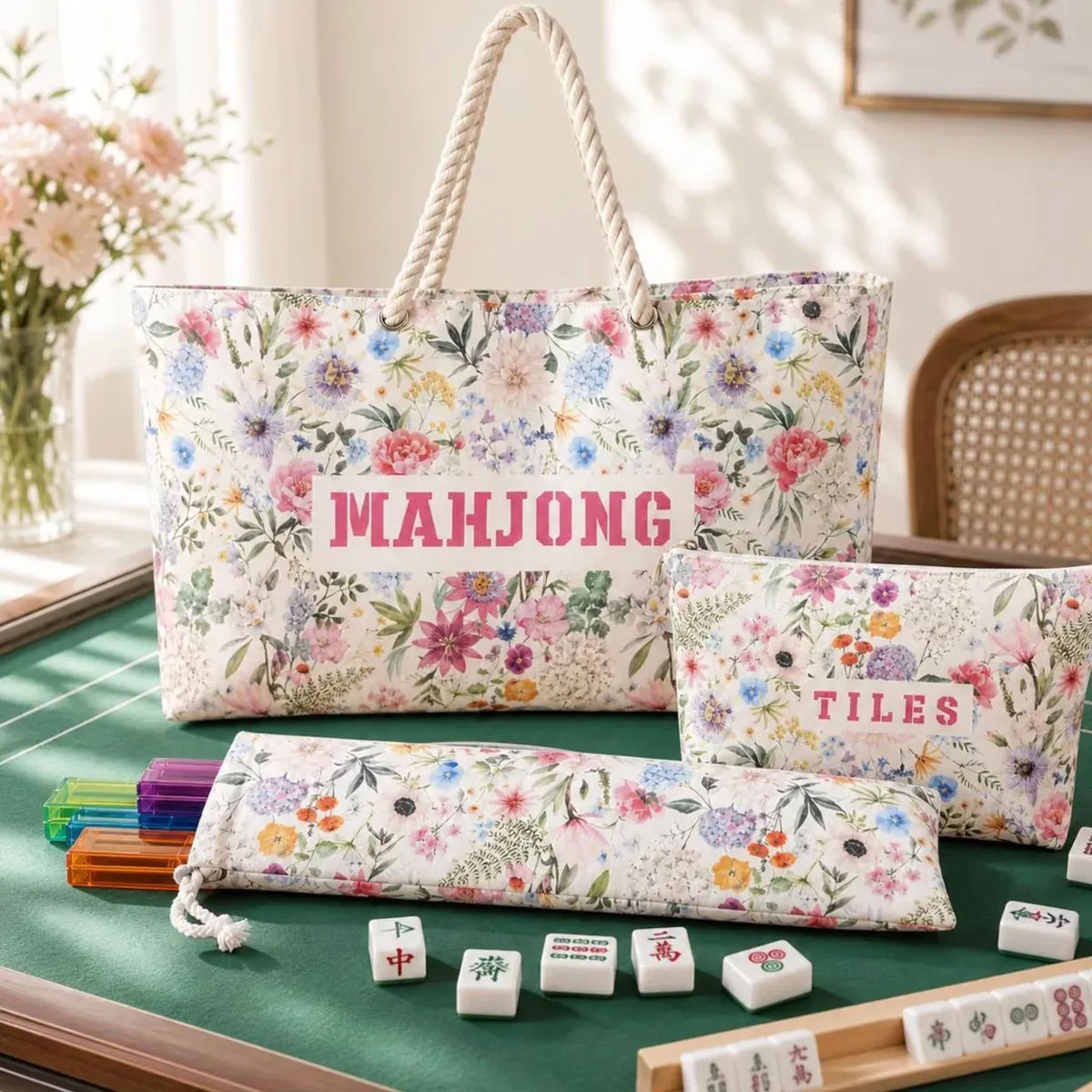
A custom mahjong case is a protective carrying solution designed to hold a complete 160-tile American mahjong set (152 playing tiles plus spares), mats, racks, and dice. Cases range from zippered nylon bags suited to weekly games at friends' homes, to hard-shell carriers for frequent travel, to engraved wood or acrylic boxes for display. Most hold a full set with accessories; protection level, portability, and aesthetic matter equally depending on whether you're hauling gear to a standing Thursday game or gifting a set to a new player. Mahstead offers cases and bags in the travel-bag collection designed to pair with our 160-tile sets, and many shoppers pair them with best-selling mahjong sets for a complete gift or starter package. Choose based on frequency of transport, climate (humidity, heat), and whether you want protection, portability, or display-quality storage—not all three are equal in a single case.
What exactly fits in a standard custom mahjong case?
A standard case holds the 152 playing tiles, 8 jokers, and spare tiles from a complete set—that's roughly 160 tiles total—plus room for a mat (folded), one or two racks with pushers, dice, and the National Mah Jongg League card. Most cases designed for American mahjong have compartments or dividers to keep tiles organized and prevent mixing. Interior dimensions vary: a compact nylon bag might measure 16×12×4 inches when flat, while a hard case can be 18×14×5 inches or larger to accommodate a rolled mat without crushing it. Tile weight (acrylic tiles are heavier than bamboo or bone alternatives) affects case choice—lighter materials allow a softer bag; heavier tiles often need rigid structure.

Soft bag vs. hard case—which do you actually need?
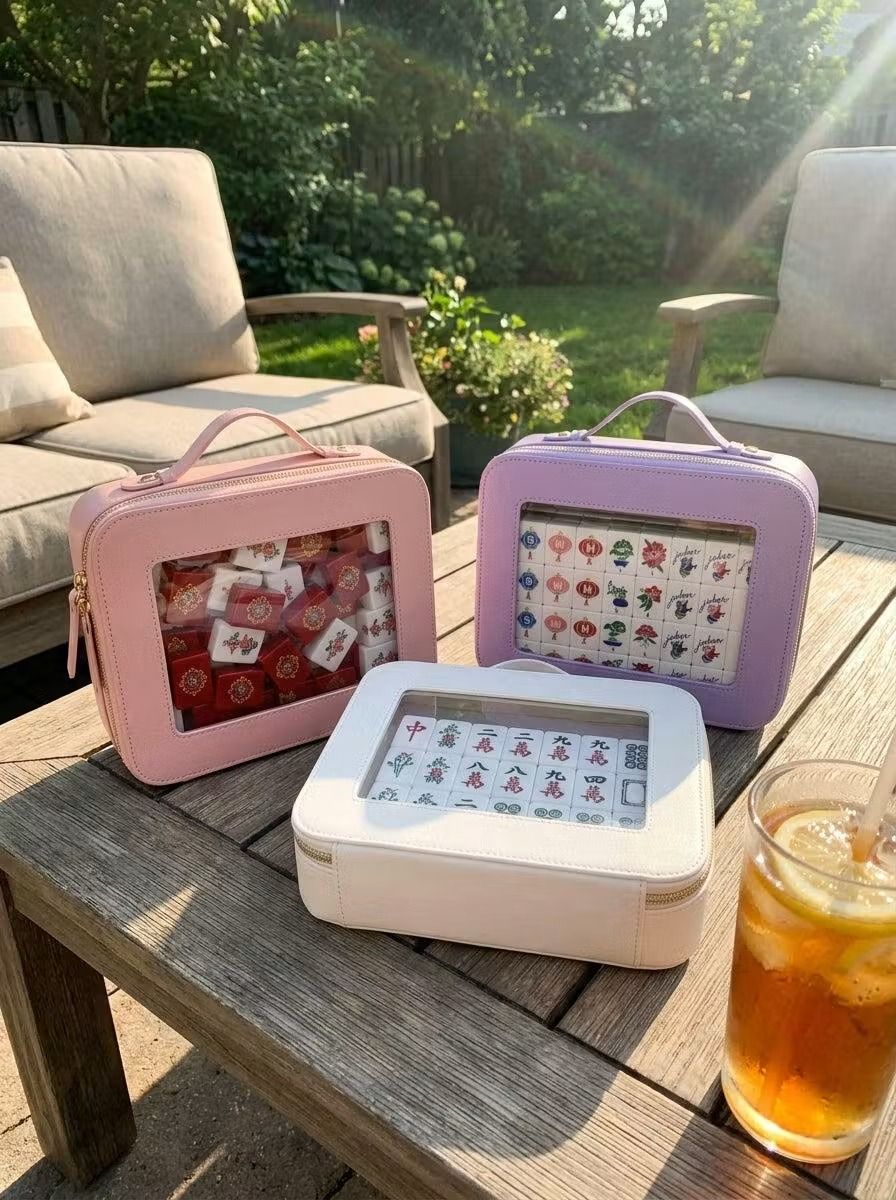
Soft nylon or canvas bags are best if you transport your set weekly to a nearby player's home or game night, have a car, and don't need the case to double as a display piece. They weigh less, fold flat for storage, and cost less. Hard cases (rigid plastic, molded foam, or wood) are worth it if you fly with your set, store it in humid environments, lend it frequently to others, or want a case that protects against crushing or rough handling. Hard cases also look sharper in a living room and resist moisture better. Compare in the table below:
Type | Best For | Weight | Moisture Resistance | Display-Quality | Packing Footprint |
Soft zippered bag | Weekly local transport | Light | Moderate | No | Folds flat |
Semi-rigid molded | Car travel + occasional flights | Medium | Good | Partial | Compact |
Hard-shell with latch | Frequent flights, humid climate, display | Heavy | Excellent | Yes | Rigid footprint |
Wood or engraved box | Heirloom, gift, permanent home storage | Very heavy | Good | Yes | Fixed shape |
How do you protect tiles during travel if you're flying?
If you fly with your set, pack the case with tiles in individual compartments or soft dividers—never loose in the bag. Place the case itself in a padded suitcase or checked luggage (carry-on space is tight for a full set). Use bubble wrap or foam sheets around the case to absorb impact during handling. Acrylic tiles are durable but edges can chip if tiles shift violently; compartments are non-negotiable. For extra protection on long trips, pack the case as the innermost layer of your luggage, surrounded by soft items like clothes. Remove the mat separately and roll it in a garment bag to prevent creasing. If you're renting and don't want to carry your own set, contact local mahjong groups before traveling to see if you can join a game with house sets. American mahjong sets paired with travel cases are often purchased as gifts for players who move frequently or travel for work.
🀄 Shop best-selling mahjong sets →
What features should you check before ordering a custom case?
Before committing to a case design or material, verify these five points:
Interior dimensions: Confirm the case fits your specific set (160-tile acrylic sets are bulkier than compact travel versions; measure your tile stack height).
Compartment count and size: Count how many separate sections you need—one large divider or four small ones for organizing by suit?
Latch and zipper durability: Look for reinforced stitching on zippers and metal hardware that won't rust or break after repeated use.
Moisture seal: If you play in humid regions or store your case in a garage, choose one with a gasket or weatherproof seal.
Weight and handle style: Will you carry it by hand, roll it, or store it upright on a shelf? Handles and weight matter for comfort.
Most Mahstead cases come with product photos showing interior layout; compare them side-by-side before ordering. Ask the seller whether the case is pre-formatted for a 160-tile set or if it's a generic carrier that might fit. We design ours to pair perfectly with our acrylic sets and mats.

Can you customize a case with your name or game group logo?
Yes—many players engrave or personalize cases to mark ownership (especially in a shared household) or celebrate a game group. Engraved wood or acrylic cases are popular gifts; you can typically add names, initials, a founding year, or a short phrase. Canvas or nylon bags can be monogrammed via embroidery. Before ordering, confirm the seller's lead time for engraving (can range from a few days to 3–4 weeks) and whether design proofs are provided. Ask whether the personalization is laser-engraved (permanent and clean on acrylic/wood) or embroidered (softer look on fabric). Some players commission custom artwork—tiles arranged in a pattern, a mahjong symbol, or a pun specific to their group. If you're gifting a personalized case with a set, order early to account for engraving time.
🎁 See our most-loved mahjong sets & accessories →
Where should you store a custom case when not in use?
Store your case in a cool, dry space—not a hot attic, humid basement, or direct sunlight, which can warp soft materials and fade graphics. Soft bags should be unzipped or loosely closed to prevent mildew. Hard cases with moisture seals are more forgiving but still benefit from climate control. If you stack other items on top of a case, use rigid cases (they won't compress); soft bags should sit flat or on a shelf. For frequent players, many keep their case in a living room closet or cabinet, ready to grab for game night. If you own multiple sets or loan one regularly, a labeled case (engraved or with a printed label) prevents mix-ups. Visit the travel-bag collection to see size, material, and storage-friendly options.
Is a case worth the extra cost if you only play at home?
If all your games happen at your own table, a soft bag (or no case) is fine—you're protecting the set from dust and pets, not transport wear. However, many home-only players appreciate a case for two reasons: easy reset (close the case between games to keep spares and dice organized), and long-term storage (tiles stay clean and organized for months or years). A display-quality hard case also works as home décor if your mahjong set is an heirloom or collection piece. If you host games and multiple players bring their own sets, having one organized case on hand makes setup faster. A soft bag costs less and stores flat in a closet; a hard case occupies shelf space but looks intentional. For home-only use, a soft bag is practical and sufficient.
✨ Find your Mahstead set — free US shipping →
What to check before you buy
Set size and tile material: Confirm the case is designed for a 160-tile American mahjong set, not a compact travel set or a different game variant.
Compartment layout: Does it match how you organize tiles (by suit, or all mixed)? Can you remove dividers if you want flexibility?
Extras included: Does the price include storage for a mat, racks, and dice, or just tiles?
Warranty or return policy: Can you return it if tiles don't fit snugly or if the latch fails after a few uses?
Shipping time: If you need the case before a specific game or gift date, verify lead times (standard, engraving, or custom options).
Most players buy a case once and use it for years. Choose based on how you actually play—not how you think you'll play. If you're unsure, a soft bag is a low-risk starting point; you can always upgrade to a hard case later. Compare the mahjong bags and cases collection with our best-selling mahjong sets to create a complete, coordinated package.
FAQ
Can you fit a mat inside a custom mahjong case?
Most cases designed for full sets have room for a folded or rolled mat, either in a dedicated pocket or alongside tile compartments. Roll the mat lengthwise and place it around the edge. Measure your mat (typically 27×27 inches folded to about 7×7) against the case's interior depth before ordering.
Do hard cases protect tiles better than soft bags during airline travel?
Hard cases offer more impact protection and resist crushing, but soft bags work fine if tiles are compartmentalized and the case is packed as an inner layer in a suitcase surrounded by soft items. Hard cases are worth it if you fly frequently or are extra cautious; soft bags suffice for occasional trips.
How much do custom engraved mahjong cases typically cost?
Prices vary by material, size, and complexity of engraving—ask us for a quote on the product page. Engraving usually adds 1–3 weeks to lead time. See current pricing and options in the travel-bag collection.
Can you use a regular carrying case meant for board games?
Sometimes, if the interior dividers are removable and the case is at least 18×14×5 inches. However, board game cases often have many small compartments designed for different pieces, making them fiddly for mahjong. A case designed for mahjong accommodates tile stacks and includes space for a mat; it's worth the extra cost for convenience.
What's the difference between a case and a storage box?
Cases are portable (zippers, handles, or wheels) and designed for transport; storage boxes are stationary and prioritize protection and display. Many players use a case for travel and a decorative box for home storage or as a heirloom piece.
Should you buy a case and a set together or separately?
Buying them together ensures compatibility (size, style, aesthetics) and often qualifies for bundled shipping. Many players starting out prefer a best-selling mahjong set paired with a travel case as a single gift or starter package—it's convenient and looks intentional.


View More
View More
View More
