
Mahjong for Dominoes Players: What Transfers Over
Last updated: Nov 23, 2026
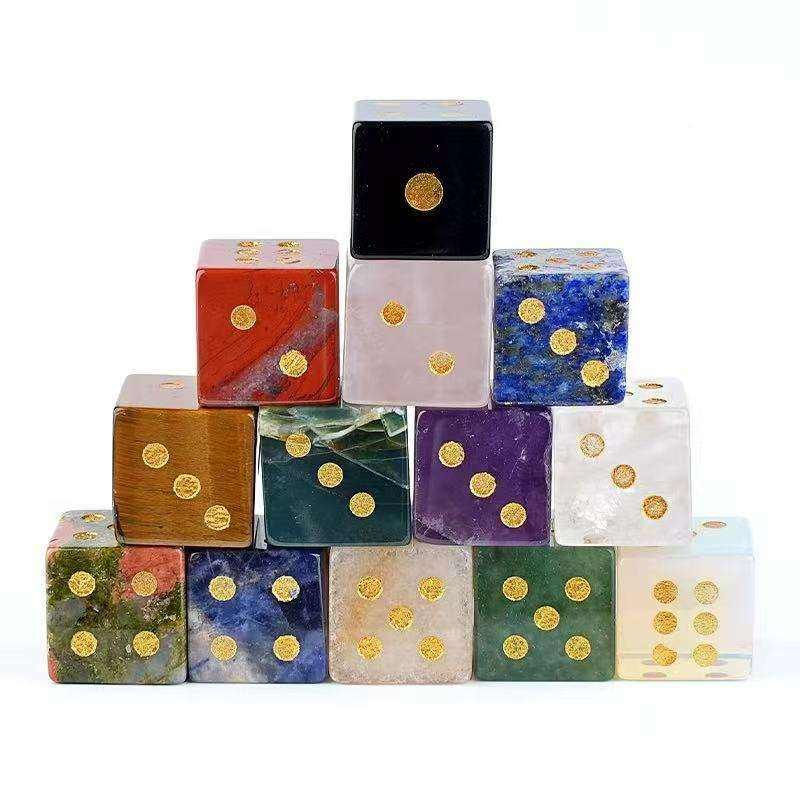
Dominoes and mahjong share tile-based strategy and visual memory, so dominoes players often pick up tile recognition quickly. American mahjong, however, requires memorizing the current National Mah Jongg League card, learning hand patterns (sequences of identical or special tiles), understanding the Charleston (pre-game tile exchange), and scoring by completed hand value—not by pips or chains. Dominoes emphasize playing tiles to extend lines; mahjong demands building and declaring a single hand from 14 tiles. Both reward spatial thinking and risk assessment, but mahjong involves more rule memorization and less open-play improvisation. Most dominoes players adapt within 3–5 game sessions. We recommend starting with our best-selling mahjong sets and the official league card for your region to avoid confusion on hand validity.
What tile logic you're already bringing?
Dominoes players already excel at pattern spotting—you see dominoes chain, recognize chains that block opponents, and calculate draws tactically. Mahjong similarly rewards you for spotting groups (three or four identical tiles) and understanding which tiles remain in the wall. The core skill—watching which tiles are exposed and remembering which have been discarded—transfers directly. You'll also understand risk; dominoes players know when a draw is dangerous, and mahjong has the same logic: do you discard a safe tile or chase a hand that might bust your waiting tile? That intuition is already yours, and it's 40% of winning mahjong play.

Where dominoes rules stop and mahjong begins?
In dominoes, you play tiles onto the board in real time; the game flows forward and tiles stay visible. In American mahjong, you build a hidden hand of 14 tiles and only reveal when you've matched the current year's card. Dominoes let you "draw," but mahjong is all-or-nothing: you declare mahjong (win) or you wait, draw, and discard. Dominoes scoring is additive (pip totals); mahjong scoring is hand-based (each legal hand on the card has a point value, and you score per winning hand). In dominoes, any legal play is legal; in American mahjong, only hands listed on the current card count—you cannot invent or modify hands. That rigidity feels strange at first but eliminates endless rule debate.
How hand structure changes your thinking?
Dominoes recognize chains (one domino leads to another); mahjong recognizes sets. A mahjong hand contains a pair (2 identical tiles) plus melds—groups of three or four tiles. Melds are only pungs (3 identical, e.g., three 5 Dots) or kongs (4 identical), never sequences like 1-2-3 as in Chinese mahjong. This matters: in dominoes, 2-3 follows 1-2 naturally; in American mahjong, 2-3-4 does not exist. You must build bunches of the same tile, not chains of different numbers. When you read the card, you'll see patterns like "three Red Dragons and three 1 Craks and four 7 Dots"—groups, not sequences. That shift from linear flow to grouped bunches is the biggest mental pivot dominoes players make.
The Charleston: why it's dominoes' biggest lookalike—and difference?
Before each American mahjong game, players pass tiles left, right, and across—the Charleston. It feels like dominoes' setup because everyone's shuffling and swapping tiles tactically. Here's the difference: in dominoes, you typically draw from a shared boneyard; in the Charleston, you control what you pass away. You see tiles in your hand before the pass happens, so you can ditch unwanted tiles strategically. Dominoes players often love this moment because it mirrors the early positioning of dominoes play. The Charleston gives you two chances to shape your hand (first pass and second pass), then play begins. Understanding the Charleston removes one major confusing moment; read our Charleston explained guide to see the exact sequence.
Scoring and winning: the numbers game you need to learn?
Dominoes score by pip totals; mahjong scores by hand classification. The National Mah Jongg League card lists hundreds of hands, each with a point value. For example, a hand might be worth 30 points (a simple all-pung hand) or 70 points (a complex hand with flowers and a bonus). When you declare mahjong, you earn that hand's value; if you're wrong, you pay a penalty. Dominoes let you calculate score mid-game; mahjong only settles score when a hand is complete and correct. Most players use a scorecard to track rounds. This feels rigid to dominoes players at first—you can't "win a little"—but it speeds up games and removes scoring disputes. Our American mahjong scoring guide covers point values and settlement rules in detail.
🀄 Shop best-selling mahjong sets →
From dominoes to mahjong: what you should skip and what to embrace?
Skill from Dominoes | Transfers to Mahjong? | How to Adapt | Why It Matters |
Counting remaining tiles | Yes | Watch discard pile; track card tiles drawn | Predict what's left in wall |
Risk assessment (draw or play safe) | Yes | Apply same logic; chasing risky hands costs points | Timing of declaration wins games |
Blocking opponent plays | Partially | Discard tiles opponent likely needs | Slows opponent's hand; indirect tactic |
Tracking sequences | No | Stop looking for 1-2-3 chains; mahjong uses identical groups | Biggest mental reset |
Speed play | No | Slow down; verify every hand against the card before declaring | One wrong declaration loses round |
Drawing from a pool | No | In mahjong, the wall is drawn by turn; no free draws | Structure is fixed; no improvisation |
The sharpest difference: dominoes reward speed and improvisation; mahjong rewards accuracy and pattern matching against a fixed reference (the card). Dominoes players often rush their first mahjong declarations and call hands that aren't on the card—slow down, check the card, and verify the hand matches exactly.
How to host your first game as a dominoes player switching to mahjong?
Gather four players, one current year's National Mah Jongg League card, and a best-selling mahjong set (152 playing tiles, 8 jokers, shuffled in a bag). Assign winds (North, East, South, West); East deals first. Each player draws 13 tiles from the wall and picks one from the Charleston pass. The player to East's right then draws from the wall (14th tile), and play begins. Players draw and discard in turn; when a player completes a hand matching the card, they declare mahjong and reveal. If the hand is legal, they score; if not, they pay a penalty and play continues. Set a time limit or round count before starting (e.g., "East playing four rounds"). Dominoes players often adjust after one full round—the second game flows much faster.
🎁 See our most-loved mahjong sets & accessories →

What to check before you buy your first set?
Tile size and readability: Our sets use acrylic tiles with printed symbols; verify the print size matches your eyesight (standard acrylic is legible at arm's length for most players).
Joker count: A regulation American mahjong set has 152 playing tiles plus 8 jokers. Never add extra jokers to the wall—all 160 tiles are for one game only.
Card version: The card changes every spring. Confirm your set comes with the current year's card, or purchase it separately from the National Mah Jongg League.
Storage: Does your bag fit the tiles, card, and a scorepad? Check the bag dimensions before buying.
Comfort: Try tiles at a friend's table if possible. Acrylic is durable and slides smoothly; if you prefer bamboo or bone, confirm the vendor carries them (most American players use acrylic).
Why mat and racks matter when you're starting out?
A mahjong mat defines four player zones and keeps tiles organized during shuffling and the Charleston. Dominoes players are used to a flat table; mahjong introduces a structured layout, and a mat enforces that structure instantly, reducing setup errors. Racks with pushers angle your 14 tiles toward you and let you hide your hand from other players—critical for fairness. Dominoes players often hold tiles in hand at first; racks feel awkward until you play three games, then they feel essential. For weekly home games, a mat and one or two racks streamline play and prevent disputes. See our racks and pushers guide for sizing and fit.
✨ Find your Mahstead set — free US shipping →
Common mistakes dominoes players make in their first five games?
Calling mahjong before checking the card. Dominoes train you to move fast; mahjong punishes speed. Always verify your hand is on the card before declaring.
Trying to make sequences (1-2-3). American mahjong has no sequences. Stop looking for ascending numbers; build groups of identical tiles only.
Keeping too many tiles "open" (in the middle of the wall, hoping to draw). Discard unpaired tiles and tiles that don't match known hands on the card. Holding 14 mismatched tiles guarantees a loss.
Forgetting the Charleston changes your hand. Many dominoes players feel the first pass but then treat tiles as static. The pass left, pass right, and pass across shifts what you're holding; adapt your strategy after each pass.
Playing too many rounds before taking a break. Dominoes games can last hours; mahjong rounds are shorter (10–20 minutes) but mentally intense. After four rounds, players are fatigued. Schedule breaks.
The fastest way for dominoes players to learn mahjong?
Play online simulators or watch one recorded game before your first live game. Most dominoes players read rules and feel lost; watching a full hand played from Charleston to mahjong declaration makes everything click. Then, at the table, announce you're new and ask for a "learning hand"—experienced players will slow down and walk you through. The National Mah Jongg League's official tutorials are beginner-friendly. Plan for three live games to feel comfortable and five to feel confident. Dominoes players usually adjust faster than people with no tile-game background because you're already thinking in groups and discards.
Do you need a mahjong-specific table, or is any flat surface okay?
Any sturdy table (dining, folding card table) works fine. A mahjong mat is optional but speeds setup and prevents tiles from sliding. Dominoes often use wide tables to spread chains; mahjong needs less space—four players fit comfortably at a 36×36-inch table. If you host weekly games, investing in a travel-friendly mat or a stationary mat keeps the space consistent and protects the tiles. Dominoes players moving to mahjong often find a mat eliminates half their setup time.
Where dominoes players find local mahjong games?
Search community centers, libraries, synagogues, and country clubs in your area—many host weekly mahjong groups and welcome new players. Meetup boards and community Facebook groups often list games. Because dominoes and mahjong communities overlap regionally, ask dominoes players in your network if they know mahjong hosts. Many cities have formal mahjong clubs that track league statistics; joining gives you access to tournaments and regular partners. Since you already have dominoes networks, leverage those connections—someone nearby likely plays mahjong too.
Pillar reference: starting your mahjong journey?
For a complete beginner overview (not just dominoes players), see our mahjong for beginners guide, which covers terminology, how jokers work, and tile rotation rules from scratch. That guide assumes no prior tile-game knowledge; this article assumes you know dominoes, so it skips basic setup and focuses on the gaps dominoes thinking creates.

FAQ
Can I play mahjong with dominoes tiles?
No. Mahjong tiles are unique—three suits (Bams, Craks, Dots numbered 1–9), four winds, three dragons, flowers, and jokers. Dominoes have only two symbols per tile and don't include these characters. You need a proper mahjong set.
How long does a mahjong game take compared to dominoes?
One mahjong round (East playing four times) typically takes 30–60 minutes; a full session (all four winds) is 2–3 hours. Dominoes rounds vary widely but often run longer because multiple players can win in one round. Mahjong is one winner per hand, so games are more compact.
Do I need to memorize the mahjong card like I memorize dominoes chains?
You don't memorize it, but you do reference it constantly during your first 10 games. Most players keep the card visible on the table and check it every time they consider declaring. After 20 games, patterns emerge and you remember common hands, but even veteran players check the card for unfamiliar combinations.
What's the biggest mental shift from dominoes to mahjong?
Dominoes reward reactive play (you see what's played, you respond); mahjong rewards planning (you build a hand from the card before the game starts, then chase that plan). You're moving from improvisation to execution of a predetermined pattern.
Can dominoes players teach mahjong to non-dominoes players?
Yes, and dominoes players often make great mahjong teachers because they understand tile logic, discard strategy, and risk. The only thing they need to re-learn themselves first is that mahjong has no sequences and that the card is law. Once they internalize that, they teach clearly.
Is American mahjong harder than the dominoes games I've played?
American mahjong has more rules and a steeper learning curve (the card, hand verification, joker placement). But the core strategy—tile counting, discard timing, reading opponents—is similar. Most dominoes players find it harder for the first two weeks, then equally challenging after that.


View More
View More
View More
