
Mahjong Competition Rules for Beginners
Last updated: Nov 23, 2026
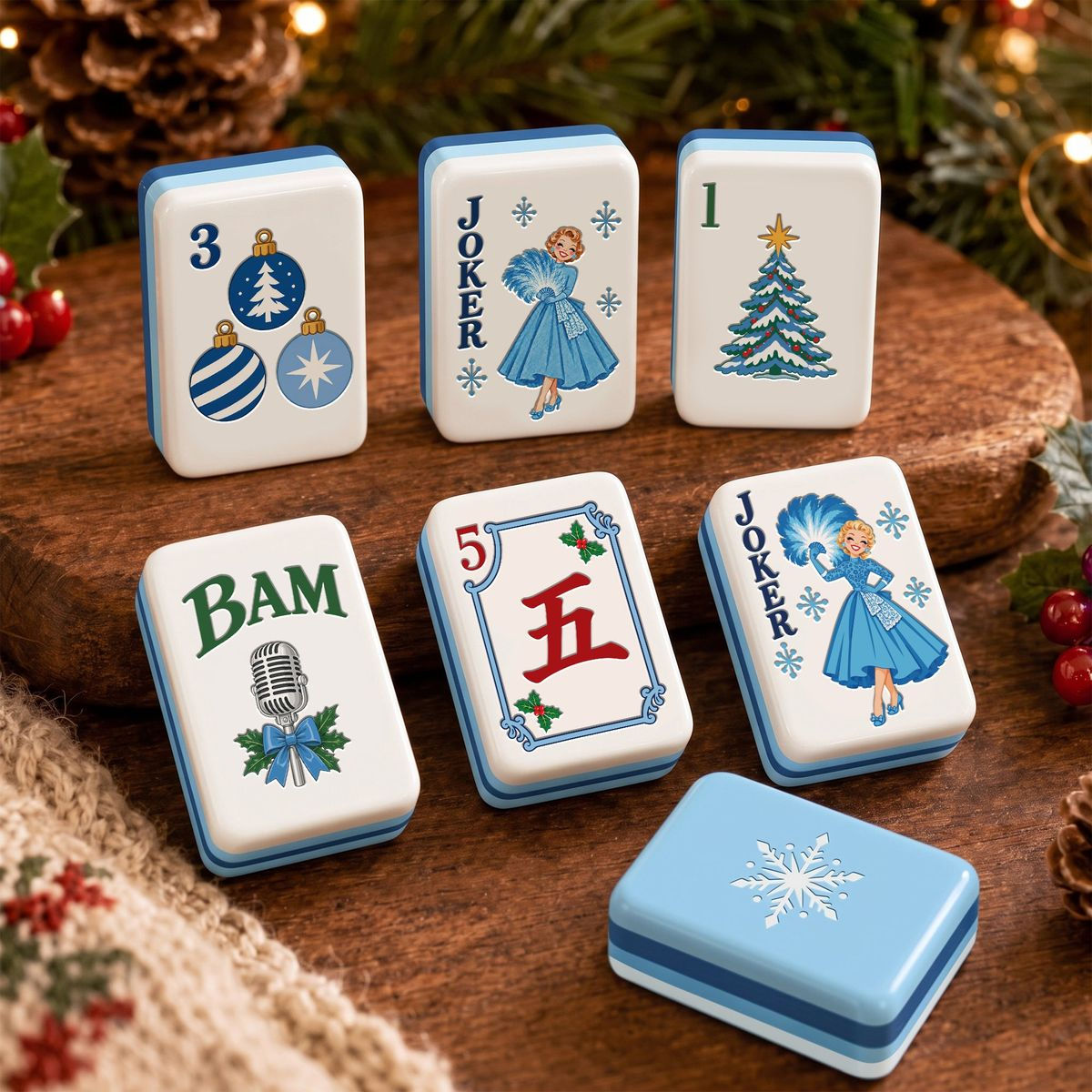
American mahjong competition uses exactly 152 tiles (Bams, Craks, Dots 1–9 in four copies each, 16 winds, 12 dragons, 8 flowers, 8 jokers) and one current-year National Mah Jongg League card. A legal winning hand must match a pattern on that card exactly—no substitutions. You can only expose pungs (three identical), kongs (four identical), quints (five identical), or sextets (six identical tiles); no sequences allowed. Jokers may never be a single tile or pair. Games last roughly one hour per round; a session typically runs 4–6 rounds. Penalties include declaring dead hand, replaying, or losing points for rule violations. The Charleston (tile-passing before play) is mandatory. We host weekly games using our best-selling mahjong sets to ensure every table plays by the official standard.
How does American mahjong competition differ from casual play?
Casual games often bend the hand-matching rule or ignore penalty structure—competition doesn't. Every hand must match the current year's League card exactly: no wild cards, no invented patterns. Exposed tiles, joker placement, and dead-hand calls are documented and enforced the same way at every table. Tournament rules also specify how long you have to make a call (usually three seconds) and what happens if you disclaim without drawing a tile. Casual play gives you room; sanctioned play doesn't.

What tiles must be in a legal American mahjong set?
A regulation set contains 152 playing tiles: 36 Bams (bird on the 1), 36 Craks, 36 Dots, 16 winds (four each of North, East, West, South), 12 dragons (four Red, four Green, four White), 8 flowers, and 8 jokers—never blanks during play. Sets sold as 160 tiles include spares beyond those 152; only the standard 152 are shuffled and dealt. White dragons are the zero; Red goes with Craks, Green with Bams, White with Dots. If any suit, wind, or dragon count is wrong, call it before the first draw or forfeit your claim.
What exposures are legal in competition?
You may expose pungs (three identical tiles), kongs (four identical), quints (five), or sextets (six)—never a pair, single, or any sequence like 1-2-3. A joker can only replace a tile within an exposed set, not stand alone or as one of a pair. If you claim a tile by calling "pung" but the tiles don't match exactly, your hand is dead. Exposures must stay on the table in front of your position until winning; removing or rearranging them mid-hand is a penalty. Each exposure must be clear and unmixed: all three Bams in a pung, not two Bams and a joker pretending.
Exposure Type | How Many Tiles | Can Include Joker? | Legal in Competition? |
Pung | 3 identical | Yes (1 joker max) | Yes |
Kong | 4 identical | Yes (1 joker max) | Yes |
Quint | 5 identical | Yes (up to 2) | Yes |
Sextet | 6 identical | Yes (up to 3) | Yes |
Pair | 2 identical | No | Never (only in final hand) |
Sequence (1-2-3) | 3 in order | No | Never |
Mixed (2 Bam + 1 joker) | Any | Partial match | Never |
How is the winning hand validated?
When you declare mahjong, you lay down all tiles (exposed sets and concealed hand, plus the drawn tile). A scorekeeper or opponent checks that: (1) the hand matches a printed pattern on the current League card, (2) no tile appears more than four times, (3) exposed sets were legal at claim time, (4) jokers are placed correctly (never as single or pair), and (5) you drew the exact final tile needed. If any point fails, your hand is dead—you're out of that round and may lose points. In high-level tournaments, a third party verifies the card pattern before paying out. Always photograph or note the hand before tiles are shuffled, especially if scoring is disputed.
What penalties apply to rule violations?
Calling a tile you don't own or exposing an illegal set results in a dead hand. Drawing out of turn or passing wrong during the Charleston costs you one turn. Declaring mahjong on an unmatched pattern is a dead hand; some games deduct additional points. Joker misplacement (as single or pair) voids the hand. If you reach for a tile and change your mind, in strict play you may not take another; pick intentionally. Claiming too slowly—after the next player draws—forfeits your call. Most clubs use a demerit or point-loss system; repeat violations can get you excluded from that week's game. We always remind new players: play slowly, call clearly, and ask before the game starts which penalties your group enforces.
🀄 Shop best-selling mahjong sets →

Do all American mahjong variants use the same competition rules?
American mahjong is standardized by the National Mah Jongg League; any sanctioned game uses the same 152-tile count, card, and exposure rules. Casual American games may skip the Charleston or relax hand-matching, but that's not "competition." Chinese, Hong Kong, Riichi, and Taiwanese mahjong all have different tile counts, sequences, scoring, and card systems—they are not interchangeable. If you're playing for entry fees or ranking points, verify which variant and which year's League card apply before buying a set or sitting down. Our acrylic sets are built for standard American play with the League card in mind.
What common mistakes cost beginners games in competition?
Joker misuse: Placing a joker as a single tile or part of a pair instead of inside an exposed set. Once exposed, jokers stay visible—you can't hide them in your concealed hand.
Slow claims: Hesitating more than a few seconds before calling lets the next player draw; your moment passes. Practice calling quickly.
Wrong tile count: Starting with 13 or 15 instead of 14, or ending with the wrong number when you draw. Count at the start and after every claim.
Ignoring the card: Memorizing old patterns instead of checking the current year's League card. Patterns change every spring.
Unclear exposures: Laying tiles so loosely that you or others can't see exactly which tiles form which set. Neat, distinct rows prevent disputes.
Forgetting the Charleston: Skipping or doing it wrong costs you the legitimacy of your starting hand; always exchange with the three players before drawing from the wall.
New players we coach usually slip on joker placement or card-reading; spend 10 minutes before your first competition game drilling exposures and checking the card layout. How to read the mahjong card walks through it step by step.
Where do beginners find sanctioned competition games?
The National Mah Jongg League publishes a directory of affiliated clubs on their website; search by state or city. Community centers, libraries, synagogues, country clubs, and senior centers often host weekly or monthly games, usually posted on meetup boards or their activity calendars. Some clubs run tournaments with entry fees and prizes; others are free for members. Call ahead to confirm they use the current year's League card and which variant they play. Most beginners start in a casual club game before entering a tournament. Bring mahjong mats and a travel bag if you're attending a public venue—it keeps tiles organized and protected.
🎁 See our most-loved mahjong sets & accessories →
How do you avoid a dead hand before it happens?
Read the card before you draw. Once you have 14 tiles, identify three or more plausible patterns on the current League card; mark them mentally. As you draw and discard, track which patterns remain possible. Never claim a tile unless you can see it completing a pattern on the card—not in your head, but printed on the card you're holding. If you're unsure, ask the scorekeeper quietly before declaring. After you call a tile, expose any legal sets immediately and clearly; don't wait and rearrange later. If you notice an error (wrong count, misplaced joker) before you declare, fix it. Once you say "mahjong," your hand is locked in—no corrections. Some clubs let you take back a claim if you haven't exposed yet; ask your group's rule before the game.
What to check before you buy a set for competition
Tile count: Confirm the set contains exactly 152 playing tiles (plus spares). Acrylic sets from Mahstead's best-selling collection ship at this standard.
Joker clarity: Make sure jokers are clearly marked and visually distinct. You'll place them often; fuzzy jokers create disputes.
Tile size and weight: Competition sets should have tiles thick and heavy enough to feel solid when you draw and place them. Lightweight tiles shift on mahjong racks or mats.
Card included: Some sets don't include a League card. Always buy or obtain the current year's card separately if needed.
Bag or case: If you're traveling to club games, a padded travel bag protects your set and keeps tiles from spilling.
✨ Find your Mahstead set — free US shipping →

FAQ
Can I use a different mahjong card for competition?
No. All sanctioned American mahjong competition uses the National Mah Jongg League's card issued that spring. Using an old card or a different publisher's card voids your hand.
What happens if I draw out of turn?
Your hand is typically penalized by losing one turn or one point, depending on your club's rules. Some clubs call it a dead hand if it's a severe breach. Always clarify your group's rules before the game.
Can I substitute tiles in an exposed set?
No. Once exposed, a set is locked. Tiles can't be moved, added, or removed—not even to "fix" a mistake. That's why slow, intentional exposures matter.
Is joker placement visible to other players?
Yes. Jokers in exposed sets must be clearly visible on the table. Jokers in your concealed hand stay hidden, but you can't use them once you declare mahjong.
What if someone calls "mahjong" but the hand doesn't match the card?
That hand is dead. The player is out of that round. In some clubs, they also lose points as a penalty. Always verify before paying out.
Do I have to use the Charleston every hand?
Yes, in competition American mahjong. The Charleston is mandatory before the first draw of each hand. Skipping or doing it incorrectly can lead to a forfeit or penalty.
How long do I have to respond to a called tile?
Typically three seconds before the next player draws. Exact timing varies by club; ask before you sit. If you want a tile, call immediately.
Can I change my discard after I've placed it face-up?
In most rules, no. Once you place and release a tile, it's played. Some casual games allow one take-back per round, but check first.


View More
View More
View More
