
Mahjong Cognitive Benefits for Seniors: Brain Health Through Play
Last updated: Nov 23, 2026
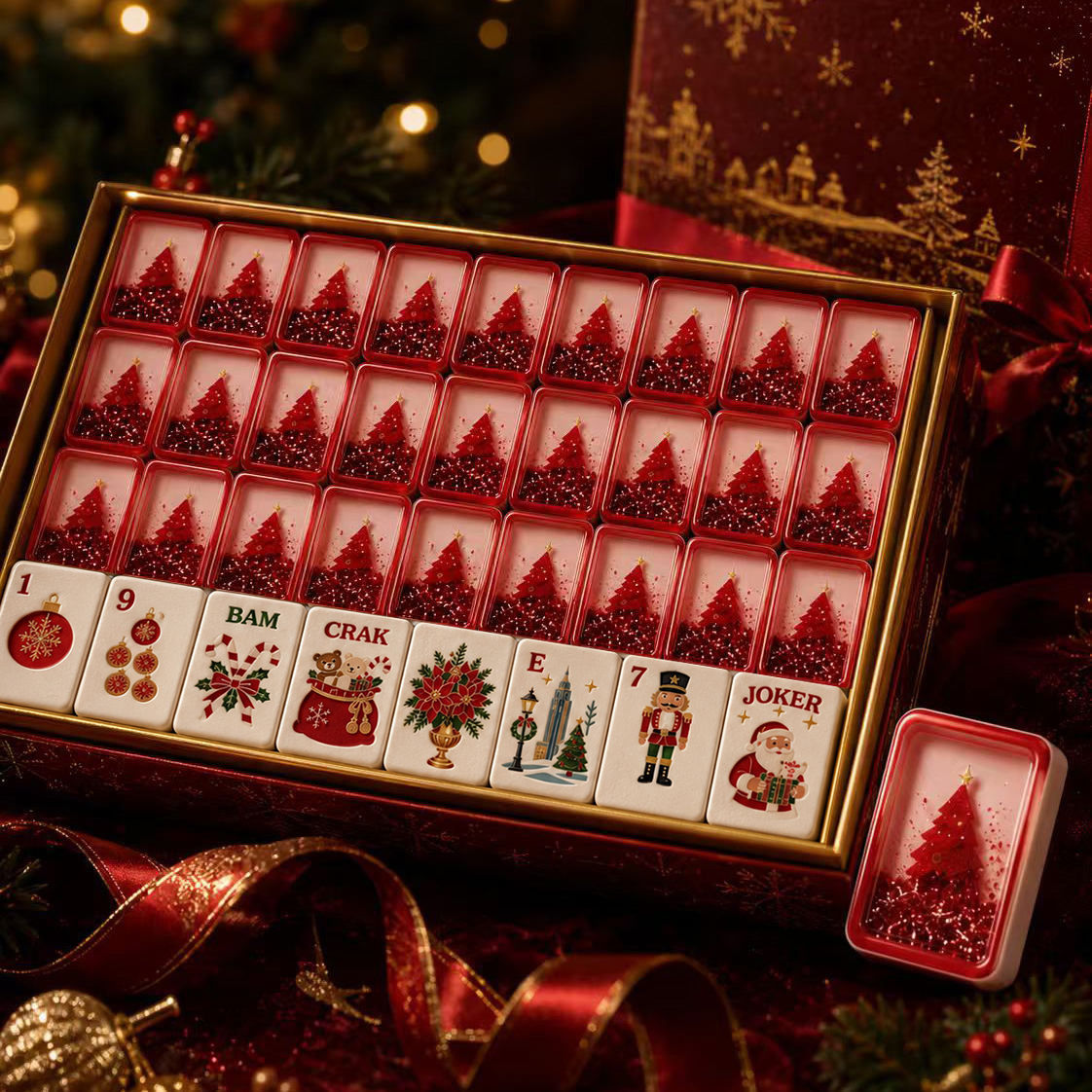
Mahjong offers measurable cognitive benefits for seniors: the game demands simultaneous pattern matching, memory recall, and strategic decision-making within a social context. Research into tile-matching games indicates that regular play correlates with improved short-term memory, faster processing speed, and better attention span in older adults. A typical game lasts 45–90 minutes and involves four players managing 152 tiles across multiple rounds, requiring constant calculation of probabilities and hand possibilities. American mahjong, the most accessible variant for English-speaking seniors, uses the current year's National Mah Jongg League card to standardize legal hands—no prior knowledge needed. The social component—sitting face-to-face, communicating, laughing—addresses isolation, a significant risk factor for cognitive decline. Starting costs are modest: a quality engraved American mahjong set runs a one-time investment, and most seniors find weekly games through community centers, libraries, or local clubs. 🀄 Shop best-selling mahjong sets →
Does mahjong really improve memory in seniors?
Yes—but let's be precise. Playing mahjong engages working memory (holding multiple tile combinations in mind), pattern recognition (spotting which tiles complete a hand), and recall of the current year's legal hand patterns from the National Mah Jongg League card. A senior learns quickly that remembering which tiles have been discarded dramatically improves winning odds. Over weeks of play, this repetition strengthens both episodic memory (remembering a specific game) and procedural memory (knowing how to play faster without conscious thought).
The cognitive load is deliberate: you track four players' discard piles, your own 13 tiles, the card patterns, probability of useful draws, and the social cues around the table. No single skill dominates; the game demands switching between all three. Seniors report they "have to stay sharp" to keep up, and that mental engagement often transfers to other tasks—groceries, names, dates—within weeks.

How does the social element protect brain health?
Isolation accelerates cognitive decline in older adults more reliably than passive entertainment alone. Mahjong forces real-time interaction: you announce discards, negotiate tile-passing during the Charleston (the ritual before each game begins), explain your hand, and navigate the table banter. Unlike a crossword puzzle or Sudoku app, mahjong removes loneliness and activates the social brain—the part that processes faces, tone, and group dynamics.
A weekly four-person game creates accountability. Seniors commit to a time, get to know the same players, and often develop friendships that extend beyond the table. That routine and social anchor has independent protective effects against depression and cognitive decline. We've seen players stay mentally active into their 90s partly because they don't want to miss Tuesday game night.
What's the difference between American mahjong and other versions?
American mahjong is the simplest entry point for English-speaking seniors because the hand patterns are printed on an annual card—you don't memorize abstract rules. The tiles are larger and heavier than Asian variants (easier to handle and see clearly). The game plays exactly the same every week: always four players, always 152 tiles, always using that year's card.
Chinese mahjong, Hong Kong mahjong, and Riichi (Japanese) mahjong have different tile counts, hand structures, and scoring systems. Those variants demand steeper learning curves and often assume prior cultural familiarity. For a senior new to the game, American mahjong removes barriers. If your group later explores other variants, the tile recognition and strategic thinking transfer directly.
How quickly can a senior learn to play?
Most seniors grasp the basics—recognizing suits (Bams, Craks, Dots), the four winds, dragons, and how to form a winning hand—within one teaching session of 30–45 minutes. Proficiency (understanding probabilities, managing a full hand of 13 tiles, reading the card without hesitation) develops over 4–8 weeks of weekly play.
The Charleston (the tile-trading prelude) feels awkward at first but becomes automatic after two games. Beginners make the common mistake of holding too many jokers, not realizing that jokers can only substitute for tiles in an exposed pung, kong, quint, or sextet—never as a single tile or pair. Once that clicks, everything else flows. We recommend learning alongside an experienced player who can play a few rounds with you before you join a regular group. Our mahjong for beginners guide walks through the entire setup and first few hands step-by-step.
What equipment does a beginner senior need?
A single complete mahjong set is all that's required; it contains 152 playing tiles and extra jokers, and costs far less than most hobbies. Look for sets with large, engraved tiles (easier to read) and clear suit symbols (Bams show circles, Craks show Chinese characters, Dots show circles). Acrylic tiles are louder than bone but easier to clean and durable for 20+ years.
Optional but helpful for seniors: a mahjong mat reduces tile noise and organizes the discard area visually; racks with pushers help players hold tiles upright without hand strain; a travel bag or case lets you bring the set to friends' homes or a community center without damage. None of these are mandatory—we've hosted games on kitchen tables with bare tiles—but they eliminate common frustrations (dropped tiles, hand fatigue, lost pieces).
🎁 See our most-loved mahjong sets & accessories →

A Quick Comparison: What Senior Players Actually Choose
Setup | Who It's For | Why It Works |
Basic set only, sit at dining table | Casual weekly group, no storage concern | Low cost, portable, no fuss |
Set + mat + pushers | Regular players with hand fatigue or poor eyesight | Tiles stay organized, easier to hold tiles upright, cleaner discard piles |
Set + mat + case + dice | Serious hobbyist or gift-giver | Professional look, protects tiles, ready to travel anywhere |
Set with large engravings (Chinese characters or titles visible from 3 feet) | Seniors with vision changes or arthritis | Easier to identify suits at a glance, reduces eye strain |
What physical challenges might a senior face—and how to solve them?
Hand fatigue: Holding 13 tiles upright for 45 minutes strains arthritic hands. Solution: use mahjong racks with pushers. Racks keep tiles upright automatically; pushers (small sticks) let you select a tile without gripping.
Dropped or scattered tiles: Picking tiles off a bare table is awkward. Solution: play on a mahjong mat, which corrals tiles and reduces noise. Mats also clearly mark each player's position and discard zone.
Difficulty reading small symbols: Acrylic tiles with deep engraving are legible from across the table; printed or flat tiles fade with age. Solution: choose sets with bold, raised engraving—check product photos for clarity before buying.
Memory of the card patterns: Beginners often lose the printed card or can't find a specific hand during play. Solution: keep the card in a clear sleeve at the center of the table. Practiced players rarely need it after a few weeks.
Neck or back strain: Leaning over a low table for an hour causes discomfort. Solution: play at a table with a height of 28–30 inches (standard dining height), never on a low coffee table. If your group plays at a community center, check the furniture beforehand.
How to find a mahjong group in your area
Community centers, libraries, senior centers, and synagogues in most US towns host weekly or monthly mahjong groups. Ask staff directly or check bulletin boards. Meetup.com and Nextdoor often list game times and locations. Some country clubs have standing games. If no group exists, you and two friends can start one: one player reads the card aloud, and within a month, teaching overhead vanishes.
The best groups welcome beginners. If a group refuses to teach or criticizes mistakes harshly, find another—mahjong thrives on patience and humor. Experienced players know that a new senior learning is an investment in future games.
What to check before you buy your first set
Tile size: Hold a sample or check product dimensions (1.2 × 0.75 inches is standard; look for photos showing tiles in hand).
Weight and material: Acrylic is durable and affordable; bone or wood tiles are heavier but louder. Choose based on your hand strength and noise tolerance.
Engraving depth: Clear, raised symbols are easier to read. Avoid flat printed tiles if you have vision changes.
Joker count and condition: A 160-tile set includes the 152 playing tiles plus spares. Check that all jokers are present (easy to lose).
Case or bag: If you'll transport the set, verify the case fits and protects tiles during travel.
Where you'll play: If your regular venue has a mat already, a basic set suffices. If you're hosting, a mat and racks prevent frustration.
✨ Find your Mahstead set — free US shipping →
The real payoff: Why seniors love mahjong
After a few weeks, most seniors report sharper focus during the day, improved recall of recent events, and a stronger sense of belonging. The game becomes the anchor of the week—something they look forward to, prepare for (learning new patterns), and discuss afterward. That anticipation and engagement is itself a cognitive reserve builder.
One more reality: mahjong is fun. You're not forcing your brain through a chore; you're laughing at a bad draw, celebrating a win, and enjoying your friends' company. That joy is the real medicine.
🌟 Shop engraved mahjong sets for seniors →

FAQ
Is mahjong harder to learn than chess or bridge?
No. Mahjong relies on visual pattern matching and probability, not strategy trees. Most seniors play their first full game within 90 minutes. Chess and bridge demand memorization of abstract rules; mahjong's rules are printed on the card.
Can someone with arthritis comfortably play mahjong?
Yes, with the right setup. Racks eliminate hand-gripping fatigue. Larger tiles (standard acrylic size) are easier to handle than small ones. A padded mat reduces wrist strain when reaching for discards. Start with shorter games (30 minutes) and build tolerance.
How often should a senior play to see cognitive benefits?
Once weekly for 8–12 weeks shows measurable improvements in recall and focus. More frequent play (twice weekly) accelerates results. The consistency matters more than the volume—a reliable Tuesday game beats occasional all-day marathons.
What if no mahjong group exists near me?
Start one. Invite two friends, buy a set and card, and play monthly. Word spreads. Within a season, you'll likely have a waiting list. Community centers, libraries, and senior centers often advertise group-organized games.
Is American mahjong the best version for seniors new to the game?
Yes, for English speakers. The card removes memorization burden. Tiles are larger and easier to read than Chinese variants. Rules are standardized each year. If your area has established Chinese or Hong Kong groups, both are equally valid—but American is the gentlest entry.
Do I need to buy fancy tiles, or will a basic set work?
A basic set works perfectly. Upgrades (engraving, acrylic clarity, a mat, racks) matter only if you have vision issues, hand pain, or want to reduce noise. Never let equipment cost stop you from learning.


View More
View More
View More
