
Matching Dragons in Mahjong: Examples & Rules
Last updated: Nov 23, 2026
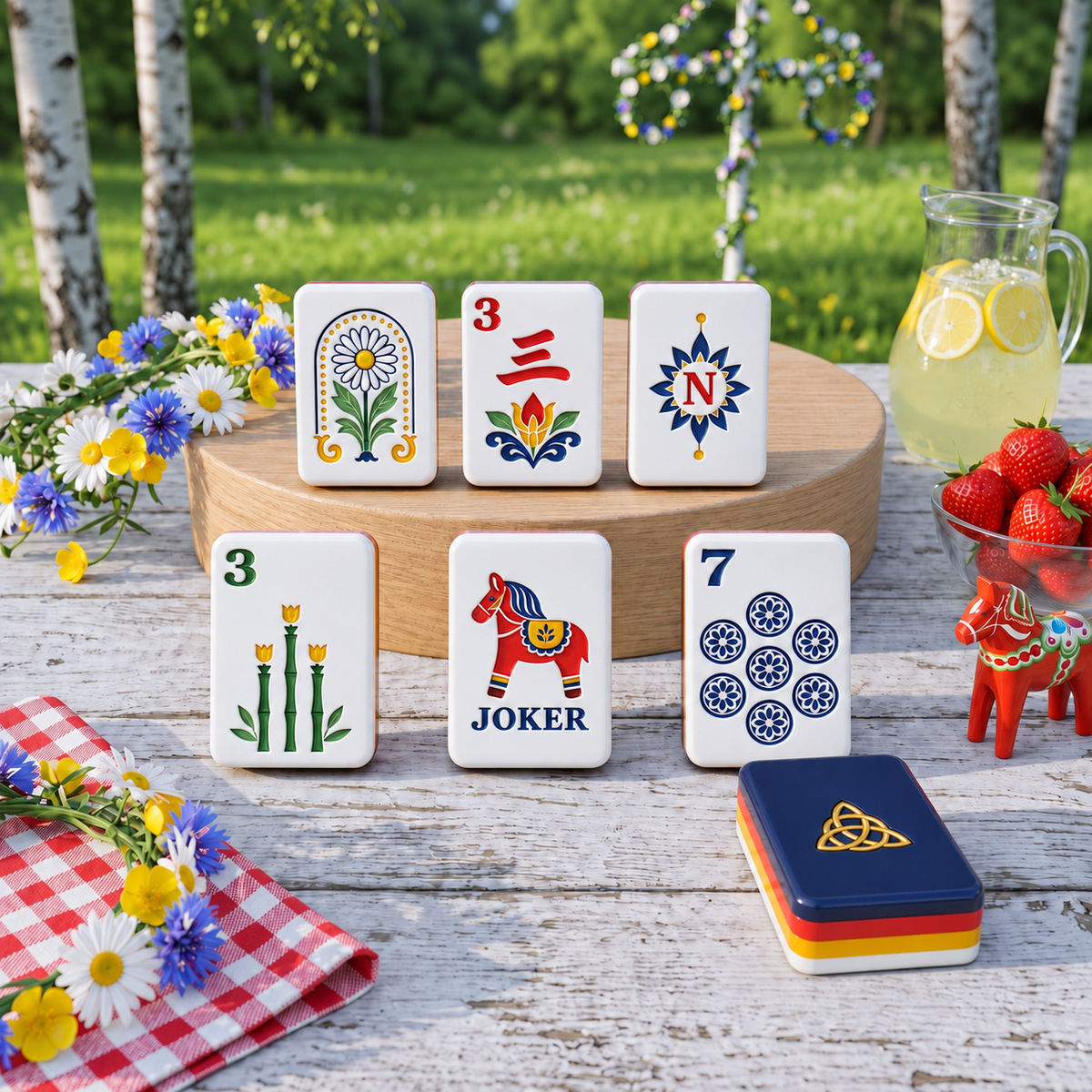
In American mahjong, dragons are the three bonus tiles—Red, Green, and White/Soap—each tied to a suit. You spot them by their color and by their position on the card: they appear as separate rows, not as numbered sequences. Unlike winds (North, East, South, West), dragons cannot be called or exposed as pairs in American play; they must appear as pungs (three identical), kongs (four identical), or longer exposures in a valid hand from the current year's National Mah Jongg League card. Beginners often confuse dragons with winds because both are bonus tiles, but winds are directional honors while dragons are suit-linked symbols. To match a dragon correctly, find your hand pattern on the card, check whether it contains a dragon section, count the exact tiles needed, and verify no jokers sit in the pair position.
What exactly are dragons and how do they link to suits?
Dragons are three bonus tiles unique to mahjong. Red goes with Craks, Green with Bams, White (also called Soap) with Dots and serves as zero. Dragons appear on the National Mah Jongg League card in dedicated sections, never as numbered runs. Unlike numbered tiles (1–9 in each suit), dragons are symbols—you cannot break them into sequences. On the card, dragon patterns are listed separately, making them easy to spot once you know where to look.
🀄 Shop best-selling mahjong sets →

Why do beginners confuse dragons with winds?
Both dragons and winds are bonus honor tiles, triggering confusion. Winds (North, East, South, West) are directional and never tied to suits; dragons are symbol-based and always paired to one suit. On the card, winds appear in their own sections, and so do dragons—but their rows don't overlap. Winds can be used as a pair in a hand; dragons cannot, which is the biggest rule difference. If you read a hand pattern that shows a pair, and it's a dragon, that hand is invalid in American mahjong. Memorizing this one rule stops most mistakes.
How do I find dragon patterns on the National Mah Jongg League card?
Open the current year's card and scan each row. Dragon sections are clearly marked (usually by suit icon or the dragon symbol itself). Each section lists how many of that dragon you need: three (a pung), four (a kong), five (a quint), or six (a sextet). Once you locate a pattern with dragons, count down the columns: the first column shows the winning pair (never a dragon), and the next columns show the tiles you need to expose or hold in hand. Dragon patterns often sit at the bottom half of the card, grouped by suit and number of tiles. The pattern number helps you cross-reference: write it down before you call a hand.
What's a real example of a valid dragon hand?
Let's say the card shows: Pair of 1 Dots | 5-Red-Red | 5-Red-Red. This means: one pair of 1 Dots (your winning tile), then two separate pungs of Red dragons with 5 Craks sandwiched between them (e.g., 5 Crak–Red–Red, then 5 Crak–Red–Red). You'd need six tiles total: two 1 Dots, four Red dragons, and two 5 Craks. You cannot substitute a joker into the pair (1 Dots must stay all natural). If the pattern calls for "Red-Red" only (no number attached), it means only two Red dragons—not a pung—which is unusual in American mahjong and typically means the pattern is invalid as written. Always double-check the card before committing.
What mistakes kill a dragon call and how do I avoid them?
The three most common fails: (1) using a joker in the pair—jokers never sit in the pair position, period; (2) mixing dragon colors—Red, Green, White are not interchangeable; (3) confusing dragon counts—three Reds is a pung, but a pattern that says "Red-Red-Red-Red" needs a kong (four), not three plus a joker. Before you call, point to each tile on the card, whisper its suit and number (or dragon name), then physically lay down your hand without calling. Wait three seconds. If you spot a mistake, take it back and reshuffle. If you call and the hand is wrong, you're typically out that round. Some groups allow a short verification window—ask your players beforehand. The simplest safeguard: never call until your hand is laid flat and you've read every tile aloud.
🎁 See our most-loved mahjong sets & accessories →

Comparison: Dragon vs. Wind vs. Numbered Tile Behavior in American Mahjong
Element | Dragon | Wind | Numbered Tile (1–9) |
Suit Link | Tied to one suit (Red→Crak, Green→Bam, White→Dot) | No suit link; honor only | Belongs to Bam, Crak, or Dot suit |
Can Be a Pair? | No; never in pair position | Yes; can be winning pair | Yes; can be winning pair |
Exposure Rules | Pung (3), kong (4), quint (5), sextet (6) only | Pung, kong, quint, sextet; or pair | Pung, kong, quint, sextet; or pair; or chow (not in American) |
Joker Substitution | Yes, in non-pair tiles | Yes, in non-pair tiles | Yes, in non-pair tiles |
Found on Card | Dedicated dragon sections per suit | Wind sections grouped separately | Numbered tile grids (rows 1–9) |
Common Error | Confusing color; using in pair position | Mistaking for a dragon | Trying to make a sequence (American: no chows) |
What to check before you buy a mahjong set for dragon-matching clarity
Look for sets with clear color contrast: Red dragons (usually bright red or crimson), Green dragons (forest or jade green), and White dragons (ivory or bone with a black frame or characters). On close inspection, each dragon tile bears a Chinese character or symbol identifying it. Avoid sets with faded or muddy colors—after a few rounds under lamp light, you need instant recognition. Check the tile size: standard American mahjong tiles are 1¼ inches, large enough to read but small enough to fit a standard rack. Acrylic tiles typically resist moisture and hold color longer than bamboo or bone. Our best-selling collection includes sets engineered for game-day durability and color clarity. Pair your set with a quality mat or rack so tiles don't slip during shuffles—misaligned dragons are invisible dragons.
✨ Find your Mahstead set — free US shipping →
A step-by-step checklist for matching dragons in your hand
Draw your hand and sort by suit: Bams left, Craks center, Dots right; honors (winds, dragons, flowers) far right.
Spot all dragons: Point to each Red, Green, or White tile; say its name aloud; group by color.
Find your target pattern on the card: Use the pattern number your player called, or scan the dragon sections until the pattern matches.
Count each segment: Verify pair (always numbered, never dragon), then each pung, kong, or longer set. Do numbers and dragon counts match your tiles?
Check joker placement: Any joker in your hand? It can only replace a numbered or wind tile, never a pair or a dragon in a pair position.
Lay flat and read aloud: "1 Dot, 1 Dot [pair], 5 Crak, Red, Red, 5 Crak, Red, Red [two pungs of Red with 5 Craks]," etc.
Wait three seconds: Scan for mismatches. If all clear, call. If wrong, reshuffle quietly and draw again.
Why does suit linkage matter for dragons?
In American mahjong, Red ties to Craks, Green to Bams, White to Dots—this matters because it helps you remember which tiles belong together on the card. When the card shows a dragon hand, the suit context tells you which numbered tiles surround it. Red hands often mix Craks with Red dragons; Green hands pair Bams with Green dragons. Understanding this link trains your eye to scan faster and reduces false calls. It's also why hand scoring reflects suit combinations: a hand with Craks and Red dragons is valued as a unit, not as separate elements. Once you internalize the three links, reading the card becomes automatic.
How do jokers interact with dragons in a valid hand?
Jokers can stand in for any tile except the pair and except inside a pair position. If a hand shows "Pair of 1 Dots | Red-Red-Red | 2 Crak-2 Crak-2 Crak," you can use a joker to replace one 2 Crak (making it a pung with two natural 2 Craks and one joker), but you cannot use a joker to replace the pair of 1 Dots, and you cannot use a joker to replace any Red dragon in that pung. Jokers give you flexibility in the three-to-six-tile sets, but they lock you out of the pair. If you don't have two natural tiles of the same kind for your pair, you cannot joker your way to a valid hand—you must reshuffle and draw again. This rule prevents fraud and keeps the game fair.
FAQ
Can a dragon ever be the winning pair in American mahjong?
No. Dragons cannot occupy the pair position. A winning pair must always be two identical numbered tiles (like two 1 Dots) or two identical winds—never dragons. If a pattern shows a dragon symbol in the pair column, that pattern is invalid or misread.
What's the difference between a Red dragon and a 1 Crak?
A Red dragon is a bonus symbol tied to Craks; a 1 Crak is a numbered tile (often showing a bird). They look completely different on the tile. Red dragons have Chinese characters and a red color; 1 Craks show a bird or lines. They are never interchangeable, and the card distinguishes them clearly.
If I hold Red-Red-Red-Red (four Red dragons), how many are exposed?
All four—a kong. In American mahjong, once you have four identical tiles (numbered or bonus), you expose the entire kong and replace one with a tile from the wall. You cannot hide any of them; kongs are always called and revealed.
Can I use a joker to fill in one missing Red dragon if I have two natural ones?
Yes. If you need three Red dragons (a pung) and hold two natural Red dragons plus one joker, the joker stands in for the third Red. This is allowed anywhere except the pair position. Once you call, you flip the joker face-up so everyone sees the substitution.
How do I tell Green and Red dragons apart if I'm colorblind or playing under poor light?
Ask your players if you can handle the tile before the game starts; most groups allow quick inspection. Tiles also carry characters: Green has its own symbol, Red has its own. If your set lacks clear character marks, consider an engraved mahjong set where each tile's identity is laser-etched and readable even with a magnifier.
Do dragon patterns appear on every year's National Mah Jongg League card?
Yes. Dragon patterns appear on the card every year, though the exact hands and positions change seasonally. You always consult the current year's card to verify a hand is legal—using a prior year's card invalidates your call.


View More
View More
View More
