
Mahjong Clubs in Miami: Where to Play & What to Join
Last updated: Nov 23, 2026
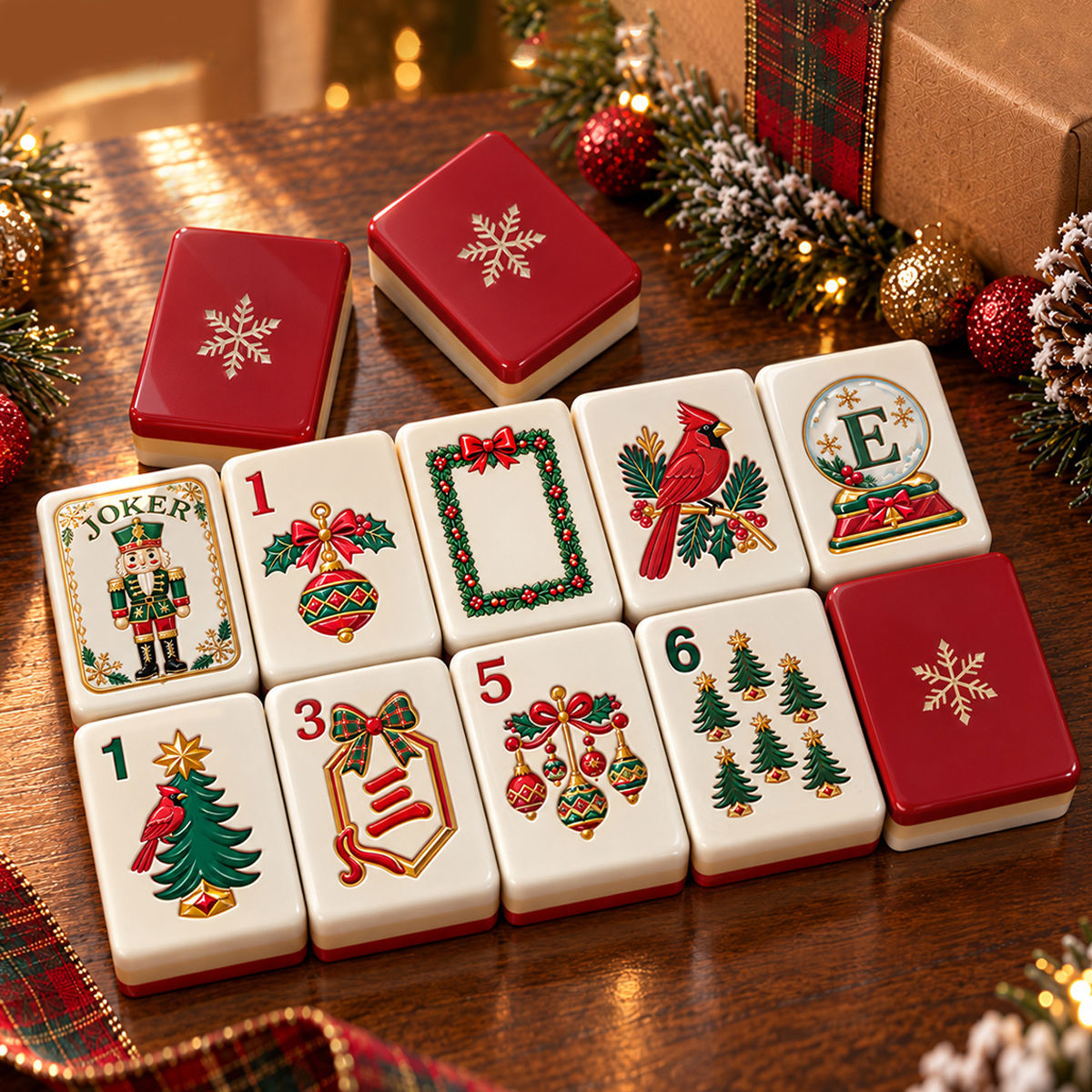
Miami's mahjong scene centers on community centers (especially in Coral Gables, Coconut Grove, and Aventura), Jewish synagogues and community centers across the county, country clubs with active game groups, and informal meetups posted on community boards and social media. Most clubs play American mahjong using the current National Mah Jongg League card (refreshed each spring) and host games on set weekday afternoons or evenings; some have seasonal tournaments. To join, call ahead to confirm the game time and bring cash for the buy-in (usually modest). You'll need how to play American mahjong basics: the Charleston (tile pass), how jokers work, and how to read the hand card. Many clubs welcome beginners but expect you to know the fundamentals. Starting at a club is easier if you own a travel-ready 160-tile set from our best-selling collection and bring a pen for keeping score.
Where Do Miami Players Gather?
Community centers and recreation departments across Miami-Dade County often host open mahjong groups. Check your local city recreation website—Coral Gables Parks & Recreation, Aventura Parks & Recreation, and Coconut Grove Community Center are common hosts. Call before attending; some groups require membership or a small drop-in fee. Ask specifically for American mahjong (the 152-tile variant with the National Mah Jongg League card), not Chinese mahjong, since rules differ significantly.
Jewish community centers and synagogues throughout Miami-Dade (Aventura, Coral Gables, Palmetto, and Miami Beach areas) frequently offer or host mahjong groups, often with experienced players who teach newcomers. Arrive early to introduce yourself—most groups are welcoming and will explain house rules before the first hand. Some communities publish seasonal schedules; others run informal drop-in games.
Country clubs and private clubs in the Miami area sometimes maintain active mahjong groups. Membership or guest privileges are required, but if you know a member, they can often sponsor your attendance. These tend to be more competitive and expectation-oriented, so ask about the group's skill level and betting stakes before your first visit.

What's the Typical Game Format?
American mahjong games in Miami follow the National Mah Jongg League ruleset. A standard game seats four players, takes 45 minutes to two hours depending on pace, and uses a 152-tile set plus 8 jokers. Each hand begins with a Charleston—a three-stage tile-passing ritual—then players draw and discard until someone forms a winning combination from the current year's hand card. Scoring is calculated by hand type (pairs, chows in non-American variants, pungs, kongs, quints, sextets, and joker substitutions), and the winner is typically paid by the other three players based on the hand's point value. House rules about betting stakes, kong interruptions, and dead hands vary by club; always ask before you play.
Most Miami clubs use table mats and tile racks with pushers to keep the game organized—they reduce fumbling and speed up play. A quality mat shows the discard layout clearly and protects tiles from damage. New players often feel rushed; understanding the Charleston and joker rules beforehand cuts anxiety in half.
How to Join: A Practical Checklist
Step | Action | Why It Matters |
Research | Identify 3–5 venues (community centers, temples, clubs) and call to confirm game day/time | Saves wasted trips; games vary by day |
Ask about rules | Request house rules on betting, kong penalties, and card disputes | Prevents misunderstandings mid-game |
Confirm beginner welcome | Ask if the group teaches or expects you to know the game | Manages expectations; some groups are competitive-only |
Bring cash | Prepare small bills for buy-in and potential losses | Most clubs don't accept cards; be ready |
Own a set (optional) | Bring a travel-friendly set if you want to host later | Shows commitment; clubs sometimes need backup sets |
Learn the card first | Study the current year's National Mah Jongg League hand card before you play | Massive time-saver; avoids embarrassment and delays |
Arrive 15 minutes early | Meet other players, ask questions, and let organizers know you're new | Signals respect; gives time for a quick rules chat |
What to Bring (and What Not to Bring)
Bring:
Cash for the buy-in (exact amount if possible)
A pen and small notepad to track scoring
The current year's National Mah Jongg League hand card (printed or on your phone), or ask the group to use theirs
Water or a beverage (ask if the venue allows it)
A respectful attitude and willingness to learn
Don't bring:
Alcohol (most venues prohibit it; it clouds judgment and is disrespectful to other players)
Phone distractions (put it away; mahjong demands focus)
Aggressive competitiveness if you're a beginner (new players learn fastest in a calm, patient group)
Expectations of winning money (in friendly games, the payout is modest, and losing teaches the game faster)
If you want your own set for future hosting or practice, the best-selling collection includes durable 160-tile American sets designed for regular play and travel. Many Miami players keep a set at home to practice hand patterns between club sessions.
Before You Walk In: What to Know
Understand American mahjong basics. American mahjong plays with 152 tiles (not 144 like Chinese mahjong). There are no chows (sequences like 1–2–3)—only pungs (three identical tiles), kongs (four identical), quints (five), and sextets (six). Jokers act as wild tiles and can substitute for any tile except in a single tile or a pair. Read how to play American mahjong before your first session; it answers 90% of beginner confusion.
Know the Charleston. The Charleston is the three-stage tile pass before the first hand. Each player passes three tiles right, then three left, then three across (or with variations). If you've never seen it, watch a two-minute video or ask the group to demo it slowly. The ritual looks complex but is intuitive once you see it.
Learn joker rules. Jokers substitute for missing tiles in exposed melds (pungs, kongs, quints, sextets) but never sit alone or in a pair. For instance, a pung of 5 Dots might be two 5 Dots and one joker. Misusing jokers is a common beginner mistake. Our guide to jokers clarifies the restrictions.
Study the hand card format. The National Mah Jongg League card lists all legal winning hands for the year. Each hand has a code (letters and numbers) showing the tile combination and where jokers are allowed. The card looks intimidating, but you don't memorize it—you read it during play. Ask a nearby player to show you how to use it; they will.

The Right Equipment Matters
When you start hosting games at home or want to travel with your own set, quality equipment speeds up play and prevents frustration. A 160-tile American mahjong set includes the full playing count plus spares. Paired with a mat and racks with pushers, you'll have a setup that mirrors club standards. Acrylic tiles are durable, lightweight, and easier to shuffle than bamboo—useful for frequent travel between venues.
🀄 Shop best-selling mahjong sets →
Finding Your First Game: Step-by-Step
Step 1: Search for venues. Use Google Maps or your city's Parks & Recreation website to search "mahjong" + your neighborhood. Look for community centers, senior centers, Jewish community centers, and country clubs. Many clubs don't have a strong online presence, so calling ahead is faster than searching.
Step 2: Call or visit in person. Ask: "Do you host American mahjong?" (crucial, since some host only Chinese mahjong), "When does the group meet?" and "Are drop-ins welcome?" Jot down the day, time, and any buy-in cost. Some venues ask you to register or call ahead; others take walk-ins.
Step 3: Review house rules. Before you arrive, ask: "Is there a betting minimum?" "What happens if someone calls 'kong' but no one has the tile?" "Do you allow dead hands?" (A dead hand is a flawed meld that can't win; house rules differ on penalties.) Taking notes prevents disputes and shows respect.
Step 4: Study the hand card. Download or print the current year's National Mah Jongg League card. Spend 15 minutes scrolling through it to get used to the format. You won't memorize it; you just need to recognize how it's organized (by number of pairs, by suit, by special patterns).
Step 5: Play your first hand slowly. Let the group know you're new. Most experienced players will slow down, explain calls, and answer questions. Your first hand won't be a win—and that's fine. The goal is to learn the flow: Charleston, draw, discard, watch others' discard tiles, recognize winning combinations.
Step 6: Return twice before judging. Mahjong feels chaotic on day one. Attend two more sessions before deciding if the group fits. After three games, the rhythm becomes natural.
FAQs: What Players Actually Ask
Q: Do I need to own a mahjong set to join a club? A: No. Clubs provide sets during play. Owning one matters only if you want to practice at home or host future games. Many Miami players skip this expense until they're comfortable.
Q: Can I play American mahjong if I've only played Chinese mahjong? A: You'll need to relearn the rules. American mahjong has no chows (sequences), uses the National Mah Jongg League card, and applies jokers differently. The Charleston is also unique to American play. Most clubs expect you to start fresh.
Q: How much money should I bring for my first game? A: Bring enough to play a few hands without stress—enough to cover small losses and not worry. Most friendly Miami clubs have modest stakes. Ask the organizer or a regular player what's typical before you arrive.
Q: What's the age range at Miami clubs? A: Most clubs include players from their 40s through 80s, with a mix of skill levels. Some groups skew older (60+), others are more mixed. Call ahead and ask about the typical player age if that matters to you.
Q: If I lose, do I pay immediately? A: Yes, in most American mahjong games. After the hand is scored, winners are paid by the three other players immediately, usually in cash. This is why you bring cash and not cards.
What to Check Before You Buy Your Own Set
If you decide to host or travel with your own gear:
Tile quality: Acrylic tiles are lighter than bamboo and easier to shuffle during the Charleston. They're also less likely to crack if dropped.
Joker count: Standard American mahjong uses 152 tiles plus 8 jokers. A 160-tile set includes spares for replacements.
Set size: Check that tiles are large enough to read without straining and small enough to fit in a travel bag. Test the dimensions if you plan to travel to club games.
Mat fit: If you buy a mat, confirm it fits your table and displays the discard layout clearly so all players can see tiles.
Storage: Consider a travel bag or case if you'll carry your set between venues.
🎁 See our most-loved mahjong sets & accessories →
Final Thoughts
Miami's mahjong clubs are welcoming and active. Your first game won't be perfect—you'll misread the card, call a hand wrong, or forget the Charleston order. That's normal and expected. Show up, ask questions, and play the long game (pun intended). After three sessions, you'll know whether you've found your people. Many Miami players have been in the same club for decades because the game is both challenging and social. Start by calling your local community center or Jewish center this week—they can get you into a game within days.
Ready to build your own set for home practice or hosting? Browse our best-selling mahjong sets and accessories and find a design that fits your style. Free US shipping on all orders.
✨ Find your Mahstead set — free US shipping →

FAQ
What's the difference between American mahjong and Chinese mahjong played in Miami?
American mahjong uses 152 tiles, no chows (sequences), and hands come only from the annual National Mah Jongg League card. Chinese mahjong has different tile counts, allows chows, and uses a fixed set of hands. Miami clubs offer both; always confirm which one before you join.
How often do Miami clubs meet?
Most clubs meet weekly on the same day—often Tuesday or Thursday afternoons, or weekend mornings. Some run daily drop-in games. Call ahead to confirm the schedule; it varies by venue and season.
Is mahjong illegal to play for money in Florida?
No. Casual mahjong games for modest stakes between friends are legal in Florida. Organized gambling operations or unlicensed casinos are prohibited, but club games with small buy-ins are not prosecuted. That said, play responsibly and never gamble more than you can afford to lose.
What happens if I don't know how to read the hand card?
Ask another player to teach you during the game. Experienced players expect this and are usually patient. The card uses a simple code; after one or two hands, the format clicks into place.
Can I bring a friend who's never played mahjong?
Yes, most clubs welcome newcomers. Call ahead and let them know you're bringing a beginner so they can prepare an extra seat and brief explanation. Your friend should read or watch a basic tutorial beforehand to avoid slowing the game too much.


View More
View More
View More
