
Mahjong Clubs in Little Rock: Where to Find & Start Playing
Last updated: Nov 23, 2026
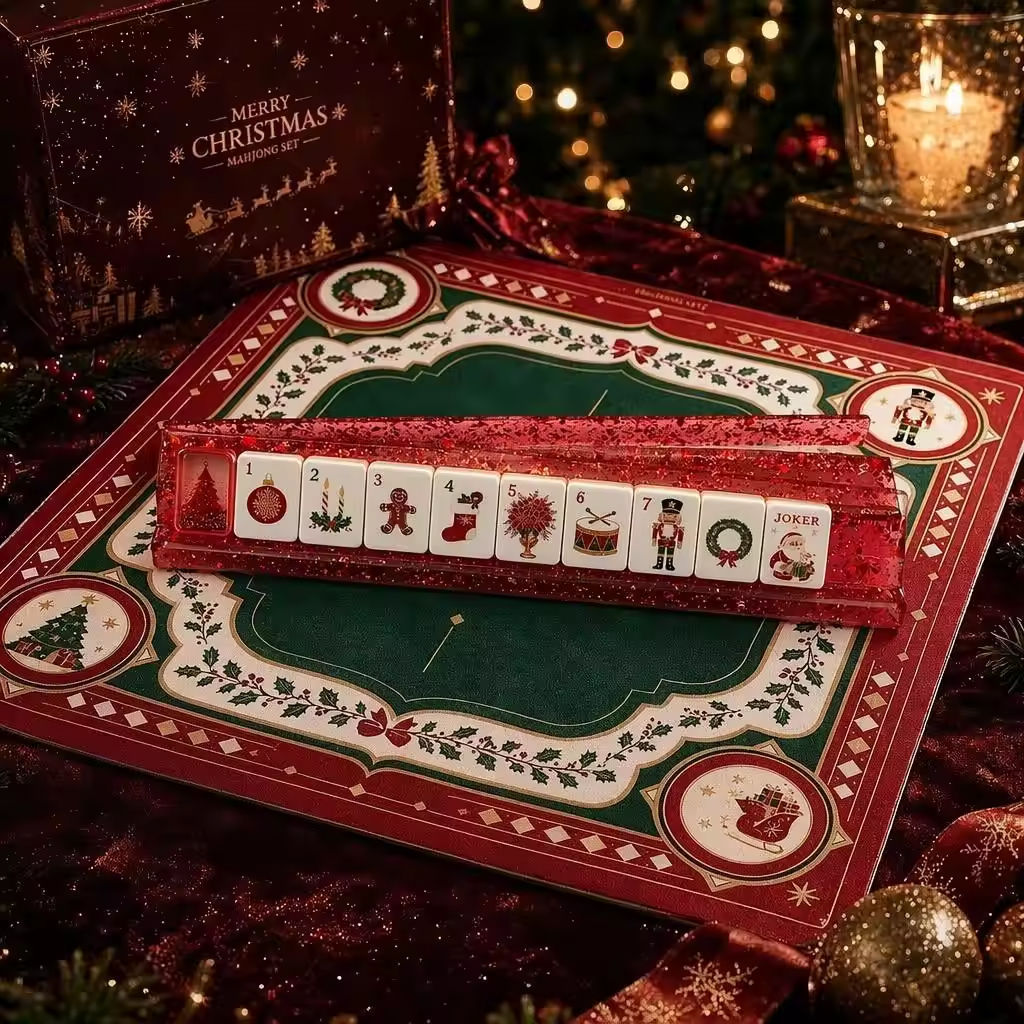
Little Rock's mahjong scene exists mostly in informal home games and small community networks rather than dedicated clubs. Your best paths: check with the Little Rock Public Library and local community recreation centers for current game groups or bulletin boards; visit synagogues or country clubs that often host card-game nights; scan Meetup and Facebook groups for "mahjong Little Rock" or "card games Arkansas"; ask at local hobby shops. Many players organize weekly home games—four players, two hours, a standard 160-tile set with rack and mat. American mahjong uses the current-year National Mah Jongg League card (issued spring 2026) and costs almost nothing to learn if you find an existing group. If no games exist nearby, hosting weekly at home with a best-selling set is cheaper and faster than waiting for a club to form.
Where do Little Rock players actually meet?
Little Rock games tend to cluster around three settings: home games among friends (the vast majority), occasional events at community centers or libraries that post schedules on their websites, and card-night circles at private clubs. Call your local library's reference desk and ask if they know of mahjong meetups or can post a notice. Community centers in central and west Little Rock sometimes host game nights; check their activity calendars online. Synagogues and country clubs are worth a phone call—many have bridge or card-game communities that include mahjong. The honest answer: if you can't find an existing group in 20 minutes of searching, you're not alone, and the fastest path is hosting.

Should I join an existing group or start my own?
Joining is best if a game exists and welcomes beginners—you learn faster, pay nothing, and meet experienced players. Starting your own costs little and gives you total control: pick three friends, schedule a weekly day, buy one set, and teach. Learn the basics first—the Charleston (tile-passing ritual), hand-reading, joker rules—so you can explain to newcomers. One host shared that their Tuesday game started as a solo learner with a new set and three curious colleagues; six months later it had a waiting list. You'll need exactly one 160-tile set (152 playing tiles, eight jokers), a mat to define the play area, and optional racks with pushers so tiles don't slide. The barrier to hosting is remarkably low.
🀄 Shop best-selling mahjong sets →
What's the difference between American mahjong and other variants players might mention?
American mahjong—the game you'll find in Little Rock communities—uses 152 tiles, no sequence melds (chows), and hands come only from the official spring 2026 League card. Chinese, Hong Kong, Riichi (Japanese), and Taiwanese variants use different tile counts (usually 144), allow sequences, and have different scoring or joker rules. If someone says "I play mahjong" in the U.S., assume American unless they specify. The League card changes every year, so March 2026 players get the 2026 card—that's the bible for what's legal. Confusion often starts when a player learns one variant abroad and returns expecting the same rules. Ask any group: "Are we playing American mahjong from the League card?" If yes, you're in the right room.

What equipment do you actually need to start, and what's just nice-to-have?
Essential:
One 160-tile mahjong set (contains 152 playing tiles and eight jokers; never add extra tiles to the game).
The current-year National Mah Jongg League card (free or small cost; check the League website or ask your group).
A flat surface: dining table, coffee table, or card table.
Highly recommended:
A mahjong mat—defines the play zone, keeps tiles from sliding, and makes setup faster.
Racks with pushers—hold tiles upright so you see only your hand; pushers help organize melds without touching them by hand.
Nice but optional:
A travel bag or case if you'll carry the set between locations.
Dice (included in most sets) for determining seating and the starting hand.
Beginners often overbuy. A mat and racks transform the experience—tiles stay put, the game flows faster, and you focus on strategy instead of fumbling. Everything else is comfort.
Item | Who Needs It | Why | Cost Basis |
160-tile set | Every player/group | Core game; 152 tiles play, 8 jokers spare | Sets start modest; see current price on the product page |
League card 2026 | Every player | Rules; changes yearly; no hand is legal without it | Free to low cost from League |
Mat | Groups of 3–4 | Tile control, setup speed, professional feel | Affordable; see collections page |
Racks with pushers | Regular players | Hide your hand, organize melds, faster play | Moderate; available as bundle or individual |
Bag or case | Traveling players | Transport without tile damage | Optional; check travel collection |
🎁 See our most-loved mahjong sets & accessories →
How do beginners avoid the biggest mistakes when joining or starting a game?
Mistake 1: Playing without the current-year card. The 2026 League card came out spring 2026. Old cards are illegal. Before your first game, confirm your group uses this year's card. If you can't find one, contact the National Mah Jongg League directly.
Mistake 2: Adding "house rules" before you know the official rules. American mahjong has one set of rules (from the League). Don't invent "wild" joker plays or custom hands. Learn the real game first—it's simpler than it sounds. Then your group can house-rule if everyone agrees (but beginners often mistake house rules for canon and teach newcomers wrong).
Mistake 3: Not understanding how jokers work. Jokers substitute for one tile only; they can never be part of a pair and can never represent a single tile by themselves. This rule saves endless arguments.
Mistake 4: Buying a set without enough jokers. A 152-tile set has eight jokers—that's the standard. Don't add jokers from other games (mismatched sizes/colors cause chaos). Mahstead 160-tile sets come with eight jokers plus spares; you never need extras for play.
Mistake 5: Assuming a mat is cosmetic. A mat eliminates accidental tile-sliding, speeds cleanup, and marks the boundary so everyone knows where the discard pile is. If you host regularly, a mat is not optional.
What should you check before you buy or join a game?
Before joining an existing group:
Confirm they play American mahjong (the League card variant).
Ask what year the League card is (should be 2026).
Find out if beginners are welcome and if anyone teaches.
Check the schedule: weekly, monthly, or ad-hoc?
Is there a cost per session? Many home games are free or potluck.
Before hosting or buying a set:
Do you have a flat table and three other willing players? (You need four for a standard game.)
Will games be weekly, casual, or seasonal?
Do you want a mat and racks from the start, or add them later?
Will you store the set permanently at your home or transport it?
✨ Find your Mahstead set — free US shipping →

FAQ
Can I play mahjong with fewer than four players?
Yes. Two and three-player variants exist but use different rules and tile setups. The League card is written for four players. Learn the adapted rules before starting a two- or three-player game, or stick to waiting for a fourth.
Is mahjong hard to learn?
Not if someone teaches you live. The basics take one evening: tile names, the Charleston (passing ritual), how to read a hand from the card, and joker rules. Most players enjoy a game within three hours; strategy deepens over weeks. Books alone confuse beginners—a group setting is faster.
What's the National Mah Jongg League card, and why does it change every year?
The League publishes the legal hand patterns for that year. Hands come only from the card; you can't invent your own. The card changes annually to keep the game fresh and force players to learn new patterns. It's issued in spring (2026 card came spring 2026). Buy or print a copy before your first game.
Do I need special tiles or a fancy set to learn, or can I use any set?
Any 160-tile American mahjong set with eight jokers works. Don't mix sets (tiles vary in size, color, or weight). A standard set with a mat and racks is the professional choice, but beginners can start with a basic set and upgrade later.
If I host a weekly game, what's the cheapest way to get started?
One 160-tile set (152 tiles + eight jokers), one mat, and the 2026 League card. Racks are helpful but optional for a first game. You host, teach, and split any snacks. The barrier is so low that many Little Rock groups started exactly this way—one enthusiastic person and three friends.
Where do I find the 2026 League card if my group doesn't have one?
The National Mah Jongg League sells cards online. Some sets include a card copy, and some online retailers print them. If your local group doesn't know where to find one, contact the League directly—their website has a store and FAQs. Without the card, you have no legal hands.


View More
View More
View More
