
Mahjong Clubs in Atlanta: Where to Play & How to Start
Last updated: Nov 23, 2026
Atlanta's mahjong scene centers on community centers (especially in Buckhead, Midtown, and around Perimeter Mall), public libraries, and private country clubs that host weekly or monthly games. Most clubs welcome newcomers and play American mahjong using the National Mah Jongg League card, updated each spring. A typical game lasts two to three hours; players bring a 160-tile set, score sheet, and familiarity with basic hand patterns. Beginner-friendly groups often meet weekday afternoons or weekend mornings. To find a club, search "mahjong" on Meetup or your city's Parks & Recreation department website, call local library branches directly (many host drop-in games), and ask at Jewish community centers and country clubs—mahjong players are usually happy to welcome newcomers. Cost varies from free (community centers) to modest table fees at private clubs. Join the pillar page on mahjong for beginners to learn rules before your first game. 🀄 Shop best-selling mahjong sets →
How do I find a mahjong club that meets near me?
Atlanta's mahjong community isn't concentrated in one neighborhood—groups meet across the city. Start by checking your city Parks & Recreation website; many departments list recurring games at community centers. Search "mahjong Atlanta" on Meetup.com, filter by distance, and read recent posts to confirm groups are still active (some listings become stale). Call the main branch of your local library system; staff can direct you to established game circles or bulletin boards where players post schedules. Jewish community centers and country clubs often host games but may not advertise widely online—a phone call works best. Once you've identified two or three prospects, visit early (arrive 15 minutes before start time) to observe the skill level and friendliness before committing.

What equipment should I bring to my first game?
You'll need a complete American mahjong set (152 playing tiles plus spares) and a current year National Mah Jongg League card—the card changes every spring and is essential for knowing which hands are legal to play. Bring a pen for scoring (pencil fades), a small notebook, and small cash if the club charges a modest table fee or asks for a stakes contribution. Many clubs loan sets if you call ahead, but bringing your own—especially a sturdy set with clear tile markings—shows respect for the game and speeds play because you won't fumble learning someone else's tile arrangement. Ask the host whether to bring snacks (some clubs pool money for refreshments) and what time to arrive. Our best-selling mahjong sets are compact enough for travel, so you can keep your game ready in the car or bag.
What's the difference between beginner and advanced Atlanta groups?
Beginner groups explicitly welcome new players, explain the Charleston (the tile-passing ritual before each hand), and allow extra time for players to study the card and call hands. Players in beginner circles may pause to discuss strategy or clarify rules. Advanced groups expect you to know how the Charleston works, move tiles quickly, and play without lengthy consultation of the card. Speed matters; a hand that takes five minutes in a beginner group should take two in an advanced circle. Don't let this intimidate you—experienced players remember their first game and will gently correct mistakes. Attend one beginner session to learn the rhythm before moving to a faster table. Most clubs have both levels, sometimes playing simultaneously in different areas of the room.
What are the unwritten rules of Atlanta mahjong culture?
American mahjong culture emphasizes friendly competition and generosity toward learners. Players expect you to announce your hand clearly (saying "mahjong" when you've completed a legal hand, not letting it sit unnoticed), track discards carefully, and take your turn promptly—slow play frustrates the whole table. Never handle another player's tiles without asking. If you win, congratulate others; if you lose, ask what hand beat you without complaint. Bring small bills or exact change for any table fee or refreshment contribution; fumbling for payment slows the game. Phones stay silent (most groups enforce a no-phone rule). Many groups observe a superstition about not offering unsolicited advice mid-hand, though post-hand discussion is welcome. Above all, show up on time, stay for the scheduled session, and thank the host.

What should I learn before attending my first game?
You don't need to memorize the entire National Mah Jongg League card, but learn the basic structure: hands are built from pungs (three identical tiles), kongs (four identical), quints (five identical), sextets (six identical), pairs, and singles—never sequences or "chows" like 1-2-3, which exist in other mahjong variants but never in American mahjong. Understand that jokers are wild and can substitute for any tile except they can never form a pair or stand alone as a single tile. Know the four winds (North, East, West, South), three dragon colors (Red, Green, White/"Soap"), and that flowers and seasons are bonus tiles drawn separately. Study the current year's card section by section—focus on one or two hand types before your first game rather than trying to absorb all patterns. Watch a YouTube tutorial showing a full game from dealing through winning (searching "American mahjong tutorial" finds clear guides). Attend the beginner's guide for a step-by-step overview. Most hosts will walk you through your first hand face-up so everyone sees the pattern—no pressure, just learning.
What I'm Looking For | Best Atlanta Meeting Type | How to Find It | What to Bring |
Absolute beginner, learn rules | Library drop-in or community center beginner circle | Call Parks & Rec or library directly | Set, card, pen |
Intermediate, steady weekly game | Meetup group or synagogue game circle | Search "mahjong" on Meetup, filter by distance | Set, card, cash for fees |
Fast competitive play | Private club or country club game | Call clubs directly; ask about membership | Set, card, good tile-reading skills |
Casual social, no pressure to win | Neighborhood group or church circle | Check nextdoor.com or community boards | Set, card, snacks optional |
Flexible schedule, occasional play | Online or rotating host game | Ask existing players for contact info | Video-call set or travel set |
🎁 See our most-loved mahjong sets & accessories →
How do I avoid common first-game mistakes?
Don't assume American mahjong plays like Chinese or Hong Kong mahjong—the tile structure and hand patterns are entirely different, so prior experience can actually confuse you. Don't try to memorize every hand on the card; instead, focus on recognizing patterns as the game progresses. Don't discard tiles carelessly; watch what other players discard and avoid throwing tiles that could help them complete a hand (this is illegal if you're the discarder—you'll be corrected). Don't call a hand before checking the card twice; false wins embarrass everyone and slow the game. Don't hesitate to ask "Can I call?" or "Is this a legal hand?"—experienced players expect and welcome questions from newcomers. Don't assume you understand a hand type after one round; patterns repeat, and you'll recognize them faster by the third or fourth time you see them. Most importantly, don't give up after a slow first game; mahjong rhythm comes from repetition, not intelligence.
✨ Find your Mahstead set — free US shipping →
What to check before you buy or borrow a set
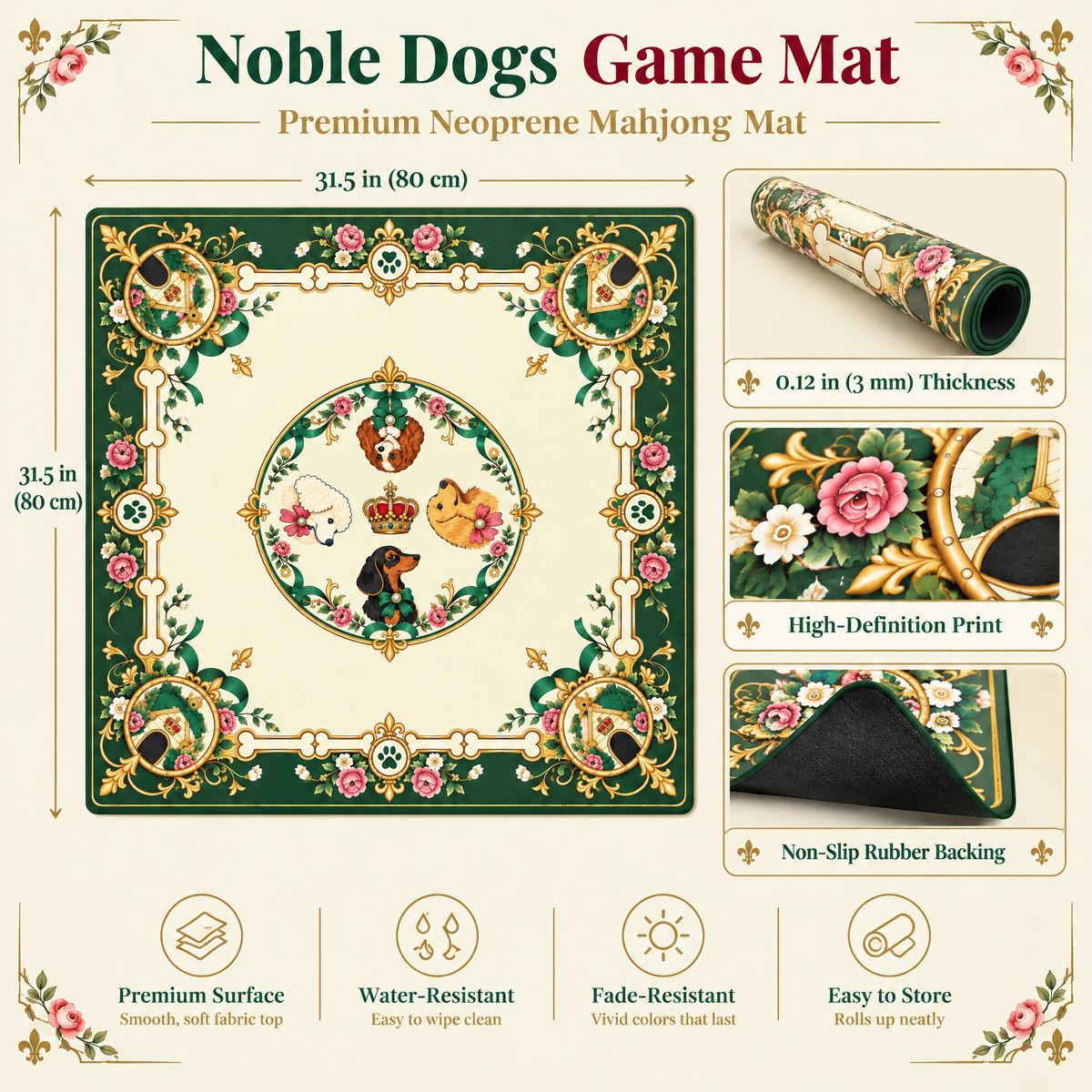
If you're borrowing a club set, confirm the tiles are legible (worn tiles slow new players down significantly) and that the set includes the current year's card. If you're buying your first set, choose one with clear large print on tiles—ease of reading matters far more than aesthetics when you're learning. Verify all 152 playing tiles are present (count one suit fully: 36 tiles per Bam/Crak/Dot, plus 16 winds, 12 dragons, 8 flowers, 8 jokers). The set should come with pushable racks so you can sort tiles without fumbling. A protective mat prevents tiles from sliding and marks the discard area clearly—essential for organized play. Test the tiles in your hands; they should feel substantial, not cheap or slippery. Engraved or custom sets make wonderful gifts for friends you'll play with regularly, but for your first set, prioritize durability and legibility over decoration.

FAQ
Do Atlanta mahjong clubs charge membership fees?
Most community center and library games are free or charge a small table fee (a few dollars per person). Private clubs and country clubs may have annual memberships. Call ahead to confirm; many groups welcome first-timers without payment on the initial visit.
What if I don't know anyone who plays mahjong in Atlanta?
Use Meetup, call your local library or Parks & Recreation, and don't hesitate to join a group of strangers—mahjong communities are inherently social and welcoming to newcomers. You'll make friends within two or three sessions.
Can I learn American mahjong online before joining a club?
Yes. Watch YouTube tutorials on American mahjong rules, study the current year's National Mah Jongg League card pattern sections, and read guides on how jokers work and how to read the card. This preparation shortens your learning curve significantly.
Should I buy an expensive set or start with a basic one?
Start with a mid-range set that has clear tile markings and durable construction. Fancy or engraved sets are wonderful for regular players or as gifts, but as a beginner, legibility and function matter far more than appearance.
What happens if I call mahjong incorrectly on my first try?
You'll be gently corrected, the hand resets, and play continues. Mistakes are normal and expected; experienced players remember their first games and are patient with errors.
How often do Atlanta mahjong groups meet?
Weekly is most common (same day and time each week), with some groups meeting twice weekly or monthly. Confirm the schedule with the host before committing; some groups take summer breaks.


View More
View More
View More
