
Mahjong Classes for Beginners in New Orleans: Where to Learn & What to Buy
Last updated: Nov 23, 2026
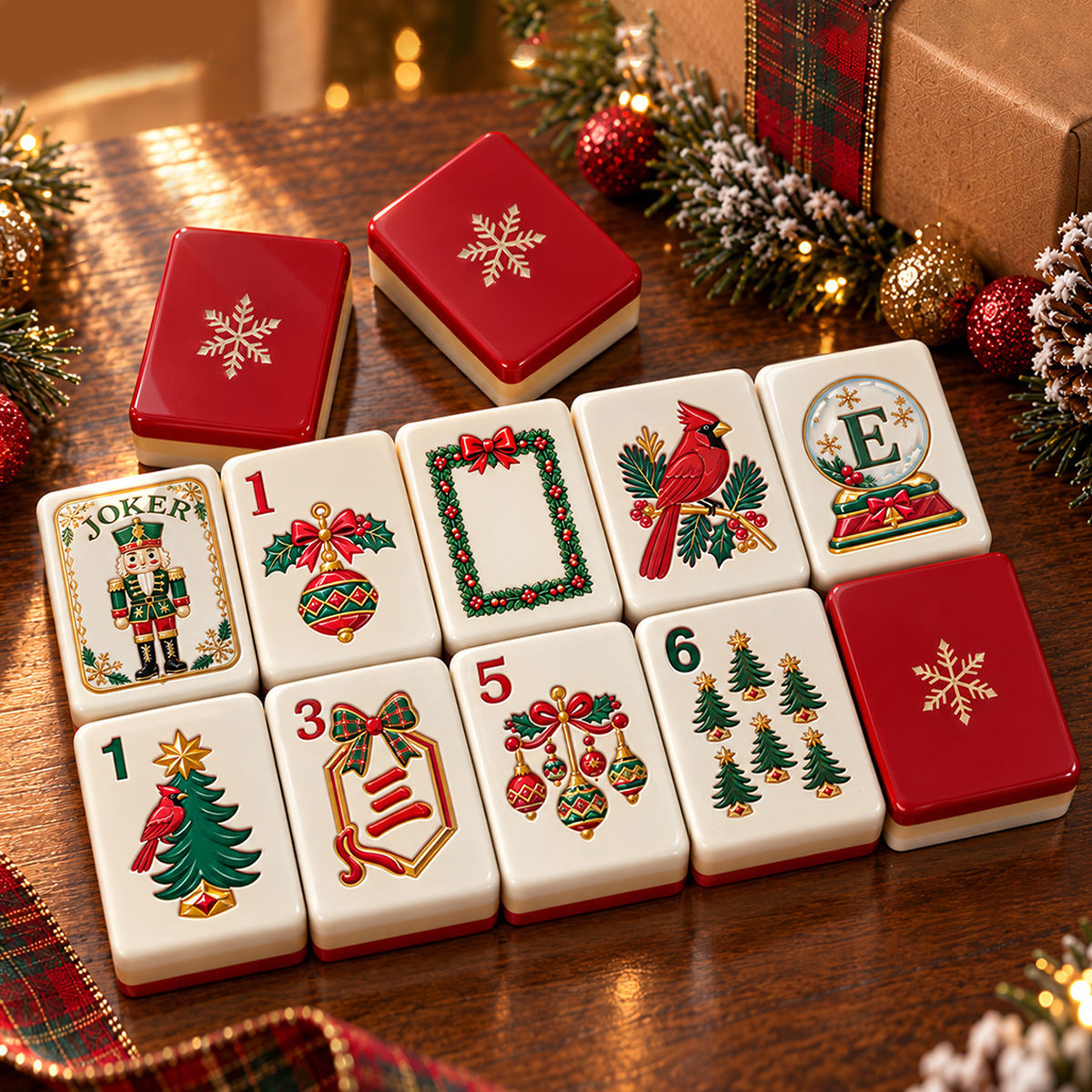
New Orleans beginner mahjong classes meet year-round in public libraries (check your branch's events calendar), community centers, and Jewish community centers; call ahead to confirm session times and whether drop-ins are welcome. Most beginner courses run 4–8 weeks and teach American mahjong rules: hand-building with the National Mah Jongg League card, the Charleston tile pass, and exposure rules for pungs, kongs, and quints. Expect to learn scoring and how jokers work in American play in the first weeks. Cost ranges from free (library) to modest fees (centers cover instructors). Once you're ready for your own set, best-selling American mahjong sets include everything you need: 152 playing tiles, 8 jokers, a card rack, and often a mat. Bring a notebook; avoid joining a table without understanding hand verification first. 🀄 Shop best-selling mahjong sets →
How do I find beginner mahjong instruction in New Orleans?
Start by calling your local public library branches—many offer free or low-cost mahjong lessons in spring and fall. Community centers in neighborhoods like Mid-City and the Lower Garden District often host beginner sessions. Jewish community centers in the area run structured courses for newcomers. Search online meetup boards and Facebook groups for "mahjong New Orleans"; active players often post class schedules. Some instructors also teach privately; ask at your library for referrals. Most beginner courses meet weekly for six to eight weeks, with flexible drop-in options available as you progress.

What's different about American mahjong versus other versions?
American mahjong uses 152 playing tiles plus 8 jokers and only hands from the current year's National Mah Jongg League card—no freestyle play. You cannot call or expose sequences (chows); only pungs (three identical tiles), kongs (four), quints (five), and sextets (six) can be exposed. Jokers cannot be used as a single tile or a pair—only within a group. Chinese and Hong Kong mahjong allow chow calls and play off older or no-card hands; Riichi mahjong adds concealed-hand rules and fast scoring. New Orleans classes almost always teach the American version because it's the dominant game in the South. Learn the full American rule set before your first lesson so you can keep up.
What should a beginner expect in week one of a mahjong class?
Your first lesson will cover tile identification: Bams (stick suits with bird on 1 Bam), Craks (number symbols), Dots (circles), Winds (N/E/W/S), Dragons (Red, Green, White), and Flowers. The instructor will teach how to count tiles, draw from the wall in rotation, and recognize the three basic hand patterns on the League card. You'll learn the Charleston—the ritual tile exchange before play begins. Most courses then walk through hand-reading and scoring basics. Bring your own notebook and expect to handle tiles during practice; nothing is tested. New students often confuse pungs (three identical tiles) with sequences; instructors drill this repeatedly. By week two, you'll read a few simple hands; by week four, you'll spot them yourself.
What tile set and accessories do I need to start playing at home?
Once you finish a beginner course, purchase an engraved or classic American mahjong set that includes 152 playing tiles, 8 jokers, a card rack (or build one from an old notecard holder), and ideally a mat. A mahjong mat makes play cleaner: tiles glide smoothly, and you won't lose pieces to carpet. If you'll play weekly, add racks with pushers to hold your hand neatly and avoid accidental discards. For travel to a friend's house or a game downtown, a bag or case keeps tiles safe and organized. Most sets ship complete and ready to use; open the box, sort tiles into suits (takes 15 minutes first time), and play. Don't buy a 144-tile set—American mahjong requires all 152 tiles plus jokers.
Item | Who needs it | Why | When to buy |
Basic 152-tile set | Every player | Play-ready out of the box | Before first home game |
Mat | Weekly home host | Prevents tile scatter, speeds play | After 2–3 games |
Racks with pushers | Serious player | Reduces misdeals, keeps hand hidden | After month 1 |
Case or bag | Traveling player | Protection in car or purse | If you play away from home |
Extra jokers/blanks | Replacement only | Tile wear or loss | Never needed unless tile breaks |
✨ Find your Mahstead set — free US shipping →

How do I verify a hand and avoid common beginner mistakes?
After you draw, you must match your 14 tiles to a hand pattern on the current year's National Mah Jongg League card. Beginners often miss these errors: (1) assuming pungs can be different numbers (they can't—1-2-3 is not a pung); (2) forgetting that jokers cannot be a single tile or pair; (3) calling "mahjong" before checking the card (you lose the hand); (4) using the White Dragon as a blank when it has a suit (White goes with Dots). Read the card carefully: each row shows a valid hand. Mark the card with a dry-erase marker as you learn hand groups. Ask your instructor to review five hands with you before play; most will stay late to help. Once you've played twenty hands, verification becomes automatic.
What should I check before buying a mahjong set?
Before you purchase, confirm the set includes exactly 152 playing tiles (not 144) plus 8 jokers, a card rack, and ideally a mat or mat-compatible backing. Check that tiles are large enough for your hands (standard American sets use tiles about 1¼ inches, readable at table distance). If you have arthritis or low vision, ask about larger-tile options. Verify that the set comes with a current or recent year's National Mah Jongg League card—the rules and valid hands change every spring. Look for sets with acrylic or plastic tiles (they last for years); bamboo or bone require careful storage. Read the shipping policy: Mahstead offers free shipping across the US, so factor that into cost. Avoid buying "antique" or "vintage" sets from unknown sellers unless you're sure of the tile count and card year.
🎁 See our most-loved mahjong sets & accessories →
What to check before you buy
Tile count: 152 playing tiles + 8 jokers is the only valid American setup.
Card year: Confirm the set includes the current or recent year's League card.
Tile size: Standard ~1¼ inch tiles suit most hands; verify if you need large print.
Shipping: Confirm free US delivery and estimated arrival (matters if you need the set by a game date).
Mat fit: If you own a table, check mat dimensions before ordering.
Spare tiles: Sets include a few extra tiles for wear or loss; you never add them to play.

FAQ
Can I learn mahjong online instead of a class?
Online courses work for memorizing rules, but beginners need hands-on practice: tile handling, exposure rhythm, and card-reading speed are skills only in-person play teaches. Take a four-week class first, then use online videos to review scoring and strategy.
Do I need to buy a set before my first class?
No. Most beginner classes provide shared sets. Buy your own set after your first or second class, once you know you enjoy the game and understand tile layout.
How much does a beginner mahjong set cost?
See current price on the product page; costs vary by design and materials. All Mahstead sets ship with free US delivery.
What if my tiles get damaged or lost?
American sets ship with spare jokers and tiles; replacements rarely needed. If a tile breaks, contact the seller. Buying a full new set for one lost tile is not necessary; ask your group if anyone has spares.
Is American mahjong harder than card games like bridge?
No. Mahjong has fewer rules than bridge and no bidding. Most players master the basics in four to six weeks and enjoy casual games for decades. Scoring takes longer to memorize but is not required to play and learn.
Can I play mahjong with friends who learned Chinese or Hong Kong rules?
Not without agreement. American, Chinese, and Hong Kong mahjong have different hand patterns, exposure rules, and scoring. Agree on the variant before sitting down; mixed rules create confusion and disputes.


View More
View More
View More
