
Mahjong Bamboo Suit Meaning: Bams Explained
Last updated: Nov 23, 2026
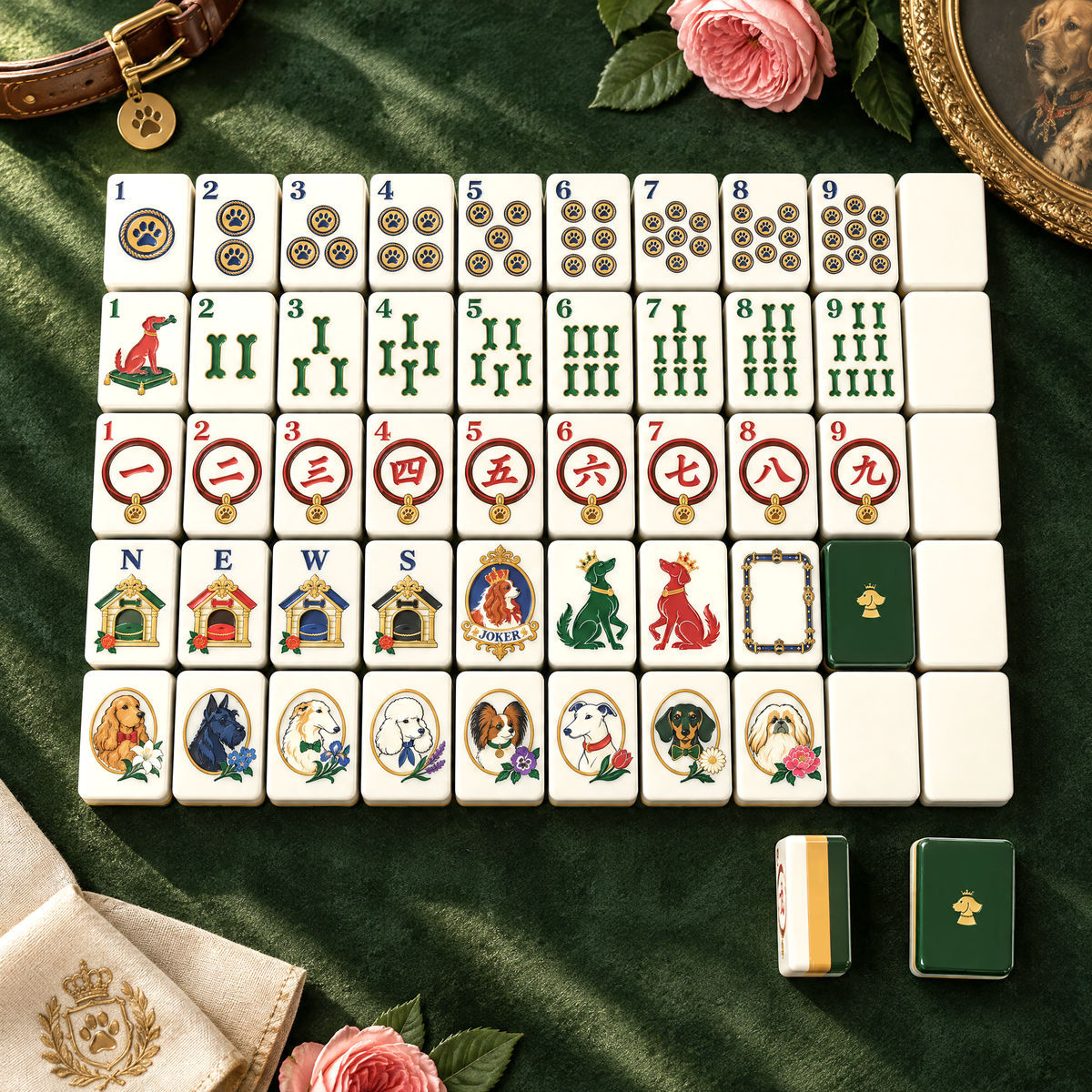
In American mahjong, the Bamboo suit (Bams) is one of three primary suits, containing 36 tiles: numbers 1–9, each repeated four times. The 1 Bam is distinctive because it shows a bird rather than the numeral "1"—a holdover from Chinese tradition. Bams pair with the Green Dragon to form specific hand patterns on the National Mah Jongg League card each year. When you're building melds (pungs, kongs, quints, sextets), Bams follow the same rules as Craks and Dots: identical numbers stack together, never in sequence. The suit's green coloring and bamboo imagery make it instantly recognizable on your tiles; spotting the bird on the 1 Bam helps beginners confirm they're reading the suit correctly. Our acrylic sets render Bams with crisp contrast so you spot them fast during play.
The Bamboo suit—or "Bams"—is the second of three numbered suits in American mahjong, containing 36 tiles: numbers 1–9, with four identical copies of each number. The 1 Bam is instantly recognizable because it depicts a bird rather than a numeral, a visual quirk that dates back centuries in Chinese gaming traditions. Bams pair with the Green Dragon to unlock certain hand combinations on the current year's National Mah Jongg League card. Understanding Bams is essential because what's in an American mahjong set depends on recognizing all three suits and how they combine.
How do you identify Bamboo tiles at the table?
Bamboo tiles are almost always rendered in green or teal on modern acrylic sets, distinguishing them visually from Craks (red/orange) and Dots (blue/white). The 1 Bam stands out with its bird symbol—usually a sparrow or crane—instead of a numeral. Numbers 2–9 display the corresponding quantity of thin vertical bamboo stalks. Once you've handled a set a few times, spotting Bams becomes automatic; the color, texture, and stalk pattern create a strong visual memory. In a live game, quick recognition prevents misreads and keeps the pace smooth. Our best-selling mahjong sets use high-contrast acrylic engraving so even players with vision challenges can distinguish suits instantly.
🀄 Shop best-selling mahjong sets →

Why does the 1 Bam show a bird instead of a number?
The bird on the 1 Bam (called the "sparrow" in some traditions) harks back to ancient Chinese playing cards and tiles. Early designs used pictorial marks to represent the lowest pip, and this imagery survived into modern mahjong. Some theories tie it to a pun or folk symbol for luck or longevity, though historians debate the exact origin. What matters for gameplay: the bird is not a decorative quirk—it's the official face of the 1 Bam tile. Learning to recognize it prevents costly errors when you're matching tiles quickly during the Charleston or mid-hand. Players sometimes misidentify it as a Flower or a special tile if they've never played before, so pointing it out during a teach-in smooths the learning curve.
What hands use Bamboo tiles with the Green Dragon?
The National Mah Jongg League card (issued each spring) specifies which combinations are valid each year. Green Dragons often appear alongside Bams in pattern rows marked for specific meld types—pungs, kongs, quints, or sextets of Green Dragons paired with like-number Bams, or in other structured arrangements. You cannot call a sequence like "1 Bam–2 Bam–3 Bam" (chows don't exist in American mahjong), so Bams are always grouped as identical numbers: three 5 Bams, four 7 Bams, and so on. Jokers can substitute for any Bam to complete a pung or kong. How to read the mahjong card walks you through finding valid patterns; Bams appear in dozens of winning configurations annually. Understanding the card's layout is the quickest way to see where Bams fit into your strategy.
🎁 See our most-loved mahjong sets & accessories →

How do Bams differ from Craks and Dots in gameplay?
The three numbered suits—Bams (bamboo/green), Craks (characters/red), and Dots (circles/blue)—follow identical rules in American mahjong. You form identical-number melds from any suit: three 6 Bams, three 6 Craks, three 6 Dots are all legal pungs, but a "1–2–3" mix across suits is not. The real difference is flavor: Bams pair with Green Dragons, Craks with Red Dragons, and Dots with White Dragons (Soap). No suit is stronger or weaker; they're purely visual categories that help players organize their racks and match hands on the card. New players sometimes think one suit is "easier" or "worth more points," but scoring depends entirely on which pattern you complete, not which suit it uses. Recognizing this equality helps beginners stop hunting for a "best" suit and focus on finding any valid hand on the current card.
Aspect | Bams (Bamboo) | Craks (Characters) | Dots (Circles) |
Color | Green/teal | Red/orange | Blue/white |
Symbol on 1 | Bird | Chinese character | Single dot |
Paired dragon | Green Dragon | Red Dragon | White Dragon (Soap) |
Rules | Identical pungs/kongs only | Identical pungs/kongs only | Identical pungs/kongs only |
Gameplay weight | Equal | Equal | Equal |
What role do Bams play in scoring and strategy?
Since all three suits follow the same structural rules, Bams don't carry inherent bonus points or penalties. Your score depends on which hand pattern you complete (as listed on the current National Mah Jongg League card), not which suit it contains. Strategy around Bams mirrors strategy for any suit: track which Bams have been discarded, keep your options open during the Charleston, and ditch high-risk tiles early. Because the Green Dragon pairs with Bams, some hands that require Green–Bam combinations may feel "Bam-heavy" that year; always check the active card to see how many Bam-dependent patterns exist. American mahjong scoring explains how points accrue; understanding it means you'll know whether a Bam-based hand is worth pursuing over a Dot-based one in your specific game.
✨ Find your Mahstead set — free US shipping →
What mistakes should you avoid when handling Bams?
Confusing the 1 Bam's bird with a Flower tile: The bird is part of the suit; Flowers are a separate category of honor tiles. One quick way to verify: count by suit. You should always have 36 Bams (1–9 × 4 copies). If your count is off, you've misidentified a tile.
Attempting to call a Bam sequence (chow): American mahjong does not permit chows. You can only expose pungs (3), kongs (4), quints (5), or sextets (6) of identical Bams—never 1–2–3 or 7–8–9. This rule catches beginners who've played Chinese or Riichi variants before.
Forgetting that Jokers substitute in Bam melds: Jokers can stand in for any Bam (or any tile) to complete a pung, kong, or larger meld. Using Jokers strategically—saving them for your hardest melds—is core American mahjong tactics.
Misreading Bam numerals during a fast game: The stalk patterns (2 stalks for "2 Bams," 7 stalks for "7 Bams") are quick once you're familiar, but new players often second-guess themselves. Spend 5 minutes before your first game brushing up on 1–9 so you're fluent by deal-time.
Mixing suit colors with tile quality concerns: Bams are always green/teal, regardless of set material or manufacturer. If your Bams look faded, muddy, or mixed with other colors, your set may be damaged or counterfeit. Acrylic sets with laser engraving maintain bright, distinct colors through years of play.
What to check before you buy
When choosing a mahjong set, inspect how clearly the Bams (and all suits) are color-separated. Acrylic sets with crisp engraving render each suit in vibrant, unmistakable hues. Verify the bird on the 1 Bam is visible and not worn or unclear. If you're hosting weekly games or teaching beginners, a high-contrast set cuts teach-in time dramatically. Lightweight acrylic also means less hand fatigue for players with joint sensitivity—important if Bam-intensive hands dominate your group's season. Check that spare tiles are included; acrylic sets occasionally arrive with replacements for worn Bams after heavy rotation.

FAQ
What is a Bam in mahjong?
A Bam is one of the three numbered suits in American mahjong, representing bamboo. It contains 36 tiles: numbers 1–9 repeated four times each. The 1 Bam features a bird instead of a numeral.
How many Bam tiles are in a standard set?
A standard American mahjong set contains 36 Bam tiles: the numbers 1 through 9, each appearing four times.
Can you make a sequence with Bams (like 1–2–3)?
No. American mahjong does not permit sequences (chows). You can only form pungs (three identical Bams), kongs (four identical Bams), or larger melds with the same number.
What color are Bamboo tiles?
Bamboo tiles (Bams) are typically rendered in green or teal, distinguishing them from red/orange Craks and blue/white Dots.
Why does the 1 Bam have a bird on it?
The bird is a traditional design element dating back to early Chinese gaming tiles. It represents the lowest value tile in the suit and is now standard across all modern sets.
Do Bams have any special scoring rules?
No. Bams follow the same scoring rules as Craks and Dots. Your score depends on which hand pattern you complete, not which suit it contains.


View More
View More
View More
